

Struggling to see equipment displays in bright sun or dim light? These small frustrations can lead to bigger, more costly mistakes. Prioritizing readability can solve these problems for good.
Readability is simply how easy it is to read an equipment's display. It is extremely important because it directly impacts safety, boosts production efficiency, and helps you meet industry standards. This makes it a critical factor to consider when you purchase new equipment.

Now, you have a basic answer. But readability1 is more than just a bright screen. It is a deep concept that can affect your entire operation, from the speed of your production line to the safety of your team. It’s a detail that can make or break your investment. Let's break down what it really means and why it should be at the top of your checklist.
What is readability and why is it important?
You bought new equipment, but your team says the screen is hard to see. This slows them down and increases the chance of simple, costly mistakes.
Readability is how easily your team can read the information on a device's screen. It's vital because poor readability causes operational errors, lowers productivity, and creates safety risks. Good readability ensures clear, quick, and accurate data interpretation in any work environment.
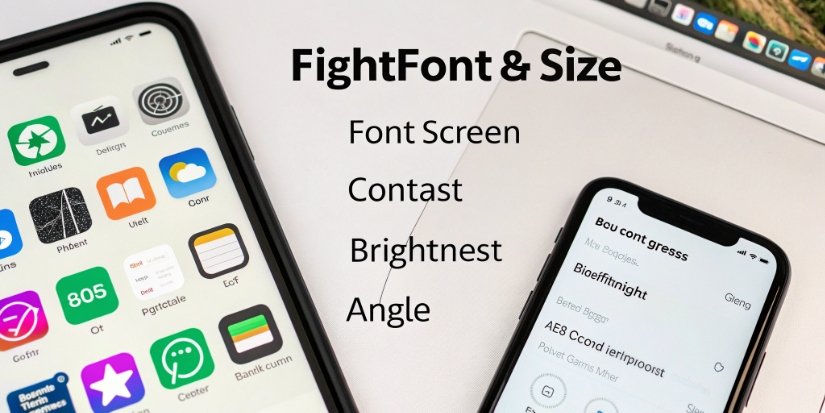
When we talk about readability, we're looking at a few key things. It’s not just one feature, but a combination of elements that create a good user experience. I've seen firsthand how getting this right transforms a workplace.
I remember a client in the food processing industry. Their old scales had small, non-backlit displays2. On the fast-paced packaging line, workers were constantly misreading weights in the dim factory light. This led to inconsistent product packages and customer complaints. After they switched to scales with large, bright displays with high contrast, their error rate dropped by over 30%. That’s the real-world power of good readability.
Here’s how we can break down its importance:
Safety
Poor readability can be dangerous. If an operator misreads a critical value on a control panel or misses a warning message because the screen is glary, it can lead to accidents. In environments that handle heavy loads or chemicals, a simple reading error can have serious consequences.
Efficiency
Clear displays mean faster work. Operators don't have to squint, step closer, or double-check a reading. This saves seconds on every single task, which adds up to huge productivity gains over a year. It also reduces eye strain and mental fatigue for your team, making them less likely to make mistakes toward the end of a long shift.
Compliance
In many industries, readability is not just a "nice-to-have" feature; it's a legal requirement3. For example, medical device regulations like the EU's MDR have strict rules about the clarity of information on displays. This ensures that a nurse or doctor can read vital signs or dosage information without any chance of error.
What is readability in a weighing balance?
Is your scale's display just a number, or is it useful information? A confusing display can mean the difference between a perfect measurement and a costly batch recall.
In a weighing balance, "readability" refers to the smallest increment the scale can display. For instance, a scale with 0.1g readability shows weight in steps of one-tenth of a gram. This number defines the precision of the measurement you can see on the screen.
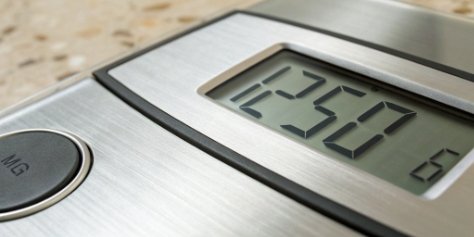
This technical definition is the first thing you'll see on a spec sheet, and it's extremely important. It tells you how precise the scale is. If you are mixing small amounts of valuable materials, you need a scale with high readability (more decimal places). If you are just weighing large boxes for shipping, lower readability is fine.
We often work with clients in the chemical and pharmaceutical sectors. For them, precise measurements are non-negotiable. A scale with 1g readability simply will not work when they are mixing sensitive compounds. They need balances with readability down to 0.01g or even 0.001g. But it’s not just about the decimal places. The display itself must be large, backlit, and stable. This ensures the operator can confidently record the exact measurement without hesitation or doubt. True readability in a weighing balance is this combination of technical precision and visual clarity.
Here’s a simple guide to choosing the right readability for your application:
| Readability | Typical Application | Example Use Case |
|---|---|---|
| 1g to 10g | General Shipping, Logistics | Weighing outgoing pallets and large boxes. |
| 0.1g to 1g | Food Processing, Portion Control | Portioning ingredients for recipes, quality checks. |
| 0.01g | Compounding, Quality Control | Mixing specific chemical formulas, precise parts counting. |
| 0.001g and lower | Laboratory, Pharmaceutical | Scientific research, medicine formulation. |
Choosing the right technical readability ensures you have the precision you need. Ensuring it's displayed clearly ensures you can actually use it.
What is the readability of measuring instruments?
You've probably seen the term "readability" on spec sheets for many different instruments. It can seem like it means slightly different things for different devices, which is confusing.
For any measuring instrument, readability is the smallest increment of measurement the device can display. This concept applies to scales, calipers, meters, and more. It defines the finest level of detail you can read from the instrument, but it does not guarantee its accuracy.
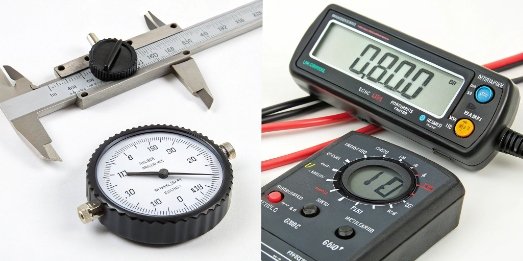
The idea is the same whether you're looking at a weighing scale, a digital caliper4, or a voltmeter. Readability is about the smallest step the display can show. A caliper might have a readability of 0.01mm. A voltmeter might have a readability of 0.1V. This number tells you the limit of the instrument's display resolution.
Over my 18 years as an industrial scale manufacturer, I've seen a huge shift in what this means in practice. Early digital instruments just showed numbers on a basic LCD screen. Now, we think about the entire user experience. Better display technology like OLED offers higher contrast and wider viewing angles, making screens easier to read in all conditions. But practical readability goes beyond the screen itself. It's about how the information is presented. Modern instruments use features like color-coding to show status at a glance. For example, a scale display might turn green when the weight is within the target range and red when it's not. This is the evolution of readability. It’s about turning raw data into information that people can understand and act on instantly without having to think. This is why standards like ISO 92415, which covers the ergonomics of electronic displays, are so important to us as manufacturers.
What is the difference between accuracy and readability?
A scale's specification sheet lists both "readability" and "accuracy." Many people think they are the same thing. They are not. Confusing them can lead you to buy a scale that is precisely wrong.
Readability is the smallest increment an instrument displays (e.g., 0.01g). Accuracy is how close that displayed measurement is to the true, actual value. You can have a scale with high readability that is not accurate, making it precisely incorrect.

The best way to understand this is with the classic dartboard analogy. Think of the bullseye as the true, correct weight.
- High Readability, Low Accuracy: You throw all your darts, and they land in a tight cluster, but far away from the bullseye. Your scale is very precise (high readability), showing "10.55g" every time. But the actual weight is 11.00g. Your measurement is consistent, but wrong.
- Low Readability, High Accuracy: Your darts are scattered around the bullseye. An instrument with low readability might give you readings like "10g," "11g," "12g." The readings are not precise, but their average is close to the true value.
- High Readability, High Accuracy: All your darts are in a tight cluster right on the bullseye. This is the goal. Your scale consistently shows "11.00g," and the true weight is indeed 11.00g.
As a buyer, you need both. As an OEM/ODM provider, this is a core conversation we have with our clients. A customer might request a scale with very high readability, but they haven't thought about the accuracy grade they need. Our role as weighing experts is to guide them. We explain that one without the other is useless for serious quality control. Our job is to deliver a solution that provides both, ensuring their measurements are not just precise, but also correct. Every single one of our products undergoes comprehensive testing for both before it leaves our facility.
Here is a direct comparison:
| Feature | Readability | Accuracy |
|---|---|---|
| Definition | Smallest displayed increment. | Closeness to the true value. |
| Tells You | The level of precision in the reading. | The level of correctness of the reading. |
| Can you have one without the other? | Yes, you can have high readability with low accuracy. | Yes, an accurate scale can have low readability. |
Conclusion
Choosing equipment with high readability and verified accuracy is not a small detail. It is a strategic decision that directly boosts your operational safety, work efficiency, and overall product quality.
-
Understanding the significance of readability can help improve safety and efficiency in your operations. ↩
-
Explore the benefits of backlit displays for improved readability and user experience. ↩
-
Ensure compliance by understanding the legal standards for readability in your industry. ↩
-
Learn how readability impacts the usability and precision of digital calipers. ↩
-
Understand the ergonomic standards for electronic displays to improve user interaction. ↩


[…] you; accuracy is how close that displayed value is to the true weight. You can have a balance with high readability3 that is not accurate if it is not calibrated correctly. Think of it like a car's speedometer. It […]