
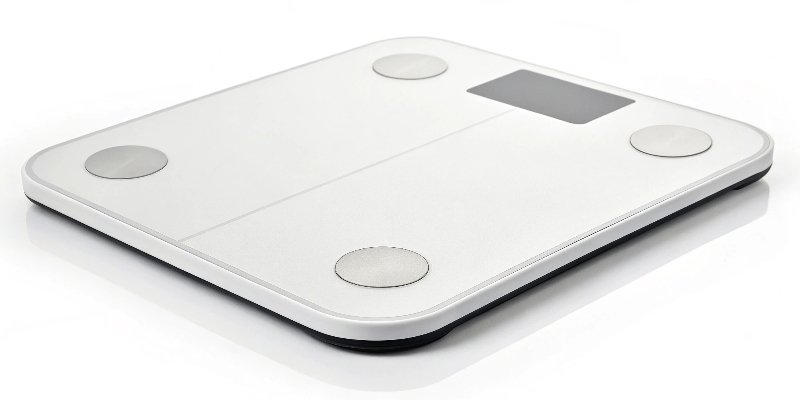
Tired of messy cables and manual data entry? A Bluetooth scale can simplify your workflow, but the wrong one means connection drops and inaccurate data, hurting your bottom line.
The best industrial Bluetooth scale offers stable, long-range transmission (up to 100m), a durable build for your environment (like IP68 stainless steel), and seamless data integration with your ERP or WMS systems. It depends entirely on your specific industrial application needs.
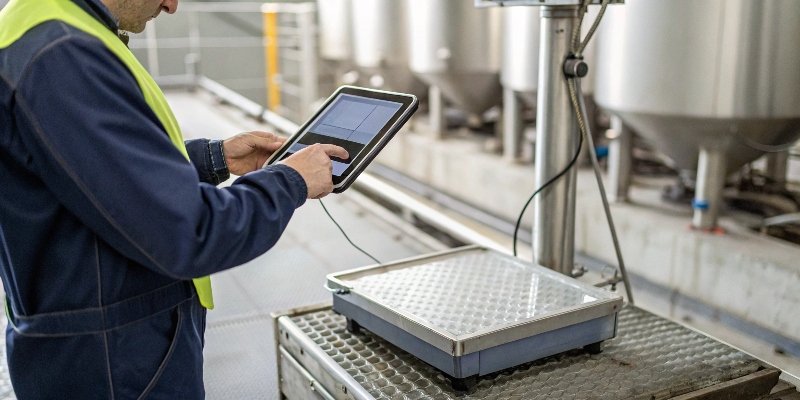
Choosing the right scale isn't just about the Bluetooth feature. Over my 18 years in this industry, I've seen that the best choice comes from understanding how you'll actually use it every day. It's about asking the right questions before you buy. Let's break down what really matters.
Do Bluetooth smart scales actually work?
You've probably heard that Bluetooth can be unstable. You worry about investing in a smart scale only to face constant connection issues, which would disrupt your entire production line.
Yes, industrial-grade Bluetooth scales work very well when you choose the right one. They use powerful chips for stable, anti-interference connections over long distances. This ensures reliable data transfer directly to your systems, removing manual errors and boosting efficiency.
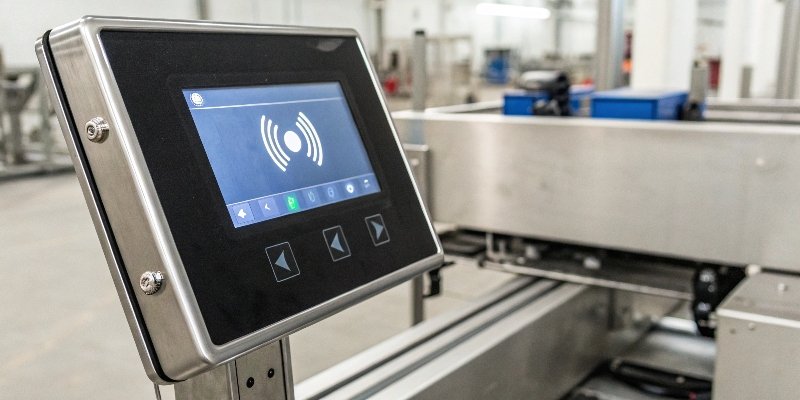
I often get asked if Bluetooth is strong enough for a busy factory floor. The answer is a clear yes, but not all Bluetooth is the same. Consumer-grade technology simply won't survive. For industrial settings, we focus on a few key performance details that make all the difference.
Transmission Performance
First, the Bluetooth chip inside is the most important part. We insist on using high-quality imported chips1, like those from CSR or Dialog. They handle electronic interference from other machines much better. Next is the transmission distance. A basic 10-meter range is fine for a single workstation. But for weighing pallets on a loading dock that needs to sync with an office computer, you need a range of up to 100 meters.
Connection Stability
Finally, you have to think about how many devices you need to connect at once. A good industrial scale should connect to a computer, a handheld PDA, and a mobile phone at the same time without dropping the signal. This makes sure your data flows smoothly to everyone who needs it, right away.
What are the best smart scales to buy?
It's confusing to pick a "smart" scale when so many are on the market. You need one that will actually connect with your systems and withstand your daily work without failing.
The best smart scales to buy are the ones that perfectly match your specific job. A logistics company needs a scale with a 100-meter range and ERP integration. A food processor needs a waterproof, stainless steel model. Focus on the core function, not just the "smart" label.

When a client asks me for the "best" scale, I always turn the question back to them: "What is your environment and what do you need the data for?" The answer tells us everything we need to know. There is no single "best" model for everyone, but there is a best type for your job. I often use a simple table to help guide the decision.
Recommended Models by Application
| Application | Recommended Model | Key Advantage |
|---|---|---|
| Express Logistics | Yaohua A12E Bluetooth Scale | 100-meter range, connects to multiple devices |
| Food Processing | Weigherps-A8 Waterproof | IP68 rating, stainless steel top, real-time app sync |
| Chemical & Pharma | Weigherps Explosion-Proof | 316L stainless steel, certified, direct data to PLC |
| Smart Manufacturing | Taiwan Sakura WN-V6 Series | Triple interface (BT, RS232, USB), Profinet support |
This method makes sure you get a tool that solves your actual problem. For example, a chemical plant requires an explosion-proof2 certified scale made of 316L stainless steel for corrosion resistance. A standard logistics scale would fail and be a safety risk in that environment.
What brand of scale is most accurate?
Inaccurate measurements can cost you thousands in wasted materials or shipping mistakes. With so many brands claiming high accuracy, how do you know which one truly delivers consistent, reliable results?
Accuracy is more than just a brand name; it's about matching the scale's precision (its division value) to your needs. Brands like Yaohua and Weigherps offer highly accurate industrial scales, but you must choose the right model. For logistics, a 0.01kg division is excellent.
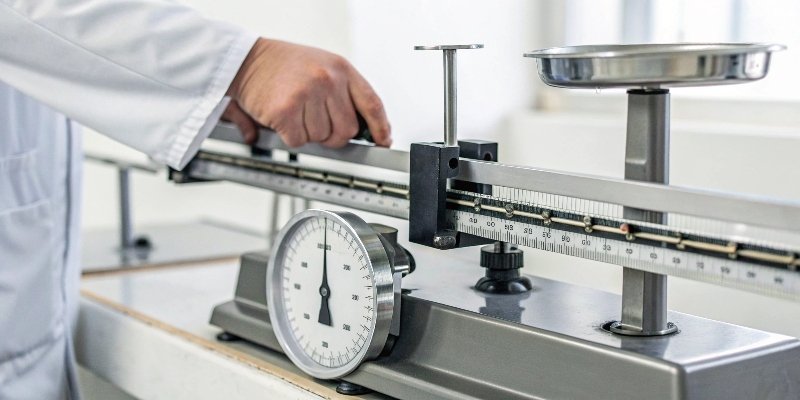
I always tell my clients that a good brand is a sign of quality, but true accuracy3 comes from the specifications you choose. A great brand can still be the wrong choice if the specs don't align with your work. We have to look at two important numbers: the maximum capacity and the division value4.
Matching Load Capacity and Precision
- Capacity (Range): This is the heaviest weight the scale can handle. For express shipping, scales in the 30kg to 500kg range are most common. For heavier industrial goods, you might need a capacity of 1000kg or more.
- Precision (Division Value): This is the smallest weight increment the scale can measure. It can range from a tiny 0.001kg for lab-like settings to 0.05kg for bulk goods. For most logistics and warehousing jobs, we find that a division of 0.01kg provides the perfect balance of accuracy and cost.
Choosing a scale with far more precision than you need just adds unnecessary cost. The most accurate brand is the one that provides a reliable scale with the exact specifications your operation requires.
Which type of scale is the most accurate?
You need accuracy you can trust every single day. But with different materials and protection levels, it's hard to know which type of scale will hold its precision in your challenging workplace.
The most accurate scale is one that is built to survive in your specific environment. A scale used in a dry warehouse can be made of carbon steel. For a wet or corrosive area, a 316L stainless steel, IP68-rated scale is needed to protect the internal sensors and maintain accuracy.
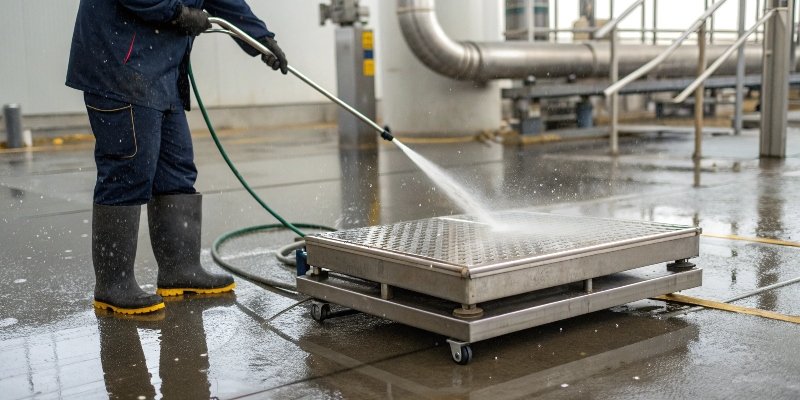
A scale's accuracy over time depends a lot on its durability. The internal load cells that measure weight are very sensitive. If moisture, dust, or chemicals get inside the housing, the readings will start to drift and become unreliable. This is why the physical construction is just as important as the electronic parts. I help clients choose the right build by looking at their workplace.
Adapting to Industrial Environments
| Application Setting | Recommended Material | Protection (IP) Rating |
|---|---|---|
| Normal Warehouse | Carbon Steel with Spray Plastic | IP67 |
| Damp / Dusty Areas | 304 Stainless Steel | IP68 |
| Chemical / Corrosive | 316L Stainless Steel + Coating | IP68 |
| Cold Chain / Freezer | Anti-Condensation Design | IP68 |
For instance, a client in the food processing industry needs to wash down their equipment daily with high-pressure water. A basic IP67-rated scale wouldn't last. They need an IP68-rated, fully stainless steel scale. This tough build protects the electronics, which ensures the scale stays accurate for years, even with harsh daily cleaning.
Conclusion
Choosing the best Bluetooth scale means matching its specs—transmission, accuracy, and build—to your exact industrial needs. This ensures reliable performance and a great return on your investment.
-
Find out how superior chip technology enhances performance and reliability in scales. ↩
-
Learn why explosion-proof scales are crucial for safety and compliance in hazardous environments. ↩
-
Learn how to assess scale accuracy to avoid costly errors in your operations. ↩
-
Understand how division value impacts measurement precision and operational efficiency. ↩


Comments (0)