
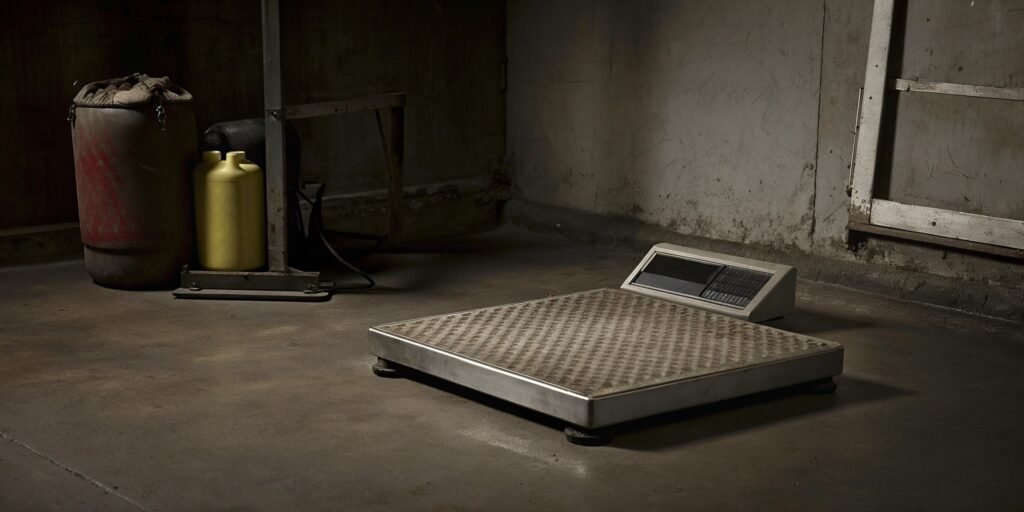
Struggling with inaccurate chemical measurements? Worried about corrosive spills damaging your equipment? The right scale ensures precision and protects your investment, preventing costly errors and replacements.
The best digital scale for weighing chemicals is a laboratory balance, specifically an analytical or precision balance. These scales offer high accuracy and feature materials like stainless steel or anti-corrosion coatings, which resist damage from spills and ensure reliable, repeatable results for your critical experiments.
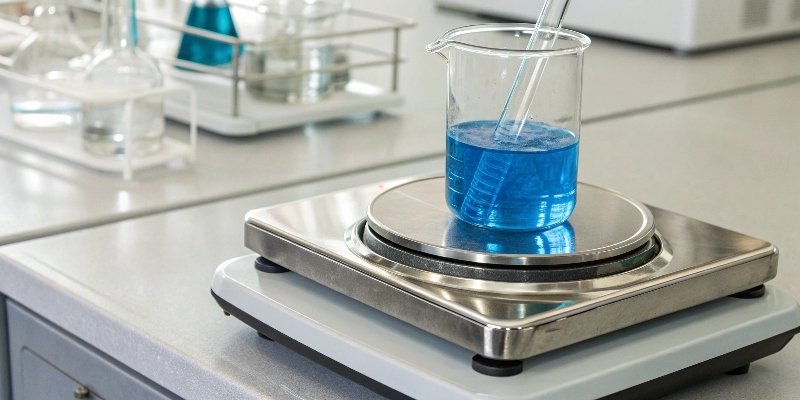
So, a laboratory balance1 is the answer. But that's just the starting point. I remember working with a client who bought a high-precision scale, but it failed within a month. The reason was simple. They did not consider the type of chemicals they were using. Choosing the right scale involves more than just precision. It is about understanding the specific demands of your lab. You need to know what to look for to make a smart purchase. Let's break down what you really need to know.
What should you use to weigh chemicals on a scale?
Afraid of contaminating your samples or damaging the scale's pan? Direct contact with chemicals causes cross-contamination and corrosion. You should always use appropriate weighing containers to ensure accuracy and longevity.
You should always place chemicals in a container, never directly on the scale pan. You can use disposable weigh boats, weighing paper, or glass beakers. This practice prevents contamination, protects the scale from corrosion, and ensures you can transfer the chemical easily after weighing.
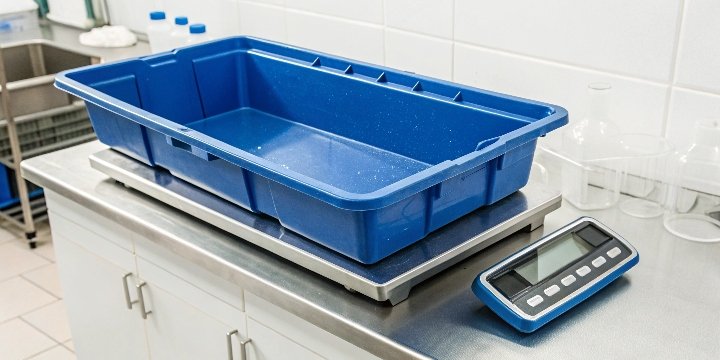
Early in my career, I saw a technician pour a chemical powder directly onto a brand-new scale. It was a costly mistake. The powder was slightly acidic and permanently etched the stainless steel pan. This mistake compromised every measurement afterward. That experience taught me a valuable lesson. The container is just as important as the scale itself. Direct contact can cause corrosion, staining, and make cleaning impossible. It can also lead to cross-contamination2, which ruins your experiments.
Choosing the Right Container
You have several options for weighing containers. Each one has a specific purpose. Your choice depends on the chemical you are weighing and what you plan to do with it next. A simple table can help you decide.
| Container Type | Material | Best For | Considerations |
|---|---|---|---|
| Weighing Paper | Low-nitrogen parchment | Small amounts of dry powder | Can be affected by static; not for liquids |
| Weigh Boats | Anti-static plastic | Powders and granules | Disposable and low-cost; flexible for easy pouring |
| Glass Beakers | Borosilicate glass | Liquids and corrosive chemicals | Reusable and heat-resistant; heavier weight |
The Taring Process is Key
After you place the empty container on the scale, you must press the "Tare" or "Zero" button. This action subtracts the container's weight. The scale will then display zero. Now, when you add your chemical, the scale only shows the weight of the chemical itself. At Weigherps, we design our scales with intuitive tare functions. We know these small details make a big difference in daily lab work.
What is a digital scale used for in chemistry?
Do you think chemistry is just mixing liquids? Without accurate mass measurements, your formulas are off and your experiments fail. Digital scales are essential for nearly every quantitative task in chemistry.
In chemistry, a digital scale is used to precisely measure the mass of solids and liquids. This is crucial for preparing solutions with specific concentrations, determining reaction yields, and conducting quantitative analysis. It provides the foundational data for reproducible and accurate scientific work.
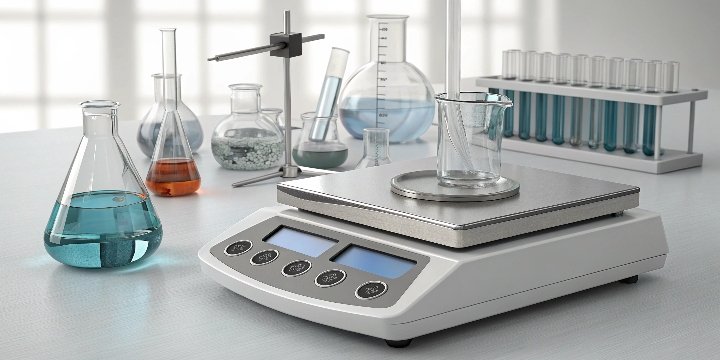
A digital scale is the heart of a quantitative chemistry lab. Without it, your work is just guesswork. For our clients in software development, think of it like this. The scale provides the clean, accurate input data. Without it, even the most sophisticated analysis software produces garbage. Every accurate measurement builds on the one before it. A reliable scale makes sure that the foundation of your work is solid.
Foundation of Formulations
Most chemical processes start with creating a solution. You need to dissolve a precise amount of a solid (the solute) into a liquid (the solvent). For example, to make a 1 Molar solution of sodium chloride (NaCl), you need to weigh exactly 58.44 grams of NaCl and dissolve it in water to make a final volume of 1 liter. If your weight is off by even a small amount, the concentration of your final solution will be wrong. This can affect the results of any experiment that uses it.
Measuring Reaction Outcomes
Scales are also critical for measuring the success of a chemical reaction. You can calculate the theoretical yield3, which is the maximum amount of product you could create. After the reaction, you weigh the actual product you made. Comparing the actual yield to the theoretical yield tells you how efficient your reaction was. This is a key metric in both academic research and industrial production. Precise weighing is the only way to get a meaningful result.
What is the chemical scale called?
You might hear terms like "scale," "balance," or "chemical scale" used in labs. This can be confusing. Using the wrong term can lead to you buying the wrong piece of equipment for your needs.
A "chemical scale" is most accurately called a laboratory balance. While "scale" is a general term, "balance" is used in scientific contexts to denote a high-precision instrument. Professionals use terms like analytical balance or precision balance, depending on the required accuracy.

I once spoke to a purchasing manager for a software company that was branching into IoT hardware testing. He was frustrated. He kept searching for "chemical scale4s" online and found a confusing mix of kitchen scales and extremely expensive scientific devices. He did not know what to choose. We clarified the terminology for him. This simple change helped him narrow his search and find the right tool for his team's needs.
Scale vs. Balance: What's the Difference?
Technically, a scale measures weight, which is the force of gravity on an object. A balance measures mass by comparing an unknown mass to a known mass. In a lab, you need to measure mass because it is a constant property of matter. Most modern digital "balances" use an electromagnetic force restoration mechanism to determine mass. While people often use the terms interchangeably, "balance" implies the high precision needed for science.
| Feature | General Scale | Laboratory Balance |
|---|---|---|
| Terminology | Scale | Balance |
| Measures | Weight (force) | Mass (amount of matter) |
| Typical Use | Kitchens, shipping, bathrooms | Labs, pharmacies, quality control |
| Key Feature | General approximation | High precision and accuracy |
Why the Name Matters
When you are responsible for purchasing, using the right name is important. Searching for a "precision balance5" will give you much better results than searching for a "scale." It filters out consumer-grade products and shows you instruments designed for professional use. This is why our product catalogs at Weigherps are so specific. We list our products as precision balance5s or analytical balance6s. We want our clients to have a clear understanding of exactly what they are getting.
What are the three types of weighing scales?
So you know you need a laboratory balance, but which one should you choose? Buying the wrong type means you either waste money on features you don't need or you get a device that is not accurate enough for your work.
The three main types of laboratory balances are defined by their readability: Analytical Balances (0.1mg or better), Precision Balances (1mg to 1g), and Microbalances (0.001mg or better). Your choice depends on the level of accuracy your specific chemical applications require.

It's a classic cost-benefit analysis. As a purchasing manager or technical director, you do not need to be a chemist. But you do need to understand these equipment tiers. This knowledge prevents you from overspending on unnecessary precision or underspending and getting a useless tool. When we talk to clients, we always start by asking about their application. We guide our clients through this choice. Our goal is to ensure they get the most cost-effective solution that meets their technical needs perfectly.
Matching the Balance to the Task
Let's break down the main types, so you can see which one might be right for you. Each one serves a different purpose in the lab, based on how small a weight it can measure.
-
Precision Balances: These are the workhorses of the lab. They offer a good balance of speed and accuracy. They are perfect for preparing buffer solutions7 and measuring general chemical samples. Their readability is typically from 1 gram down to 0.001 grams (1 milligram).
-
Analytical Balances: These are for tasks that need high precision. They are used for quantitative analysis8 or preparing chemical standards9. They are so sensitive that they must be enclosed in a glass case, called a draft shield, to protect them from air currents. Their readability is usually 0.1 milligrams or better.
-
Microbalances and Ultra-Microbalances: These are the most sensitive and most expensive balances. They are used for measuring extremely small samples, like single particles or fine coatings. Their readability can go down to the microgram (μg) level.
Here is a quick summary table:
| Balance Type | Typical Readability | Common Use Case |
|---|---|---|
| Precision | 1g to 1mg | Preparing solutions, general weighing |
| Analytical | 0.1mg to 0.01mg | Quantitative analysis, standards |
| Microbalance | ≤ 0.001mg (1μg) | Weighing tiny samples, filters |
Conclusion
Choosing the right chemical scale means picking a laboratory balance with the correct precision and material resistance. This ensures accurate results, protects your equipment, and makes your investment worthwhile.
-
Explore this link to understand the importance of laboratory balances in achieving precise measurements in scientific experiments. ↩
-
Learn about cross-contamination in laboratories and best practices to prevent it during chemical weighing. ↩
-
Learn about theoretical yield and its importance in evaluating the efficiency of chemical reactions. ↩
-
Explore the terminology around chemical scales and balances to ensure you choose the right equipment for your lab. ↩
-
Discover the differences between precision and analytical balances to choose the right one for your lab needs. ↩ ↩
-
Learn about analytical balances, their features, and why they are essential for high-precision measurements in labs. ↩
-
Discover the role of buffer solutions in chemistry and the importance of accurate measurements in their preparation. ↩
-
Understand the significance of quantitative analysis in chemistry and how accurate measurements contribute to reliable results. ↩
-
Learn about chemical standards and their significance in ensuring accuracy and reliability in laboratory measurements. ↩


Comments (0)