

Choosing the wrong balance can ruin your results. This mistake costs time and money. Here’s how to pick the right one for perfect accuracy every time.
An analytical balance is more accurate, measuring to 0.1 milligrams or better. A precision balance typically measures to 1 milligram. For highly sensitive tasks like chemical analysis or pharmaceutical research, an analytical balance is essential. For general lab work, a precision balance is often sufficient.

Now that you know the key difference in accuracy, you might be wondering how this applies to your specific needs. The distinction goes beyond just numbers; it affects your daily work, your budget, and the reliability of your data. For the last 18 years, I've helped clients select the right weighing equipment, and I've seen firsthand how a small difference in readability can have a massive impact on production outcomes. Let's explore these differences more deeply so you can make an informed choice that benefits your operations.
Which type of balance does my chemistry laboratory need?
Equipping your lab is expensive. A wrong choice means wasted budget and compromised experiments. Let's ensure you get the right balance for your specific chemical applications without overspending.
For quantitative analysis, pharmaceutical formulation, or measuring chemical reagents, you need an analytical balance due to its high precision (0.1mg). For sample preparation, quality control checks, or educational experiments where milligram accuracy is sufficient, a precision balance is a more cost-effective choice.

The decision really comes down to the smallest amount you need to weigh and the level of accuracy your application demands. I often tell my clients to think about their most critical measurement. If that measurement involves substances where a tiny error could compromise an entire batch, then an analytical balance1 isn't a luxury; it's a necessity. It’s an investment in quality and consistency. On the other hand, for tasks like mixing buffers or general quality checks, a precision balance2 provides the necessary accuracy without the higher cost and sensitivity of an analytical model. It offers a great balance between performance and budget.
Task-Specific Requirements
The right tool depends entirely on the job. For example, in drug development, every microgram counts. But for checking the weight of incoming raw materials in a factory, you need speed and durability more than extreme precision.
| Application | Recommended Balance | Reason |
|---|---|---|
| Chemical Analysis | Analytical Balance | Requires the highest level of accuracy (0.1mg) |
| Pharmaceutical R&D | Analytical Balance | Small variations can affect drug efficacy |
| Routine Quality Control | Precision Balance | Good accuracy (1mg) and faster stabilization |
| Educational Labs | Precision Balance | Cost-effective and durable for teaching |
Budget and Throughput Considerations
Don't forget to consider your workflow. Analytical balances often have draft shields and require a controlled environment, which can slow down weighing. Precision balances are more robust and faster, making them better for high-throughput environments where you need reliable results quickly.
Why do scales give different readings in different locations (such as on the Moon)?
You rely on scales for consistent measurements. But what if location changes your readings? Understanding why this happens is key to ensuring your data is always accurate and reliable.
Scales measure weight, which is the force of gravity acting on an object's mass (Weight = Mass x Gravity). Since gravity varies by location (e.g., it's weaker on the Moon), the weight reading changes. Balances, however, compare an unknown mass to a known mass, making them immune to gravity changes.

This is a fundamental concept in weighing that can have real-world implications, even here on Earth. I once had a client who moved their manufacturing plant from a coastal city to a high-altitude location. Suddenly, their highly sensitive scales started giving slightly different readings, which affected their product consistency. The problem wasn't the scales; it was the change in local gravity. This experience taught me just how critical regular calibration3 is, especially when equipment is moved. It ensures that no matter where you are, your measurements remain true.
Mass: The Constant Property
Mass is the amount of "stuff" in an object. It is a fundamental property and remains the same no matter where you are in the universe. An object with a mass of 10 kilograms on Earth will also have a mass of 10 kilograms on the Moon or in deep space. True balances, especially mechanical two-pan balances, work by comparing an unknown mass to a known mass. Because gravity affects both pans equally, the measurement of mass is unaffected by location.
Weight: The Variable Force
Weight, on the other hand, is the force exerted on an object by gravity. Because the Moon has about one-sixth the gravity of Earth, an object there will weigh only one-sixth of what it does on Earth. Even on our planet, gravity varies slightly depending on altitude and latitude. This is why most modern electronic scales, which measure force, need to be calibrated at their location of use to provide an accurate mass reading.
If a digital scale measures weight (affected by gravity), why does it display units in kilograms (kg) instead of newtons (N)?
Seeing kilograms on a scale seems straightforward. But it measures force, not mass. This contradiction can be confusing and lead to measurement errors if not understood correctly. Let's clarify this.
Digital scales use a load cell to measure force (weight) and then convert it to a mass unit (kg) using an internal calibration factor. This factor assumes Earth's standard gravity (9.8 m/s²). It displays kilograms for convenience, as this is the standard unit of mass in commerce and science.
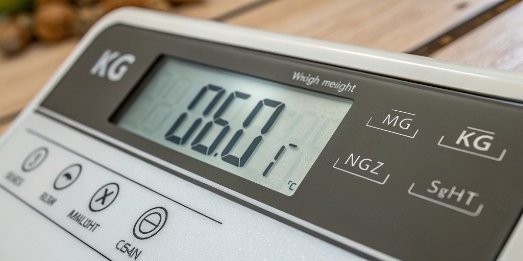
As a manufacturer, this is a topic I discuss frequently with our R&D team and clients, especially those integrating our weighing systems with their software. The scale’s software is programmed to perform a simple calculation: Mass = Weight / Gravity. The key is that the value for "gravity" is a fixed constant programmed into the scale's firmware. This is why on-site calibration using a known mass is so vital. It adjusts this internal calculation to match the local gravity precisely, ensuring the kilograms you see on the screen accurately reflect the object's true mass. It's a smart and practical solution that makes modern scales so useful.
The Inner Workings of a Digital Scale
A digital scale4 doesn't measure mass directly. Inside, a device called a load cell5 bends slightly under the object's weight. This bending creates an electrical signal. The stronger the force (weight), the stronger the signal. The scale's microprocessor then takes this signal, which represents force in Newtons, and runs it through a calculation to convert it into kilograms or pounds for the display.
The Role of Calibration
This conversion process is why calibration is not just a suggestion—it's essential for accuracy. The scale assumes a standard level of gravity. If the local gravity is slightly different, the calculation will be slightly off. Calibrating the scale with a known mass (like a certified 1 kg weight) essentially tells the scale, "This specific electrical signal equals exactly 1 kg in this location." It fine-tunes the internal formula, making the displayed reading accurate.
| Measurement | Unit | What it is |
|---|---|---|
| Force (Weight) | Newtons (N) | What the scale's load cell measures |
| Mass | Kilograms (kg) | What the scale calculates and displays |
In what situations must I use a balance instead of a scale?
Using a scale when you need a balance can invalidate your entire process. This mistake is costly. Knowing when a true balance is non-negotiable protects your work's integrity.
You must use a balance when extreme precision is required and the measurement must be independent of gravitational variations. This includes scientific research, chemical formulation, and creating calibration standards. A balance compares masses, while a scale measures force, making a balance inherently more accurate for these tasks.

In my experience providing weighing solutions, the clearest dividing line is the consequence of error. If a small error could lead to a failed experiment, an ineffective drug, or a flawed scientific conclusion, you need a balance. We work with many companies in specialized industries where precision is not just desired, but mandated by regulations. For these clients, an analytical balance is the only option. However, for most industrial applications, like manufacturing, logistics, or food production, a high-quality, properly calibrated digital scale is the perfect tool. It provides the necessary accuracy in a more robust and cost-effective package.
Applications Demanding True Mass Measurement
Certain fields cannot tolerate the slight inaccuracies that come from gravitational variation or environmental factors. A true balance, especially an analytical balance, is required for:
- Pharmaceutical Compounding: Creating medications where precise ratios of active ingredients are critical for safety and efficacy.
- Quantitative Chemical Analysis: Determining the exact amount of a substance in a sample.
- Physics Experiments: Measuring fundamental constants or verifying scientific theories.
- Metrology: Creating and verifying standard masses used to calibrate other scales and balances.
When a Scale is a Better Fit
For the vast majority of commercial and industrial tasks, a scale is not only sufficient but also more practical. Scales are generally more durable, faster, and have higher capacities. They are ideal for:
- Shipping and Logistics: Determining postage and freight charges.
- Manufacturing: Portion control and quality checks on a production line.
- Retail: Selling goods by weight, like produce or bulk items.
- Medical Use: Monitoring a patient's weight.
| Use Case | Recommended Instrument | Why? |
|---|---|---|
| Formulating a new drug | Analytical Balance | Requires the highest possible precision and accuracy. |
| Weighing grain in a silo | Industrial Scale | Needs high capacity and durability, not 0.1mg precision. |
| Shipping a package | Bench Scale / Floor Scale | Measures weight for logistics; fast and reliable. |
| Calibrating a weight set | Mass Comparator (Balance) | Must be independent of local gravity for true mass. |
Conclusion
Choosing between an analytical and precision balance depends on your needed accuracy. Understanding the core differences between mass and weight ensures you select the right tool for every measurement task.
-
Explore the intricacies of analytical balances to understand their precision and applications in various fields. ↩
-
Learn about precision balances and their cost-effective solutions for general lab work and quality control. ↩
-
Understand the critical role of calibration in maintaining accuracy and reliability in measurements. ↩
-
Learn about the technology behind digital scales and how they provide accurate mass readings. ↩
-
Explore the function of load cells in scales to understand their role in weight measurement. ↩



Comments (0)