

Struggling to choose the right scale? You see many display digits and assume it’s super accurate, but this common mistake can lead to costly errors in your production process.
Readability is the smallest increment a scale can display, like decimals on a screen. Accuracy, however, is how close the scale's measurement is to the object's true weight. A highly readable scale is not always an accurate one.
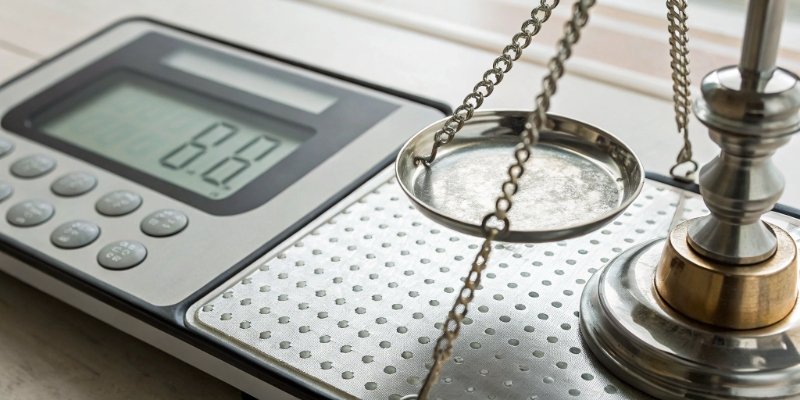
This is one of the most common points of confusion I’ve seen in my 18 years in the industrial scale1 business. People often believe that more decimal points on the display mean a better, more precise instrument. This assumption can lead you to buy a scale that doesn't fit your needs, either by overspending on unnecessary resolution or, worse, by getting a scale that isn't accurate enough for your critical applications. It’s a simple mix-up, but one that can have a big impact on your operations. Let's break down these concepts so you can have complete confidence in your next weighing equipment2 purchase.
What is the real difference between readability and accuracy?
You're comparing technical specifications for two scales, and the terms feel jumbled. Are you about to overpay for a feature you don’t need or buy a scale that will fail you?
Think of it this way: readability is what you see, while accuracy is how true that reading is. A scale can be highly readable, showing many decimal places, but still give you the wrong weight. This makes accuracy the more critical factor for performance.

In my experience, especially when working with tech partners who need to integrate our scales with their software, this distinction is crucial. Imagine your system is getting data from a scale that reads to 0.01g (that's its readability). Your software logs this precise number. But what if the scale itself is off by a full 2 grams? That’s a failure of accuracy. All your precise-looking data is fundamentally wrong. This can throw off inventory counts3, batching formulas, and quality control4 checks. I often use the analogy of a car's speedometer. A digital speedometer that shows your speed as 65.5 MPH has high readability. But if you’re actually going 70 MPH, it has low accuracy. For industrial processes, accuracy is the foundation of reliable data.
| Feature | Readability5 | Accuracy6 |
|---|---|---|
| What it is | The smallest division displayed by the scale. | How close the measured weight is to the true weight. |
| Also known as | Resolution, Division, Increment | Trueness, Correctness |
| Example | A scale shows 10.1g, 10.2g, 10.3g... (0.1g) | A 10.0g weight reads between 9.9g and 10.1g on the scale. |
| Purpose | Indicates the level of detail in the reading. | Indicates the overall performance and reliability of the scale. |
| Mistake | Assuming more decimal places means more accurate. | Overlooking it in favor of higher readability. |
What exactly is the readability of a balance?
You see "readability" on a spec sheet, and it seems simple. But if you misinterpret what it means, you could get a scale that lacks the detail your process absolutely requires.
Readability, also called resolution or division, is simply the smallest increment of weight the balance can show on its display. If a scale measures in steps of 0.1 grams, its readability is 0.1g.
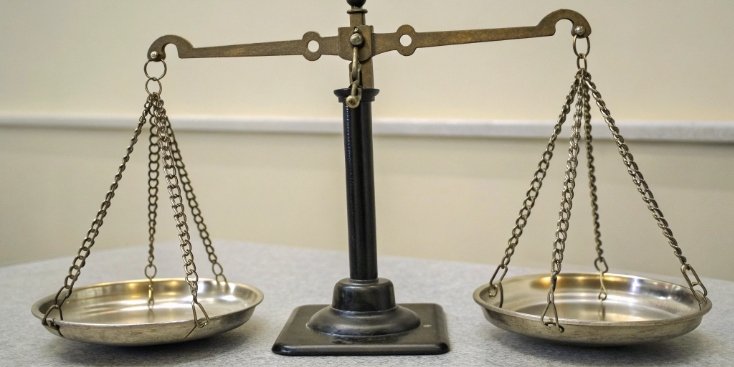
Readability is determined by the scale's design—its load cell and its electronics. It is not a measure of performance, but rather a specification of the display's detail. For example, a heavy-duty floor scale for weighing pallets might have a readability of 0.5 kg. It will display weights like 500.0 kg, 500.5 kg, and 501.0 kg. It cannot show you 500.2 kg. In contrast, a laboratory balance used for mixing formulas might have a readability of 0.001g. It provides a much finer level of detail.
How Readability Affects Your Choice
The right readability depends entirely on your application. For a software provider connecting to a weighing system7, this is critical. Your software needs to be ready to handle the data format. If you're building a system for counting thousands of tiny screws, you need a scale with high readability to detect the weight of a single screw. If you are developing an application for a logistics warehouse, a lower readability is perfectly fine and more cost-effective. As an OEM/ODM manufacturer8, this is one of the first questions we ask our clients. We need to match the scale's readability to their specific market needs to provide a truly effective solution.
So, how is a balance's accuracy actually determined?
Now you know accuracy is a top priority. But when you look at a spec sheet, how can you tell if the scale is truly accurate? You can't just trust a marketing claim.
A scale’s accuracy isn’t just a single number; it's a profile of its performance confirmed by testing. It’s determined by factors like linearity, repeatability, and eccentricity, and verified through calibration with certified weights.

When we build and test our scales, we don’t just check if it can weigh one object correctly. We perform a comprehensive series of tests that our quality control department runs on every single unit before it ships. Accuracy is a combination of several performance factors9. For our clients in the software industry, whose systems depend on flawless data, understanding these factors helps them appreciate what makes a professional-grade scale reliable. Your software can't fix bad data from an inconsistent scale.
The Key Pillars of Accuracy
Let's look at the main things that define a scale's accuracy.
| Factor | What it Measures | Why it Matters for You |
|---|---|---|
| Linearity | The scale's accuracy across its entire capacity range, from near zero to its maximum. | Your system needs to trust the data whether it's weighing a 5kg or 50kg item. |
| Repeatability | The scale's ability to show the same result when weighing the same object multiple times. | For automated processes and inventory control, inconsistent results create chaos. |
| Eccentricity | The scale's ability to show the same result even if the object is placed off-center. | In a busy warehouse or production line, items are rarely placed perfectly in the middle. |
An inaccurate scale can be a huge liability. If its linearity10 is poor, your batching formulas could be wrong depending on the batch size. If its repeatability11 is low, your automated quality control might fail good parts and pass bad ones. That's why we focus on delivering scales that perform reliably across all these metrics.
Conclusion
Never confuse readability with accuracy. Readability is just the number of decimals on the display, while accuracy is the scale’s true performance. Always choose a scale based on your genuine accuracy needs.
-
Gain insights into the essential features that make industrial scales reliable. ↩
-
Get tips on selecting the best weighing equipment for your specific applications. ↩
-
Discover the potential pitfalls of relying on inaccurate scales for inventory management. ↩
-
Learn how accurate scales are vital for effective quality control in production. ↩
-
Understanding readability helps you choose the right scale for your specific needs. ↩
-
Learn how accuracy impacts your operations and why it’s crucial for reliable data. ↩
-
Explore the critical factors to consider for selecting the right weighing system. ↩
-
Understand how manufacturers can help you choose the right scale for your needs. ↩
-
Learn about the key factors that determine the accuracy of weighing scales. ↩
-
Discover why linearity is crucial for accurate measurements across different weights. ↩
-
Find out how repeatability ensures consistent results in your weighing processes. ↩



[…] think of readability3 as detail. It's the smallest step the scale's display shows. For instance, if a scale displays […]