
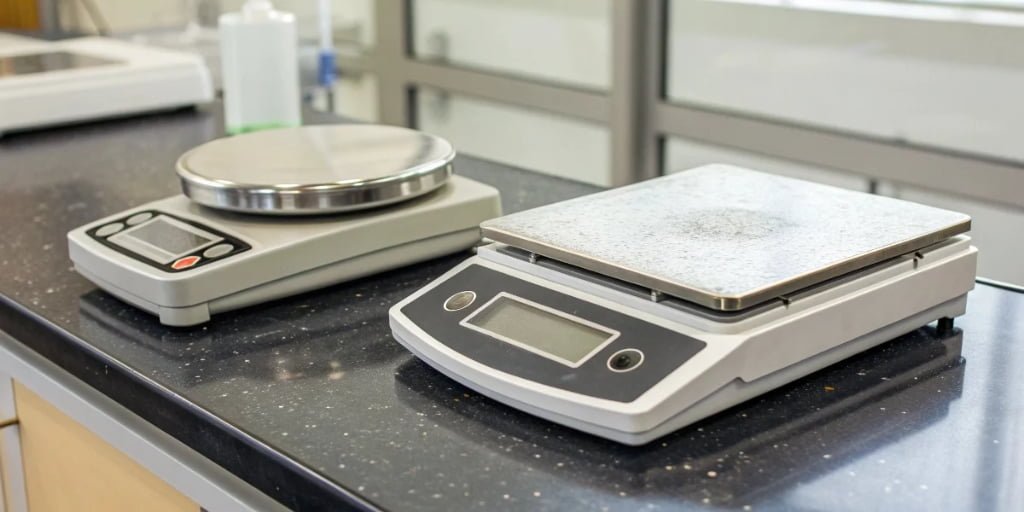
Your scale is inaccurate, and you're not sure what to do. Making the wrong choice costs money and hurts production. Understanding the difference between calibration and replacement is key.
Calibration adjusts your existing scale's software to ensure it weighs accurately. It is a routine, low-cost procedure. Replacement is buying a new scale, a major expense reserved for when a scale is broken beyond repair, can't hold its accuracy, or is technologically obsolete.
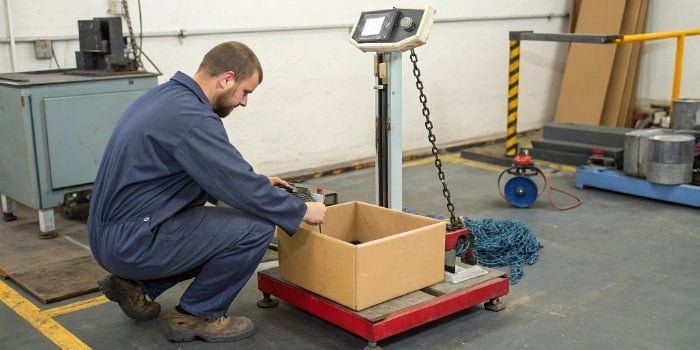
Making the right call between a simple adjustment and a major purchase is a daily challenge for anyone managing industrial equipment1. This decision directly impacts your budget, your product quality, and your operational efficiency. Over my 18 years in the scale manufacturing business, I've seen companies waste thousands by replacing scales that just needed a tune-up. I've also seen others risk their reputation by trusting a failing scale for too long. Let's break this down further so you can make the right, cost-effective choice every single time.
What does it mean to calibrate a scale?
You hear "calibration" all the time, but do you know what it actually involves? Misunderstanding this simple process can lead to costly errors and non-compliance in your operations.
To calibrate a scale means you compare its measurement to a known, certified weight standard. You then adjust the scale so its reading perfectly matches that standard. This process ensures your scale's output is consistently accurate and trustworthy, like setting your watch to the correct time.
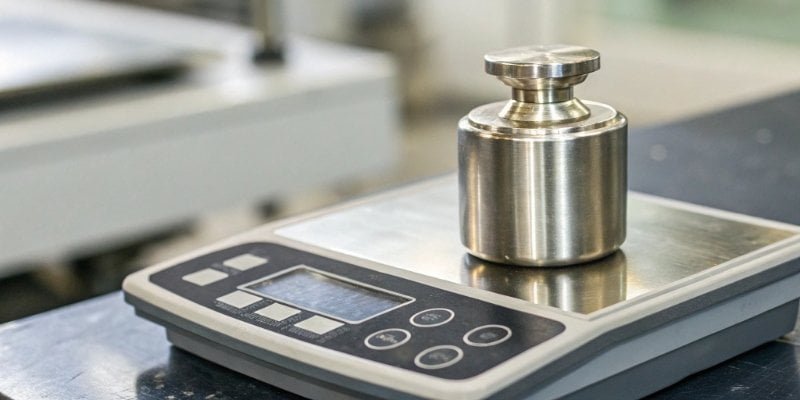
Calibration2 is more than just a quick check. It is a precise procedure that is fundamental to quality control. In our work at Weigherps, we do this every day. A technician places a certified weight on the scale. They check the reading on the display. If the reading is off, they access the scale's internal settings and make small adjustments until the displayed weight equals the certified weight. This process confirms that the scale is performing within its specified tolerance.
Why is Calibration a Must-Do?
The importance of this can't be overstated. For many of our clients, calibration is not optional; it's a requirement for compliance with international standards like CE. Here’s why it’s so critical:
- Accuracy: It ensures your final product meets specifications. You avoid shipping underweight products or giving away overweight ones.
- Compliance: Many industries have strict regulations that mandate regular, traceable calibration.
- Cost Savings: An accurate scale prevents material waste and protects your profit margins.
- Reliability: It builds trust in your own production data and builds confidence with your customers.
What is the difference between calibration and repair?
Your scale is giving you strange readings. Is it a calibration problem or is it broken? Calling for a repair when only calibration is needed wastes money and time.
Calibration is a routine adjustment to ensure accuracy on a working scale. A repair is when you must fix or replace a broken component, like a damaged load cell or dead display. You calibrate a functional scale; you repair a broken one.
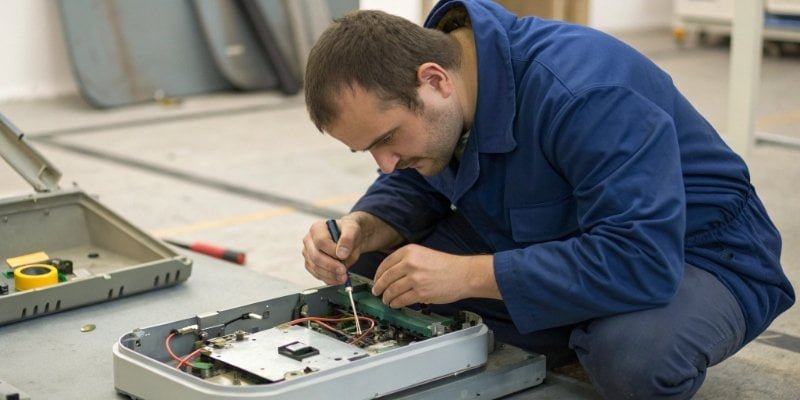
Think of it this way: if your car's alignment is off, you get it adjusted (calibration). If you have a flat tire, you get it replaced (repair3). We often get calls from new clients who think their scale is broken. Our first step is always to ask about its calibration history4. Often, a professional calibration is all it takes to get them back up and running. However, if a scale won't accept or hold a calibration, it almost always points to an underlying hardware problem that requires a repair. Many times, the issue is a failing load cell5, which is the heart of the scale.
Calibration vs. Repair: A Quick Comparison
Here is a simple table to help you tell the difference.
| Feature | Calibration | Repair |
|---|---|---|
| Goal | Adjust for peak accuracy6 | Fix a malfunction or broken part |
| Process | Software or digital setting adjustment | Component replacement or physical fixing |
| Frequency | Routine (daily, monthly, quarterly) | As needed (when something breaks) |
| Who Does It | Trained user or certified technician | Service technician |
| Outcome | An accurate, trustworthy scale | A functional, working scale |
How often should you replace weighing scales?
Your industrial scales are a big investment. How do you know when it's really time to buy new? Holding on too long risks failures, but replacing too soon wastes your budget.
There is no fixed schedule. You should replace a scale when repair costs become too high, it constantly fails to hold calibration, or its technology is too old for your business needs, like lacking IoT connectivity. Frequent breakdowns are a clear sign it's time for an upgrade.
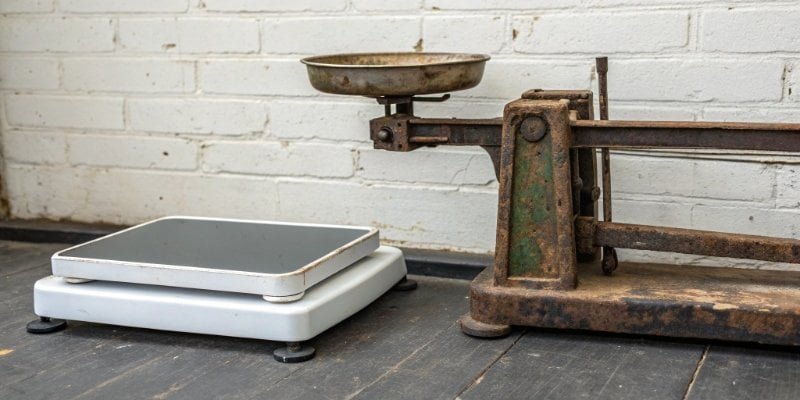
A well-maintained industrial scale can last for many years. But all equipment has a lifespan. The decision to replace should be based on performance7 and economics, not just age. For example, a customer recently came to us because their old scale needed a third major repair in a year. The total cost of the repairs was approaching the price of a brand-new, modern scale from us. A new scale comes with our 12-month after-sales service guarantee, providing peace of mind and predictable costs. It was an easy decision for them to make the switch.
Key Signs It's Time for a New Scale
Look for these clear indicators:
- Constant Repairs: If the scale is breaking down often, the total cost of ownership8 is too high. A new unit is a more reliable and often cheaper long-term investment.
- Failure to Hold Calibration: If you calibrate the scale and it quickly becomes inaccurate again, a core component is failing. This is a major red flag.
- Obsolete Technology: Your business is growing. You now need a scale that can send data to your ERP system or provide IoT tracking. If your old scale can't be upgraded, it's holding you back. This is why we specialize in custom IoT weighing solutions.
- Visible Damage: Severe corrosion, a bent frame, or unfixable display issues can compromise safety and accuracy.
What are the three types of calibration?
You know calibration is important. But did you know there are different types? Using the wrong method might not meet your quality standards or satisfy legal requirements.
The three main types of calibration are external, internal, and automatic. External calibration uses certified test weights. Internal uses a motor-driven weight inside the scale. Automatic is a self-activating internal calibration based on environmental changes.
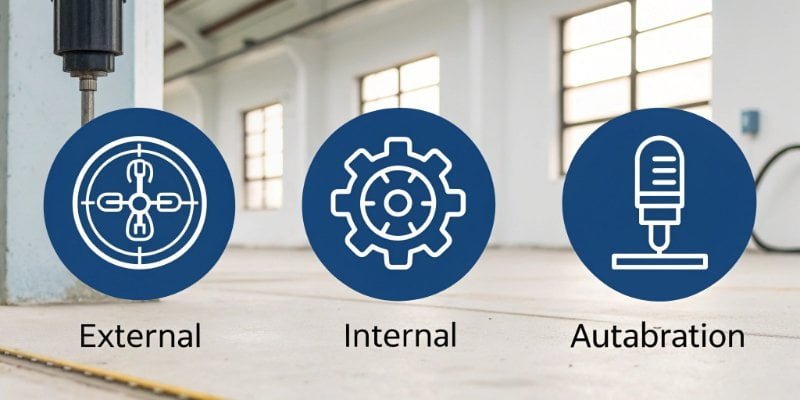
Choosing the right type depends on your scale, your application, and your industry's rules. Not all scales offer all three types. As an OEM/ODM manufacturer, we design scales with the right calibration features for our clients' target markets. High-precision lab scales, for instance, nearly always have internal or automatic calibration because even a small temperature change can affect their accuracy. In contrast, a heavy-duty floor scale in a warehouse is almost always calibrated externally. It's about matching the technology9 to the job.
Breaking Down Calibration Types
Here is a look at each type and where it's best used.
| Calibration Type | Description | Best For |
|---|---|---|
| External | A technician uses certified, traceable weights to manually test and adjust the scale. | Industrial, commercial, and legal-for-trade applications. It is the most common and provides a calibration certificate for audit10s. |
| Internal | The scale contains a built-in weight. The user presses a button, and the scale uses this mass to adjust itself. | Quick, convenient accuracy checks for precision scales11 in labs or light industry. Good for frequent verification. |
| Automatic | The scale monitors itself and automatically performs an internal calibration when it detects a significant change. | High-end analytical balances where maximum accuracy is critical and user effort must be minimized. |
Conclusion
In short, routine calibration keeps your scale accurate and compliant. Replacement is for scales that are broken, outdated, or too costly to maintain. Making the right choice protects your profits.
-
Learn how to keep your equipment running efficiently and avoid costly replacements. ↩
-
Understanding calibration is crucial for maintaining accuracy and compliance in industrial operations. ↩
-
Understanding the difference can prevent unnecessary costs and downtime. ↩
-
A thorough calibration history can help identify issues before they become costly problems. ↩
-
Learn about the critical component that affects the performance of your scales. ↩
-
Accuracy is vital for product quality and compliance; explore how it affects your business. ↩
-
Explore the link between scale performance and overall production efficiency. ↩
-
Understanding ownership costs can help in making informed purchasing decisions. ↩
-
Stay updated on the latest technology trends that can enhance your weighing processes. ↩
-
Calibration certification is crucial for compliance and can simplify audit processes. ↩
-
Discover the importance of precision scales in various industrial applications. ↩


Comments (0)