
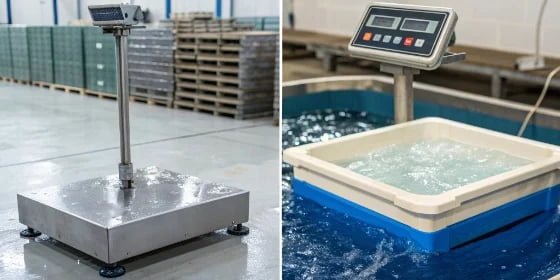
Your "waterproof" scale just failed after a washdown, halting production. Now you face costly downtime and repairs, feeling misled. Understanding the true meaning of these terms protects your investment.
In industrial scales, "waterproof" is a graded term, while "watertight" signifies a higher, specific level of protection. A watertight scale, typically with an IP67 or IP68 rating, is sealed to prevent water ingress even during immersion, unlike many "waterproof" models that only resist splashes. A truly watertight industrial scale is essential for most washdown environments to avoid costly damage.
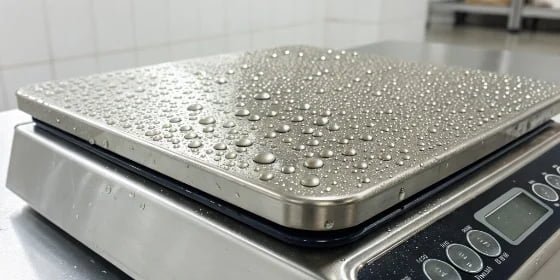
You've probably seen these terms used as if they mean the same thing. They don't. This difference is critical for the survival of your equipment and the efficiency of your operations. As a manufacturer, I've seen firsthand how this simple misunderstanding can lead to expensive failures. So, how can you be sure you're getting the protection you actually paid for? Let's break down exactly what you need to look for.
What is the difference between waterproof and watertight?
Are you confused by the "waterproof" and "watertight" labels on industrial scales? This confusion can lead to expensive damage when a scale that isn't properly sealed gets wet.
"Waterproof" is a general claim that a scale can resist water. "Watertight" is a more specific and higher level of protection, implying a seal so effective that water cannot enter under defined conditions of pressure and immersion. For industrial use, "watertight" means a high IP rating.

Think of it like clothing. A "waterproof" jacket might keep you dry in a light shower, but you wouldn't go swimming in it. A "watertight" drysuit, on the other hand, is designed for complete immersion. The same principle applies to industrial scales. A scale might have a "waterproof" indicator, but that says nothing about the load cell1 or the platform connections, which are often the first points of failure. This is why we rely on a standardized system called Ingress Protection2, or IP ratings. A truly watertight scale will have a high rating, like IP673 or IP684, clearly stated. This rating is a guarantee, not a marketing term.
Understanding the Terms with IP Ratings
| Term | General Meaning | Common IP Rating | Best Use Case |
|---|---|---|---|
| Water-Resistant | Can resist light splashes. | IPX4, IPX5 | Dry areas with a risk of accidental spills. |
| Waterproof | Can handle directed water jets. | IPX6, IP67 | Environments with regular washdowns. |
| Watertight | Can be submerged in water. | IP67, IP68, IP69K | Harch environments with high-pressure hosing5 or full immersion. |
Is water-resistant the same as waterproof?
Thinking "water-resistant" and "waterproof" mean the same thing is a common mistake. This assumption can destroy expensive equipment when used in a wet factory or processing plant.
No, they are not the same. "Water-resistant" means the scale can hold off water penetration to a small degree, such as light splashes or mist. "Waterproof" implies a much more robust level of protection, meaning it can withstand powerful jets of water or even full immersion.
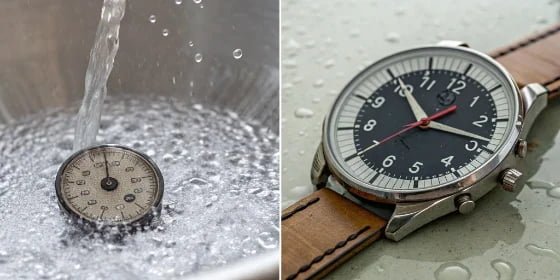
There is a clear hierarchy of protection, and understanding it is key to choosing the right equipment.
Understanding the Protection Hierarchy
Water-resistant is the lowest level of protection. It usually means the electronic components have a light coating that repels water, but there are no real seals to block it. It’s designed to survive an accidental splash, nothing more.
Waterproof is the next step up. This involves much better construction, including basic seals around the housing and display to block water entry from direct sprays.
The Role of IP Ratings
This hierarchy is officially defined by IP ratings. The second digit of an IP rating tells you its level of liquid protection. For example, an IP65-rated scale is protected against low-pressure water jets from any direction. An IP67-rated scale can be fully submerged in up to 1 meter of water for 30 minutes. I once had a client in the fish processing industry who bought an "IP65 waterproof" scale. Their cleaning process involved soaking the weighing platform overnight. The scale failed within a week. They didn't realize IP65 doesn't cover immersion. We helped them select a fully stainless steel, IP68-rated model, and they have used it for years without a single issue. It's about matching the rating to the reality of your work environment.
What makes something watertight?
Do you wonder what actually stops water from getting inside and destroying your scale? It’s not just a claim. Without knowing the key features, you risk choosing a scale that looks tough but will fail under pressure.
A truly watertight scale is all about its physical construction. Key elements include rubber or silicone gaskets, tight-fitting O-rings, and completely sealed enclosures for sensitive parts like the load cell and indicator. The quality of these components and the precision of the assembly are what make a scale watertight.
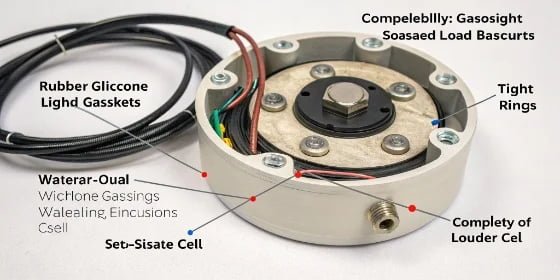
Achieving a watertight seal is a result of careful engineering from the ground up. It's more than just a tight-fitting case.
Key Sealing Components
The first line of defense is gaskets6 and O-rings7. These are typically made from durable silicone or rubber and are placed in every joint or opening, like the seam where two halves of the indicator casing meet. They create a physical barrier that water can't get past. The load cell, the heart of the scale, must also be in its own hermetically sealed enclosure, often welded shut.
Beyond the Seals: Construction and Materials
Another critical weak point is where cables enter the housing. A watertight scale uses special waterproof cable glands. These fittings compress tightly around the cable, forming a seal that prevents water from wicking along the wire and into the electronics. The choice of material is also vital. We use 304 or 316 stainless steel8 for our watertight scales because it resists rust and corrosion. A corroded housing can compromise the integrity of the seals over time. At our factory, every scale advertised as watertight undergoes pressure testing9. We check every single seal and connector to ensure it can withstand the harsh conditions our customers face.
Which is better waterproof or water-resistant?
Deciding between "waterproof" and "water-resistant"? Choosing the wrong one for your needs means you either overspend on features you don't need or face equipment failure from water damage.
For almost all industrial settings, "waterproof" is better than "water-resistant." But the best choice depends on your specific work environment. If a scale is in a dry area with only a slight chance of spills, a water-resistant model might be enough. For any wet process or regular cleaning, a waterproof scale is necessary.
The "better" option is the one that is both cost-effective10 and completely reliable for your specific application. Over-specifying protection is a waste of your budget, while under-specifying is a guarantee of future problems and downtime. As a purchasing manager or technical director, your goal is to get the best return on your investment.
Matching Protection to Your Environment
Here’s a simple guide to help you decide.
| Environment | Primary Risk | Recommended Protection | Why It Matters |
|---|---|---|---|
| Dry Warehouse / Logistics | Dust, occasional light splash | Water-Resistant (IP54) | Protects from dust and minor accidents at a lower cost. |
| Food Preparation / Kitchen | Frequent spills, light cleaning | Waterproof (IP65/IP66) | Handles wipe-downs and low-pressure water sprays without damage. |
| Meat & Fish Processing | Daily high-pressure hosing | Watertight (IP67/IP68) | Must survive intense, daily cleaning and potential immersion. |
| Chemical or Pharmaceutical | Corrosive liquids, sterile washdowns | Watertight (IP68/IP69K) | Needs maximum defense against both liquid ingress and material corrosion. |
You don't always need the most expensive, highest-rated scale available. You need the right scale. This is where our expertise comes in. We focus on providing a weighing solution that is perfectly tailored to your operational needs and budget, ensuring you get performance and reliability without overpaying.
Conclusion
Understanding watertight versus waterproof isn't just about semantics. It's about matching the correct IP-rated scale to your specific environment to ensure reliability and protect your valuable investment.
- Learn about the role of load cells in scales and why their protection is vital for accurate measurements. ↩
- Explore the Ingress Protection system to better understand how it classifies equipment against water and dust. ↩
- Learn about the IP67 rating and its significance in ensuring your scale's durability in wet environments. ↩
- Find out how an IP68 rating guarantees protection against water ingress, crucial for your operations. ↩
- Learn about high-pressure hosing and its implications for choosing the right scale for your cleaning processes. ↩
- Discover how gaskets contribute to the watertight integrity of industrial scales and prevent water damage. ↩
- Explore the importance of O-rings in creating seals that protect sensitive components from water. ↩
- Explore the differences between these stainless steel types to choose the best material for your scales. ↩
- Learn about pressure testing and its role in ensuring the reliability of watertight scales. ↩
- Learn how to select cost-effective scales that meet your needs without compromising on quality. ↩


Comments (0)