
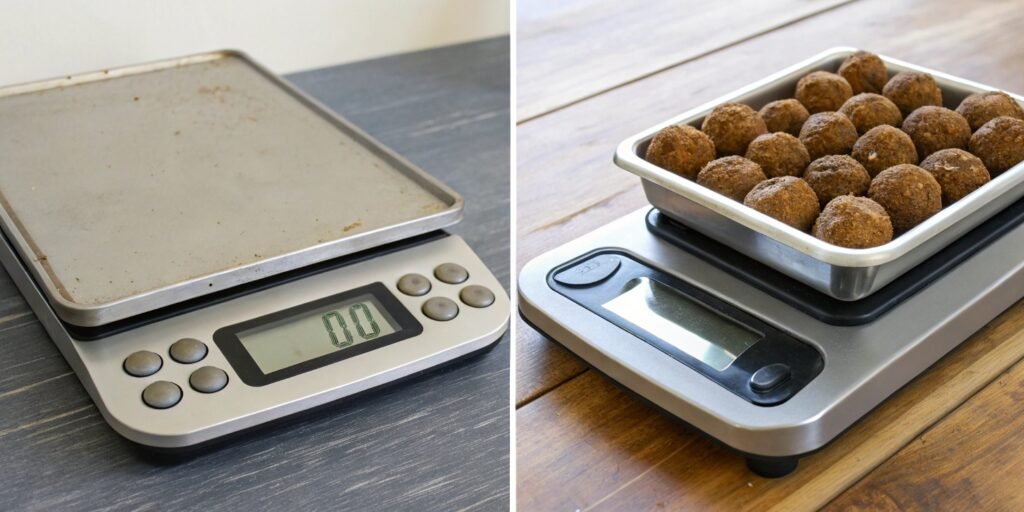
Tired of slow, manual counts of small parts? These frustrating errors can lead to costly inventory and shipping mistakes. A counting scale might just be the solution you need.
A counting scale uses the weight of a sample to calculate the total quantity of identical items, while a regular digital scale only displays the total weight. The key differences are the counting function, a higher internal resolution for accuracy, and a three-window display for weight, single-piece weight, and quantity.
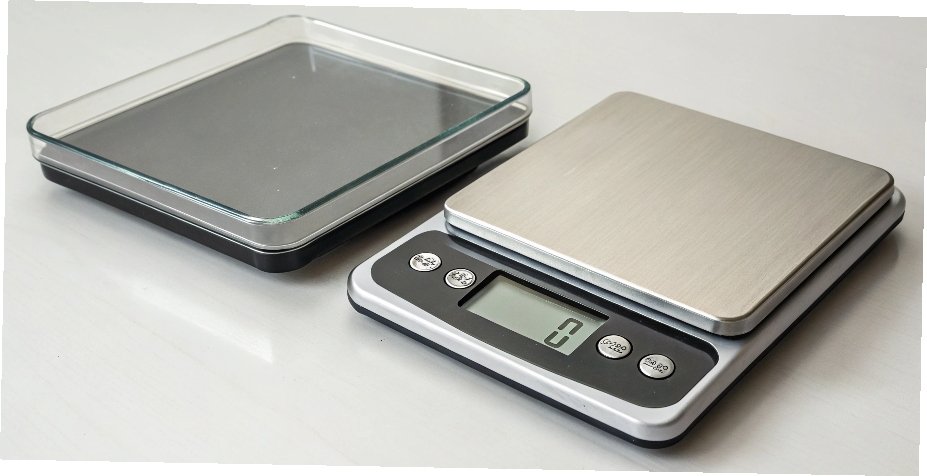
You see the basic difference now. But that's just the start. When it comes to your specific needs—your tiny screws, your valuable components—the details are what really matter. You need to know if this technology can truly handle the precision your business demands. Let's dive deeper into the questions that purchasing managers and technical directors like you ask me every day.
If the parts I need to count are very light and not completely uniform in weight, can a counting scale still be accurate? How big can the error be?
Are you worried that tiny weight variations in your parts will make a counting scale useless? Inaccurate counts lead directly to shipping errors and can damage your company's reputation.
Yes, a counting scale can still be highly accurate, but you must understand the potential for error. If the weight variation between individual parts is over 5%, errors can accumulate. In this case, the total count could be off by ±3%, depending on the batch size.
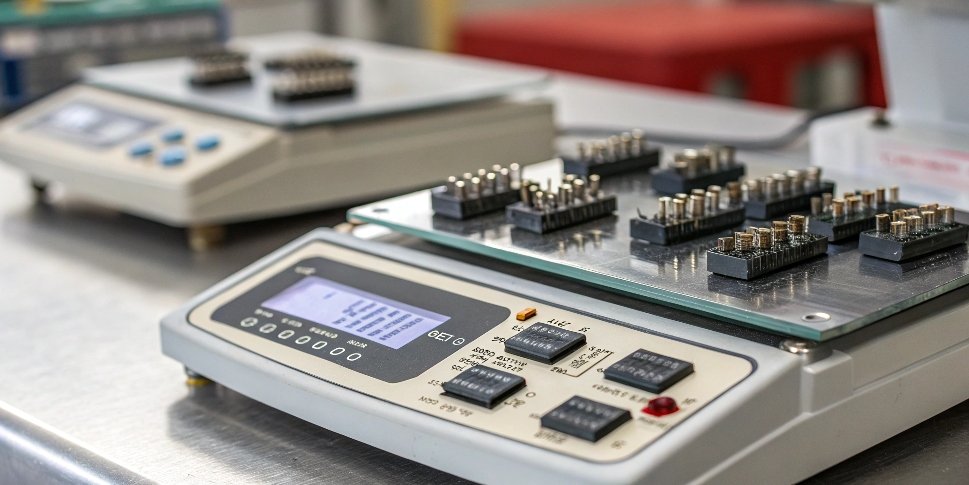
The accuracy of a counting scale1 with non-uniform items depends on two main things: the parts themselves and the environment. I always tell my clients to first understand the variation in their inventory. It's a concept we call the Coefficient of Variation2, or CV. If the CV of your parts is less than 1%, you're in great shape.
Understanding Error Sources
Let's break down where errors come from.
- Single-Piece Weight Variation: This is the biggest factor. Imagine you're counting 1,000 screws. If you establish your sample with a few slightly heavier screws, the scale will undercount the total batch. If your sample uses lighter screws, it will overcount. The more parts you count, the more this small error can grow.
- Environmental Factors: Counting scales are sensitive. Vibrations from nearby machinery or even strong air currents from a ventilation system can affect the load cell3. This can introduce a small error, typically between ±0.5% and ±2%.
Here's a simple way to think about it:
| Part Weight Variation | Recommended Action | Potential Error |
|---|---|---|
| Less than 3% | Standard counting scale is suitable. | Minimal |
| 3% to 5% | Use a scale with an Automatic Counting Accuracy Improvement4 (ACAI) feature. | Low |
| More than 5% | Weigh the total batch and divide by the average piece weight. Or pre-sort the parts. | High |
For many electronic components, the variation is usually low enough for a high-quality counting scale to work perfectly.
How do I choose the right counting scale for my specific products (e.g., screws, pills, electronic components)?
Choosing a scale can feel overwhelming with all the options available. Making the wrong choice means you've wasted money and are still stuck with the same counting frustrations as before.
To choose the right scale, first match its readability to your lightest part. The scale should be able to detect a weight at least 10 times smaller than a single part. Then, ensure the capacity can handle your largest batches and look for helpful features like memory storage.

I've helped hundreds of businesses select the right equipment. The process always comes down to a few key questions about your specific products and workflow. Thinking through these points will lead you to the perfect choice without the guesswork.
1. Match Accuracy to Your Parts
The most important factor is the scale's resolution5, often called readability. This is the smallest change in weight the scale can detect and display. A simple rule I recommend is the "Rule of 10." If you are counting screws that each weigh 0.1g, you need a scale with a readability of at least 0.01g. This ensures the scale is sensitive enough to establish a very precise average piece weight from your sample. For expensive electronic components with a CV of around 0.5%, a scale with 0.01g readability is essential.
2. Determine the Right Capacity
Next, think about the total weight of the largest batch you will ever need to count. If a full box of your screws weighs 10 kg, you need a scale with a capacity of at least 10 kg, preferably a bit more, like 15 kg, to be safe. Also, check the platform size. It needs to be large enough to hold your container or box without overhang, which can cause inaccurate readings.
3. Consider Advanced Features
Modern counting scales have features that can make your life much easier. A key one is the Automatic Counting Accuracy Improvement (ACAI) function. This feature refines the average piece weight as more parts are added to the scale, which is perfect for items with slight weight variations. Other useful features include memory presets for commonly counted items and connectivity options to link with your inventory software.
How many samples should be used for sample weighing—10, 50, or 100?
You have your scale, but what is the magic number for your sample? Using the wrong sample size can lead to inaccurate counts for the entire batch, completely defeating the purpose of buying the scale.
A larger sample size is almost always better. For small, lightweight, or high-value parts, always use 100 pieces for your sample. For heavier, more uniform parts, 50 is a reliable number. A 10-piece sample should only be used for quick, non-critical checks.
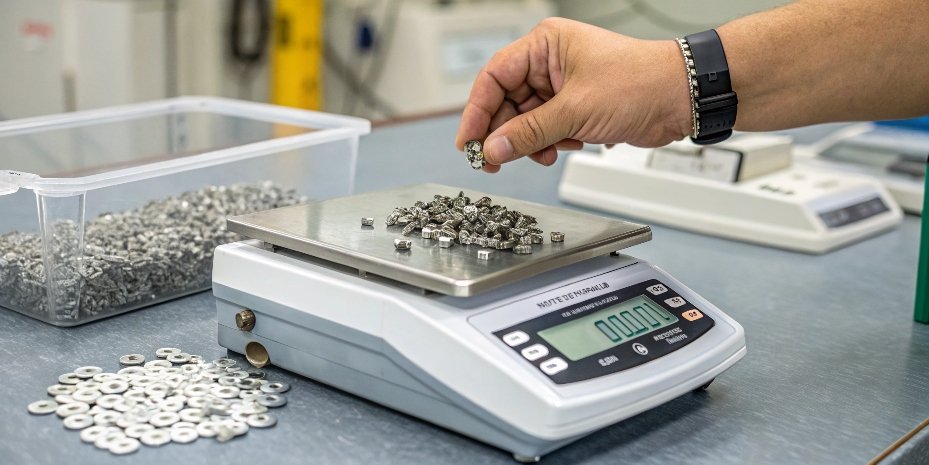
Why does the sample size6 matter so much? It's all about creating a better average. A larger sample smooths out the tiny weight differences between individual pieces. If you only use 10 pieces, and one of them happens to be unusually heavy or light, it will skew the average and throw off your entire count. A 100-piece sample minimizes the impact of any single outlier.
I remember a client who managed inventory for a large electronics assembly line. They were using a 10-piece sample and constantly fighting with discrepancies. I convinced them to switch to a 100-piece sample. It took an extra minute to set up, but their inventory errors dropped to almost zero within a month.
When to Use Which Sample Size
Here’s a quick guide to help you decide.
- 10 Samples: Use this only for quick spot-checks or for parts that are large, heavy, and very uniform in weight. I do not recommend this for inventory management.
- 50 Samples: This is a good all-around number for many common parts like standard nuts and bolts. It provides a solid balance of accuracy and speed.
- 100 Samples: This is the professional standard. You should always use 100 samples when counting small, lightweight components, pills, or any high-value item where count accuracy is critical. It gives the scale the best possible data to work with.
By taking the time to create a larger, more accurate sample, you ensure that every count that follows is reliable.
How often does a counting scale need to be calibrated? Can I calibrate it myself?
You've invested in a precision instrument, but how do you make sure it stays precise? An uncalibrated scale is just a guesser, and its inaccurate readings could be costing you money.
For best results, calibrate your counting scale at least quarterly (every 3 months). It must also be recalibrated anytime it is moved or serviced. Yes, you can easily perform the calibration yourself using a set of certified standard weights and the instructions in the user manual.
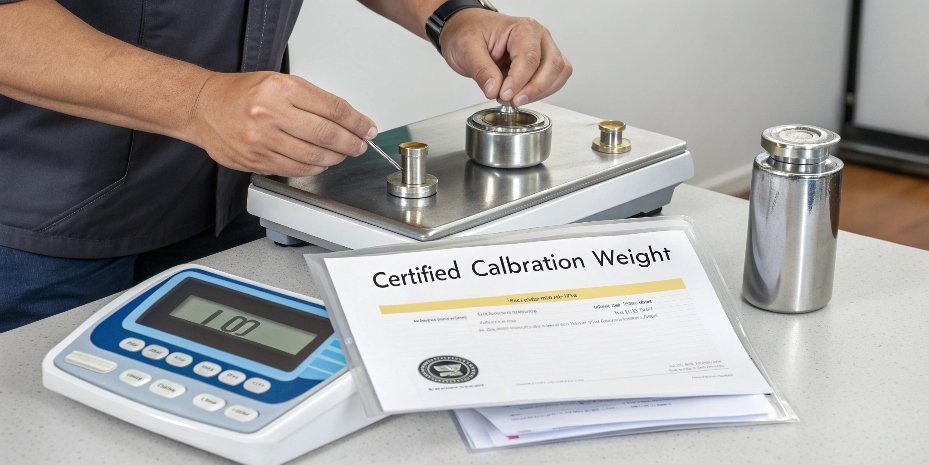
Calibration is not a "set it and forget it" task. Think of it like tuning a musical instrument. Over time, factors like temperature changes, mechanical stress, and general wear can cause a scale to drift from its true reading. Regular calibration resets it back to perfect accuracy. This simple maintenance task is one of the most important things you can do to protect your investment and ensure your inventory data is always trustworthy.
Your Calibration Schedule
A quarterly schedule is a great starting point for most industrial environments. If the scale is used in a harsh environment with a lot of vibrations or temperature swings, you might want to consider calibrating it monthly. And remember the absolute rules: always calibrate a brand-new scale before its first use and recalibrate it after any repairs or if you move it to a new location, even just across the room.
How to Calibrate Yourself
Calibrating a modern scale is a straightforward process. Most of our Weigherps models use a simple three-point calibration method.
- Zero Point: You start with nothing on the platform and set the zero point.
- Mid Point: You place a standard weight, often 20% of the scale's capacity, on the platform.
- Full Point: You place a weight equal to the full capacity of the scale on the platform.
The most important thing is to use certified standard weights. Don't grab an object that you think weighs 1kg. Calibration weights are manufactured to extremely precise tolerances. You can purchase these from us or any reputable metrology supplier. They are a necessary investment to guarantee the accuracy of your scale. The entire process only takes a few minutes and is clearly explained in your scale's user manual.
Conclusion
A counting scale offers precision for inventory far beyond a standard scale. Choosing the right one, using a proper sample, and regular calibration will ensure accuracy and boost your efficiency.
-
Explore this link to understand how counting scales can revolutionize your inventory management. ↩
-
Understand the Coefficient of Variation and its significance in ensuring accurate counts. ↩
-
Discover the technology behind load cells and their importance in counting scales. ↩
-
Find out how ACAI can enhance the accuracy of your counting process. ↩
-
Understand the concept of resolution and its role in selecting the right counting scale. ↩
-
Explore the importance of sample size in achieving reliable counting results. ↩



[…] a failure of accuracy. All your precise-looking data is fundamentally wrong. This can throw off inventory counts3, batching formulas, and quality control4 checks. I often use the analogy of a car's speedometer. A […]