

Choosing the wrong precision instrument is a costly mistake. Don't let confusing specs lead to bad data. Understanding the core difference between balances ensures you get exactly what you need.
The main difference is precision and design. Analytical balances measure tiny masses to 0.1mg or better inside a draft shield for maximum accuracy. Top-loading balances are less precise but faster, handling larger loads on an open pan for general-purpose weighing.
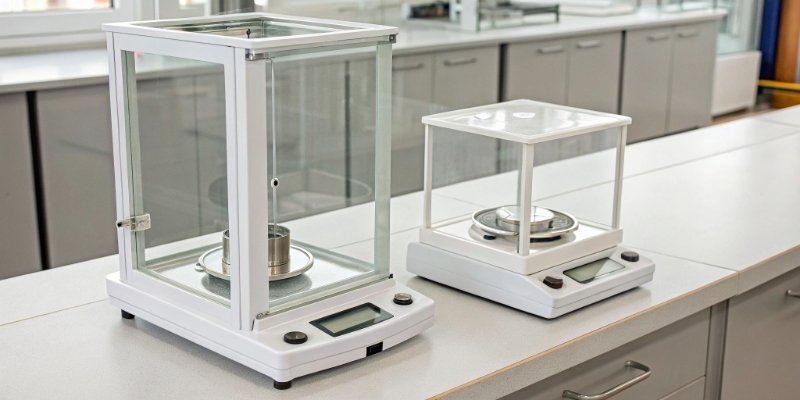
Now that you know the fundamental difference, you might wonder which one is right for your specific application. The answer isn't always obvious. In my 18 years of manufacturing industrial scales, I’ve seen companies waste thousands by overspending on unnecessary precision or, worse, getting inaccurate results with the wrong tool. Let's dive deeper into the specifics so you can choose with complete confidence and protect your investment.
What is the difference between top loading balance and analytical balance?
Struggling to decide between these two common balances? The technical jargon can be confusing, leading to a purchase you might regret. Let's break it down into a simple comparison.
The key difference is in their readability, capacity, and construction. Analytical balances provide extremely high readability (e.g., 0.0001 g) in a specialized draft-shield enclosure. Top-loading balances offer versatility with good readability (e.g., 0.01 g) and an open weighing pan for speed.
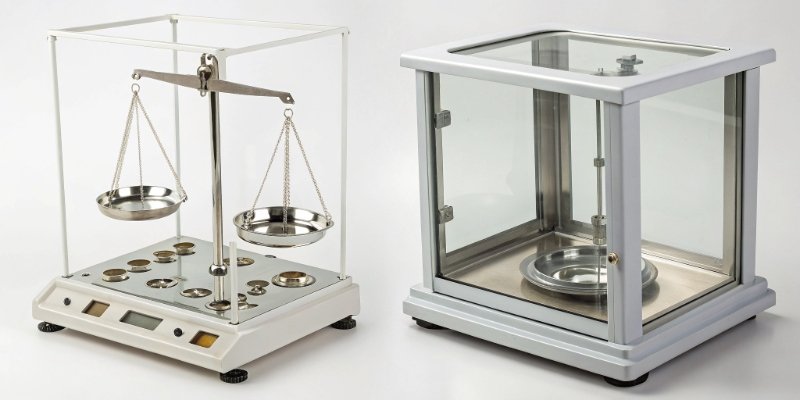
To make this crystal clear, let’s look at the features side-by-side. As a manufacturer, these are the exact specifications we build our products around, because they define the instrument's entire purpose. Each feature directly impacts how and where you can use the balance effectively. Understanding them will guide you to the perfect choice for your lab or production line.
Feature-by-Feature Breakdown
Making the right choice comes down to matching the instrument's features to your daily tasks. A feature that is critical for one user might be completely unnecessary for another.
| Feature | Analytical Balance | Top-Loading Balance |
|---|---|---|
| Readability | Extremely High (0.1mg to 0.001mg) | Good to High (1g to 1mg) |
| Design | Enclosed in a draft shield1 | Open weighing pan |
| Capacity | Low (typically < 300g) | Higher (up to several kilograms) |
| Use Case | Quantitative analysis, formulation | Sample prep, quality control2 |
| Cost | Higher | Lower |
A draft shield on an analytical balance isn't just for show. It prevents tiny air currents, dust, or even the operator's breath from affecting the measurement. I once visited a client whose sensitive chemical formulations were inconsistent. The problem was they were using a top-loader in a room with a strong ventilation system. The air movement was enough to throw their measurements off. Switching to an analytical balance solved the issue instantly.
What is the difference between analytical balance and normal balance?
You hear "balance" and "scale" used all the time. But using a "normal" balance for a task requiring an analytical one is like using a hammer for surgery. It’s the wrong tool.
An analytical balance is a highly specialized lab instrument for measuring mass with sub-milligram precision. A "normal" balance, like a bench or shipping scale, is a general-purpose tool for routine weighing with much lower precision, measuring in grams or kilograms.

The difference goes far beyond just the numbers on the display. It's rooted in the technology inside the instrument and the environment it's designed for. When we design weighing systems at Weigherps, the internal mechanics for an analytical system are worlds apart from those of a standard bench scale. Let's explore why one is a high-tech instrument and the other is a rugged workhorse.
Technology, Purpose, and Cost
The distinction between these two types of balances isn't just minor—it's fundamental. It stems from the internal technology, which dictates their precision, application, and price.
The Technology Inside
An analytical balance typically uses an electromagnetic force restoration3 (EMFR) mechanism. In simple terms, it uses an electromagnet to levitate the weighing pan and counteract the weight of the sample. The amount of electrical current needed to maintain this balance is directly proportional to the mass, allowing for incredibly precise measurements. A "normal" balance often uses a simpler strain gauge load cell4. This cell bends slightly under weight, and the change in electrical resistance is measured. It's robust and cost-effective, but far less sensitive.
Precision and Application
This technological gap creates a vast difference in application.
- Analytical Balance: Think of it as a surgical scalpel. It's used for tasks where the smallest error matters, like pharmaceutical formulation, chemical analysis, or density determination.
- Normal Balance: This is your utility knife. It's perfect for portion control, quality checks on a production line, or weighing packages for shipping. It values durability and speed over pinpoint accuracy.
Choosing the right one protects the integrity of your work and your budget.
What is a top loader balance?
Need to weigh samples quickly and reliably, but don't need the extreme precision of an analytical balance? You might feel stuck between two extremes. The top-loader is your solution right in the middle.
A top-loader balance, or top-loading balance, is a versatile digital scale with an unenclosed weighing pan on top. It offers a great balance of speed and precision (typically 0.1g to 0.001g), making it a workhorse for many routine laboratory and industrial tasks.

The name "top-loader" is descriptive; you simply load your sample onto the pan from the top. There are no doors or chambers to open, which makes the weighing process incredibly fast. This design makes it the go-to instrument for a huge range of applications where efficiency is just as important as accuracy. We build our top-loaders to be robust because we know they're often used in busy environments, from university chemistry labs to industrial quality control stations.
The Workhorse of the Lab and Factory
If the analytical balance is the specialist surgeon, the top-loading balance is the skilled general practitioner. It handles a wide variety of common but important tasks with efficiency and reliability.
Common Applications
Top-loaders are indispensable for tasks that bridge the gap between rough weighing and high-precision analysis. You'll find them being used for:
- Sample Preparation: Weighing out bulk materials before they are processed for more sensitive analysis.
- Quality Control: Performing quick spot-checks on manufactured parts or products to ensure they meet weight specifications.
- Formulation and Compounding: Mixing ingredients for cosmetics, supplements, or industrial compounds where precision to the milligram is sufficient.
- Educational Use: In schools and universities, they are perfect for teaching students the principles of weighing without the high cost and delicacy of an analytical balance.
When our clients need a solution for these kinds of tasks, a top-loader is almost always the recommendation. It provides the necessary accuracy without the slower workflow and higher cost of an analytical model, delivering fantastic cost-effectiveness5.
What is the difference between analytical balance and weighing balance?
The terms can be confusing, and this confusion can be costly. If you think an "analytical balance" is just another name for any "weighing balance," you might make a major purchasing error.
A "weighing balance" is the broad, general term for any device that measures mass. An analytical balance is a very specific type of weighing balance, defined by its ultra-high precision (0.1mg or better) and its enclosed design for sensitive measurements.

Think of it like vehicles. "Vehicle" is a general term. A "Formula 1 race car" is a very specific type of vehicle designed for one purpose: speed. You wouldn't use it to buy groceries. In my 18 years in this industry, the most important first step with any client is clarifying their exact needs to place them in the right category of instrument. All analytical balances6 are weighing balances, but very few weighing balances have the right to be called analytical.
A Family of Instruments
To clear up the confusion, it helps to see how these instruments relate to each other. "Weighing Balance" is the family name that covers a whole spectrum of devices, each with a different level of precision and purpose. Placing them in a hierarchy makes it easy to see where analytical and top-loading balances7 fit.
Here is a simplified breakdown of the weighing balance family, from most to least precise:
| Category | Typical Readability | Example Use Case |
|---|---|---|
| Analytical Balances | ≤ 0.1 mg | Testing drug purity, measuring trace elements. |
| (Includes Semi-Micro, Micro, etc.) | (e.g., 0.01 mg, 0.001 mg) | |
| Precision Balances | 1 mg to 1 g | Mixing formulas, quality control checks. |
| (Includes most Top-Loaders) | (e.g., 0.001 g, 0.01 g, 0.1 g) | |
| General Purpose Scales | > 1 g | Weighing ingredients, shipping packages. |
| (Includes Bench, Counting Scales) | (e.g., 1 g, 5 g, 10 g) |
As you can see, analytical and top-loading balances occupy the high-precision end of the spectrum. An analytical balance is simply a member of the weighing balance family with elite capabilities. Choosing the right one means identifying exactly where on this spectrum your needs lie. There's no sense in paying for an elite instrument when a reliable workhorse will do the job perfectly.
Conclusion
Analytical balances provide ultimate precision for sensitive work, while top-loaders offer speed for general tasks. Your specific application is the only factor that determines the right choice for your needs.
- Discover how a draft shield enhances measurement accuracy in analytical balances. ↩
- Understanding quality control processes can help ensure product consistency and reliability. ↩
- Explore the technology behind analytical balances for precise measurements. ↩
- Learn about strain gauge load cells and their applications in weighing instruments. ↩
- Understanding cost-effectiveness can help you make informed purchasing decisions. ↩
- Explore the applications of analytical balances to see how they can enhance your precision measurements. ↩
- Learn about top-loading balances and how they can improve efficiency in your weighing tasks. ↩



Comments (0)