
Choosing the right weighing technology can feel overwhelming. The wrong decision leads to inaccurate data and operational headaches. We are here to help you understand the key differences simply.
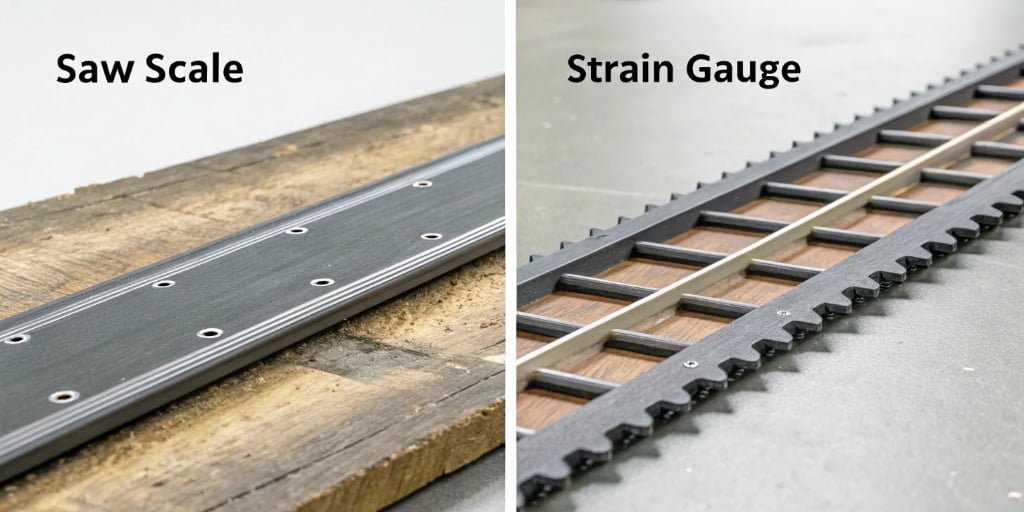
The main difference is how they sense weight. A strain gauge scale measures the physical stretching of a sensor. A SAW (Surface Acoustic Wave) scale measures a change in the frequency of a sound wave. This makes SAW scales much less sensitive to temperature changes and other environmental factors.
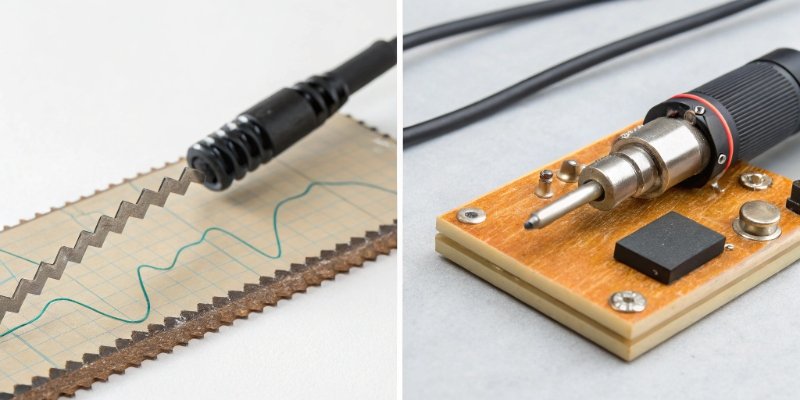
Understanding the fundamentals of weighing technology1 is crucial for making an informed decision. For 18 years, we have helped clients navigate these choices, ensuring they get the most reliable and cost-effective solution for their specific needs. Let's start by breaking down the most common technology first, the strain gauge, so you can see how it compares.
What is a strain gauge scale?
Are you wondering how most industrial scales work? Choosing a scale without knowing its core mechanism can be a risk. Strain gauge technology is the reliable foundation of modern weighing.
A strain gauge scale uses a sensor that measures how much a metal element, called a load cell, bends or stretches under weight. This physical change is converted into an electrical signal that tells you the object's weight. It is a proven and widely used technology.
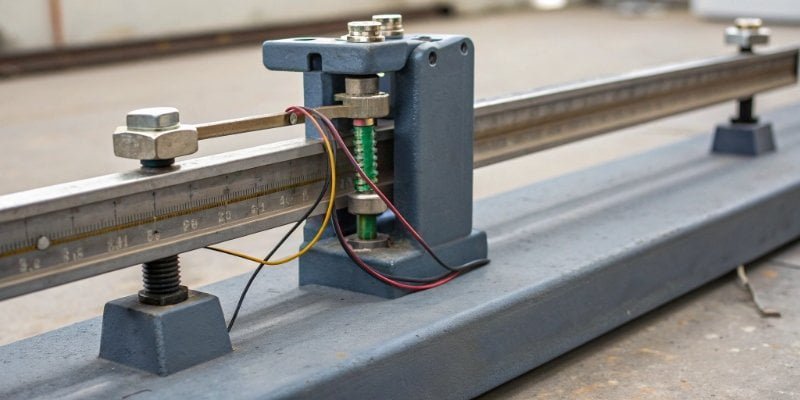
Let's dive deeper into how this works. Inside almost every standard electronic scale is a load cell2. We attach a very small, sensitive grid called a strain gauge to this load cell. When you put an item on the scale, its weight puts force on the load cell, causing it to bend by a microscopic amount. The strain gauge bends along with it. This stretching or compressing changes the electrical resistance of the strain gauge. The scale's electronics measure this change in resistance very precisely. A bigger change means more weight. This signal is then converted into the final weight reading you see on the display. It's a simple, direct, and effective method. This is why strain gauge scale3s have been the industry standard for decades. We have built thousands of custom systems based on this technology for clients worldwide.
| Component | Function |
|---|---|
| Load Cell | The core structure that bends under weight. |
| Strain Gauge | The sensor that detects the bend and changes resistance. |
| Electronics | Reads the resistance change and calculates the weight. |
What is a strain gauge used for?
You know what a strain gauge is. But where is it actually used? Using the wrong sensor for your application can lead to failure. Strain gauges are incredibly versatile and critical components.
Strain gauges are used almost everywhere precise force or weight measurement is needed. Their most common use is in industrial weighing scales. They are also vital in structural safety monitoring for bridges, automotive testing, aerospace engineering, and even in medical devices for pressure sensing.
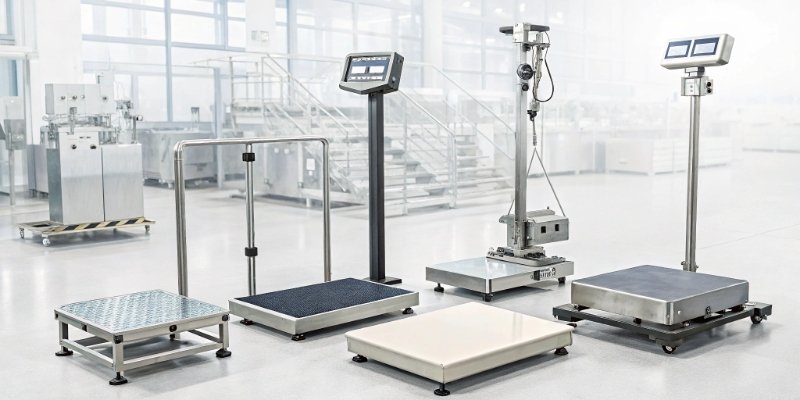
The applications are truly extensive, and we've seen them used in many innovative ways. In our field of industrial weighing, they are the heart of everything from small bench scales for parts counting to massive truck scales. Outside of weighing, engineers use them to ensure safety. For example, they place strain gauges on bridges and building beams to monitor stress and detect potential structural problems early. In the automotive industry, they are used during crash tests to measure the force of impact on different parts of a car. Aerospace engineers rely on them to test the stress on aircraft wings and fuselages during flight. Even in the medical world, you find them in infusion pumps and other devices that require precise force measurement4. Their reliability and accuracy make them a go-to solution for any application where understanding physical stress is critical.
Key Application Areas:
- Industrial Weighing: Bench scales, floor scales, hopper scales, truck scales.
- Structural Health Monitoring: Bridges, buildings, dams, tunnels.
- Automotive: Force measurement in testing, component stress analysis.
- Aerospace: Airframe testing, landing gear stress analysis.
- Medical Devices: Infusion pumps, robotic surgery equipment.
What is the difference between a strain gauge and a load cell?
People in the industry often use the terms "strain gauge" and "load cell" as if they are the same thing. This confusion can cause problems when specifying parts. It is important to know the difference.
A load cell is the entire mechanical body that is designed to bear a load. A strain gauge is the specific sensor that is attached to the load cell. The strain gauge is just one part of a complete load cell assembly. The load cell is the muscle and the strain gauge is the nerve.
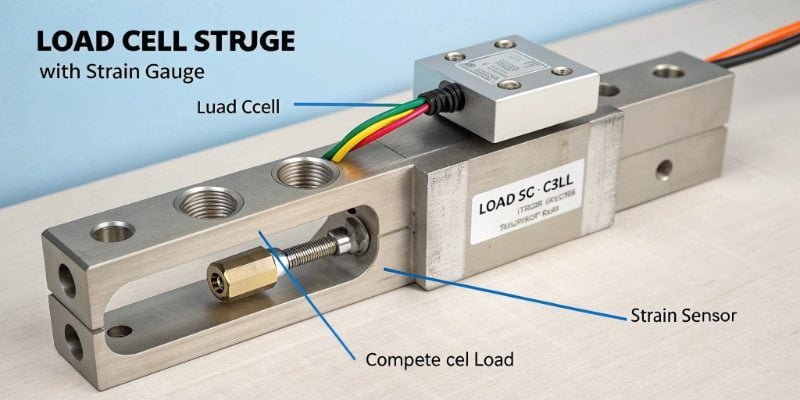
Think of it like this. A load cell is a carefully engineered piece of metal, usually aluminum or steel. We design its shape so that when a force is applied, it deforms in a very consistent and predictable way. The strain gauge itself is a thin, flexible resistor pattern printed on a backing. We then bond this strain gauge to a specific spot on the load cell where the deformation is most pronounced. So, the load cell's job is to bear the weight and deform predictably. The strain gauge's job is to sense that tiny deformation. You cannot have a strain-gauge-based scale without both. The load cell provides the physical structure, and the strain gauge provides the electrical measurement. At our factory, the process of pairing the right gauge with the right load cell body is a critical step in quality control5. It ensures every weighing system we ship is accurate and repeatable.
| Term | Description | Analogy |
|---|---|---|
| Load Cell | The complete structural component that bears the force. | A car tire |
| Strain Gauge | The electronic sensor on the load cell that measures the strain. | The air pressure sensor inside the tire |
What is the difference between a piezoelectric sensor and a strain gauge?
You need to measure a force, but which sensor is right? Choosing between a piezoelectric sensor and a strain gauge is a common challenge. They work on very different principles.
Strain gauges are best for measuring constant or slow-changing weights, known as static loads. Piezoelectric sensors are designed to measure rapid changes in force, like vibrations or impacts, which are called dynamic loads. They are not suitable for static weighing.
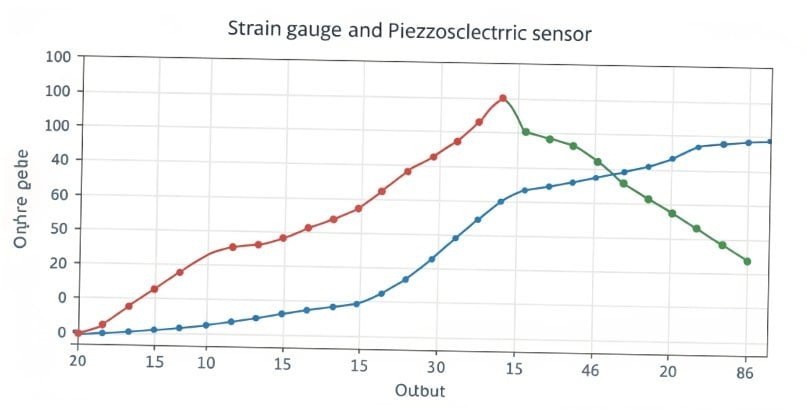
Let’s look at the core physics. A strain gauge works on the principle of piezoresistance6. When you stretch it, its electrical resistance changes. It needs a constant power source to work, and it can hold a reading for a very long time, which is perfect for weighing something on a scale. A piezoelectric sensor is different. It uses a special crystal that generates a small voltage when it is squeezed or stressed. The key thing is that it only generates a voltage when the force is changing. If you place a static weight on it, the initial voltage will quickly fade away to zero. This makes them great for things like accelerometers in your phone or as sensors for detecting machine vibrations. But it makes them completely unsuitable for accurately weighing a box. As a weighing expert, we always use technologies like strain gauge or SAW that can handle static loads7 with high stability.
| Feature | Strain Gauge | Piezoelectric Sensor |
|---|---|---|
| Principle | Resistance changes with physical strain. | Generates voltage when stress changes. |
| Best For | Static loads (e.g., weighing an object). | Dynamic loads (e.g., measuring vibration). |
| Power | Requires an external power source. | Self-generating (produces its own voltage). |
| Stability | Excellent for long-term, stable measurement. | Poor for static measurement; signal drifts away. |
Conclusion
The main difference is the sensing method. Strain gauges measure physical bending, while SAW scales measure frequency changes. This makes SAW technology more robust against temperature shifts and environmental interference.
- Explore this resource to understand various weighing technologies and their applications. ↩
- Discover the role of load cells in weighing systems and their importance in accuracy. ↩
- Learn about the mechanics of strain gauge scales and their reliability in weighing. ↩
- Discover various techniques for measuring force in different engineering fields. ↩
- Learn about the importance of quality control in ensuring accurate measurements. ↩
- Learn about the principle of piezoresistance and its applications in sensors. ↩
- Explore the differences between static and dynamic loads in measurement. ↩


Comments (0)