
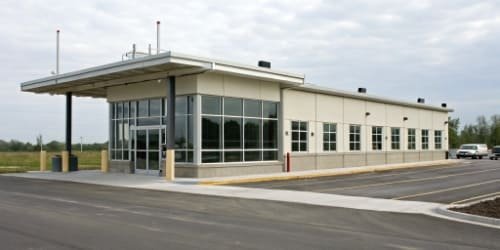
Struggling to understand what a "scale house" is? This isn't just a shed next to a scale. It's the nerve center of your entire weighing operation, and ignoring it is risky.
A scale house is a building that houses the controls, computer, software, and operator for an adjacent truck scale or weighbridge. It acts as the central command center for managing, recording, and verifying all weighing transactions, ensuring data accuracy and operational security.

But it's much more than just a building with a computer inside. I've spent nearly two decades helping clients set up weighing systems, and I've seen how a well-designed scale house1 transforms an operation. It's the brain that makes the whole system work. Let's look closer at why it's so important.
What Is the Purpose of a Scale House in Industrial Settings?
Trying to manage weighing data from multiple points? This scattershot approach leads to errors and costly delays. A scale house centralizes control, protecting your accuracy and your bottom line.
Its main purpose is to provide a secure, controlled environment for weighing operations. Here, an operator manages the entire process, from vehicle identification to data recording, ensuring every weight is accurate, traceable, and free from tampering. This protects both the buyer and the seller.
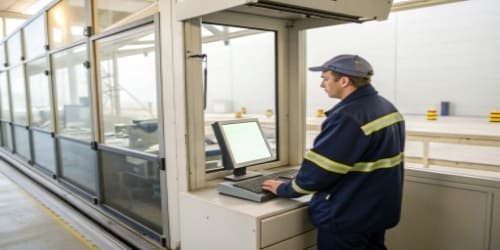
In my 19 years in this business, I've seen that the best way to think of a scale house is as a central command hub. It's not just a physical shelter for the operator and equipment. It's the concrete manifestation of your weighing system's brain. Inside, you'll find the core components that make everything run smoothly. This hub ensures data integrity, which is critical in industries like waste management, agriculture, or mining, where products are sold by weight. A proper scale house prevents fraud, protects expensive equipment from the elements, and gives your staff a safe, efficient place to work. It turns a simple scale into a professional, auditable transaction point.
Core Components of a Scale House
| Component | Function |
|---|---|
| Computer Terminal | Runs the weighing software2 and connects to the scale indicator. |
| Weighing Software | Records transactions, manages customer data, and generates reports. |
| Scale Indicator | Displays the weight reading from the scale platform. |
| Printer | Creates physical tickets for drivers and for records. |
| Operator | Manages the process, verifies information, and ensures smooth operation. |
How Does a Scale House Operate in Weighing Facilities?
Confused about the actual workflow inside a scale house? Not knowing the process makes it hard to see where your software fits. It's a simple, operator-driven data capture process.
A vehicle drives onto the scale, and an operator in the scale house uses a computer to manage the transaction. They identify the vehicle, capture one weight (gross or tare), and then a second weight after loading or unloading to calculate the net weight.
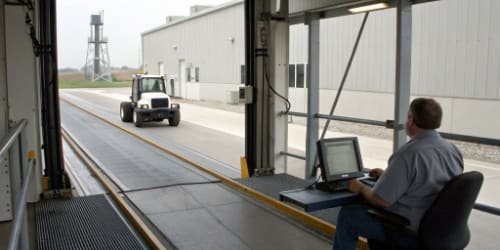
The daily operation is a straightforward, repeatable process. I've helped countless facilities streamline this. First, a truck arrives and positions itself on the weighbridge3. The driver communicates with the scale house operator. The operator uses specialized weighing software to pull up the truck's information or create a new entry. The first weight, or gross weight, is captured and saved. The truck then proceeds to load or unload its materials on-site. Afterward, it returns to the scale to be weighed again. This second weight is the tare weight. The software automatically subtracts one from the other to calculate the net weight of the material. Finally, the operator prints a transaction ticket4 for the driver and the company's records. This entire workflow is managed from the security and comfort of the scale house, creating a reliable data trail5 for every single load.
What Roles Do Scale Houses Play in Logistics and Transport?
Are you managing logistics without a central weigh point? Inaccurate load data can lead to huge fines and customer disputes. Scale houses are your first line of defense in logistics.
In logistics, scale houses act as critical checkpoints to ensure trucks are not overloaded, which is vital for road safety and legal compliance. They verify inbound and outbound shipment weights, providing accurate data for billing, inventory management, and chain of custody documentation.
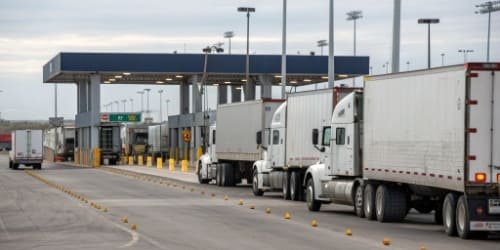
I always tell my clients in logistics6 that a scale house is their gatekeeper. It's the point where you verify everything coming in and going out. For transport companies, its most important role is preventing overloading7. Overloaded trucks are a massive safety hazard and can result in severe fines and even suspension of operating licenses. The scale house provides an official, certified weight ticket as proof of compliance. Beyond that, it's about business accuracy. When you buy or sell bulk materials, the weight is the transaction. The scale house provides the undisputed data for invoicing. It also helps manage inventory levels with precision. You know exactly how much raw material has arrived and how much finished product has shipped. This tight control is impossible to achieve without a central, reliable weighing operation managed from a scale house, making it a critical asset.
How Are Scale Houses Essential to Efficient Weight Management?
Are weighing processes creating bottlenecks in your operation? Slow truck processing times can grind your entire supply chain to a halt. Scale houses are designed to streamline this flow.
Scale houses are essential for efficiency because they centralize and speed up the entire weighing process. By having a dedicated operator and system, they reduce manual errors, accelerate vehicle throughput, and provide instant, accurate data for better operational planning and resource management.
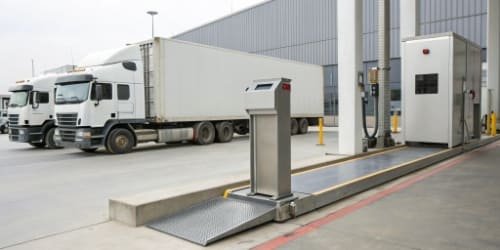
Efficiency is all about flow. In my experience, the biggest slowdowns happen when data isn't captured quickly and accurately. A scale house solves this problem. Instead of a driver getting out and manually writing things down, a professional operator handles the entire transaction in seconds. This dramatically increases truck turnaround time. Think about it: if you can process 20% more trucks per day, that's a huge boost to your facility's overall capacity. Modern scale houses can be even more efficient. We help clients integrate systems like RFID readers8, traffic lights, and unattended kiosks. This allows drivers to weigh themselves without an operator, running 24/7. The data is still sent to a central server, managed by your software, but the process becomes almost instantaneous. This is how a scale house evolves from a simple control room to a powerful tool for business optimization9.
Conclusion
In short, a scale house is much more than a building. It is the command center for your weighing operations, ensuring accuracy, compliance, and efficiency for your entire business.
-
Understanding the role of a scale house can enhance your weighing operations and ensure data accuracy. ↩
-
Learn about essential features of weighing software to improve your operational efficiency. ↩
-
Learn about weighbridges to understand their critical role in weight measurement and logistics. ↩
-
Explore the significance of transaction tickets in maintaining accurate records and compliance. ↩
-
Understanding data trails can help you maintain transparency and accountability in your operations. ↩
-
Understanding the role of scale houses in logistics can enhance your operational efficiency. ↩
-
Learn about the dangers of overloading to ensure safety and compliance in your transport operations. ↩
-
Explore how RFID technology can enhance the efficiency of your weighing operations. ↩
-
Discover how effective scale house management can lead to significant business improvements. ↩



Comments (0)