
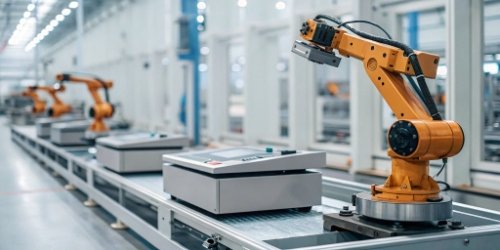
Your smart factory is blind without accurate data. You’ve invested in software but are still guessing about your physical operations. What if you’re making decisions based on bad information?
IoT scales, or intelligent scales, are the foundational data sources for Industry 4.0. They capture precise, real-time weight information directly from your production line and feed it into ERP and MES systems. This enables true automation, data-driven decisions, and a fully connected smart factory.
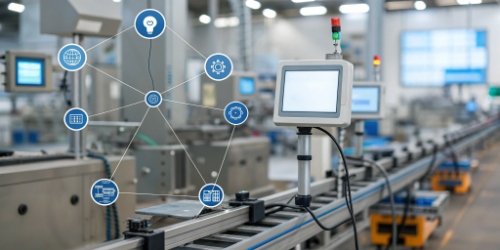
You hear a lot about Industry 4.01, the cloud, and big data. But these grand ideas fall apart without good data. The whole system starts with what happens on your factory floor. As a manufacturer of industrial scales for 19 years, I’ve seen this firsthand. We often call them "intelligent scales2," but I think "IoT scales3" is a more accurate term. They aren’t just smart; they are connected. They are the first link in the data chain, the very source of truth for your entire operation. Their role isn’t just to weigh things. It’s to translate physical material into digital information accurately and instantly. Let’s explore how these essential devices make Industry 4.0 a reality.
How Do Intelligent Scales Contribute to the Goals of Industry 4.0?
Your factory goals are clear: be more efficient and cut waste. But manual tracking creates errors and delays. This gap between your goals and your process costs you money every day.
Intelligent scales contribute by automating data collection at the source. They provide real-time weight data, which eliminates manual errors, enables precise inventory control, and supports automated quality checks. This data directly fuels the efficiency and connectivity goals of Industry 4.0.
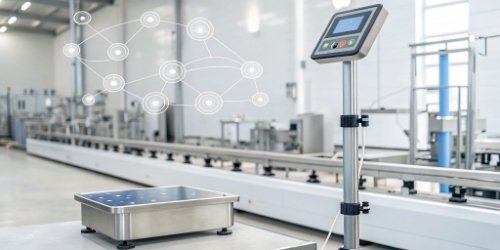
Intelligent scales, or IoT scales, are not just standalone devices. They are active participants in your factory’s digital ecosystem4. Their main job is to provide the raw, accurate data that smart systems need to function. Without this data, your advanced software is just guessing. I remember a client in the chemical industry who struggled with batch consistency. They implemented our IoT scales, which fed precise ingredient measurements directly into their production control system. The result was a dramatic improvement in product quality and a reduction in wasted materials. This is a perfect example of how these scales bridge the physical and digital worlds.
Here’s how they support key goals:
Key Contributions to Industry 4.0
| Industry 4.0 Goal | How IoT Scales Contribute |
|---|---|
| Automation | Scales trigger automated actions based on weight, like filling containers to a target level or sorting products by weight class. |
| Real-time Data | They provide instant updates on material consumption, production output, and inventory levels to your ERP or MES. |
| Traceability | By recording the exact weight of every component at each stage, scales create a detailed digital record for compliance5 and quality control. |
| Predictive Maintenance | Some advanced scales6 can monitor their own performance, sending alerts before a calibration issue or failure occurs. |
This seamless flow of information is the foundation of a truly smart factory.
What Impact Do Smart Weighing Systems Have on Industry 4.0 Implementation?
You are trying to implement Industry 4.0, but your processes are stuck in the past. Manual data entry is slow and full of errors, making your new smart systems unreliable and ineffective.
Smart weighing systems have a transformative impact. They replace manual, error-prone data entry with automated, highly accurate data streams. This shift makes your production data trustworthy, enabling reliable automation, reducing waste, and improving overall operational efficiency, which are central to Industry 4.0.
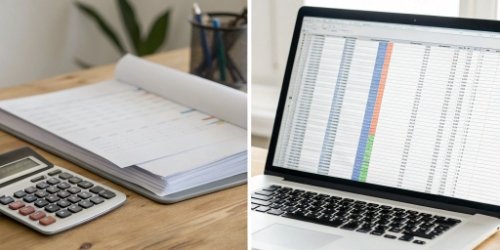
The impact is like night and day. Before, you had operators writing down numbers on a clipboard. Someone else would then enter those numbers into a computer. Every step was a chance for a mistake. With a smart weighing system, the data goes directly from the scale to your software in an instant. There are no typos, no missed entries, and no delays. This isn’t just a small improvement; it changes how you manage your entire operation. We worked with a logistics company that was losing money from inaccurate shipping weights. After integrating our IoT scales into their conveyor system, they got precise weights for every package automatically. This eliminated billing disputes and optimized their truck loading.
From Manual to Automated
The shift fundamentally changes your factory’s data culture7.
- Before: Data was old, often inaccurate, and hard to access. Decisions were based on history and guesswork.
- After: Data is live, precise, and available to any authorized system or person. Decisions are made proactively based on current reality.
This transition from reactive to proactive management is a core benefit. You can spot a problem with material flow or product quality now, not at the end of the day or week. This immediate feedback loop is what makes a factory "smart."
How Are Intelligent Scales Integrated into the Industry 4.0 Framework?
You have powerful software, but connecting it to your factory floor hardware is a major headache. Different protocols and custom integration work create delays and drive up costs for your projects.
Intelligent scales are designed for easy integration. They use standard communication protocols like MQTT, OPC-UA, and APIs to connect directly with MES, ERP, and SCADA systems. This creates a seamless link between the physical equipment and the enterprise software layer.
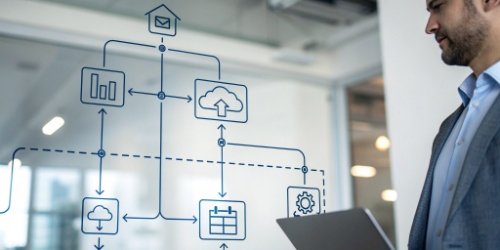
As a software provider, this is where it gets interesting for you. In the past, getting data from a scale was difficult. It often required proprietary hardware and complex coding. Today, our IoT scales are built like any other modern IT device. They speak the same language as your software. For your team, this means integration8 is faster and more reliable. You can use a common API to pull data, instead of writing custom drivers for each device. This approach turns the scale into a simple, reliable "data node" on the network. Your software can subscribe to data feeds from the scale just as it would from any other web service.
Layers of Integration
Thinking about it in layers helps clarify the process:
- Physical Layer: The IoT scale itself, with its load cells and sensors, captures the raw weight.
- Communication Layer: Built-in network interfaces (Ethernet, Wi-Fi) and protocols (TCP/IP, MQTT) transmit the data.
- Data Exchange Layer: A documented API or data structure (like JSON) makes the information easy for your software to understand and use.
- Application Layer: Your ERP, WMS, or custom software application receives the data and uses it to manage inventory, control production, or create reports.
This structured approach makes our scales a plug-and-play component for your Industry 4.0 solutions, not a barrier.
What Benefits Do Advanced Scales Offer in Facilitating Industry 4.0?
You know you need to upgrade, but you have to justify the cost. The benefits of new technology seem abstract, and it’s hard to prove a clear return on investment (ROI).
Advanced scales offer tangible benefits by increasing efficiency, cutting waste, and ensuring compliance. The ROI comes from reduced labor costs (no manual entry), lower material losses (precise measurement), and better product quality, directly boosting your profitability and competitiveness.
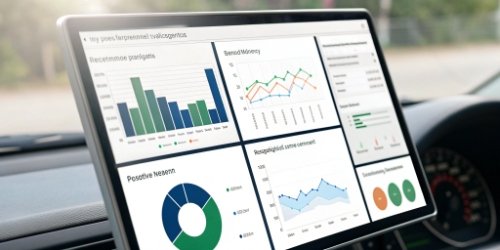
The benefits of IoT scales are not abstract. They appear directly on your financial reports. Every gram of raw material you save, every minute of labor you reallocate, and every product that doesn’t fail a quality check is real money. Think about compliance. In many industries, like food or pharmaceuticals, you must prove traceability9. Our IoT scales create an automatic, unchangeable digital log of every weight measurement. This makes audits simple and reduces regulatory risk. A client in the pre-packaged food business used our checkweighing scales to ensure every bag met the labeled weight. This not only prevented fines but also stopped them from giving away product by overfilling.
Key Tangible Benefits
These benefits directly support business growth and profitability.
| Benefit | Impact on Business |
|---|---|
| Reduced Material Waste | Precise control over ingredients and raw materials leads to lower purchasing costs and higher profit margins. |
| Increased Throughput | Automating weighing and data collection steps removes bottlenecks, allowing you to produce more in the same amount of time. |
| Improved Quality Control | Real-time monitoring ensures every product meets specifications, reducing rework, scrap, and customer complaints. |
| Enhanced Traceability | Automatic data logging simplifies regulatory compliance and provides a powerful tool for managing recalls if ever needed. |
These are not just features; they are tools to make your business more robust, efficient, and profitable.
Conclusion
Ultimately, IoT scales are the nervous system of the smart factory. They provide the essential, real-time data that brings the promise of Industry 4.0 to life on your production floor.
-
Discover the transformative effects of Industry 4.0 on manufacturing and how it drives innovation. ↩
-
Learn about the advantages of intelligent scales in enhancing efficiency and accuracy in manufacturing processes. ↩
-
Explore how IoT scales function as the backbone of smart factories, providing real-time data for better decision-making. ↩
-
Learn about the significance of a digital ecosystem in creating interconnected manufacturing processes. ↩
-
Explore the compliance landscape in manufacturing and how to meet regulatory standards. ↩
-
Discover the innovative features of advanced scales that enhance manufacturing efficiency. ↩
-
Explore how fostering a data culture can lead to better decision-making and operational improvements. ↩
-
Understand the common challenges faced during IoT integration and how to overcome them. ↩
-
Explore the importance of traceability in compliance and quality assurance in manufacturing. ↩



Comments (0)