

You see weighing scales everywhere, but do you grasp the core concept? This can make it hard to choose the right technology, costing you time and money.
A weighing scale is a device that measures weight by quantifying the force an object exerts due to gravity. This force is then translated into a readable unit, like kilograms or pounds, helping you make informed decisions in business and industry.
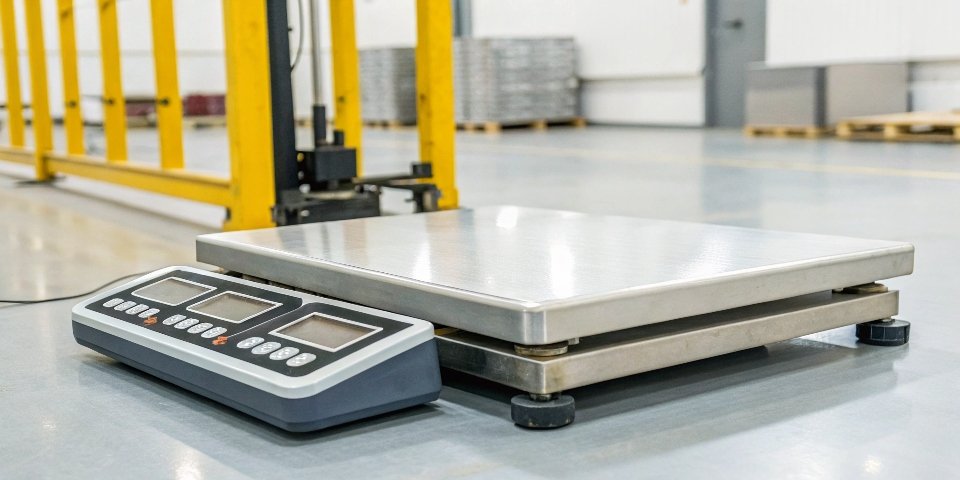
That simple definition is just the start. As a manufacturer, I've seen firsthand how a deeper understanding can transform a business's efficiency. To truly grasp the concept, we need to explore how they work, the science that powers them, the various types available, and their incredible journey through history. This knowledge is key to leveraging the right weighing technology for growth. Let's start by looking under the hood.
How does a weighing scale actually work to measure weight?
A scale gives a number, but the process can seem like magic. Not understanding how it works can lead to costly operational errors and major inefficiencies in production lines.
A scale works by measuring the force an object exerts under gravity. A modern digital scale uses a load cell that deforms slightly under weight. This changes its electrical resistance, which a microprocessor converts into your final, precise weight reading.

In my 18 years of designing industrial scales1, the load cell2 is the component I respect the most. It’s the heart of any modern digital scale. Let’s break down its function.
The Core Component: The Load Cell
When you place an object on a scale, it pushes down on the platform. This pressure is transferred to a device called a load cell. A load cell is essentially a transducer. It's a block of metal, often aluminum or steel, designed to bend in a very slight, controlled way when force is applied. Glued to this block are strain gauges3, which are tiny, sensitive electrical conductors. As the load cell bends, the strain gauges stretch or compress, changing their electrical resistance4. This change, though minuscule, is directly proportional to the force applied.
From Electrical Signal to Digital Readout
The change in resistance is too small to be useful on its own. So, the scale sends this weak signal to an analog-to-digital converter5 (ADC). The ADC’s job is to measure this electrical change and convert it into a digital value—a series of ones and zeros that a computer can understand. A microprocessor then takes this digital data, applies a calibration6 formula to it, and translates it into the final weight you see on the display, like kilograms or pounds. This entire process happens almost instantly.
| Step | Action | Component Involved |
|---|---|---|
| 1 | Object is placed on the scale. | Scale Platform |
| 2 | Force is transferred and bends the component. | Load Cell |
| 3 | Electrical resistance changes. | Strain Gauges |
| 4 | Weak analog signal is converted to digital. | Analog-to-Digital Converter (ADC) |
| 5 | Digital signal is processed and displayed. | Microprocessor & Display |
What is the scientific difference between mass and weight?
People often use the words "mass" and "weight" as if they are the same thing. In science and industry, this confusion can cause major inaccuracies and compliance issues.
Mass is the amount of matter in an object, a constant value measured in kilograms. Weight is the force of gravity pulling on that mass, measured in Newtons. Scales measure weight, but are calibrated to display the more commonly used mass.

Understanding this distinction is not just academic; it has real-world implications, especially for our clients who operate globally. Mass is an intrinsic property of an object. It represents the quantity of "stuff" it contains. An object's mass is the same whether it's on Earth, on the Moon, or floating in space. The standard unit for mass is the kilogram (kg).
Weight, on the other hand, is a force. It’s the result of a gravitational field acting on an object's mass. The formula is simple: Weight = Mass × Gravitational Acceleration (g). Since gravity varies slightly depending on your location on Earth (it's weaker at higher altitudes), an object's weight can change. This is why highly sensitive scales must be calibrated on-site. The standard scientific unit for weight is the Newton (N). So, when a scale gives you a reading in "kilograms," it has actually measured the weight in Newtons and then divided by the local gravitational constant to display the mass for your convenience.
| Feature | Mass | Weight |
|---|---|---|
| Definition | The amount of matter in an object. | The force of gravity acting on an object's mass. |
| Unit | Kilogram (kg), Gram (g) | Newton (N), Pound-force (lbf) |
| Constancy | Constant everywhere in the universe. | Varies with the strength of gravity. |
| Formula | N/A (a base property) | Weight = Mass × Gravity |
What are the main types of weighing scales and how are they used?
You need a new scale for your business but feel overwhelmed by the options. Choosing the wrong type can waste money, reduce accuracy, and hurt your overall productivity.
The main types are mechanical, electronic (digital), and hydraulic/pneumatic. Mechanical scales are for simple tasks. Electronic scales offer high precision for commercial and industrial use. Hydraulic and pneumatic scales are used for heavy-duty applications in harsh environments.
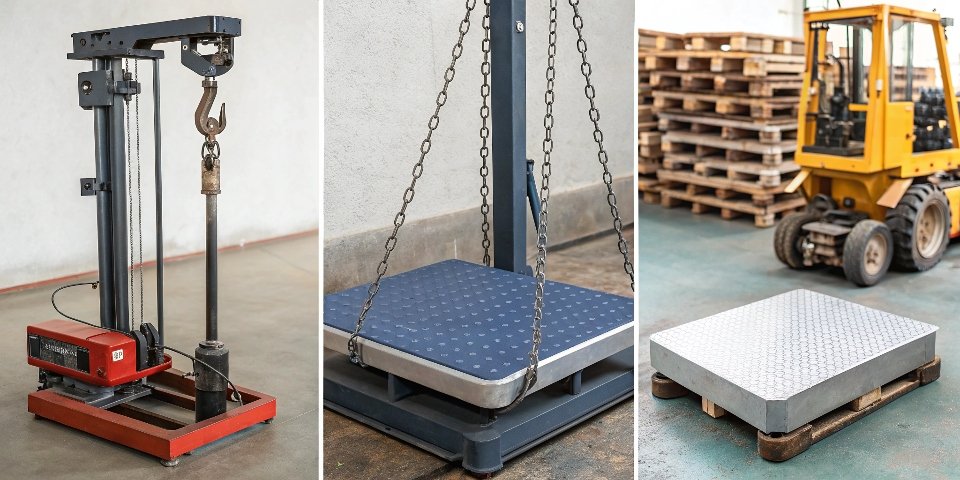
At our company, we focus on providing clients with the most effective weighing solutions for their needs. This starts with understanding the primary technologies available and where they fit best.
Mechanical and Electronic Scales
Mechanical scales, like balance beams or spring scales, were the standard for centuries. They operate on simple physical principles and don't require electricity, making them reliable for basic tasks. However, they lack the precision and data capabilities needed for modern industry. Electronic scales, which use the load cell technology we discussed, are the current industry standard. They offer high accuracy, fast readings, and features like tare and unit conversion.
Industrial and IoT Scales
For heavy-duty applications like weighing trucks or large containers, hydraulic scales7 are a robust choice. They use a piston and fluid-filled chamber to measure weight, making them durable and resistant to shock loading. Our specialty, however, lies in advanced electronic scales, especially IoT electronic scales8. These smart scales are integrated into a network. They don't just measure weight; they collect, transmit, and analyze data in real-time. This allows our software clients to build systems that automate inventory management, monitor production flow, and ensure quality control, turning a simple weighing device into a powerful business intelligence tool.
| Scale Type | Operating Principle | Common Use Case | Key Advantage |
|---|---|---|---|
| Mechanical | Levers, springs, or balances | Home kitchens, simple field work | No power needed, durable |
| Electronic | Load cells and microprocessors | Retail, labs, most industries | High accuracy, data features |
| Hydraulic | Fluid pressure | Truck weighing, heavy-duty industry | Extremely rugged, explosion-proof |
| IoT Scales | Connected electronic scales | Smart factories, logistics, automation | Real-time data integration9 |
How have weighing scales evolved from ancient times to the digital age?
We take today's ultra-precise scales for granted. We often forget the centuries of innovation that allow our modern industries to function with such accuracy and efficiency.
Weighing scales evolved from simple balance beams in ancient civilizations to Roman steelyards and 18th-century spring scales. The 20th century introduced digital scales with load cells, and today we have smart, IoT-connected systems for advanced data integration.

The history of weighing is a fascinating story of human ingenuity. It reflects our growing need for fairness, precision, and efficiency in trade and science. The journey is a long one.
From Ancient Balances to Mechanical Precision
The earliest weighing devices date back to ancient Egypt and Mesopotamia around 2000 BC. These were simple balance beams with a central pivot. An object was placed on one side and balanced with stones on the other. The Romans improved on this with the steelyard, an unequal-arm balance with a sliding weight, which made it more portable. For centuries, not much changed. Then, in the 1700s, the spring scale was developed based on Robert Hooke's principle of elasticity. It measured weight by how much a spring stretched. This was a major step forward, but still limited by mechanical friction and wear.
The Digital and Connected Revolution
The true revolution happened in the 20th century with the invention of the electronic load cell. This moved weighing from the mechanical realm to the electronic. It allowed for incredible precision and removed the guesswork. As a manufacturer, this is the era my work is built upon. But innovation didn't stop there. The advent of microprocessors made scales "smart." Today, we are in the age of IoT weighing systems. Scales no longer just provide a number; they are data points in a connected ecosystem, empowering businesses with insights that drive growth and efficiency.
| Era | Key Innovation | Impact |
|---|---|---|
| Ancient (c. 2000 BC) | The Balance Beam | Enabled fair trade and barter. |
| Roman Empire | The Steelyard | Made weighing portable and more versatile. |
| 18th Century | The Spring Scale | Provided a direct reading of weight without counterweights. |
| 20th Century | The Electronic Load Cell | Ushered in the age of digital precision. |
| 21st Century | IoT-Connected Scales | Transformed scales into smart data collection devices. |
Conclusion
From simple concepts to complex IoT systems, scales are essential tools. Understanding them helps you choose the right technology to advance your business and achieve truly accurate results.
-
Discover the essential features of industrial scales that make them suitable for heavy-duty applications. ↩
-
Learn about load cells, the heart of modern scales, and their critical role in accurate weight measurement. ↩
-
Learn about strain gauges, their function in load cells, and their importance in accurate weight measurement. ↩
-
Understanding electrical resistance changes can deepen your knowledge of how scales provide precise readings. ↩
-
Discover how ADCs transform analog signals into digital data, crucial for modern weighing technology. ↩
-
Understanding calibration ensures accurate measurements, crucial for compliance and operational efficiency. ↩
-
Learn about hydraulic scales, their robust design, and how they are used in heavy-duty industries. ↩
-
Discover how IoT scales integrate data for smarter inventory and production management. ↩
-
Learn about the importance of data integration in IoT scales for real-time monitoring and analysis. ↩



Comments (0)