

Ever wonder about the true power of a simple weighing scale? Without accurate weight, trade, production, and even health management would be impossible. Let's see how they truly work.
A weighing scale is a tool for measuring mass or weight. Its main uses include ensuring fair trade in commerce, controlling quality in industry, enabling precise experiments in science, and managing personal health. From kitchens to factories, they provide critical data for countless decisions.
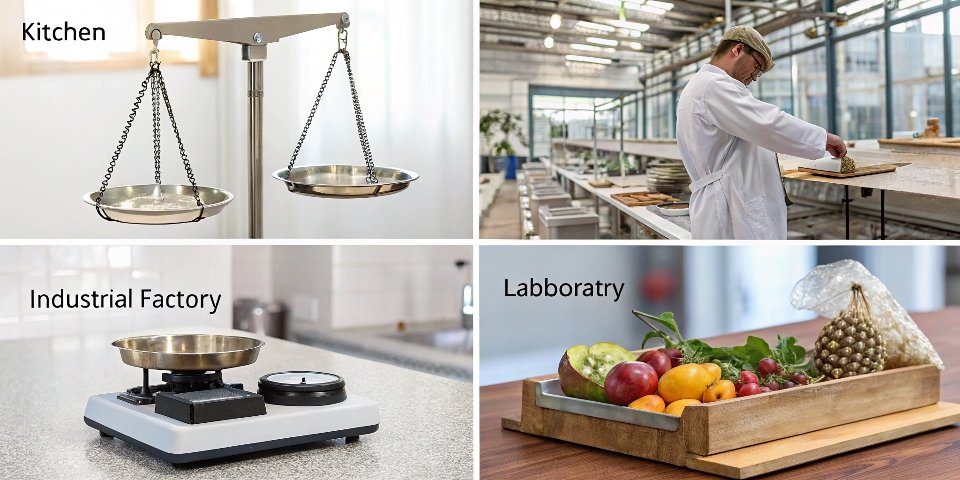
I've been in the weighing industry for 18 years. During that time, I've seen scales change from simple mechanical devices to complex IoT systems1. But their fundamental importance has never wavered. You might think a scale just gives you a number, but its impact is much bigger than that. It is all about fairness, safety, and progress in our modern world. Now, let’s explore how these tools are an essential part of our lives and businesses.
Why are weighing scales so important?
Relying on estimates in your business can lead to major losses. Imagine shipping products with incorrect weights or using the wrong mix of materials. These mistakes are very costly.
Weighing scales are important because they provide objective, accurate data. This data ensures fairness in trade, safety in transport, consistency in manufacturing, and validity in scientific research. They are the foundation of trust and precision in many critical processes that shape our world.
In my experience as a manufacturer, I can tell you that weight is a universal language of business. Its importance can be seen everywhere.
In Commerce and Trade
Trust is the foundation of any transaction. A certified scale makes sure that a customer buying apples pays for the exact weight they receive. The same principle applies to massive international shipments of raw materials. Accurate weight prevents disputes and financial losses. Without it, global trade would be chaotic. It builds confidence between buyers and sellers, which is something we value deeply when serving our global clients.
In Industry and Production
Consistency is key to quality. Think about a pharmaceutical company making medicine. A tiny error in the weight of an active ingredient could have serious consequences. We provide scales that help our clients maintain this precision2. I remember a client in the food processing industry who was losing thousands each month because of inconsistent package weights. We installed a simple, integrated checkweigher on their production line. This small change fixed a big problem, securing their profits and brand reputation.
For Safety and Compliance
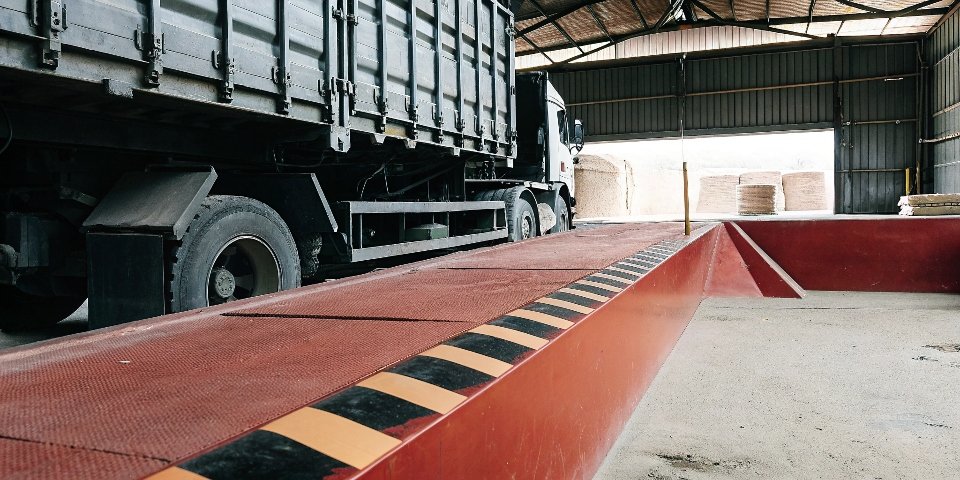
Overloaded trucks damage roads and cause terrible accidents. Truck scales and axle weigh pads are vital for enforcing transportation laws and ensuring public safety. This function of weighing is not just about business; it’s about protecting infrastructure and saving lives.
What is the purpose of using a scale?
Making big decisions without solid facts is a huge risk. Your quality, efficiency, and profits are all on the line. A reliable scale removes the guesswork and gives you control.
The main purpose of a scale is to quantify mass. This quantification serves four key goals: ensuring fairness in transactions, maintaining consistency in production, supporting research with reliable data, and helping individuals manage their health. Each use is about converting a physical property into actionable information.

A scale's purpose is to turn an unknown physical property into a known, usable number. This simple concept has four powerful applications that we see every day in our work.
Purpose 1: To Ensure Fairness
The most basic purpose of a scale is to create a fair exchange. When you see a scale in a market, its purpose is to guarantee that neither the buyer nor the seller is cheated. This applies to everything from buying vegetables to purchasing gold. It replaces subjective estimation with objective fact. This transparency is critical for a healthy economy and is a core principle behind every commercial scale we manufacture.
Purpose 2: To Maintain Consistency
In manufacturing, the purpose of a scale is to replicate a process perfectly, time after time. Whether you are mixing chemicals, baking bread, or assembling electronics, the recipe or formula must be followed exactly. A scale ensures that each batch has the same quality as the last. For our industrial clients, this consistency is directly tied to their brand's reputation and profitability.
Purpose 3: To Enable Discovery
In a laboratory, a scientist uses a high-precision balance for one main purpose: to get reliable data. Scientific theories are built on measurable, repeatable evidence. An analytical balance provides that evidence by measuring tiny masses with incredible accuracy. This purpose is about uncovering new knowledge and pushing the boundaries of what we know.
What is the use or function of a scale?
You have a process, but you are not sure if it is efficient. You are losing materials or time but cannot pinpoint where. A scale's function is to give you that visibility.
A scale's primary function is measurement. Its secondary functions include counting, portioning, checkweighing, and data collection. In modern systems, a scale can also function as a data input device for ERP or logistics software, directly integrating physical measurements into digital workflows.
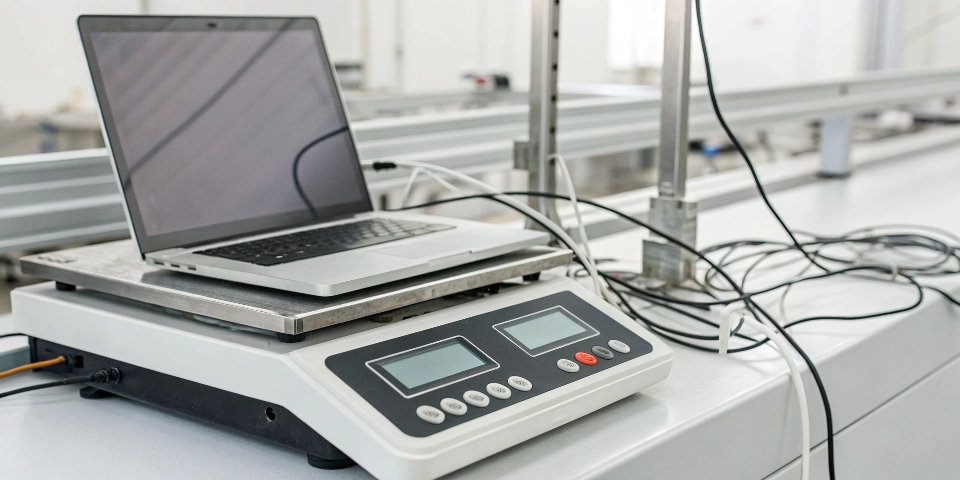
A scale does more than just show you a number. Especially today, modern scales have multiple functions that are designed to solve specific business problems. As we build scales for our clients, we focus on functions that deliver real value.
From Basic Measurement to Advanced Automation
The most basic function is weighing. You place an object on the scale, and it tells you its weight. But advanced scales do much more. A professional in our field, especially a software vendor, should understand these extended functions. They are what turn a simple tool into a smart business solution.
Here is a breakdown of common functions:
| Function | Description | Application Example |
|---|---|---|
| Basic Weighing | Measures the total mass of an object. | Weighing a package to calculate shipping costs. |
| Parts Counting | Calculates the quantity of items based on a sample weight. | Counting thousands of tiny screws for inventory. |
| Checkweighing | Verifies if a weight is within a preset target range (too light/OK/too heavy). | Ensuring every bag of coffee meets its label weight. |
| Data Integration | Sends weight data to another system like a computer or PLC. | Our IoT scales logging production data into an ERP. |
For a software provider, the "Data Integration" function is the most important. This is where a physical measurement enters the digital world. Our IoT-enabled scales are designed for this. They can communicate directly with your software, feeding real-time weight data into supply chain management3, quality control, or production monitoring systems. This function transforms the scale from a standalone device into a critical sensor in a larger, smarter ecosystem.
How do we use a weighing scale?
Using a scale seems simple, but getting an accurate reading is not always guaranteed. Improper use can lead to errors, waste, and even safety hazards in industrial settings.
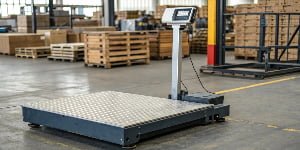
To use a scale, first ensure it is on a flat, stable surface and calibrated (tared to zero). Place the object gently in the center of the platform. Wait for the reading to stabilize before recording the weight. For industrial scales, proper loading and maintenance are crucial.
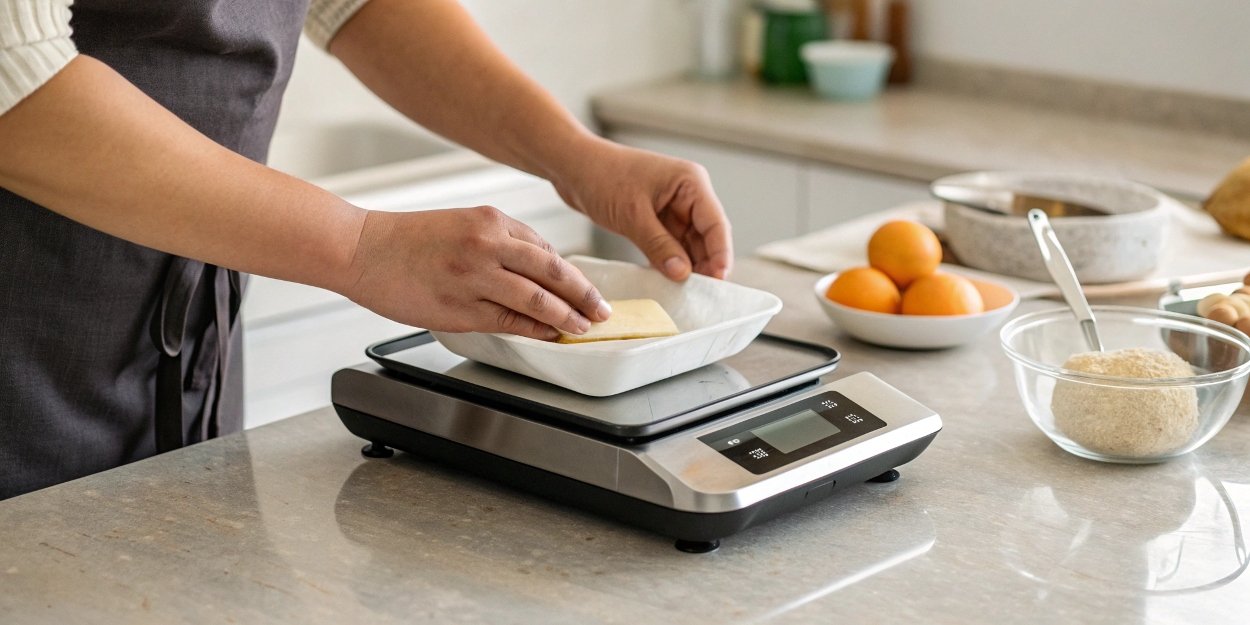
As experts who build and test scales daily, we know that proper technique is essential for accuracy. Following a few simple steps can make all the difference between a reliable measurement and a costly mistake.
Step 1: Prepare the Environment
Before you even turn the scale on, look at where you are placing it. The surface must be flat, level, and stable. Vibrations from nearby machinery, drafts from air conditioners, or an unstable table can all affect the reading, especially with high-precision scales. In our quality control department, every testing station is designed to eliminate these disturbances.
Step 2: Calibrate and Tare
Turn the scale on and let it warm up for a few minutes. Then, you need to "tare" it. Taring sets the display to zero. This is very important if you are using a container to hold what you are weighing. You place the empty container on the scale, press the "Tare" or "Zero" button, and the scale will ignore the container's weight. For long-term accuracy, scales also need periodic calibration with certified test weights.
Step 3: Place the Object Correctly
Place the item you want to weigh gently in the center of the weighing platform. Dropping a heavy object on a scale can damage its internal load cell. Placing it off-center can sometimes lead to a slightly inaccurate reading. Once the object is on the platform, wait for the display to become stable before you record the number.
Step 4: Perform Regular Maintenance
Good tools last longer with good care. Keep your scale clean and protected from dust and moisture. Following the manufacturer's guidelines for care is important. At Weigherps, we stand by our products with a 12-month after-sales service guarantee because we know that a well-maintained scale is a reliable scale.
Conclusion
A weighing scale does more than measure weight. It ensures fairness, drives efficiency, and guarantees quality. From simple tasks to complex industrial systems, it provides the essential data we need.


Comments (0)