
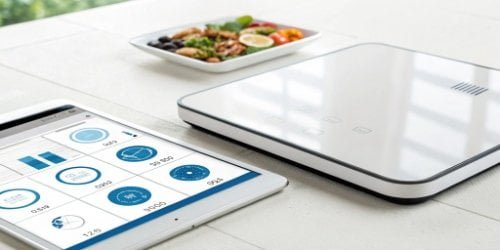
Struggling to integrate your software with hardware for real-time data? This gap costs you clients and limits your software’s potential. Our smart scales bridge this divide seamlessly.
Your software can extract fundamental data like weight, unit price, and timestamps. Our scales’ internal software then transforms this into actionable information like total sales, inventory levels, and complete transaction logs, ready for your system to use.
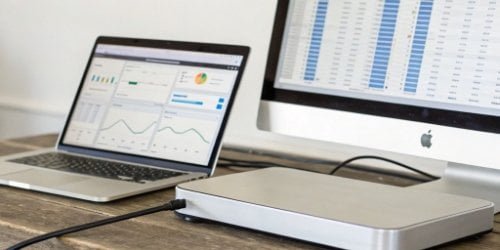
This data transfer1 is key to creating a powerful solution for your customers. As a software provider2, you build the intelligence. We provide the reliable hardware that feeds you accurate, real-time information. Let’s break down exactly what this looks like. I’ll show you the specific data you can access, how you can get it, and how we keep it secure. This will help you see the full potential for your applications. Let’s dive in.
What Types of Data Are Accessible Through Smart PC Scale Integration?
Your software needs specific data points, but hardware integration often feels like a black box. Generic, inflexible data is useless and frustrating. We solve this by providing a clear breakdown of accessible data types.
You can access raw data like weight and timestamps, but also processed information. This includes item codes, operator IDs, transaction totals, and more. This is all configurable to fit your software’s requirements perfectly.
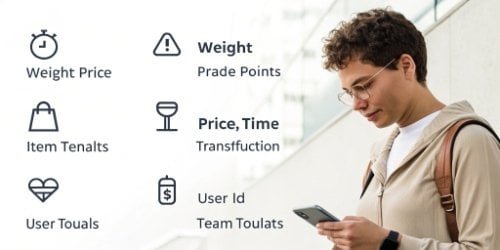
Based on my 19 years of experience, I see data in two main categories. You have the basic measurements, and then you have the enriched information that brings real value. We design our scales to provide both, giving your software maximum flexibility. Your system can decide whether to process the raw data itself or use the pre-processed data we provide.
Core Raw Data
This is the foundational layer of information that comes directly from the scale’s sensors. It’s the pure, unaltered source of truth. This includes the precise weight measurement, the exact timestamp of when the weighing occurred, and the unique serial number or ID of the scale itself. This raw data is essential for applications that require basic logging or have their own complex processing logic. It’s clean, simple, and incredibly reliable, forming the bedrock of any data-driven operation you want to build.
Enriched Processed Data
This is where our partnership truly shines. Our scale’s onboard software takes that raw data and adds valuable context, which is what most of our software partners need. When a product’s barcode is scanned, the scale logs the weight, retrieves the Product Look-Up (PLU) code, calculates the total price based on the unit price, and logs the operator’s ID. You’re not just getting a weight; you’re getting a complete, ready-to-use transaction record. We can even customize an output format or add custom data fields specifically for your software.
| Data Type | Raw Data Example | Processed Data Example |
|---|---|---|
| Weight | 1.250 kg | Weight: 1.250 kg |
| Product | N/A | Product: Apples (PLU: 4016) |
| Price | N/A | Unit Price: $2.99/kg, Total: $3.74 |
| Operator | N/A | Operator ID: 105 |
| Timestamp | 2023-10-27T10:30:01Z | Full transaction record with all fields |
How Can Software Extract and Utilize Data from Smart PC Scales?
Connecting your software to hardware is often a complex and time-consuming coding nightmare. Wasted development hours can kill your project’s profitability and timeline. We offer straightforward integration methods to prevent this.
We provide a comprehensive Software Development Kit (SDK) and clear API documentation. Your software can make simple API calls to request specific data points or subscribe to real-time data streams from the scale.

I’ve met many technical directors who were hesitant about hardware projects because of past integration failures. Our primary goal is to make this process painless. We built our system from the ground up with software vendors in mind, ensuring a smooth and fast development cycle for your team.
API and SDK Integration
We make integration simple with a well-documented RESTful API. For example, your application can send a GET request to an endpoint like /api/v1/current_weight and receive a clean JSON response. It’s that easy. For more advanced integration, we provide an SDK with pre-built libraries for common programming languages. This drastically cuts down on your development time. I recently worked with a partner who integrated their retail point-of-sale software in just two days using our SDK. This speed allows you to focus on your software’s core features, not on struggling with hardware communication protocols.
Data Utilization Examples
Once your software has the data, the possibilities are endless. You can use it to update an inventory management system3 in real time, eliminating manual stock-takes. You can feed the data into a business intelligence dashboard4 to visualize sales trends by product, location, or time of day. Another powerful use is creating automatic alerts for your clients. For instance, your software could generate an automatic reorder suggestion when the stock for a frequently weighed item runs low. Your software provides the intelligence and user interface; our scale provides the reliable and accurate data to make it all happen.
What Data Metrics Are Provided by Your Smart PC Scale for Software Use?
You need more than just weight data for your analytics platform. Basic metrics limit your software’s value and can’t provide deep insights. We solve this by having our scales offer a rich set of operational metrics.
Our scales provide key performance indicators (KPIs) directly. These include transaction counts, average transaction value, operator performance metrics, and device health status, giving your software a wealth of information to analyze.
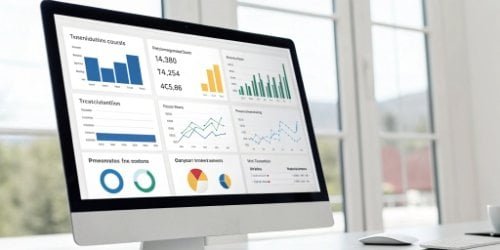
As a manufacturer working with global retailers and wholesalers, we know that operational data is just as important as sales data. A manager needs to know how their business is running, not just what it’s selling. That’s why we’ve designed our smart PC scales to be a true source of business intelligence for our partners.
Operational Metrics
Think about the insights a store manager or production supervisor needs on a daily basis. Our scales can provide data to measure this. Your software can track operator efficiency by calculating the number of items weighed per hour or per shift. You can also identify peak business hours by analyzing transaction frequency over time. By tracking which products are weighed most often, you can help your clients optimize product placement and promotions. These metrics move your software from a simple recording tool to a powerful business optimization platform.
Device and Health Metrics
For any technical director, system uptime and reliability are critical. Your software can query our scale’s status to provide proactive maintenance features. You can build a remote monitoring dashboard that shows if a scale is online, its current battery level, or if its software is up to date. You can even track calibration history5 to ensure accuracy and compliance. This allows your clients to manage an entire fleet of scales from a central location, flagging any device that needs attention before it becomes a problem. This feature prevents downtime and builds immense trust in both your software and our hardware.
How Is Data Transmission Secured Between Smart PC Scales and Software Platforms?
Sending sensitive sales and operational data over a network is a major security risk. A data breach could damage your reputation and your client’s business. We prevent this by building security into every data transaction.
We secure data transmission using industry-standard protocols like HTTPS and TLS encryption. All API communications are authenticated with tokens, ensuring only authorized software can access the scale’s data and protecting it in transit.
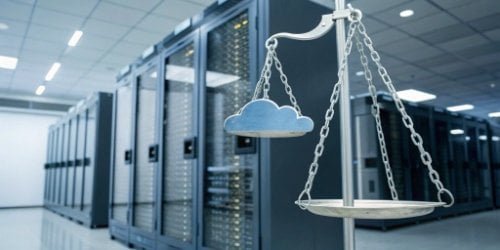
For us, security is not an optional feature; it’s a core design principle of our products. I personally oversee our technical department, and I know that data security is a top concern for software vendors. Your clients trust you with their data, and you can trust us to help you protect it.
Encryption in Transit
Every piece of data that leaves our scale to be sent to your server is wrapped in strong encryption. We use Transport Layer Security (TLS), which is the global standard for securing communications over a network. It’s the same technology that protects online banking and e-commerce transactions. This means that even if a bad actor were to intercept the data on the network, it would be completely unreadable and useless to them. We consider this a non-negotiable requirement for any modern Internet-of-Things (IoT)6 device, and our scales meet this high standard.
Authentication and Access Control
Encrypting the data is only half the battle. We also must ensure that only authorized software can request that data in the first place. Our system uses token-based authentication7 for all API requests. In the scale’s secure administrative panel, you generate a unique, secret token for your application. Your software must include this token in every request it makes. If the token is missing or incorrect, the scale’s API will instantly reject the request. This simple but powerful mechanism prevents unauthorized applications from connecting and attempting to access sensitive information. It puts you and your customer in complete control.
Conclusion
In summary, our smart PC scales provide secure, accessible, and rich data. This empowers your software to deliver real value, turning basic weight measurements into powerful business insights for your clients.
- Find out how to ensure secure and efficient data transfer between systems. ↩
- Gain insights into the responsibilities and benefits of partnering with a software provider. ↩
- Explore how an effective inventory management system can streamline operations. ↩
- Discover how dashboards can visualize data for better business insights. ↩
- Learn how tracking calibration history ensures the reliability of measurement devices. ↩
- Explore the transformative potential of IoT in modern technology and business. ↩
- Learn about the security benefits of using token-based authentication in APIs. ↩



Comments (0)