

Struggling with inaccurate gas cylinder weights? This uncertainty can lead to safety risks and costly operational losses. A specialized scale designed specifically for cylinders is the only reliable solution.
The best scale for accurately weighing gas cylinders is a specialized electronic filling scale. These scales are designed with features like automatic shut-off valves and explosion-proof construction, ensuring both precise measurement and operational safety during the filling process, unlike standard industrial scales.
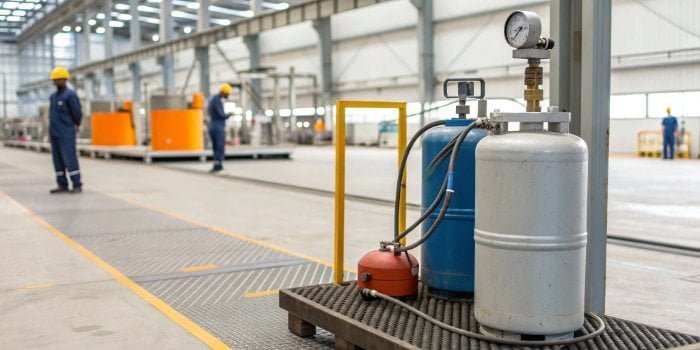
You see, just getting any old floor scale won't work for gas cylinders. There are specific dangers and requirements you need to think about. Standard scales can't handle the risks of filling flammable or high-pressure materials. They also can't offer the process automation that prevents over-filling or under-filling. Let's look at why these specialized scales are so important and how they compare to other options. Getting this right can completely change your operation's efficiency and safety record.
Which type of scale is most accurate?
Are you worried about measurement errors in your current scales? Inaccurate readings cost you money and can be dangerous. High-precision electronic scales backed by smart software offer unparalleled accuracy for your operations.
In general, high-quality electronic scales are the most accurate type available. For gas cylinders, a specialized electronic filling scale is best. It uses precise load cells and software control to guarantee accuracy, far surpassing general-purpose or mechanical scales.
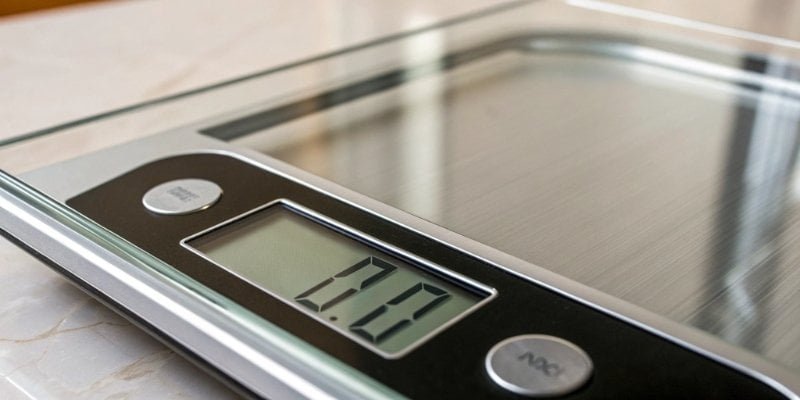
When we talk about accuracy, not all scales are created equal. The technology inside the scale makes all the difference. For over 18 years, I've seen firsthand how the shift to advanced electronics has revolutionized industrial weighing1.
Why Electronic Scales Win on Accuracy
The core of a modern electronic scale is the load cell. It's a transducer that converts force into a measurable electrical signal. This signal is then processed by a microprocessor to display a precise weight. This process is incredibly consistent and less affected by temperature, humidity, or wear.
In contrast, older mechanical scales2 rely on springs and levers. Over time, these parts stretch, rust, and wear out, causing the scale to lose its accuracy. They are also much harder to calibrate correctly.
For a business like a software vendor interested in smart devices, think of it this way: a mechanical scale is like an old analog radio, while a modern electronic scale is like a digital smart device. The digital device doesn't just give you a result; it provides clean, reliable data. This data can be logged, analyzed, and integrated into larger control systems—like our IoT-enabled weighing solutions3. This integration is key for achieving true automation and efficiency.
| Scale Type | Key Technology | Typical Accuracy Issues | Data Integration |
|---|---|---|---|
| Mechanical Scale | Springs, Levers, Dials | Friction, part wear, temperature sensitivity4 | None |
| Basic Digital Scale | Load Cell, Basic Display | Lower resolution, potential for drift | Limited to none |
| Specialized Filling Scale | High-Precision Load Cell, Microprocessor, IoT | Minimal; self-calibrating features | Full; API/SDK available |
How to measure the weight of a gas cylinder?
Confused about the correct procedure for weighing a gas cylinder? Guesswork can lead to under-filled or over-filled cylinders. Following a simple, safe process is the key to accuracy and compliance.
First, place the empty cylinder on a tared (zeroed) scale to record its "tare weight." Then, fill the cylinder. The final weight minus the tare weight is the net weight of the gas. Specialized filling scales automate this entire process for you.

Measuring the weight seems straightforward, but doing it safely and accurately during a filling operation requires the right equipment. The manual method5 has too many points of failure.
The Step-by-Step Process: Manual vs. Automated
The traditional, manual way involves a lot of steps. An operator has to place the empty cylinder on the scale, zero it out, connect the filling hose, open the valve, and watch the display like a hawk. They have to manually close the valve at the exact right moment. A split-second distraction can lead to an incorrect fill. This relies too much on human focus and increases the chance of error.
This is where our specialized gas cylinder filling scales come in. As a manufacturer, we saw this problem and engineered a solution. Our scales transform the process. You simply place the cylinder on the platform and tell the system the target fill weight. Our scale does the rest. It controls the filling process6 and uses a large-caliber, anti-pollution automatic shut-off valve to stop the flow precisely when the target weight is reached. This valve design solves the common clogging issues found in other systems. This automation doesn't just improve accuracy; it significantly increases efficiency and reduces the workload on your staff.
What is the accurate way of identifying the correct type of medical gas in a cylinder?
Worried about mix-ups with medical gas cylinders? Using the wrong gas can have fatal consequences. There are strict protocols for identification that you must follow every time, separate from weighing.
The most accurate way to identify medical gas is by checking the cylinder's label, color code, and specific valve connection. For example, the Pin Index Safety System (PISS) prevents connecting the wrong equipment. Weighing confirms the amount of gas, not its type.
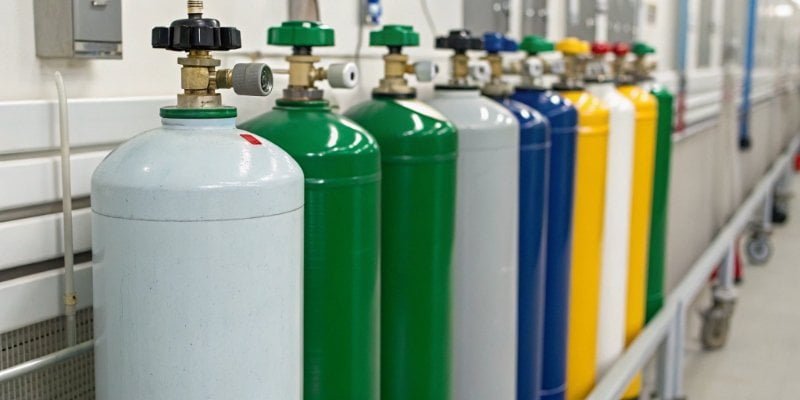
This is an excellent question because it highlights the need for a complete safety and quality control7 system. As a weighing expert, I can tell you that a scale's job is to measure mass. Identifying the substance inside the cylinder is a different, but equally critical, task.
Gas Identification vs. Gas Measurement
You should never rely on one method alone to identify a gas. It's a layered approach that ensures safety.
| Identification Method | Purpose | How it Works |
|---|---|---|
| Printed Label | Primary Identification | Clearly states the gas type, warnings, and manufacturer information. This is the ultimate source of truth. |
| Color Code | Quick Visual Check | A standardized color on the cylinder's shoulder provides an at-a-glance indicator (e.g., green for oxygen in the US). |
| Valve System | Physical Lock-and-Key | Systems like PISS use a unique pin configuration for each gas type, making it physically impossible to connect the wrong regulator. |
So where does weighing fit in? Weighing is the quality control step that happens after identification and during filling. It verifies that the correct quantity of the identified gas is filled into the cylinder.
For our clients in software and smart systems, this is where the opportunity for integration is huge. Our IoT scales can be part of a larger system. Imagine this: a worker scans the cylinder's barcode. The system identifies the gas and its required fill weight. It then sends this data to our scale, which automates the filling to that exact specification. This closes the loop between identification and measurement, creating a nearly foolproof process.
Are mechanical or digital scales more accurate?
Still using old mechanical scales in your facility? Their accuracy degrades over time, leading to inconsistent results. Upgrading to digital is a smart investment in precision and reliability for your business.
Digital scales are significantly more accurate than mechanical scales. They use electronic load cells for precise readings that aren't affected by wear and tear like the springs and levers in mechanical scales. This makes them the clear choice for professional applications.
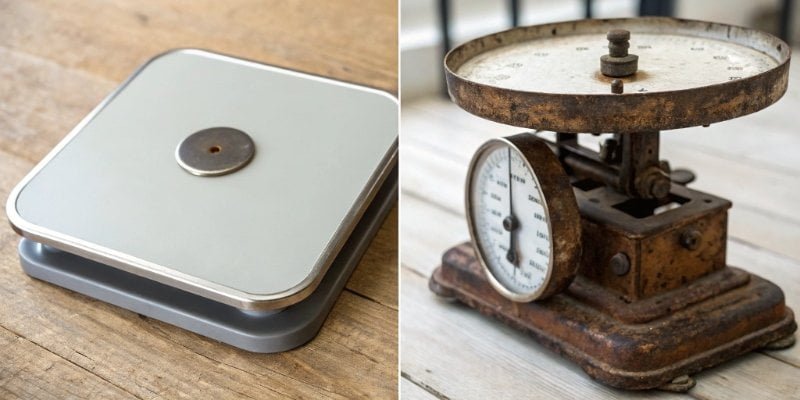
This is one of the most common questions I get, and the answer is definitive. For any application that requires reliability and precision, digital technology is superior in every way.
Digital Precision vs. Mechanical Approximation
Let's break down the core differences. A mechanical scale is a 19th-century invention. It works by balancing the load against a spring or a set of counterweights. It's prone to all sorts of physical problems. The springs get weak, parts get rusty or dirty, and even reading the dial from a slight angle can give you a different number. They are an approximation at best.
A modern digital scale is a precision instrument. As I mentioned, it uses a load cell to generate an electronic signal. This signal is clean, stable, and highly repeatable. Our scales go even further. Many are battery-powered and meet intrinsically safe explosion-proof standards, which is critical when weighing gas cylinders. This avoids the need to run expensive explosion-proof AC power lines. Plus, digital scales8 offer features that mechanical ones can't dream of:
- Tare Function: Instantly zero out the weight of the container.
- Data Output: Connect to a computer or network to log every measurement for quality control and compliance.
- Automation: Integrate with valves and controllers to automate processes, just like our gas filling scales.
For any modern industrial operation, choosing a digital scale isn't just an upgrade; it's a necessary step towards better data, improved safety, and higher efficiency.
Conclusion
For accurate, safe, and efficient gas cylinder weighing, a specialized electronic filling scale is the best choice. It automates the process, ensures precision, and eliminates common operational problems.
-
Stay updated on the latest advancements in industrial weighing for improved efficiency. ↩
-
Discover why mechanical scales are becoming obsolete in favor of digital technology. ↩
-
Explore how IoT technology is transforming weighing processes in various industries. ↩
-
Explore the impact of temperature on scale performance and how to mitigate its effects. ↩
-
Learn about the potential dangers and inefficiencies of manual weighing processes. ↩
-
Explore the detailed steps of the gas filling process for better understanding and safety. ↩
-
Learn about the role of weighing in maintaining quality standards during gas filling. ↩
-
Find out the advantages of digital scales in terms of accuracy and reliability. ↩



Comments (0)