

Choosing the wrong scale can ruin your data and lead to costly errors. You need precise measurements, but navigating the options is confusing. Understanding scale readability is the key.
For most applications, the required readability is determined by the industry. Food quality control generally requires 0.1mg, chemical synthesis needs 0.01mg, and highly sensitive pharmaceutical formulation demands the finest readability of 0.001mg or better. Your choice directly impacts accuracy and compliance.
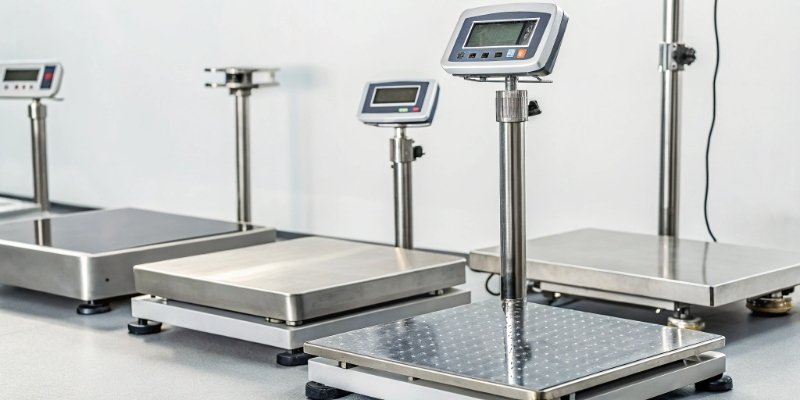
When people talk about "readability," they often mean how easy a text is to understand. But in my world of industrial weighing1, readability has a very different and very specific meaning. It refers to the smallest change in mass a scale can detect and display. It's all about precision. Choosing the right level of precision is one of the most critical decisions you will make, especially if you are developing software that needs to interact with these devices. Let's explore what this means for your specific application so you can make the right choice.
What are the different levels of scale readability?
Are you confused by terms like precision, analytical, and microbalance? This confusion can lead to buying the wrong equipment, a mistake that costs time and money. I can help clarify.
Scale readability levels range from precision balances (1g to 0.001g) for general work, to analytical balances (0.1mg to 0.01mg) for labs, and microbalances (0.001mg or better) for highly sensitive research.

Understanding these levels is the first step to selecting the correct hardware for your software integration2 project. As a manufacturer with 18 years of experience, I've seen how a mismatch here can cause major headaches. We categorize our scales into several key groups based on their readability.
Precision Balances
These are the workhorses for many general applications. Their readability typically ranges from 1 gram down to 0.001 grams (1 milligram). They are perfect for tasks where you need good accuracy but not extreme precision. Think of large-scale food production, basic chemical mixing, or parts counting in a warehouse. From a software perspective, the data from these scales is straightforward to handle. The measurement intervals3 are stable and less susceptible to minor environmental noise.
Analytical Balances
When you need greater precision, you move up to an analytical balance. These devices are standard in most laboratories. Their readability is much finer, usually between 0.1mg and 0.01mg. These scales are so sensitive that they are almost always enclosed in a glass case, called a draft shield4, to protect the weighing pan from air currents. Applications include food quality control testing, chemical synthesis, and environmental monitoring5. The data output is more granular, and your software must be able to capture and process these small increments faithfully.
Micro and Ultra-Microbalances
At the very top of the precision ladder are microbalances6 and ultra-microbalances. Here, we are talking about readability of 0.001mg (a microgram) or even better. These are highly specialized instruments used for tasks where the tiniest particle matters. Pharmaceutical formulation, stent coating, and particulate matter analysis are common uses. Integrating software with these balances requires careful planning. The software needs robust algorithms to filter out noise from vibrations or temperature changes while preserving the integrity of the true measurement data.
Here is a simple table to summarize:
| Balance Type | Readability Range | Common Applications |
|---|---|---|
| Precision Balance | 1g to 1mg | General Production, Parts Counting |
| Analytical Balance | 0.1mg to 0.01mg | Food QC, Chemical Labs |
| Microbalance | 0.001mg (1µg) | Pharmaceutical Formulation, R&D |
| Ultra-Microbalance | 0.0001mg (0.1µg) | Filter Weighing, Stent Coating |
Choosing the right category is about matching the tool to the tolerance of your specific process.
How does readability impact software integration and cost?
Do you worry that a high-precision scale will create complex software challenges? This fear can stop you from choosing the right tool. But it does not have to be so difficult.
Higher readability means more precise data, which your software must capture without loss. This affects data protocols, storage, and filtering algorithms. While high-precision scales cost more upfront, they ensure the data integrity your system relies on, which is invaluable.

As a software provider, your primary concern is how your application will talk to our hardware. The scale's readability level directly influences this. A scale is not just a piece of hardware; it is a data source. The quality and granularity of that data are determined by its readability. A few years ago, we worked with a software partner who was developing a new quality control system for a food company. They initially planned to use a standard precision balance to keep hardware costs down. But the process involved testing very small amounts of expensive spices. We showed them that the data from the precision balance wasn't granular enough, leading to inconsistencies. The switch to an analytical balance cost more, but it made their software and the entire system successful.
Data Protocol Considerations
The more readable (or precise) a scale is, the more sensitive its data output. A microbalance reading can fluctuate with a simple air current. Your software needs to be smart enough to handle this. It must parse data streams from standard ports like RS-232 or USB and apply filtering to distinguish between a real weight change and environmental noise. At Weigherps, we provide full documentation for our communication protocols. We help your technical team build stable integrations.
Cost-Benefit Analysis
It's true that a microbalance can cost significantly more than a precision balance. This can be a major factor for your project's budget. However, you must focus on the total cost of ownership7 and the cost of failure. If your software system produces bad data because the hardware isn't precise enough, the consequences can be huge. This could mean failed regulatory audits, product recalls, or incorrect formulations. The higher initial investment in the right scale protects against these much larger financial risks. It ensures your software has reliable data to work with.
Ensuring System Stability
Your reputation depends on your software being stable and reliable. When integrating with a high-readability scale, stability is key. This means ensuring the physical environment for the scale is stable (e.g., using an anti-vibration table) and that your software has a robust error-handling process. Our technical support team works closely with software vendors like you. We help you understand these requirements so you can build a complete, stable, and trusted solution for your end customer.
How do you validate the right readability for a new application?
Are you launching a new product or entering a new market? Choosing the right scale is a critical step. Guessing the required readability can lead to a failed pilot and project delays.
To validate readability, you must first determine your process tolerance, which is the acceptable margin of error. Your scale's readability should be at least ten times more precise than this tolerance. Always confirm your choice with a proof-of-concept (POC) test.

When you are breaking new ground, an educated guess is not good enough. You need a simple, reliable method to determine the exact readability your application, and therefore your software, needs to handle. At Weigherps, we guide our partners through a straightforward validation process to eliminate uncertainty and ensure project success from the start.
Understanding Process Tolerance
First, you need to define the minimum acceptable accuracy for your measurement. This is known as process tolerance8. For example, imagine you are developing a system for a pharmaceutical client. They need to add exactly 10mg of an active ingredient to a formula. Their internal quality standards allow for a deviation of ±0.2mg. In this case, your total process tolerance is 0.4mg. This number is the foundation for your entire decision. Your software will ultimately be judged by its ability to work within this tolerance.
The 10% Guideline
Once you know your process tolerance, you can apply a widely accepted industry guideline. The scale's readability should be, at a minimum, 10% of your process tolerance. In our example, the process tolerance is 0.4mg. Ten percent of 0.4mg is 0.04mg. Therefore, you would need a scale with a readability of at least 0.01mg. This ensures that the scale's own potential error is only a tiny fraction of the total acceptable error, making your measurements reliable. Going for a less precise scale (like one with 0.1mg readability) would introduce too much uncertainty.
The Importance of a Proof-of-Concept (POC)
Theory is great, but real-world testing is essential. Before you or your client make a large investment, we always recommend a POC project. This involves testing the proposed scale in the actual work environment, integrated with a pilot version of your software. A POC will reveal any unforeseen challenges, like environmental vibrations or workflow issues. As a partner, we often provide our software vendors with trial units for their POCs. This approach builds confidence, confirms your choice of readability, and ensures a smooth rollout for the final system. It's a key part of our vision to be your most reliable weighing expert.
Conclusion
Choosing the right readability balances application needs, software integration, and cost. As your weighing expert, we are here to provide the hardware and support to help you succeed.
-
Understanding challenges in industrial weighing helps in selecting the right equipment. ↩
-
Effective software integration ensures reliable data capture and processing from weighing scales. ↩
-
Measurement intervals impact data stability and accuracy in weighing applications. ↩
-
A draft shield protects sensitive measurements from air currents, enhancing accuracy. ↩
-
Scales play a vital role in environmental monitoring, ensuring accurate data collection. ↩
-
Microbalances are key for highly sensitive measurements in pharmaceutical and research fields. ↩
-
Evaluating total cost of ownership helps in understanding long-term investments in scales. ↩
-
Defining process tolerance is critical for ensuring measurement accuracy in various applications. ↩



[…] propose a Proof-of-Concept (PoC)4. This is the ultimate test. Ask to purchase a single unit for testing. This lets you assess the […]