
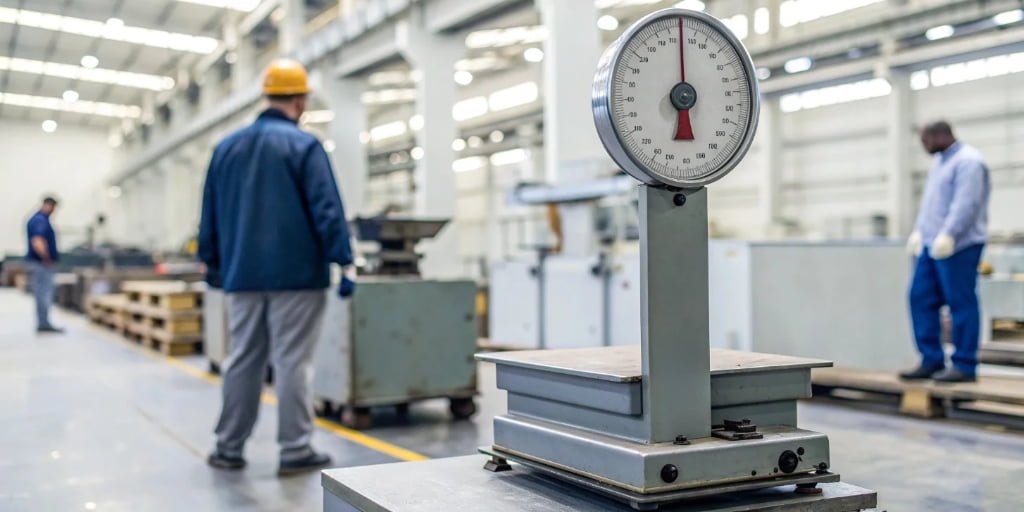
Choosing the right scale is tough. Picking the wrong accuracy can waste money or ruin products. Understanding your exact needs helps you select the perfect, cost-effective scale for your job.
For most general industrial applications, a weighing accuracy of 0.1% to 0.5% of the scale's Full Scale (FS) capacity is sufficient. High-precision tasks like pharmaceuticals may need 0.01%, while bulk material weighing might only require 1% accuracy or lower. It depends entirely on your process.
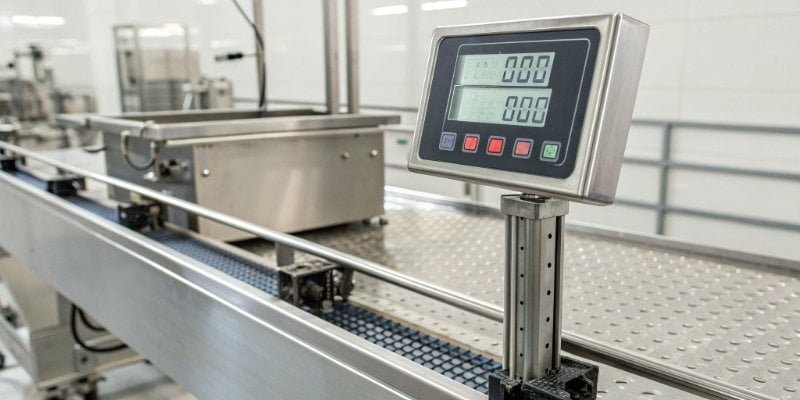
Choosing the right accuracy is more than just picking a number from a spec sheet. You need to understand what these numbers mean in the real world. It involves knowing industry standards, key technical terms, and the serious consequences of getting it wrong. Let’s break it down so you can make a confident and correct choice for your business. This knowledge is key to avoiding costly mistakes and ensuring your operations run smoothly.
How do industry standards define required scale accuracy?
Industry standards for scales seem complex and confusing. You might not be sure which classification, like OIML, applies to your specific needs, which can feel overwhelming when making a purchase.
Global standards like OIML R76 classify scales into classes, with Class III (or C-class) being the most common for industrial and commercial use. This ensures a baseline level of accuracy and performance suitable for tasks like food processing, logistics, and general manufacturing.
When we talk about scale accuracy1, we aren't just guessing. International and national bodies create standards to ensure fairness and consistency in trade and production. The most recognized international standard is OIML R762, from the International Organization of Legal Metrology. It classifies weighing instruments3 to make sure a scale in one country performs just like a scale in another. China also has its own national standards that are very similar.
For most people I work with, these two classifications are the most important:
OIML Accuracy Classes
The OIML system divides scales into classes, mainly A, B, C, and D. For industrial work, you will almost always encounter Class C.
| OIML Class | Description | Typical Application |
|---|---|---|
| Class A | High Precision | Used for scientific and laboratory weighing. |
| Class B | Precision | Weighing precious metals and gems. |
| Class C | Medium Accuracy | Most industrial and retail scales fall here. |
| Class D | Ordinary Accuracy | Rough weighing, like construction materials. |
Within Class C, you'll see a number like C3. This means it's a Class C scale with 3,000 verification intervals4, which is a very common standard for industrial platform scales. As manufacturers, we ensure our products meet these international standards, giving you confidence in your scale's performance.
What is the difference between scale accuracy and readability?
You might see "accuracy" and "readability" on a spec sheet and assume they mean the same thing. This is a common and risky mistake that can lead to buying the wrong equipment.
Readability is the smallest increment the scale's display can show (e.g., 0.01g). Accuracy is how close the measured weight is to the true, actual weight (e.g., ±0.05g). A scale can have high readability but poor accuracy, making it misleading.
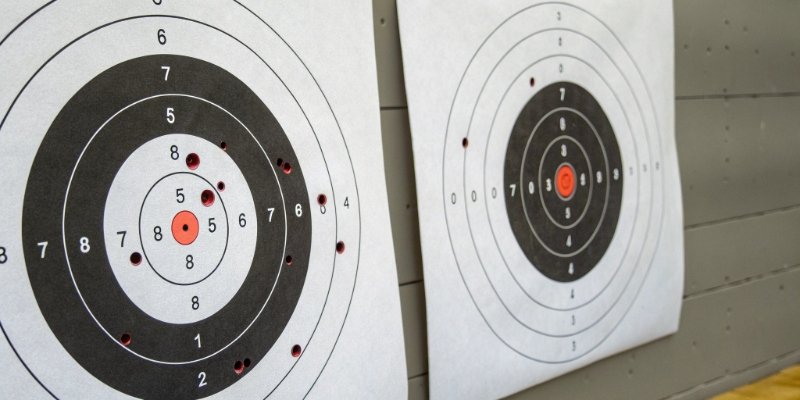
Let me give you a simple analogy. Imagine you have a car speedometer that shows your speed down to a decimal, like 60.5 mph. That's its readability. But if your tires are the wrong size, your actual speed might be 63 mph. The difference between 60.5 and 63 is its inaccuracy. A highly readable display doesn't mean the measurement is correct.
In the world of weighing, this difference is critical. You might buy a scale that displays weight to three decimal places, but it might drift or be off by a significant amount. This is why you must look at the accuracy specification, which is often stated as a percentage of the scale's full capacity (% FS).
Here’s a breakdown to make it clear:
| Term | Simple Definition | Example (for a 150kg scale) |
|---|---|---|
| Capacity | The maximum weight the scale can handle. | 150 kg |
| Readability | The smallest number the display shows. Also called division. | 0.01 kg (10g) |
| Accuracy | How close the reading is to the real weight. | ±0.05 kg (±50g) or 0.03% FS |
As a software vendor, knowing this difference is key. When your software pulls data from our hardware, you need to know the true margin of error, not just the number on the screen.
How does the type of material being weighed impact accuracy requirements?
You probably weigh many different things, from cheap bulk materials to expensive, sensitive ingredients. It's natural to wonder if one scale can really handle all these different jobs effectively.
Yes, the material directly sets the accuracy you need. High-value goods like chemicals or pharmaceuticals demand high accuracy (0.01-0.1% FS) where small errors are costly. Bulk materials like gravel or waste can use lower accuracy scales (>1% FS) to save on costs.
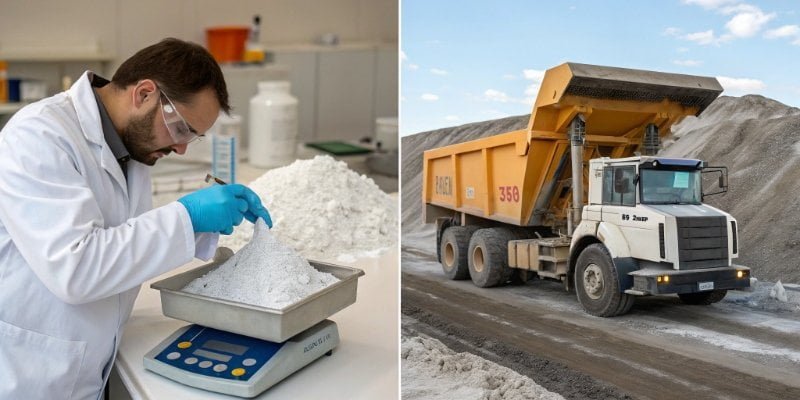
The value and purpose of what you're weighing are the most important factors. A small mistake weighing sand isn't a big deal. The same mistake weighing a pharmaceutical compound could ruin a multi-million dollar batch or even put lives at risk. Over my 18 years in this industry, I've helped clients categorize their needs into a few simple tiers.
High-Precision (0.01% - 0.1% FS)
This is for anything where pinpoint accuracy is non-negotiable. Think of laboratories, pharmaceutical production, or weighing precious metals. The cost of an error is far greater than the cost of a high-precision scale.
Medium-Precision (0.1% - 0.5% FS)
This is the sweet spot for most industrial applications5. It includes food processing, chemical batching, and general logistics. This level of accuracy ensures product consistency and is fair for commercial transactions. Most of the floor scales and platform scales we build fall into this popular category.
Standard & Low-Precision (>0.5% FS)
This is for weighing low-cost bulk materials. Examples include weighing raw construction materials, checking shipping weights for large freight, or tracking waste for recycling. Here, the goal is a good-enough estimate, and cost-effectiveness is the top priority.
| Level | % FS | Typical Applications | Why It's Needed |
|---|---|---|---|
| High | 0.01% - 0.1% | Pharmaceuticals, labs, precious metals | Safety, quality, and high financial value are at stake. |
| Medium | 0.1% - 0.5% | Food production, logistics, chemical mixing | Ensures product consistency and fair trade. |
| Standard | 0.5% - 1% | Bulk aggregate, shipping, inventory | Good enough for general estimates where precision isn't critical. |
| Low | >1% | Waste management, rough material weighing | Only a basic weight approximation is required. |
What are the consequences of using a scale with insufficient accuracy?
Trying to save some money by buying a cheaper, less accurate scale feels like a smart business move at first glance. It's a common temptation I've seen many people consider.
That initial saving can quickly disappear. An inaccurate scale leads to wasted materials, angry customers, legal fines, and ruined product batches. In the long run, the true cost of an inaccurate scale is always far higher than buying the right one from the start.
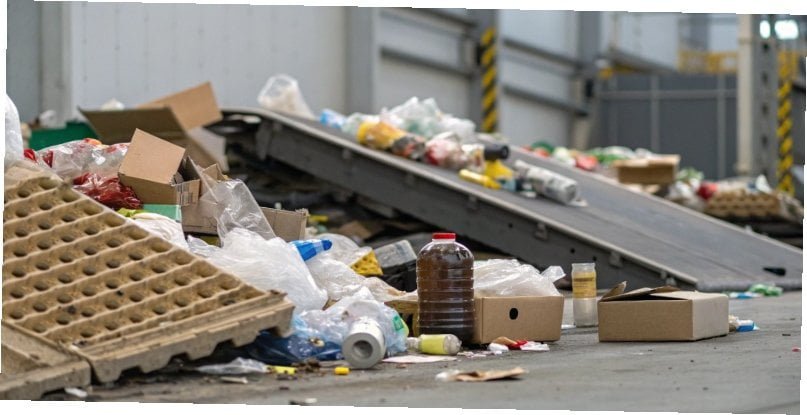
The fallout from poor weighing accuracy6 isn't just a minor headache; it can seriously harm your business. As an OEM manufacturer, I see the downstream effects when companies cut corners. We build our scales with comprehensive QA testing and a 12-month warranty precisely because we understand these risks.
Financial Losses
This is the most direct consequence. If your scale under-weighs, you might short your customers and face legal issues. If it over-weighs, you are literally giving away free product with every single item. Imagine you overfill by just 5 grams on a product. If you sell a million units, that's 5,000 kilograms of product you gave away for free.
Quality and Safety Failures
In many industries, recipes are everything. In food, chemicals, or pharmaceuticals, the wrong ingredient mix can lead to a failed batch. At best, you lose thousands of dollars in materials and labor. At worst, you could cause a safety incident, leading to a massive product recall that destroys your brand's reputation.
Compliance Problems
For any application that is "legal for trade," meaning you sell goods based on weight, you must use a certified scale. Using an uncertified or inaccurate scale can lead to heavy fines and a stop-sale order from government regulators. It's a risk that's simply not worth taking. Your equipment must comply with standards, and we ensure our products do.
Conclusion
Choosing the right scale accuracy, typically 0.1% to 0.5% FS for most uses, protects your profits and reputation. Balancing cost and precision from the start is a wise investment.
-
Discover the definition and measurement of scale accuracy to make informed decisions for your weighing equipment. ↩
-
Explore OIML R76 to understand global standards for scale accuracy and ensure compliance in your operations. ↩
-
Explore various weighing instruments to find the best fit for your specific weighing tasks. ↩
-
Learn about verification intervals to understand how they affect scale accuracy and compliance. ↩
-
Explore various industrial applications to determine the best scale type for your specific needs. ↩
-
Understanding weighing accuracy is crucial for selecting the right scale and ensuring precise measurements in various applications. ↩


Comments (0)