

!You hear "intelligent scale" and your mind goes to consumer gadgets. But your industrial clients need robust solutions. Standard scales just create data headaches and manual workarounds for your software integration.
A truly intelligent scale in 2026 is not just about measuring weight. It is a smart, connected device that uses modern technology and integrates with other hardware to solve specific, real-world problems for users in production environments. It acts as a reliable data hub for your systems.

When I first started in this industry 19 years ago, a "good" scale was simply one that was accurate and durable. Today, that's just the starting point. Our clients, especially software vendors like you, are looking for partners, not just parts. They need hardware that can keep up with the amazing solutions you build. The definition of an "intelligent scale1" has completely changed. It’s no longer a standalone tool. It has to be an active participant in a larger digital ecosystem2, a device that solves a problem rather than just providing a number. Let's look at what this really means for the near future.
What Features Define an Intelligent Scale in 2026?
Your software needs reliable, real-time data, but basic scales just can't provide it. This forces your team to create clunky, custom workarounds that are expensive and prone to breaking.
By 2026, the defining features are seamless API integration, onboard data processing, remote diagnostics, and modular software capabilities. These features allow you to build flexible and powerful custom solutions that solve the specific production challenges your clients face, creating more value for everyone.
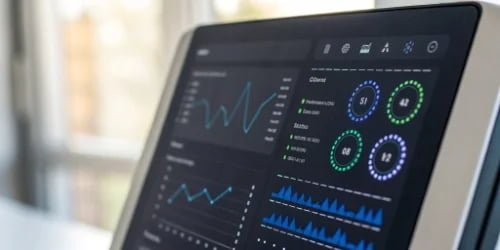
In my experience, the biggest shift is from a closed box to an open platform. An intelligent scale must be designed for integration from the ground up. This is not just an afterthought. For you, the software expert, this means you get a piece of hardware that speaks your language. We focus on providing well-documented APIs that make connecting your systems straightforward. This completely changes the dynamic. Instead of fighting with hardware, you can focus on building value-added services for your customers. Think of it as a reliable foundation. We provide the stable, accurate data source, and you build the powerful analytics, dashboards, and management tools on top. It’s a true partnership where the hardware and software work together to solve a bigger problem than either could alone.
Key Feature Evolution
| Feature | Traditional Scale (Pre-2020) | Intelligent Scale (2026) |
|---|---|---|
| Connectivity | Limited (RS-232, USB) | Full Suite (Wi-Fi, Ethernet, 5G, API) |
| Data Processing | Basic weight display | Onboard Edge Computing |
| Maintenance | Reactive (Fix when broken) | Proactive (Remote diagnostics, alerts) |
| Software | Fixed, unchangeable firmware | Modular, upgradable OS |
How Do Advances in Technology Contribute to Smarter Scales in 2026?
Technology is moving incredibly fast. It's hard to know which new developments actually matter for industrial weighing and won't just complicate your software integration projects.
Key advances in sensor fusion, low-power processors, and new wireless protocols are making scales more accurate, efficient, and reliable. This creates a stable and powerful hardware foundation for your advanced software solutions to run on seamlessly.

The core of any scale is its sensor, the load cell. But now, we're moving beyond that. We're looking at sensor fusion3. An intelligent scale might combine weight data with information from temperature or humidity sensors. This gives a much richer picture of the product or environment. For example, in the food industry, knowing the moisture content alongside the weight is critical for quality control. These new capabilities are powered by much more powerful, yet energy-efficient, processors. This allows us to perform complex calculations right on the scale itself, which is often called edge computing4. This is a huge advantage for you. It means less data has to be sent over the network, which reduces latency and improves security. It also means the scale can make simple decisions on its own, only sending important events and data to your software.
What Innovations Are Expected to Shape Intelligent Scales by 2026?
You need to stay ahead of the curve to offer the best solutions to your clients. Your competitors are always looking for an edge, and integrated hardware-software solutions are a big one.
By 2026, we expect major innovations like predictive maintenance alerts, automatic self-calibration, and enhanced material recognition using AI. These features reduce downtime and increase operational efficiency, creating new, powerful selling points for your software.

Let's break down these innovations. Predictive maintenance is a game-changer. For years, our clients had to deal with scales breaking down unexpectedly, stopping production. Now, by embedding new sensors, an intelligent scale can monitor its own health. It can detect tiny changes in performance that suggest a future failure. Then, it can send an alert directly to your software platform. Your system can then automatically schedule a maintenance ticket. Imagine offering that feature to your clients. Another huge innovation is self-calibration. Calibration is a necessary but time-consuming process. We are developing systems where scales can automatically calibrate themselves using internal reference weights, ensuring they are always accurate without needing human intervention. This saves time and eliminates a major source of error. Finally, by integrating cameras and AI, a scale can start to understand what it is weighing, not just how much it weighs, helping prevent costly errors.
How Do Intelligent Scales Integrate with IoT and AI Technologies in 2026?
"IoT" and "AI" are popular buzzwords. But it's often confusing how they practically apply to industrial scales and how they can benefit your software business.
In 2026, intelligent scales serve as critical IoT endpoints, feeding clean, real-time data to cloud platforms. AI models then analyze this data for process optimization, anomaly detection, and forecasting, all managed and visualized through your software.

Here's how I see it working for a partner like you. Our intelligent scale becomes a trusted node on the factory's network, a dedicated IoT device. It securely sends weight data and other sensor readings to a central platform like AWS IoT or Azure IoT Hub using standard protocols like MQTT. We make sure this connection is easy to set up by providing you with clear documentation and support. This is where your expertise comes in. Once the data is in the cloud, your software takes over. You can apply AI and machine learning models to this data stream. For example, an AI could monitor a production line, using weight data to spot when a filling machine is becoming less accurate. It could then alert an operator through your interface. This transforms the scale from a simple measurement tool into a key part of an intelligent, self-optimizing production system.
The Data-to-Decision Flow
- Data Collection: The intelligent scale captures weight, temperature, and other data points.
- IoT Transmission: The scale securely sends this data to a cloud endpoint.
- AI Analysis: Your software, using AI models5, processes the data to find patterns, anomalies, and insights.
- Actionable Insights: Your platform presents this information through dashboards, alerts, or reports, enabling better business decisions.
Conclusion
A truly intelligent scale in 2026 is no longer just a piece of hardware. It's a problem-solving partner that integrates technology to help users improve their production, sales, and profits.
-
Explore how intelligent scales are revolutionizing industrial weighing and data integration. ↩
-
Learn about the importance of a digital ecosystem in enhancing industrial operations. ↩
-
Explore how sensor fusion combines data for improved accuracy in industrial weighing. ↩
-
Learn about edge computing's role in reducing latency and improving data security. ↩
-
Discover how AI models can analyze data for improved operational efficiency. ↩



Comments (0)