
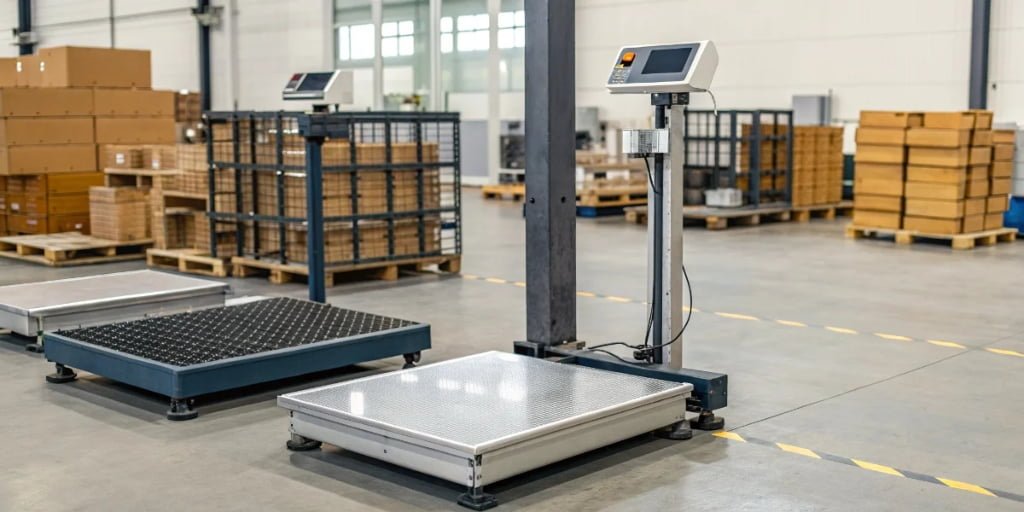
Struggling with manual processes like counting or data entry? Relying on scales just for weight is missing their true potential. Modern scales can automate tasks and boost your efficiency.
Beyond weighing, industrial scales serve as data hubs. They can perform parts counting, check for over/under weights, record data for compliance, and even control automated filling or sorting systems. Essentially, they transform a weight measurement into actionable business intelligence.
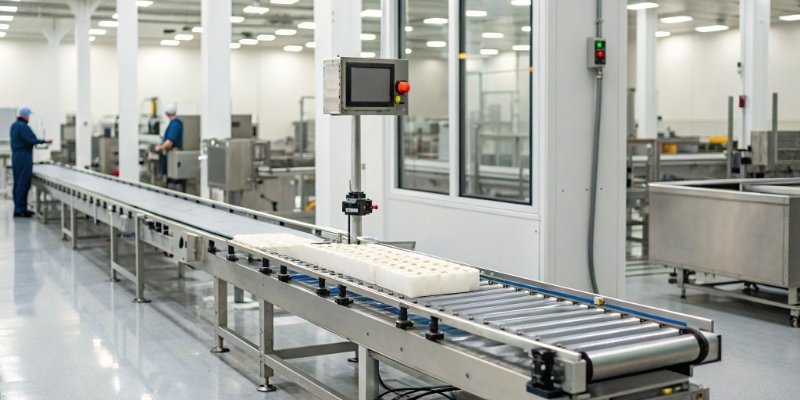
For 18 years, we've seen clients unlock amazing potential. They come to us for a simple scale but leave with a complete system. People often think weighing is the end goal of a scale. It's not. It's the starting point. All the complex and valuable functions are built on top of one thing: a precise, reliable weight signal. Let's break down what these powerful tools are really used for.
What is an industrial scale used for?
Is your production data unreliable? Manual tracking leads to errors and slow decisions. An industrial scale provides the accurate, real-time data you need for smart manufacturing and logistics.
An industrial scale is used to get precise weight measurements in industrial settings. This data is crucial for everything from ensuring product consistency and quality control to calculating shipping costs and managing inventory. It’s the foundation for many automated processes.
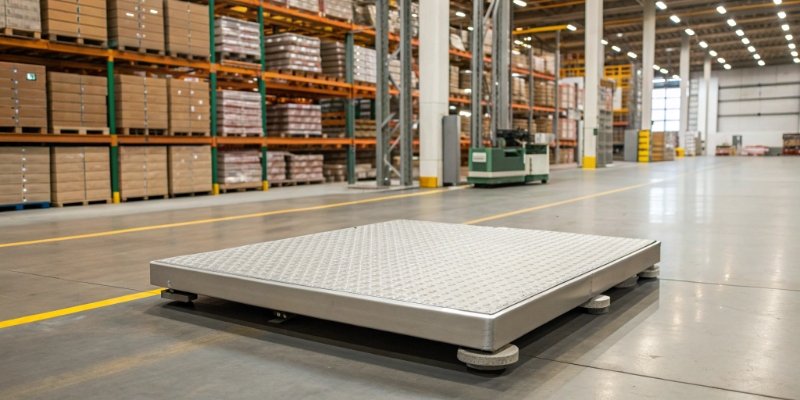
At its heart, an industrial scale is a sensor. It captures a critical data point: weight. But where that data goes is what makes it so powerful. Think about a typical production cycle. It doesn't just get used once. The weight data is used over and over again. I remember a client in the electronics assembly business. They were manually counting tiny screws for their product kits. It was slow and customers often complained about missing parts. We helped them integrate a high-precision counting scale into their packing station. The scale had a preset for the screw weight and told the operator exactly when they had the right count. They were able to cut their packing time by 40%. More importantly, customer complaints about missing parts dropped to almost zero. This is a simple example, but it shows how a scale is used for more than just finding a weight. It's used for quality, efficiency, and customer satisfaction.
From Raw Materials to Final Shipping
An industrial scale's use can be broken down into several key stages of your operation.
| Stage | Use of the Scale | Data Integration |
|---|---|---|
| Receiving | Verify incoming shipment weights against purchase orders. | Data feeds into your ERP or inventory system. |
| Production | Batch ingredients, mix formulas, control quality. | Connects to PLCs for automated process control. |
| Packaging | Count parts, perform checkweighing1, control filling. | Integrates with packaging machines and label printers. |
| Logistics | Calculate shipping weights for carriers, manage stock. | Data syncs with your Warehouse Management System (WMS2). |
Each step uses the scale not just as a measuring device, but as a data input terminal for a much larger system. This is where software vendors like you come in. Our hardware provides the clean, accurate data your systems need to thrive.
What are the functions of a weighing scale?
Are repetitive tasks like counting and checking slowing your team down? Manual work is tedious and eats into your profits. You can use a scale’s built-in functions to automate these jobs.
A modern weighing scale has many functions. Key ones include parts counting, checkweighing to verify weight tolerances, percentage weighing for formulations, and data logging. These features turn a simple measurement tool into an active part of your quality and production control system.
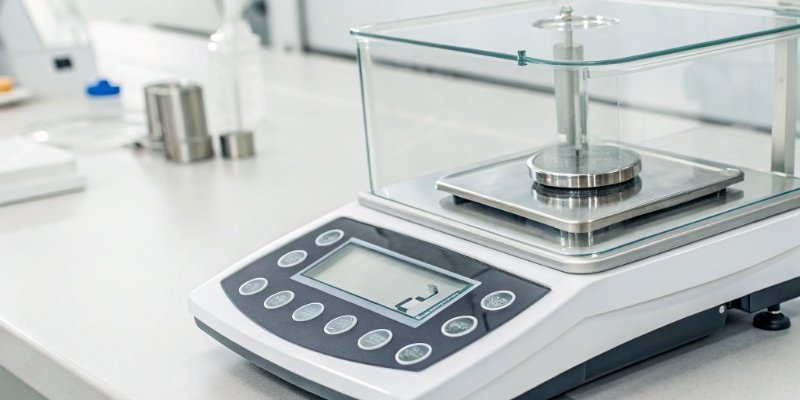
The scales we build today are less like basic tools and more like smart devices3. They have onboard processors and software that can do a lot of the heavy lifting for your operators. This is because every advanced function is just a smart calculation based on the core weight measurement. If the scale knows the weight of a single screw, it can count thousands of them. If it knows the target weight of a package, it can instantly tell you if it's good or bad. As a manufacturer, we design these functions to be easy to use. But more importantly, we design them to be easy to connect with. We know that the real power is unlocked when the scale's data doesn't stop at its own screen. It needs to flow into your software, your databases, and your control systems.
Core Functions and Their System Benefits
Let's look at some of these functions and how they are a perfect match for software integration.
| Function | What It Does | Benefit for Software Integration |
|---|---|---|
| Parts Counting | Calculates a large quantity of items based on a sample weight. | Provides exact inventory counts for your WMS or ERP system without manual entry. |
| Checkweighing | Compares an object's weight to preset over/under limits. | Triggers automated sorting gates or logs quality control4 data for statistical process control (SPC) software. |
| Percentage Weighing | Displays the weight of a sample as a percentage of a reference weight. | Perfect for formulation software, ensuring precise mixing ratios and batch consistency. |
| Data Communication | Sends the weight data out through ports like RS-232, USB, or Ethernet. | This is the gateway. It allows your software to pull real-time data5 for any purpose, from logging to live dashboards. |
As you can see, these functions are specifically designed to make a scale an active participant in a larger, automated system. Our job is to provide the reliable hardware and clear communication protocols that make your software integration seamless.
What is the function of the scale?
Do you ever wonder how a scale actually works? Ignoring the core technology means you might choose the wrong tool for the job. Understanding its most basic function helps you appreciate its power.
The primary function of any scale is to convert a physical force, which is mass, into a stable and accurate digital signal. This electronic signal is the most fundamental output. From there, it can be displayed as a weight or sent to other devices for complex tasks.

Everything we've talked about—counting, checkweighing, automation—depends entirely on this one core function. If the initial signal is noisy, unstable, or inaccurate, every other function will fail. This is why we, as manufacturers, are so focused on the quality of the core components. It all starts with the load cell6, which is the sensor that physically bends under weight. This creates a tiny analog electrical signal. Then, an Analog-to-Digital (A/D) converter turns that signal into a digital value that a processor can understand. It sounds simple, but doing it with high precision and speed, and making it stable in a harsh industrial environment, is a real engineering challenge.
From Physical Force to Digital Data
As a technical director or purchasing manager for a software company, you understand the principle of "garbage in, garbage out." The same is true for weighing systems7. The scale's function is to provide the clean "in" for your system's "out."
Why Signal Quality is Everything
A cheap, low-quality scale might give a reading that looks okay on its display. However, when you try to connect it to a PC or a Programmable Logic Controller (PLC), you might see the numbers fluctuating wildly. This is "noisy" data. It makes it impossible for your software to perform tasks that require high speed and precision, like automated filling. A good scale invests in high-quality load cells, shielding, and advanced filtering algorithms in its firmware. This ensures the digital signal sent through its communication port is clean, stable, and, most importantly, true. All the smart features are just software interpreting this pure data stream. Our focus is on perfecting that data stream.
What are the types of scale we use and what we use them for?
Not sure which scale is the right one for your job? Choosing the wrong type is not just inefficient, it can be a costly mistake that impacts your entire workflow.
We use many types of scales, each designed for a specific purpose. Common ones include bench scales for small items, floor scales for pallets, crane scales for suspended loads, and truck scales for vehicles. The key is choosing the right capacity and design for the application.

Each scale type is engineered to handle different physical objects and industrial environments. A delicate bench scale used for counting microchips would be destroyed in the environment a rugged floor scale operates in. And a floor scale isn't suitable for weighing a 20-ton truck. But the physical design is only half the story. In today's connected world, the more important question is: "How can this scale talk to my systems?" A scale is no longer an isolated island of measurement. It’s a node in your network. When we provide a solution, we don't just ask "What are you weighing?". We ask "What do you want to do with the weight information?". This helps us match you with not only the right type of scale but the right connectivity options8 to empower your software.
Matching the Scale to the System
Thinking about the scale as part of a larger system is key. Here's how different scale types9 can integrate into your operations.
| Scale Type | Typical Use Case | Smart Integration Opportunity |
|---|---|---|
| Bench Scale | Counting parts, lab formulas, portion control. | Send counts to inventory software, batch data to quality control systems. |
| Floor Scale | Weighing pallets, large containers, carts. | Integrate with a warehouse WMS via Wi-Fi to update stock levels in real-time as pallets are moved. |
| Crane Scale | Weighing large, suspended items in shipping or metal foundries. | Send weight data wirelessly to a handheld remote or a central computer for logging and safety checks. |
| Truck Scale | Weighing vehicles at entry/exit for bulk material. | Automate the entire process. Integrate with gate barriers, RFID readers, and billing software to run 24/7 without an operator. |
As you can see, every type of scale offers a chance to capture data and automate a process. Our role is to provide you with a reliable, certified hardware platform that your software can build upon, no matter the application.
Conclusion
An industrial scale is more than a weighing tool. It is a vital data source for automating and optimizing your operations, with accurate weighing as its undisputed core.
-
Understand the significance of checkweighing in maintaining quality control and compliance. ↩
-
Discover how scales can seamlessly integrate with WMS for improved logistics. ↩
-
Explore the advanced features that make modern scales integral to automated systems. ↩
-
Learn how scales enhance quality control measures in production environments. ↩
-
Discover how real-time data can drive smarter decision-making in manufacturing. ↩
-
Understand the critical role of load cells in ensuring accurate weight measurements. ↩
-
Learn about the essential elements that contribute to reliable weighing systems. ↩
-
Understand the importance of connectivity in integrating scales with existing systems. ↩
-
Explore the various types of scales and their specific applications in industry. ↩



Comments (0)