

Buying the wrong industrial scale leads to costly errors. You worry about inaccuracy and downtime. Considering material, protection, and software integration ensures the perfect fit for your needs.
Beyond the scale type, you must consider its weighing capacity and accuracy, the material (like stainless steel), its IP protection rating for durability, data connectivity options for your software, and the brand's after-sales service. These factors ensure you buy a reliable and cost-effective scale.
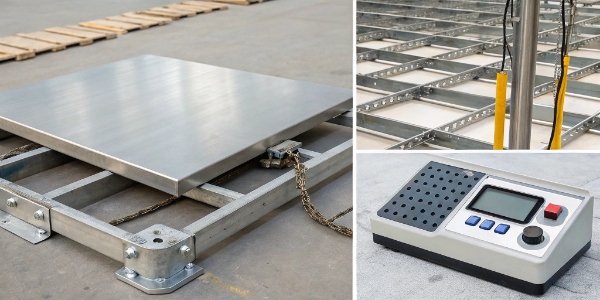
We've been manufacturing scales for over 18 years, and I've seen how a seemingly small choice can have a big impact. Many customers focus on the maximum weight and the type of scale, but they forget the details that really determine if a scale will be a long-term asset or a short-term headache. Choosing the right scale is about more than just a transaction; it's about finding a reliable tool that supports your operations for years to come. Let's dig into the questions you should be asking to make a smarter investment.
How do I determine the accuracy and resolution needed for my weighing application?
Unsure about the right accuracy? Choosing incorrectly can lead to product giveaway or compliance failures. We can help you define the perfect precision for your process.
First, determine the lightest item you'll weigh to set the minimum resolution. For accuracy, consider your industry standards and the value of your product. A good rule is to choose a scale with resolution ten times finer than your required tolerance.
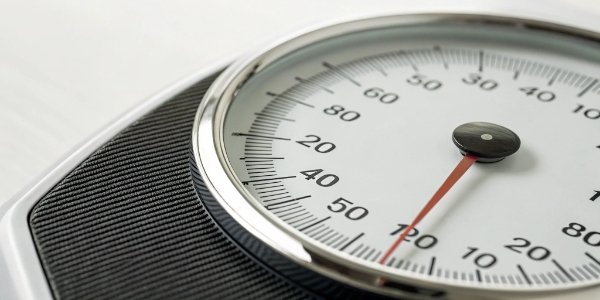
Choosing the right accuracy is a balancing act. You need a scale that is precise enough for your application, but higher precision often comes with a higher cost. The first step is to define your capacity and resolution1. The capacity is the maximum weight the scale can handle, which should be slightly more than the heaviest item you'll ever weigh. The resolution1, or division, is the smallest increment of weight the scale can display. This is determined by the lightest item you need to measure accurately.
A useful industry guideline is the "Rule of 10." This means your scale's resolution1 should be at least 10 times more precise than the tolerance you need to maintain. For example, if your process tolerance is ±10 grams, you should use a scale with a resolution1 of 1 gram. This ensures that the scale's measurement variability is a minor part of your overall process variation.
| Application | Typical Required Tolerance | Recommended Scale Resolution |
|---|---|---|
| Bulk Material Shipping | ± 1 kg | 0.1 kg (100g) |
| Food Ingredient Batching | ± 10 g | 1 g |
| Pharmaceutical Compounding | ± 0.1 g | 0.01 g (10mg) |
What data connectivity and software integration options should I look for?
Is your scale an isolated island? Manual data entry leads to errors and inefficiency. Integrating your scale with your software systems can streamline your entire workflow.
Look for scales with standard ports like RS-232, USB, or Ethernet. This allows direct connection to PCs, printers, and networks. For modern systems, check for Wi-Fi, Bluetooth, and compatibility with your existing ERP or WMS software to automate data collection.
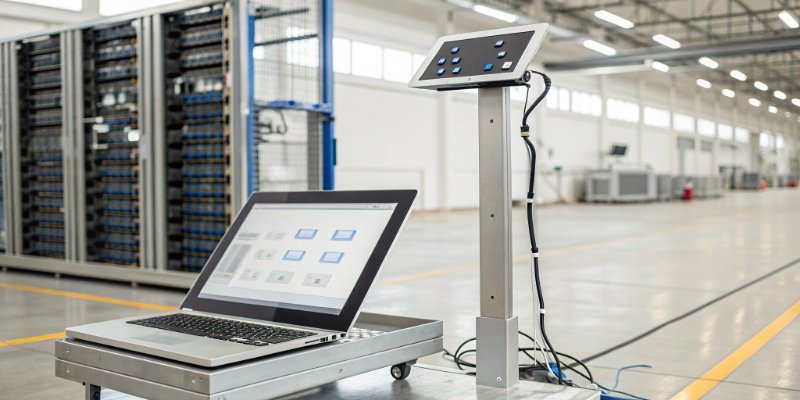
In today's industry, a scale is more than a weighing device; it's a data collection point. Manual data entry is slow and prone to human error, which can cause major issues in inventory, billing, and quality control. At Weigherps, we work closely with software vendors, so we understand how important seamless integration is. Your scale needs to talk to your other systems.
Modern scales should offer a range of connectivity options to fit your technical environment. A simple RS-232 port might be enough to send data to a printer, but for full integration, you'll want more. An Ethernet port allows the scale to connect directly to your company's network, and Wi-Fi or Bluetooth offers wireless flexibility. This allows you to automatically feed weight data into your Enterprise Resource Planning (ERP), Warehouse Management System (WMS), or other custom software. This automation eliminates errors, provides real-time data for decision-making, and creates a more efficient operation.
| Connectivity Type | Best Use Case | Benefits |
|---|---|---|
| RS-232 | Simple connection to printers or old PCs. | Reliable, basic data transfer. |
| USB | Easy connection to a nearby computer. | Plug-and-play, standard on all PCs. |
| Ethernet | Direct connection to a local area network (LAN). | Stable, fast, network-wide access. |
| Wi-Fi / Bluetooth | Wireless connection to networks and devices. | Flexible placement, no cables, IoT-ready. |
How does the operating environment (e.g., washdown, dust, hazardous areas) influence the choice of a scale?
Harsh environments destroy standard scales. Dust, water, or chemicals can cause equipment to fail fast. You need a scale built to survive your specific working conditions.
For wet or washdown areas, choose a stainless steel scale with a high IP rating like IP67 or IP68. For dusty environments, IP65 is sufficient. In hazardous zones, you must use certified explosion-proof (Ex) scales to ensure safety.

Your working environment is one of the most critical factors in choosing a scale. A scale that works perfectly in a clean, dry warehouse will fail quickly in a wet or dusty factory. I once visited a food processing plant that was using a standard carbon steel scale in their washdown area. It rusted out in six months. This is a classic mistake. The right material and protection level are essential for longevity.
The Ingress Protection (IP) rating tells you how well the scale is sealed against dust and water. The first digit rates solid protection (dust), and the second rates liquid protection (water). For example, IP65 is dust-tight and protected against water jets. IP68 means it can be fully submerged. In food, chemical, or pharmaceutical industries, stainless steel2 is the preferred material because it resists corrosion and is easy to clean. For dry, less demanding environments, a powder-coated carbon steel frame is a cost-effective option. For explosive atmospheres, you must use specially certified ATEX or IECEx scales to prevent ignition and ensure safety.
| Environment | Recommended Material | Recommended IP Rating |
|---|---|---|
| Dry Warehouse | Carbon Steel | IP54 |
| Dusty Mill | Carbon Steel or Stainless Steel | IP65 |
| Wet Food Processing | Stainless Steel | IP67 / IP68 |
| Chemical Plant | Stainless Steel (304 or 316) | IP67 / IP68 |
| Hazardous Area | Stainless Steel | IP6X + Ex Certification |
What is the total cost of ownership (TCO) for an industrial scale beyond the purchase price?
Focusing only on the purchase price is a big mistake. The cheapest scale can become the most expensive. Hidden costs like maintenance and downtime can hurt your budget.
TCO includes the initial price, installation, calibration, maintenance, repairs, and potential downtime costs. A durable, reliable scale from a brand with strong after-sales support might cost more upfront but will have a lower TCO, providing better value.
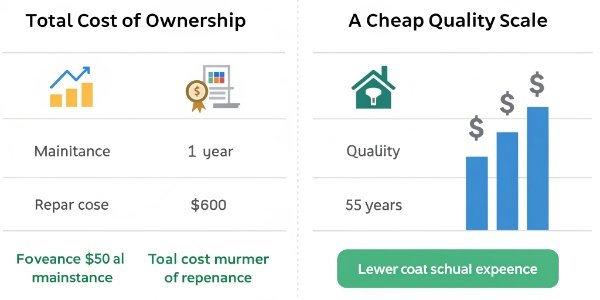
The sticker price is just the beginning of your investment. Total Cost of Ownership (TCO) gives you a much more realistic picture of what a scale will cost over its lifetime. A cheaper scale might save you money today, but if it breaks down coscienza, requires frequent repairs, or gives inaccurate readings, it will cost you far more in the long run. The biggest hidden cost is downtime. When your scale stops, your production line3 or shipping department stops, and that costs you money every minute.
As a manufacturer, We considered TCO when building the product. A well-built scale from a reputable brand will be more reliable. Strong after-sales support is also crucial. That's why we provide a 12-month warranty and have a dedicated after-sales team ready to help. When you evaluate a scale, consider its durability, the availability of spare parts, and the quality of the technical support. A slightly higher initial price for a quality product is an investment in reliability and peace of mind, ultimately leading to a lower TCO.
| Cost Factor | Low-Quality Scale (Low Price) | High-Quality Scale (Higher Price) |
|---|---|---|
| Purchase Price | Low | High |
| Maintenance & Calibration | Frequent, High Cost | Scheduled, Lower Cost |
| Repair Costs | High, Frequent | Low, Infrequent |
| Downtime Cost | High | Low to None |
| Lifespan | 1-3 Years | 5-10+ Years |
| 5-Year TCO | High | Low |
Conclusion
Choosing the right industrial scale means looking beyond its type. Consider accuracy, connectivity, environment, and total cost to ensure you get a reliable, long-lasting, and valuable tool for your business.



[…] game: Is it a hardware issue? A driver problem? A network conflict? This complexity increases the Total Cost of Ownership (TCO)5 significantly. In my 19 years as a manufacturer, we saw this pain point again and again. It's why […]