
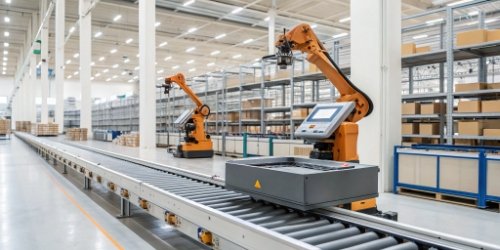
Are your automation efforts being undermined by bad data? Manual entry is slow and creates errors, crippling the very efficiency you invested in. A smart label printing scale is the solution.
A label printing scale is the crucial data connection point in an automated warehouse. It accurately weighs items, prints labels with unique barcodes or QR codes, and sends this information directly to your management system. This automates data capture for real-time accuracy and streamlined logistics.
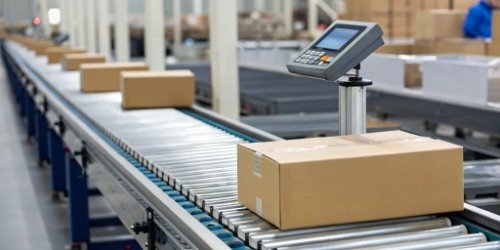
In my 19 years of manufacturing industrial scales, I've seen warehouses transform. They've gone from relying on clipboards and manual keying to running on complex software and robotics. But even the most advanced automated system is useless if the data it runs on is wrong. A single incorrect entry can send a package to the wrong continent or cause a major inventory error. That's where modern weighing technology comes in. It's not just about measuring weight anymore. These devices are intelligent terminals at the heart of the operation.
They serve as the foundational data source and, as I'll explain, can even act as independent data processing1 units. Let's look at how they fit into the bigger picture.
How do label printing scales integrate with automated warehouse systems?
Worried about the nightmare of integrating new hardware? Incompatibility can bring your entire automated operation to a grinding halt, wasting time and money. Modern scales are designed with flexible connectivity for smooth integration.
They integrate through physical ports like Ethernet, Wi-Fi, and RS-232, and use standard communication protocols. With robust APIs and SDKs, they can establish direct, two-way data exchange with your Warehouse Management System (WMS) or ERP software, making integration straightforward for your technical team.

As a software provider, you know that seamless integration2 is everything. Your clients expect your software to work perfectly with their hardware, and we build our scales to make that happen. The goal is to create a true plug-and-play experience. We provide your development teams with the Software Development Kits (SDKs3) they need to communicate with our hardware effortlessly. This isn't about forcing you to adapt to our system; it's about giving you the tools to make our scales a natural extension of your software.
This two-way communication is key. Your WMS can send order information to the scale, and the scale can send back the verified weight and a unique tracking ID. This kind of dialogue is what enables true automation.
| Integration Method | Best For | Key Advantage |
|---|---|---|
| Ethernet/Wi-Fi | Most modern warehouses | Stable, high-speed, and enables network-wide access. |
| API/SDK | Custom software solutions | Maximum flexibility and control for developers. |
| RS-232/USB | Legacy systems or direct PC connection | Simple, reliable point-to-point communication. |
| Data Protocols (MQTT/TCP) | IoT4 and Cloud-based systems | Lightweight and efficient for real-time data streams. |
What functions do label printing scales serve in the automation of warehouses?
Think your automation system is complete with just robots and software? Without accurate data capture at every key step, the whole system can easily fail. Label printing scales perform several vital functions.
Their primary functions are precise weighing, on-the-spot data processing like calculating piece counts, and printing custom labels. These labels contain barcodes or QR codes that feed essential data into your automated system for tracking, sorting, and management, all without any manual input.
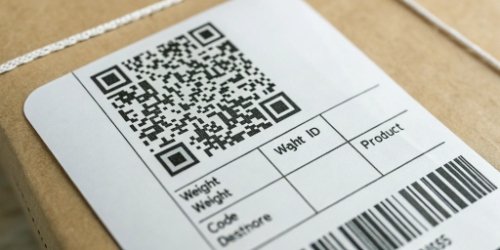
A common mistake is seeing a scale as a simple one-trick device. In a modern warehouse, it’s a multi-functional workhorse. Let's break down what it actually does.
Core Functions for Automation
-
Precise Weighing: This is the foundation. From verifying incoming goods against a purchase order to ensuring a final package meets shipping requirements, accuracy is non-negotiable. An incorrect weight can lead to costly shipping penalties or incorrect inventory counts.
-
Data Processing: This is where the "smart" part comes in. The scale's internal processor can be programmed to do more than just display weight. It can perform piece counting, check weight against pre-set tolerances (checkweighing5), or calculate shipping costs. For you as a software vendor, this means some of the processing load can be handled at the hardware level, making your system more efficient.
-
Intelligent Labeling: The scale combines the weight data with information from your WMS (like order number or destination) and prints it all onto a single label. This label is the package's passport through the automated system, telling conveyors where to route it and providing a scannable point for every tracking event.
How can label printing scales enhance efficiency in automated warehousing?
Even in a highly automated warehouse, bottlenecks can emerge. Slowdowns at the receiving dock or the packing station can undermine your entire investment. These scales are designed to accelerate these key processes.
They boost efficiency by completely removing manual data entry. This simple change drastically cuts down on human errors and speeds up core tasks like goods receiving and order fulfillment. Instant, accurate labels ensure every package gets routed and tracked correctly from the start.
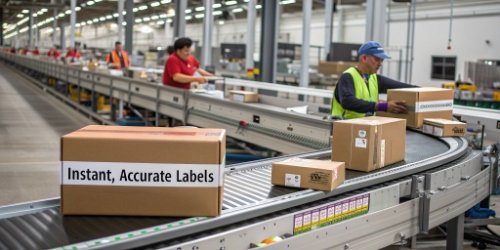
I once visited a client's facility where they had a sophisticated sorting system, but the process began with a person weighing a box, writing the weight down, and then walking to a PC to type it in. The bottleneck was obvious. By replacing that station with an integrated label printing scale6, we eliminated three manual steps. The operator now simply places the box on the scale, and the label is printed and applied automatically.
The impact on efficiency is immediate and measurable.
| Metric | Manual Process | With Integrated Scale | Improvement |
|---|---|---|---|
| Time per Package | 30-45 seconds | 5-10 seconds | ~80% Faster |
| Data Entry Error Rate | 1-3% | <0.01% | >99% Reduction |
| Throughput (Packages/hr) | 80-120 | 360-720 | 4-6x Increase |
For your customers, this translates directly into a stronger bottom line. Faster throughput7 means they can process more orders with the same staff, reducing labor costs. Fewer errors mean fewer returns and happier customers. These are the powerful ROI arguments that make investing in the right hardware an easy decision for a purchasing manager.
In what ways do label printing scales support automation in inventory management?
Trying to maintain a real-time view of your inventory can feel impossible. Stock discrepancies are a constant headache, leading to lost sales or expensive excess stock. Scales provide the clean, real-time data needed for true inventory control.
They support automated inventory management by capturing the exact weight data for every item that enters, moves within, or leaves the warehouse. This data, tied to a unique label, updates the WMS in real time, enabling precise stock counts, automatic reordering, and perfect traceability.

Your software is the brain of the operation, but it needs reliable senses to understand what's happening on the warehouse floor. Our scales are those senses. They provide the ground-truth data that makes your inventory management8 software powerful. Without this constant flow of accurate information, even the best software is just guessing.
Think about the key touchpoints in the inventory lifecycle where this data is critical:
- Goods Receiving: When a shipment arrives, the scale weighs the bulk pallets or individual boxes. This data is instantly compared against the purchase order in your WMS. Any discrepancies are flagged immediately, not days later during a manual count.
- Put-Away & Storage: As items are broken down and stored, they are weighed and labeled. This unique ID and weight data tells your WMS exactly what is in each specific bin location.
- Cycle Counting: Instead of manually counting thousands of small parts, a worker can simply weigh a box of them. The scale, knowing the weight of a single piece, instantly calculates the total quantity and updates the inventory record. This turns a day-long task into a ten-minute one.
- Order Fulfillment: During picking and packing, the scale verifies that the final package weight matches the expected weight of the order items, catching errors before they are shipped.
Conclusion
Label printing scales are not just pieces of hardware. They are the intelligent data backbone of a modern automated warehouse, ensuring accuracy, efficiency, and seamless integration with your management systems.
-
Discover how data processing enhances the functionality of automated systems and improves decision-making. ↩
-
Find resources on integrating new hardware into existing systems for seamless operations. ↩
-
Explore how SDKs assist developers in creating applications that work with hardware systems. ↩
-
Discover how IoT technology is transforming warehouse automation and improving efficiency. ↩
-
Understand the concept of checkweighing and its significance in ensuring accuracy in logistics. ↩
-
Explore this link to understand how label printing scales enhance automation and accuracy in warehouses. ↩
-
Understand the concept of throughput and its impact on warehouse efficiency and productivity. ↩
-
Discover best practices for effective inventory management and how technology can help. ↩



Comments (0)