
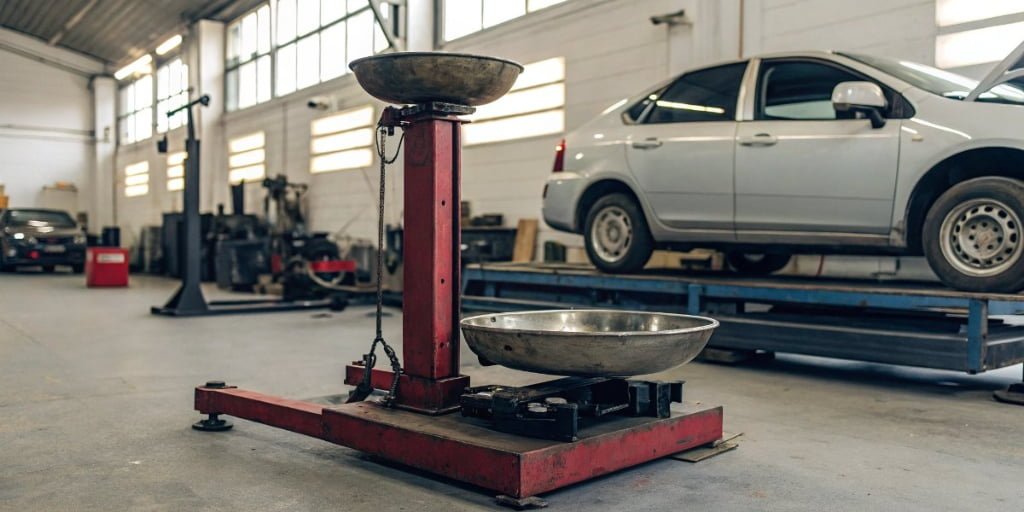
Need to weigh a car engine accurately without causing damage? Using floor scales can be risky and messy. The right crane scale is your safe, precise, and clean solution.
To weigh a car engine, you need a crane scale with a capacity greater than the engine's weight. Simply attach the scale between the hoist and the engine. This allows you to get an accurate weight as you lift it, preventing damage and keeping your workspace clean.

While a crane scale1 is the straight answer, choosing the right one and understanding the process are very important. We've been making industrial scales for 19 years, and I've seen people make costly mistakes. Getting the right tool for the job saves you time, money, and a lot of headaches. How exactly do you set it up? And how much do these engines even weigh? Let's break it down to make sure you get it right every time and avoid any problems.
How do you weigh a car engine safely and accurately?
Lifting a heavy engine is a tough job. Adding the weighing step incorrectly can introduce new risks to your team and your equipment. But it doesn't have to be complicated.
You weigh a car engine by using a crane scale, also known as a hanging scale. Attach it to your engine hoist. Then, connect the engine to the scale's hook. As you lift the engine, the scale's digital display will show you the precise weight.
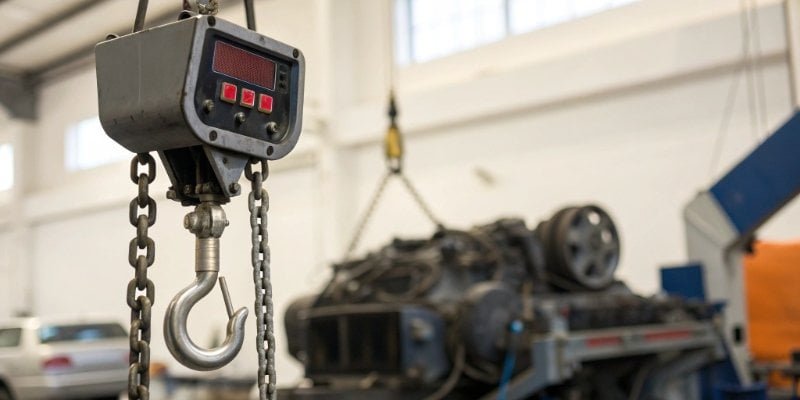
In my experience, this method is the gold standard for anyone from garage mechanics to automotive engineers. It integrates weighing directly into a process you are already doing: lifting the engine. This makes it efficient and safe. Let's go deeper into the exact steps and why this method is so much better than the alternatives.
Step-by-Step Weighing Process
- Choose the Right Crane Scale: First, you must know the approximate weight of your engine. Then, pick a crane scale with a maximum capacity well above that weight. For most car engines, a scale with a 500 kg (about 1100 lbs) capacity is a safe bet.
- Secure the Setup: Attach the crane scale securely to the hook of your engine hoist2 or gantry crane. Then, attach the engine's lifting chains3 or bracket to the hook on the bottom of the scale. Double-check that all connections are locked and secure.
- Lift and Read: Slowly lift the engine until it is completely off the ground. The scale's display will show a stable weight reading. Some of our scales have a "hold" function, which is useful for locking the measurement on the screen.
- Record the Data: Once you have a clear reading, you can record the weight. For our clients in R&D or inventory management, our IoT-enabled scales4 can send this data directly to a computer system.
Why a Crane Scale is the Best Choice
I remember a client who tried to weigh a classic V8 on a set of four small platform scales. The engine shifted, damaging one scale and nearly tipping over. It was a messy and dangerous situation. A crane scale avoids all these issues.
| Feature | Crane Scale Method | Floor Scale Method |
|---|---|---|
| Safety | High. The engine is securely suspended. | Low. Risk of engine tipping or rolling off. |
| Convenience | High. Integrated into the lifting process. | Low. Requires an extra step to move the engine onto the scale. |
| Cleanliness | High. Old, leaky engines drip on the floor, not the scale. | Low. Oil and fluids can leak onto the scale, causing damage. |
| Engine Protection | High. No direct contact with a hard surface. | Low. Risk of scratching or damaging the oil pan or other parts. |
| Accuracy | High. Measures the total suspended weight accurately. | Moderate. Weight might not distribute evenly across multiple scales. |
Using a crane scale is simply the most professional, safe, and efficient way to get the job done.
How many kg is an average car engine?
Are you planning to lift an engine or select a hoist for your workshop? Guessing the engine's weight is dangerous and can lead to equipment failure. Knowing the average weights helps you prepare.
An average car engine weighs between 135 kg and 340 kg (300 to 750 lbs). The exact weight depends heavily on its size, number of cylinders, and the materials used in its construction, like iron versus aluminum blocks.

The term "average" can be misleading because engines are not all the same. A small 4-cylinder engine from a compact car is much lighter than a big V8 from a truck. The materials make a huge difference, too. An aluminum engine block can be significantly lighter than a traditional cast iron one. We always advise our customers to find the specific weight range for their engine type before buying a scale.
Key Factors Influencing Engine Weight
Several things change how heavy an engine is. When you need to weigh one, think about these points.
- Block Material: This is the biggest factor. Cast iron is heavy and durable. Aluminum is much lighter and is common in modern cars to improve fuel economy.
- Cylinder Count and Configuration: More cylinders usually mean a bigger, heavier engine. A V6 is heavier than an inline-4, and a V8 is heavier still.
- Displacement: A larger displacement5 (like 5.7L vs 2.0L) generally means a larger, heavier engine.
- Attached Components: Is the transmission still attached? What about the turbocharger, alternator, and air conditioning compressor? These all add significant weight. The "dry weight6" is the engine alone, without fluids like oil or coolant.
Typical Engine Weight Ranges
Here is a table to give you a better idea of what to expect. We put this together based on data we've collected over the years from our clients in the automotive industry.
| Engine Type | Material | Typical Weight Range (kg) | Typical Weight Range (lbs) |
|---|---|---|---|
| 4-Cylinder | Aluminum | 90 - 160 kg | 200 - 350 lbs |
| 4-Cylinder | Cast Iron | 140 - 200 kg | 300 - 450 lbs |
| V6 Engine | Aluminum | 160 - 200 kg | 350 - 450 lbs |
| V8 Engine (Small Block) | Cast Iron | 200 - 270 kg | 450 - 600 lbs |
| V8 Engine (Big Block) | Cast Iron | 295 - 340 kg | 650 - 750 lbs |
| Diesel Engine (Truck) | Cast Iron | 400 - 1300 kg | 900 - 2900 lbs |
As you can see, the range is wide. That is why weighing is so important for safety, shipping, and design.
How heavy is a 2.4 L engine?
Are you working with a specific 2.4L engine? Its weight is not a single number and can vary by manufacturer and model. Knowing the common range helps you pick the right equipment for the job.
A common 2.4L four-cylinder engine typically weighs between 130 kg and 170 kg (approximately 285 to 375 lbs). The weight can vary based on whether it is an aluminum or iron block and what accessories are attached.

The 2.4L displacement is very popular and has been used in millions of cars around the world. Because of this, there are many different designs out there. Most modern 2.4L engines use aluminum blocks to save weight, putting them on the lighter end of the spectrum. However, older designs or industrial versions might use cast iron, which makes them heavier. For our clients who service these types of engines, we typically recommend a crane scale with a 300 kg to 500 kg capacity. This provides a great safety margin7 and ensures accuracy.
Examples of 2.4L Engine Weights
To make this more practical, let's look at some specific, popular 2.4L engines. These weights are approximate "dry weights" without a transmission attached. The actual weight you measure will likely be higher because of remaining fluids and attached accessories.
- Honda K24: This is a famous engine known for its reliability and performance. It uses an aluminum block and is very lightweight for its size.
- Chrysler 2.4L (Tigershark/World Gas Engine): Used in many Jeep, Dodge, and Chrysler vehicles, this modern engine also features an aluminum block.
- GM Ecotec 2.4L: This engine was used in many General Motors cars. It is also an aluminum design focused on efficiency.
Here is a simple table to compare them.
| Engine Model | Block Material | Estimated Dry Weight (kg) | Common Applications |
|---|---|---|---|
| Honda K24 Series | Aluminum | ~132 kg | Honda Accord, CR-V |
| Chrysler 2.4L (Tigershark) | Aluminum | ~148 kg | Jeep Cherokee, Chrysler 200 |
| GM Ecotec 2.4L | Aluminum | ~145 kg | Chevrolet Malibu, Equinox |
For any of these engines, a crane scale is the perfect tool. It allows a technician to quickly and safely verify the weight before rebuilding, shipping, or storing the engine.
How heavy is a V8 engine?
Are you planning to install a powerful V8? These engines are much heavier than smaller ones, and underestimating their weight is a serious mistake that could damage your equipment or cause injury.
A V8 engine's weight varies widely, from around 200 kg (450 lbs) for a modern aluminum small-block to over 340 kg (750 lbs) for an older cast-iron big-block. Always check the specific type before you try to lift it.
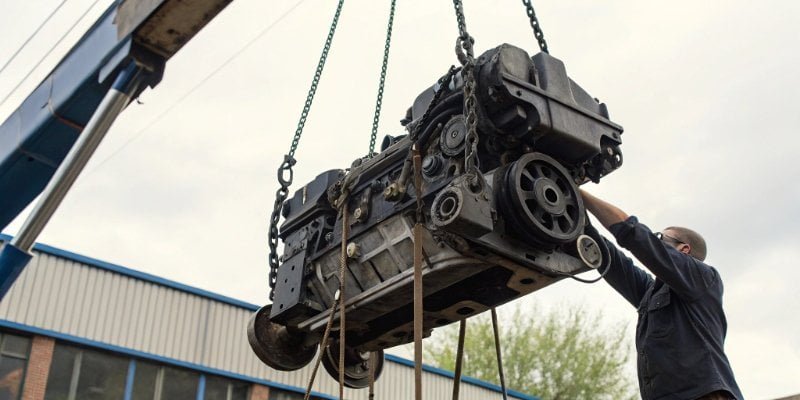
The V8 represents power, but that power comes with mass. We have worked with many performance shops and restoration experts who handle V8s every day. Their number one rule is to treat every V8 as if it's extremely heavy until proven otherwise. The difference between a "small-block" and a "big-block" V8 is huge, not just in size but also in weight, especially with the older cast iron models. For this reason, a higher capacity crane scale of at least 500 kg, or even 1000 kg for truck engines, is essential.
The V8 Weight Spectrum: Small-Block vs. Big-Block
Understanding the main types of V8s will help you estimate the load.
- Small-Block V8s: These are the most common type of V8. They are used in everything from muscle cars to pickup trucks. Modern versions, like the GM LS series, often use aluminum blocks, making them surprisingly light for their power output. Classic small-blocks are usually cast iron and a bit heavier.
- Big-Block V8s: These are built for heavy-duty applications, like large trucks and serious performance racing. They are physically larger and almost always made of cast iron, making them the heaviest of the passenger vehicle engines.
- Diesel V8s: V8 diesel engine8s found in modern heavy-duty pickup trucks are in a class of their own. They are built to handle immense pressure and are extremely heavy.
V8 Engine Weight Comparison
Let's compare some famous V8s to show the wide weight range. These are all approximate dry weights.
| V8 Type | Example Model | Block Material | Estimated Weight (kg) |
|---|---|---|---|
| Modern Small-Block | Chevy LS3 (6.2L) | Aluminum | ~208 kg (460 lbs) |
| Classic Small-Block | Ford 302 (5.0L) | Cast Iron | ~220 kg (485 lbs) |
| Classic Big-Block | Chevy 454 (7.4L) | Cast Iron | ~310 kg (685 lbs) |
| Modern Diesel V8 | Ford 6.7L Power Stroke | Compacted Graphite Iron | ~440 kg (970 lbs) |
Given these heavyweights, using a robust and reliable crane scale isn't just a good idea; it's a requirement for a safe and professional operation. Our OCS series of crane scales are designed for exactly these kinds of heavy industrial loads.
Conclusion
In short, weighing a car engine is simple and safe with the right crane scale. Knowing typical engine weights beforehand helps you choose a scale with the proper capacity for the job.
-
Explore this link to understand the functionality and benefits of using a crane scale for weighing heavy objects. ↩
-
Discover how an engine hoist works and why it's essential for lifting heavy engines safely. ↩
-
Find out about lifting chains and their importance in safely lifting heavy loads like car engines. ↩
-
Learn about IoT-enabled scales and how they can streamline data management in your workshop. ↩
-
Explore the concept of engine displacement and its significance in determining engine weight. ↩
-
Understand the term 'dry weight' and its relevance when weighing engines. ↩
-
Learn about the importance of safety margins when selecting equipment for lifting heavy engines. ↩
-
Discover the weight differences between diesel and gasoline engines for better planning. ↩



Comments (0)