

Struggling to integrate your software with industrial scales? Finding a compatible hardware partner can feel like a maze of technical issues and poor support, costing you valuable time and money.
As a software vendor, you should prioritize finding a source industrial scale manufacturer that provides easy hardware customization. It is crucial to select a partner with an in-house technical team experienced in software integration to ensure smooth collaboration, avoid technical roadblocks, and get responsive project support.

Finding the right hardware is more than just matching specs on a data sheet; it's about finding a true partner. I have seen countless software projects stall or fail completely because of a poor hardware choice. The good news is, by asking the right questions and knowing what to look for, you can avoid these costly pitfalls. Let's break down what really matters when you're evaluating potential scale manufacturers. This process is critical because it can make or break your product's success in the market.
What are the key criteria for choosing a hardware partner?
Choosing a hardware partner feels like a gamble, right? You worry about quality, support, and whether they can even integrate with the brilliant software you have built.
When selecting a hardware partner, your top criteria should be their status as a source manufacturer and their in-house technical support for software integration. Also, evaluate their production experience, quality control processes, and ability to provide hardware customization to match your software's unique requirements.

Let's get specific. As a software vendor, your success is directly tied to the hardware your system runs on. It's not just about the weighing scale; it's about the entire ecosystem. When I talk with technical directors, they are looking for partners, not just suppliers. Based on my 19 years in this industry, the most successful partnerships are built on a clear evaluation framework. You need to break down your criteria into manageable parts.
My primary insight is to focus on the manufacturing source. Are you dealing with a distributor or the actual factory? A source factory, like us at Weigherps, offers direct communication for customization, which is a massive advantage. Distributors add a layer of communication that can slow things down and introduce errors.
Next, assess their technical capabilities. Here's a critical point from my experience: find a manufacturer with an internal team dedicated to software integration1. Ask them directly, "Do you have developers or engineers who can support my team with your API or SDK?" If they hesitate, that is a major red flag. A partner without the ability to support integration is not a partner at all; they are just a problem waiting to happen.
Here is a simple table to guide your evaluation:
| Criteria | Ideal Partner Trait | Why It Matters for You |
|---|---|---|
| Source Type | Direct Manufacturer (OEM/ODM) | Enables easy customization, better pricing, and faster communication. |
| Technical Support | In-house team for software integration & API support2 | Prevents integration headaches and costly project delays. |
| Experience & Quality | Proven track record (e.g., 19+ years) & certifications (CE) | Ensures you get reliable and internationally compliant hardware. |
| Customization Ability | Willingness to modify hardware for your specific needs | Ensures your software's unique features are fully supported. |
Thinking through these points moves you from just buying a product to building a strategic alliance3 that fuels your growth.
How can you properly evaluate a manufacturer's technical capabilities?
Unsure if a potential hardware partner has the technical depth you need? Their sales pitch sounds great, but as a technical professional, you need hard proof, not just promises.
Evaluate a manufacturer’s technical capabilities by engaging their engineering team directly. Request their API/SDK documentation, ask about their experience with similar integrations, and propose a small-scale proof-of-concept (PoC) project. Their response and quality of support will reveal their true competence.
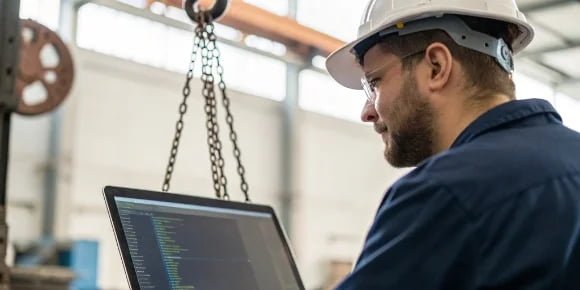
Evaluating technical capabilities is where you separate the contenders from the pretenders. It's easy to be impressed by a slick website or a confident sales rep, but you need to dig deeper. After years of collaborating on complex IoT and automation projects, I have learned that you must test their capabilities, not just trust their words.
First, ask for the documentation. Before you even talk about a purchase, request their Software Development Kit (SDK) or Application Programming Interface (API) documentation. Is it clear? Is it comprehensive? Is it up-to-date? Poor documentation is a major warning sign that they don't take software integration seriously. I remember one project that stalled for months simply because the API guide was outdated and poorly translated.
Second, insist on talking to their engineers, not just their sales team. This is non-negotiable. Your developers need to speak with their developers. Arrange a technical call to discuss your project's specific requirements.
Key Questions for Their Technical Team
- What communication protocols do your scales support (e.g., TCP/IP, RS232, Modbus)?
- Can you provide code samples for connecting to your devices?
- What level of support can my team expect during the integration phase?
- Have you worked with software companies in my industry before? Can you share a case study?
Finally, propose a Proof-of-Concept (PoC)4. This is the ultimate test. Ask to purchase a single unit for testing. This lets you assess the hardware's quality and, more importantly, the quality of their technical support when you inevitably run into questions. Their responsiveness and problem-solving skills during the PoC are a direct preview of your future relationship.
How do you ensure long-term stability and support from an IT vendor?
Worried your hardware partner will disappear after the sale? Long-term bugs or the need for updates can become your problem alone, leaving you stranded and your customers angry.
Ensure long-term stability by choosing a manufacturer with a long history and established quality control processes. Verify their after-sales support policy, including warranty periods (e.g., 12 months) and their defined process for handling technical issues post-integration. A reliable partner stands by their product.
A partnership doesn't end when the invoice is paid. For a software vendor, the long-term reliability of the hardware is directly linked to your own customer satisfaction. I've been in this business for 19 years, and I've seen smaller suppliers vanish, leaving their customers stranded with unsupported hardware. That's a disaster you simply can't afford.
So, how do you evaluate long-term stability and support?
First, look at their company history and structure. How long have they been in business? A company like ours with nearly two decades of experience isn't going anywhere. Do they have dedicated departments for quality control, technical support, and after-sales service? This structure indicates a professional operation built for the long haul.
Second, scrutinize their Quality Assurance (QA) process. Don't be afraid to ask detailed questions about how they ensure their products are ready for the field.
Key Questions for Their QA Department:
- What specific tests does each unit undergo before shipping?
- Do you perform software and battery performance testing in addition to weight calibration?
- Can you provide a copy of the QA checks for our order?
At Weigherps, every single scale is tested for weight accuracy, battery life, and software connectivity by our quality inspection department before it leaves our factory. We ship only after it passes every test. This proactive approach prevents problems before they can affect you and your customers.
Finally, understand their after-sales guarantee. A confident manufacturer will offer a clear warranty. For example, we provide a 12-month service guarantee on our products. This isn't just a promise; it's our commitment that we are responsible for the hardware's performance, allowing you to focus on what you do best: developing great software.
How do you choose an IT vendor that balances cost with quality and innovation?
Are you caught between a tight budget and the need for high-quality, innovative hardware? Choosing the cheapest option often leads to more problems and higher costs down the road.
Balance cost and quality by focusing on the Total Cost of Ownership (TCO), not just the upfront price. A source manufacturer offers better value through customization, reduced integration costs, and reliable hardware that minimizes future maintenance. Look for a partner who can help you grow.

As a purchasing manager or technical director, the budget is always a key concern. But I've learned that the cheapest option is rarely the most cost-effective. The most successful clients I work with understand the difference between price and value. The key is to evaluate the Total Cost of Ownership (TCO)5.
The initial purchase price is just one piece of a much larger puzzle. You also need to consider:
- Integration Costs: How many developer hours will it take to integrate their hardware? A partner with a great SDK and responsive tech support, which is what we strive to provide, drastically reduces this cost. This is the business case for why having in-house tech support at the factory is so important—it directly saves you money.
- Maintenance & Support Costs: What happens when one of your customers has a hardware issue? Unreliable scales lead to expensive support calls, product returns, and reputational damage. A manufacturer with a rigorous QA process and a solid warranty minimizes these long-term expenses.
- Opportunity Costs: Can the hardware adapt to your future needs? We specialize in IoT weighing and custom systems6. This means as you innovate with AI or new cloud services, your hardware partner7 can grow with you. A static, off-the-shelf product will hold your software back.
Here’s a simple comparison to illustrate the point:
| Factor | Low-Price Supplier | Strategic Partner (Source Manufacturer) |
|---|---|---|
| Upfront Cost | Low | Moderate |
| Integration | Difficult, high developer cost, poor documentation | Smooth, low developer cost, excellent support |
| Reliability | Low, frequent failures, high support costs | High, robust QA process, low long-term costs |
| Innovation | Static product, cannot adapt to new tech | Customizable, future-proof for IoT, AI, etc. |
| TCO | High | Low |
Choosing a partner who can provide a custom, cost-effective weighing solution tailored to your market isn't an expense; it's an investment in your product's future success. It empowers you to achieve a quantum leap in business development.
Conclusion
Finding the right industrial scale manufacturer is about building a true partnership. Prioritize source factories with strong technical support and a deep commitment to quality to ensure your software's success.
- Find expert insights on best practices for integrating software with hardware for optimal performance. ↩
- Understand the importance of API support in facilitating smooth integration between software and hardware. ↩
- Discover the benefits of forming strategic alliances between hardware and software vendors for mutual growth. ↩
- Learn about the significance of a Proof-of-Concept in evaluating hardware for software integration. ↩
- Explore how to calculate TCO to make informed decisions about hardware investments. ↩
- Learn about custom systems and how they can be tailored to meet specific software needs. ↩
- Get tips on selecting the ideal hardware partner to ensure successful software project outcomes. ↩



Comments (0)