

You've overloaded your industrial scale, and now it's acting up. This mistake can halt production, disrupt your workflow, and lead to costly repairs or replacements.
First, immediately remove the excess weight from the scale. Then, power it off and on again. If it shows an error code like "O-LD" or fails to return to zero, it signals a potential overload issue that needs further inspection before you can use it again.

That's the emergency first aid for your scale. But what comes next? Just because the scale powers on doesn't mean it's accurate or safe to use. Hidden damage can lead to incorrect measurements, which can be even more costly in the long run than the repair itself. Understanding how to properly inspect, troubleshoot, and potentially repair the scale is crucial. It's the only way to get your operations back online quickly and with confidence. Let's walk through the exact steps you need to take to assess the situation and find the right solution.
How can you fix a scale after it has been overloaded?
Your scale is unresponsive or inaccurate after an overload event. Now you're facing production delays, and the thought of purchasing a brand-new unit is a major concern.
You can often fix it by following a clear diagnostic process. First, perform a visual inspection for any physical damage. If it looks fine, you'll need to test the load cell. If the sensor is okay, a simple recalibration should restore its function.
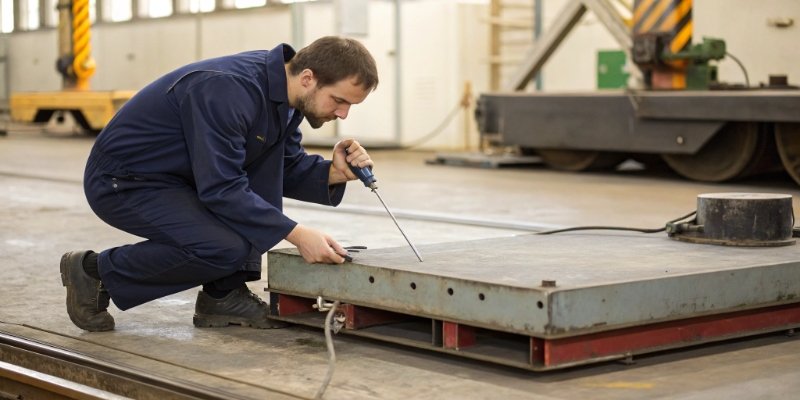
After a serious overload, a systematic approach is your best friend. In my 18 years of experience, I've seen clients rush this part and cause more problems. Don't just turn it back on and hope for the best. You have to go deeper to ensure reliability.
Step 1: Physical and Mechanical Checks
Before touching any electronics, do a thorough visual inspection1. Look at the scale's frame. Is it bent or warped? Check the feet—are they all level and intact? Look at the weighing platform itself. Any signs of stress or damage? A bent frame can put uneven pressure on the load cell2, making accurate readings impossible even if the sensor itself survived. This step is simple but absolutely critical.
Step 2: Diagnosing the Load Cell
This is the heart of the scale, and it's the part most likely to be damaged by an overload. If your scale displays an error code3 or gives wildly incorrect readings, the load cell is the prime suspect. For a technical team, the best way to check is with a multimeter. You can measure the millivolt output of the sensor when it's unloaded. If the reading is significantly above the standard (we look for anything over 0.3 mV), it's a strong sign the load cell has been permanently damaged and must be replaced. As a manufacturer, we can supply the exact replacement part to ensure compatibility.
Step 3: Recalibration as the Final Step
If the physical structure is sound and the load cell tests okay, the overload may have just knocked the scale's calibration out of sync. This is the best-case scenario. Recalibration is the process of reteaching the scale what certain weights feel like. This must be done with certified test weights to ensure accuracy. Only recalibrate after you have confirmed there is no physical or electronic damage.
What are the signs of damage if a scale is overloaded?
Your scale seems to work after an overload, but you have a nagging feeling. Is it truly okay? Hidden damage can cause inaccurate readings, compromising your product quality and costing you dearly.
The most obvious signs are persistent error codes, like "O-LD" or "OL". More subtle symptoms include weight readings that drift, failure to return to a stable zero, or consistent inaccuracies even with small, known weights. Any physical deformation is also a clear warning.
Recognizing the signs of damage early can save you from major headaches. I once visited a client in the food processing industry. Their batch mixes were consistently off, causing waste. The scale seemed fine, but a detailed inspection revealed a tiny, almost invisible deformity in the load cell housing from a past overload event. It was enough to throw off every measurement by a small, but critical, amount. They were relieved when we identified the problem.
To help you, here’s a breakdown of common symptoms and what they mean.
Common Symptoms of Overload Damage
| Symptom | What It Likely Means | Recommended Action |
|---|---|---|
| Persistent "OL" Error | The scale's internal sensor is stuck in an overload state. This often points to permanent load cell damage. | Power cycle the scale. If the error persists with no weight, the load cell likely needs replacement. |
| Drifting Readings | The weight value on the display keeps changing, even with nothing on the platform. This suggests the load cell is unstable. | Check for environmental factors like drafts or vibrations. If none, the load cell has likely been compromised. |
| Failure to Return to Zero | After removing a weight, the scale doesn't go back to 0.00. This is a classic sign that the load cell has been permanently strained. | Press the "Zero" or "Tare" button. If it still won't zero out consistently, the sensor is likely damaged. |
| Inaccurate Readings | The scale is calibrated, but it consistently reads a known weight (like a test weight) incorrectly. | This indicates the load cell's response is no longer linear or predictable. It needs to be tested and likely replaced. |
| Physical Deformation | You can see a bent frame, a warped platform, or damage to the scale's feet or housing. | The mechanical integrity is compromised. Using the scale is unsafe and will produce inaccurate results. Stop use immediately. |
Don't ignore these signs. A faulty scale is worse than no scale at all.
Can an overloaded scale be recalibrated?
Your overloaded scale is now giving you incorrect readings. You're wondering if a simple recalibration will fix it, or if you're facing a more serious, expensive repair.
Yes, an overloaded scale can sometimes be recalibrated, but only if the hardware is not damaged. You must first verify that the load cell and mechanical frame are intact. Recalibration corrects electronic drift, it cannot fix a physically broken component.
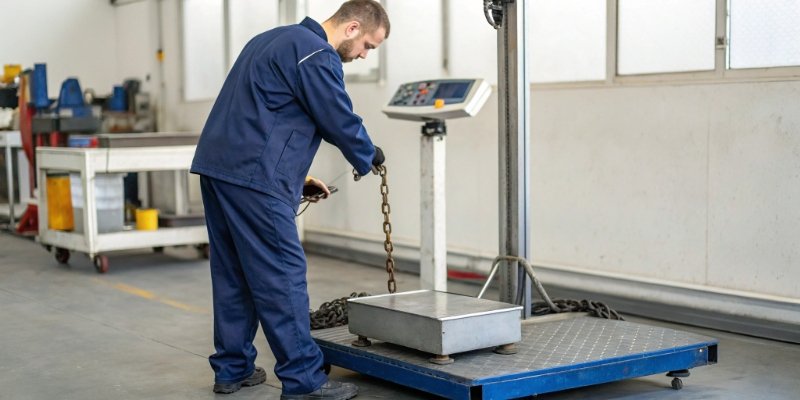
Many people think calibration is a magic fix-all button. It's not. Think of it like tuning a guitar. You can tune the strings to get the right notes (calibration), but if a string is frayed and about to snap (a damaged load cell), tuning it won't solve the real problem. The music will still sound bad, and the string will eventually break.
When Recalibration is the Right Choice
Recalibration is effective when a scale has experienced minor electronic drift due to an overload, but no permanent damage occurred. For example, a sudden shock might have shifted its zero point slightly. If, after a thorough inspection, you find no physical damage and the load cell voltage is normal, then recalibration4 is the logical next step. Using a set of certified test weights, you can guide the scale's software to correctly interpret the signals from the healthy load cell again.
When Recalibration is a Waste of Time
If your inspection reveals a bent frame or a multimeter test shows the load cell is fried, do not attempt to recalibrate. You will be chasing your tail. Calibrating a damaged system might appear to work for a moment, but the readings will be unstable, inaccurate, and unreliable. It creates a false sense of security that can be very dangerous for quality control. At Weigherps, we always advise our clients: diagnose first, then act. Replacing a damaged component before recalibrating is the only way to guarantee the accurate, repeatable performance you depend on.
How do you prevent overload damage to your scale?
Fixing a broken scale is a reactive, stressful process that causes downtime. Repeated overloads hurt your budget and your operational efficiency, creating a cycle of repair and disruption.
Prevention is simple and far more effective. Always choose a scale with a capacity higher than your heaviest loads. Thoroughly train all operators on the scale’s maximum limit and place clear warning labels. Most importantly, invest in scales with built-in overload protection features.
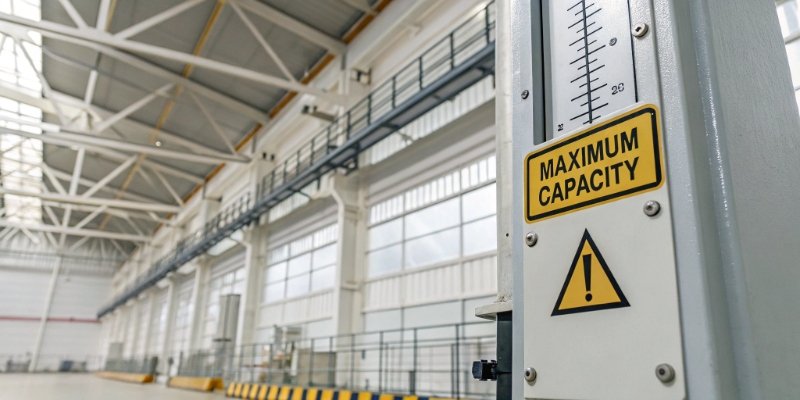
As a manufacturer, I can tell you that the most reliable scales are the ones that never get pushed beyond their limits. Prevention is not just about being careful; it's about building a system where accidents are much less likely to happen. It's the most cost-effective strategy by far.
1. Choose the Right Tool for the Job
The number one cause of overload is using an undersized scale. A good rule of thumb is to choose a scale with a maximum capacity5 that is at least 20% higher than the heaviest load you plan to weigh. If you regularly weigh items up to 100 kg, don't buy a 100 kg scale. Buy a 120 kg or 150 kg scale. This safety margin accounts for accidental drops, placing items too quickly, or occasional heavier loads. It's a small upfront investment that protects you from a much larger future expense.
2. Empower Your Team with Training
A scale is only as safe as the person using it. Ensure every single operator knows the maximum capacity of each scale they work with. This isn't a one-time thing. It should be part of onboarding and regular safety refreshers. We also strongly recommend placing large, clear labels on the scale and in the surrounding area stating the maximum capacity. Never assume people will remember.
3. Leverage Modern Technology
This is where we, as a technology-focused manufacturer, can really help. Modern industrial scale6s can be equipped with robust overload protection7.
- Audible and Visual Alarms: The scale can beep loudly or flash its display when it approaches or exceeds its limit.
- IoT Connectivity: Our smart scales can send an instant alert to a manager's phone or computer if an overload event occurs. This allows for immediate intervention.
- Mechanical Overload Stops: Many of our designs include built-in physical stops that prevent the weighing platform from compressing the load cell beyond its breaking point.
These features turn a potential disaster into a simple warning, saving the hardware from damage.
Conclusion
To handle an overload, immediately remove the weight, then inspect for damage. Recalibrate only if the hardware is intact. Ultimately, prevention through proper training and using scales with built-in protection is best.
-
This resource provides a checklist for conducting thorough inspections of your scale. ↩
-
Gain insights into the critical role of load cells in ensuring accurate measurements. ↩
-
This link will help you decode error messages and troubleshoot your scale effectively. ↩
-
Learn the steps for proper recalibration to maintain accuracy in your measurements. ↩
-
This resource helps you choose the right scale capacity for your needs. ↩
-
Explore this resource to learn how to keep your industrial scale in top condition and avoid costly repairs. ↩
-
Discover how overload protection features can save you from costly repairs. ↩



Comments (0)