

Your scale's inaccuracy is costing you money. These hidden losses from incorrect measurements are frustrating and hurt your bottom line. Using the right cleaning tools ensures long-term accuracy and protects your investment.
To clean a commercial scale, you need basic tools like non-liquid compressed air and an anti-static brush for sensitive parts. For professional maintenance, use 99% alcohol wipes on external surfaces and wear protective gear like anti-static gloves and safety goggles. Avoid all liquid cleaners internally.
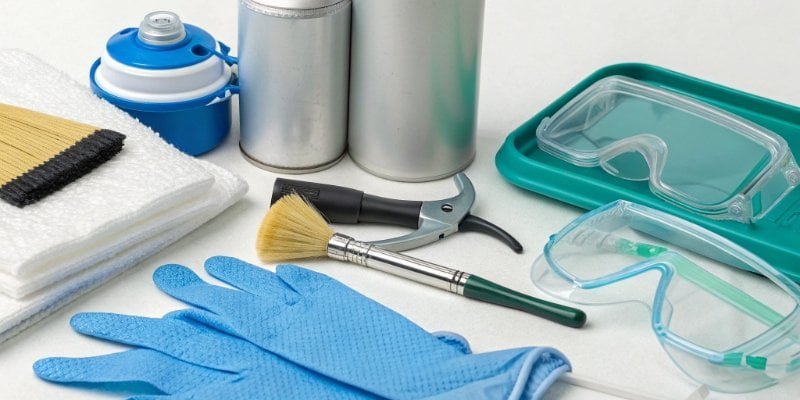
Cleaning an industrial scale seems simple. But in my 18 years of experience, I’ve seen more scales damaged by improper cleaning than by years of heavy use. Using the wrong cloth, a bit of water, or even a vacuum cleaner can cause thousands of dollars in damage. It’s not just about wiping it down; it's about maintaining a precision instrument. Let’s walk through the exact tools and methods we use to keep our scales perfectly accurate, so you can avoid these costly mistakes and keep your operations running smoothly.
How to clean a weighing scale?
You cleaned your scale, but the readings are still off. It's frustrating to spend time on maintenance only to face the same inaccuracies. A simple, repeatable process with the right tools is the key.
Power down and disconnect the scale first. Then, use compressed air and an anti-static brush to clean internal components and sensors. Only use 99% alcohol wipes for the external casing and display. Finally, let the scale dry for ten minutes before reconnecting power.
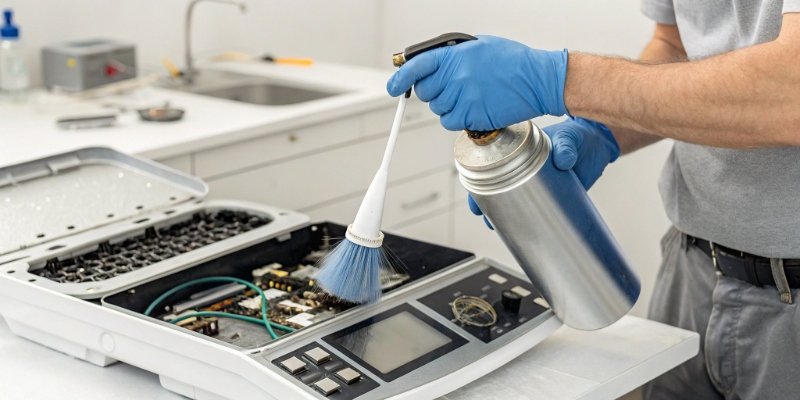
To get this right every time, you need to treat it like a technical procedure, not a simple cleaning task. Small mistakes here can lead to big problems later. At our manufacturing facility, we train our technicians to follow a strict protocol because we know that accuracy depends on it. Here is a breakdown of the process we use, which you can adopt to ensure your equipment remains reliable.
The Step-by-Step Cleaning Process
- Preparation is Everything: Before you touch the scale, power it off and unplug it from the wall. This is a critical safety step to prevent electrical shocks and protect the sensitive internal circuits. This is also the time to put on your anti-static gloves. You want to prevent any static discharge from your body from damaging the load cells1 or motherboard.
- External Cleaning: Gently wipe the housing, keypad, and display with a lint-free cloth. If you have stubborn grime, use a 99% pure alcohol wipe. Never spray any liquid directly onto the scale. Liquid can easily seep through cracks around the display or buttons and short out the electronics.
- Internal Cleaning: This is where precision matters most. Use a can of non-liquid compressed air2 to blow dust away from the sensors and circuit boards. Hold the can upright to avoid dispensing propellant. Follow up with a soft, anti-static brush3 to gently remove any remaining fibers or debris from tight spaces.
- Final Check: After cleaning, let the scale sit for at least 10 minutes. This ensures any trace moisture from cleaning or condensation has evaporated. Then, you can plug it back in, power it on, and check if it zeros out correctly. If it doesn't, don't use it. Contact your manufacturer immediately, as it may need recalibration.
What professional tools are needed for commercial scale maintenance?
Your basic cleaning routine works for a while, but it doesn't stop slow degradation. Over time, your scales become less reliable, introducing small errors that can cost your business. Investing in a few professional tools for periodic maintenance is the solution.
For true professional maintenance, you need a specific toolkit. This includes sensor calibration wrenches for technician use, 99% purity alcohol wipes for safe cleaning, and essential protective gear like anti-static gloves and safety goggles. These tools prevent damage and ensure operational compliance.
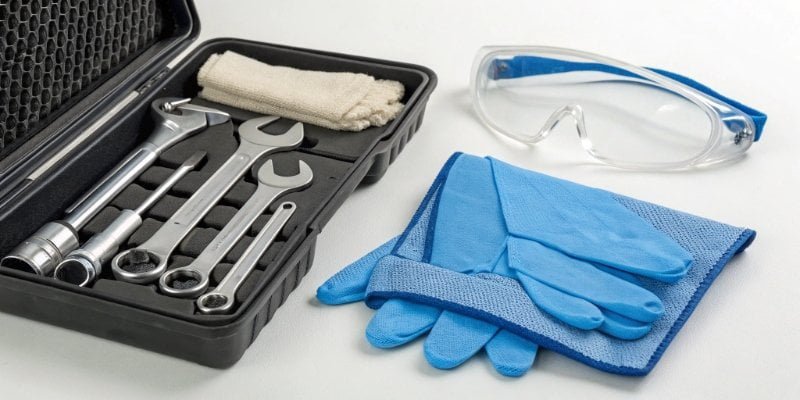
As someone who oversees the production of thousands of scales, I can tell you that the difference between a scale that lasts five years and one that lasts fifteen is often the quality of its maintenance. A purchasing manager or technical director needs to think about the total cost of ownership, not just the purchase price. Investing a small amount in the right maintenance toolkit is cheap insurance for a very expensive asset. It minimizes downtime, Aavoids service calls, and upholds the accuracy your business depends on.
Essential Maintenance Toolkit
We equip our service teams with a standard set of tools. Each one has a specific purpose designed to protect the equipment.
| Tool | Purpose | Frequency | Why It's Critical |
|---|---|---|---|
| Calibration Wrench | Adjusts the sensor's sensitivity to ensure weighing accuracy. | As needed (by tech) | For certified technicians only. Misuse will completely invalidate weight readings. |
| 99% Alcohol Wipes | Safely cleans displays, keyboards, and external surfaces. | As needed | The high purity means less water, so it evaporates quickly and reduces the risk of shorts. |
| Anti-Static Gloves | Prevents electrostatic discharge4 (ESD) from damaging sensors. | Every cleaning | ESD can instantly destroy the delicate electronics inside a load cell. This is not optional. |
| Safety Goggles | Protects eyes from flying debris when using compressed air. | Every cleaning | A basic, non-negotiable safety practice to protect the person performing the maintenance. |
The calibration wrench5 is the most specialized tool. We strongly advise that this only be used by a manufacturer-certified technician. Our teams use them during planned maintenance, often every couple of years, to bring a scale back to its factory specifications. The other items—wipes, gloves, and goggles—should be part of your standard cleaning kit. They are inexpensive but crucial for preventing the most common types of cleaning-related damage.
How should you clean digital scales specifically?
Digital scales contain sensitive electronics. You know that one wrong move with a wet cloth or a blast of static could fry the system, leading to expensive downtime. The key is to understand the specific "do's" and "don'ts" for digital components.
The method is simple: avoid liquids and static at all costs. Use non-liquid compressed air to clear dust from ports and crevices. An anti-static brush is perfect for cleaning around the display and buttons. Most importantly, power down and disconnect the scale before you start.
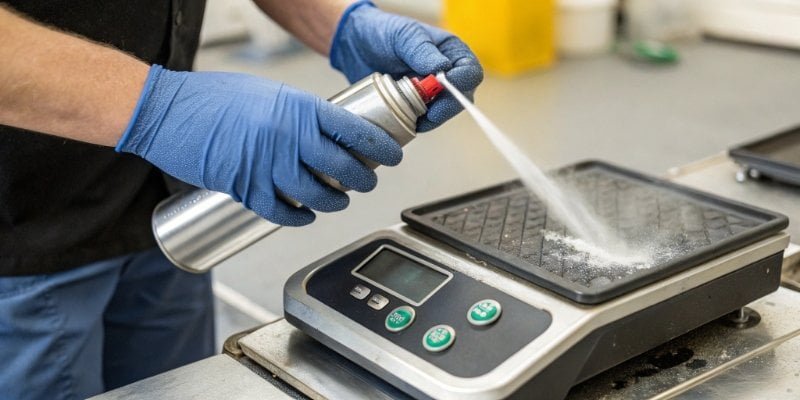
As a manufacturer, I deal with repairs caused by improper cleaning all the time. The most frequent issue we see is damage to the main circuit board or the load cell converter. These parts are the "brain" of the scale. They are highly susceptible to moisture and static. The cost of replacing a fried motherboard is often a significant fraction of the scale's original price. This is a completely avoidable expense. A careful, dry cleaning process turns a potential liability into a simple five-minute maintenance task.
Protecting Your Digital Investment
When you clean a digital scale, you are cleaning a computer. Its internal components require the same care as any other piece of high-tech equipment.
- The Circuit Board (PCB): Dust acts like a blanket. Over time, it can cause the components on the circuit board to overheat, shortening their lifespan. It can also absorb ambient moisture, creating a path for a short circuit. Compressed air is the best way to safely remove this dust.
- The Display & Keypad: Never use window cleaner or other harsh chemicals on the display screen. They can cause the plastic to become foggy or brittle. Use 99% alcohol wipes gently, as they clean effectively without leaving a residue or damaging the surface.
- The Connectors and Ports: I/O ports for data or power are magnets for dust. A quick blast of compressed air keeps these connections clean, preventing data transfer errors or poor power contact.
- The Static Threat: Technical directors understand the danger of Electrostatic Discharge (ESD). A person can build up thousands ofvolts of static electricity just by walking across a carpet. Touching a sensitive component without grounding yourself can release that energy, instantly destroying it. Anti-static gloves and brushes are your protection against this invisible threat.
What special care do old metal scales need during cleaning?
You have an old, reliable metal scale, but it's starting to show its age with rust and sticking parts. You're afraid that scrubbing too hard will damage it, but leaving it dirty is already affecting its accuracy. You need a method that is both gentle and effective.
For old metal scales, focus on removing grime without abrasives. Compressed air and a soft brush are your best tools for the mechanical parts. For rust on external, non-electronic surfaces, you can test a mild degreaser on a cloth, but keep it far from any sensors or electronics.

I have a deep respect for well-made older equipment. Some of these scales were built to last a lifetime. However, their mechanics are vulnerable in ways that modern digital scales6 are not. Their knife-edges and bearings must move freely, without friction from dirt or rust. Cleaning them is not just about looks; it is a mechanical tune-up. While you can handle the basic cleaning, you must also know when to call a professional or even consider an upgrade.
Reviving Vintage Weighing Equipment
Older or fully mechanical scales present a unique set of challenges. Their durability is legendary, but they are not immune to decay.
- Mechanical Joints and Bearings: The accuracy of an old scale depends on the almost frictionless movement of its internal levers and bearings. Dust, hardened grease, and grime can hinder this movement. Compressed air is excellent for blowing out these tight spaces. Avoid lubricants unless you know exactly what the manufacturer specified, as the wrong type can attract more dirt.
- Fighting Corrosion: Surface rust on the body might just be a cosmetic issue. You can clean it gently with a soft wire brush, but be careful not to damage the paint or surface. However, if you see rust on or near the knife-edges, load points, or any moving part, that is a serious problem. Rust here changes the geometry of the mechanics and makes accurate readings impossible. This often requires professional service.
- Calibration is Critical: After any deep cleaning of an older scale, a calibration check is mandatory. Just removing a small amount of grime from a critical pivot point can alter the scale's reading.
- Knowing When to Upgrade: Sometimes, the cost and effort of maintaining an old scale outweigh the benefits. A modern IoT-enabled scale7 from a company like ours can offer better accuracy, automated data logging, and far simpler maintenance. It can be a smart business move to retire a vintage piece for a modern tool that boosts productivity and profit.
Conclusion
Properly cleaning your scale with the right tools is key. Use compressed air and anti-static brushes, avoid liquids internally, and wear protective gear. This maintains accuracy and extends the life of your equipment.
-
Learn about the critical role of load cells in scale accuracy and care. ↩
-
Discover the advantages of using compressed air for safe and effective cleaning. ↩
-
Find out how anti-static brushes protect sensitive components during cleaning. ↩
-
Learn about the risks of ESD and how to protect your scales from damage. ↩
-
Discover how calibration wrenches ensure accurate weight readings. ↩
-
Explore specific cleaning techniques to maintain digital scales effectively. ↩
-
Explore how modern scales can enhance accuracy and reduce maintenance. ↩



Comments (0)