
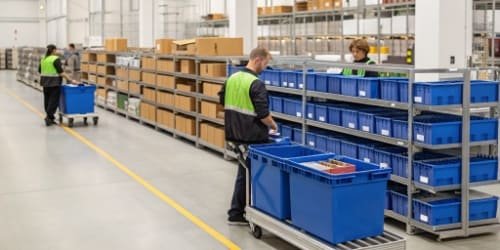
Managing inventory in a large canteen is a constant struggle. This difficulty often leads to food waste, inflated costs, and operational chaos. Modern technology offers a powerful solution to this problem.
Large canteens track inventory using a combination of specialized software, smart hardware like PC scales, and advanced technologies such as RFID and AI. This integrated system automates data collection, provides real-time stock levels, and generates detailed reports to streamline operations, cut waste, and control costs effectively.
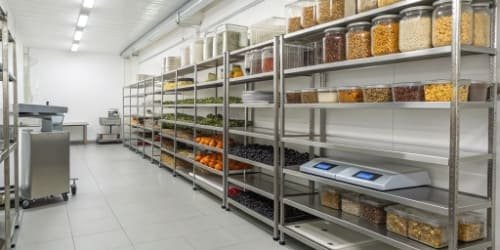
Moving from manual spreadsheets to a fully integrated system can seem like a huge leap. But the benefits are massive. You get more control, less waste, and a clearer picture of your daily operations. A smart system1 doesn't just count what you have; it helps you manage your entire food service business2 more intelligently. Let's break down the key components that make this possible.
How Do Large Canteens Use Software Tools to Manage Inventory?
Relying on pen and paper for inventory is slow and full of mistakes. These errors create major inventory gaps and constant headaches for managers. Specialized software completely automates these tedious tasks.
Canteens use inventory management software that connects directly to devices like PC scales. The software automatically records data for new supplies, tracks ingredient usage in real-time, and creates detailed reports. This empowers managers to make smarter purchasing decisions and keep costs under control.
In my experience, the magic happens when hardware and software work together. A standalone software program is helpful, but it still requires manual data entry. This is where we, as a hardware manufacturer, see the most significant impact for our clients. Imagine a delivery of fresh vegetables arrives. Instead of a worker writing down the details, they simply place the crate on a PC scale. The scale weighs the item, and this data is sent directly to the central inventory software. The software then updates the stock levels for that specific ingredient.
This integration extends from the loading dock to the kitchen.
The Connected Kitchen Workflow
The system creates a seamless flow of information. When a cook needs to prepare a dish, they weigh the ingredients on another connected scale. The software then automatically deducts that amount from the inventory. Management can see exactly what is being used, where, and when. This level of detail is impossible with manual methods.
| Feature | Manual Tracking | Integrated Software Tracking |
|---|---|---|
| Data Entry | Slow, prone to human error | Fast, automated, highly accurate |
| Stock Levels | Updated periodically (e.g., daily) | Updated in real-time |
| Reporting | Time-consuming to create | Instantly generated |
| Decision Making | Based on old, possibly inaccurate data | Based on current, precise data |
This connected approach turns your inventory into a dynamic, living database that gives you complete control.
What Are the Best Practices for Inventory Tracking in Large Food Services?
Having the right tools is only half the battle. If you use them with poor processes, you will still get waste and inefficiency. Adopting proven best practices is what guarantees success.
The best practices are implementing a First-In, First-Out (FIFO) system, setting clear par levels for all items, performing regular cycle counts, and providing thorough staff training. Combining these methods with technology ensures total consistency and accuracy in your inventory management.

Over my 19 years in the weighing industry, I've seen many businesses invest in great technology but fail to see the benefits because they skipped the fundamentals. A powerful system needs a solid foundation of good habits. In a high-volume food service environment, where many ingredients are perishable, this is especially true. You must have a clear and simple process that every team member can follow.
Key Practices for Success
First, establish a strict First-In, First-Out (FIFO)3 process. This means older stock is always used before newer stock. It's a simple concept, but it's the single most effective way to reduce spoilage. Your software can help by tracking delivery dates.
Second, set "par levels4" for every ingredient. This is the minimum amount of an item you need on hand at all times. When stock drops below the par level, your software can automatically flag it for reorder. This prevents stockouts and reduces the chance of emergency, high-cost purchases.
Finally, conduct regular "cycle counts5." Instead of doing a massive, disruptive inventory count once a month, you count a small section of your inventory every day. This makes the process manageable and helps you catch discrepancies early. When these practices are supported by accurate data from your scales and software, you create a powerful, efficient system.
How Can RFID Technology Help Large Canteens in Inventory Management?
Even with great software, tracking who did what can be difficult. This lack of clear accountability can lead to mistakes or even inventory loss. RFID technology offers a simple and automated way to solve this.
Workers can carry RFID cards, and containers can have RFID tags. When an item is moved or a worker uses a scale, a reader automatically captures the data. This creates a perfect, error-free digital record of every single action and item movement.
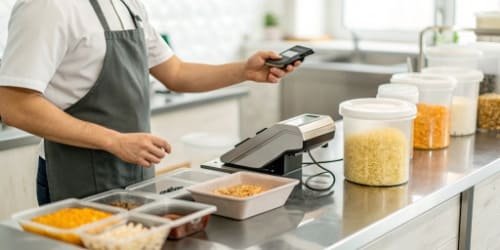
This is one of the areas I'm most excited about. RFID bridges the gap between the digital inventory system and the physical actions of your staff. It adds a layer of accountability that was previously very difficult to achieve. A barcode requires a person to actively scan it. An RFID tag is read automatically, with no extra steps. This speed and simplicity are perfect for a busy kitchen environment.
The RFID Workflow in Action
Let's look at how this works in practice. My insight for this article mentioned using RFID to track operators, and here is how it plays out for our clients.
- A kitchen staff member approaches a smart scale to portion ingredients. They have an ID badge with an embedded RFID chip.
- An RFID reader built into the scale station automatically identifies the employee.
- The employee weighs the needed ingredients for a recipe.
- The system records the weight, the ingredient, the time, and exactly which employee took it.
This process is seamless and happens in the background. It eliminates the need for manual logs and ensures every gram of inventory is accounted for. For management, it provides an invaluable audit trail6. If there are discrepancies, you can quickly trace them back to a specific time and person. It's not about watching over your staff's shoulder; it's about creating a system that is transparent and fair for everyone.
What Role Does Automated Inventory Tracking Play in Large Canteen Operations?
Manually tracking inventory is almost a full-time job in a large canteen. This pulls skilled staff away from more important tasks like cooking and service. Automation gives you that time and manpower back.
Automation uses IoT devices like smart scales and sensors to handle all the boring, repetitive tasks of inventory. It logs new shipments, monitors stock levels, and can even send reorder alerts automatically. This cuts labor costs, reduces human error, and ensures your data is always up-to-date.
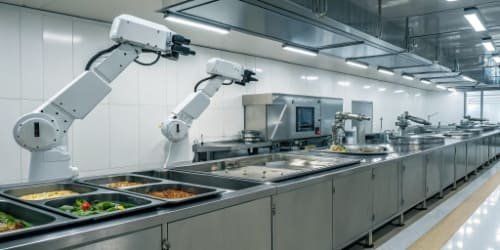
True automation is the ultimate goal. It’s where different technologies come together to create a system that almost manages itself. As I noted in my initial insights, the big challenge for canteens is that their raw ingredients are not standardized like products in a supermarket. Every bag of potatoes is different. This is where AI becomes a game-changer. At Weigherps, we work with software partners to integrate AI into weighing solutions. An AI-powered camera mounted on a PC scale can visually identify an item placed on it. It can tell the difference between carrots and celery without the operator having to touch a button.
The Power of Combined Technologies
This combination of technologies speeds up the receiving process tremendously. A worker can place a sack of onions on the scale, the AI identifies it, the scale weighs it, and the data is sent to the software—all in a few seconds.
This is the future of canteen management. It’s a system where each piece of technology handles a specific task better than a human ever could.
| Technology | Function in Canteen | Benefit |
|---|---|---|
| PC Scale | Provides precise weight data for ingredients. | Ultimate accuracy in stock numbers. |
| RFID | Identifies operators and bulk containers. | Creates accountability and a clear audit trail. |
| AI Camera | Recognizes non-standard food items. | Dramatically speeds up receiving and reduces input errors. |
| Software | Centralizes all data into one dashboard. | Provides a real-time, complete overview for management. |
By combining these tools, you build a truly automated system that is efficient, accurate, and intelligent. It empowers you to run your canteen not just as a kitchen, but as a smart, data-driven business.
Conclusion
Canteens can transform operations by integrating smart scales, software, AI, and RFID. This modern approach boosts efficiency, cuts waste, and drives profitability for a smarter, data-driven business.
-
Discover the characteristics of a smart system that can enhance your canteen's efficiency. ↩
-
Discover essential practices for running a successful food service business efficiently. ↩
-
Understand the FIFO method to minimize spoilage and optimize inventory turnover in your canteen. ↩
-
Learn how setting par levels can prevent stockouts and optimize inventory control. ↩
-
Discover how regular cycle counts can improve accuracy and efficiency in your canteen. ↩
-
Understand the importance of maintaining an audit trail for accountability in your canteen. ↩

Comments (0)