
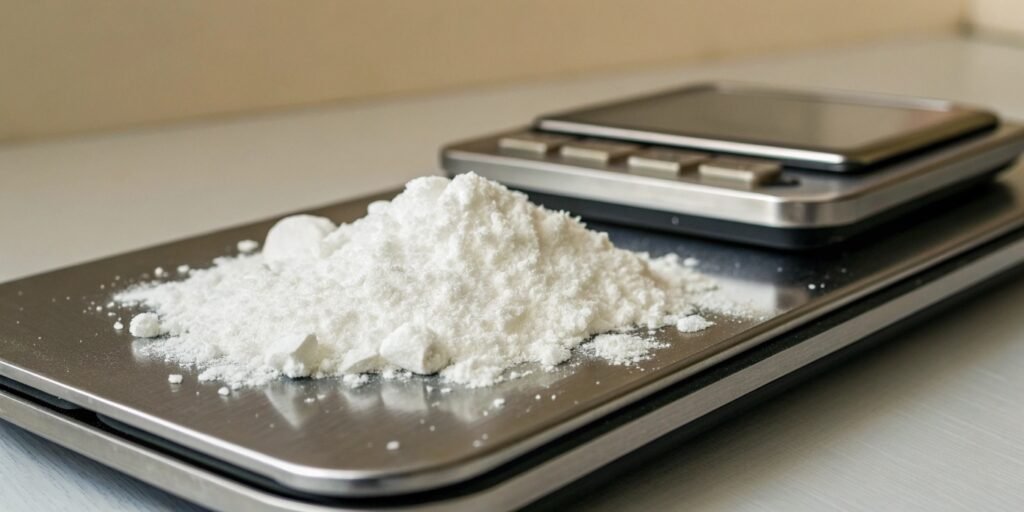
Law enforcement needs to weigh substances with court-admissible accuracy. An incorrect measurement can ruin a case. High-precision analytical balances are the essential tools for this critical and demanding job.
To weigh substances like cocaine for forensic or legal purposes, laboratories and law enforcement use high-precision analytical or semi-microbalances. These scales measure tiny amounts, often to 0.01 milligrams, ensuring the accuracy needed for court evidence and scientific analysis.
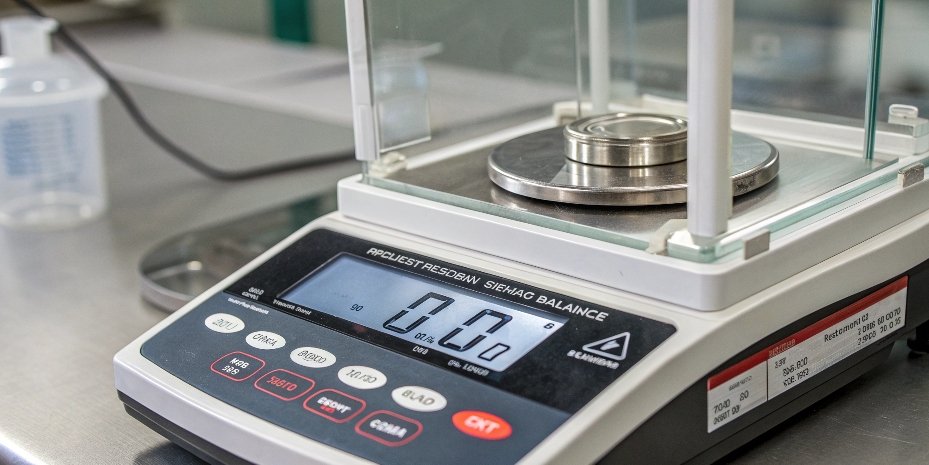
This kind of weighing goes far beyond simple measurement. The results must hold up under intense legal scrutiny, so the equipment and the process are specialized. But what exactly makes a scale suitable for this high-stakes task? It isn't just about showing a number on a screen. Let's look deeper into the specific technology that defines a "drug scale" in a professional, forensic context.
What is a drug scale?
The term "drug scale" is often used loosely online. Using the wrong type of scale for a serious application can lead to completely inaccurate and useless results. We need to understand what separates a professional instrument from a simple consumer gadget.
A "drug scale," in a professional sense, is a high-precision digital balance, like a semi-microbalance or analytical balance. It has features like high resolution (0.01 mg or better), a draft shield to protect from air currents, and anti-static properties for stability.
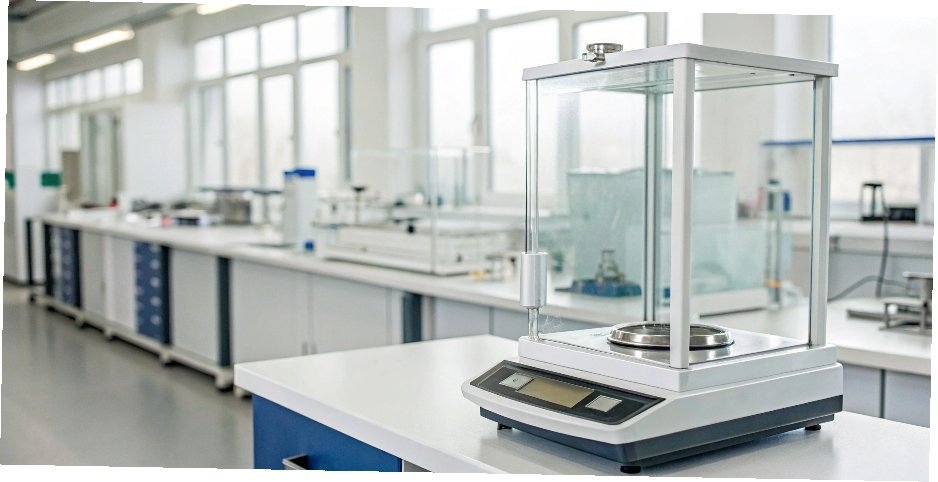
When we build weighing equipment for our clients in research and forensic labs, we focus on specific technical features. These features are non-negotiable for obtaining reliable and repeatable results, especially with fine powders that can be affected by the environment. I remember a client who was setting up a new lab and was shocked at how much a simple air vent could affect his readings before he installed proper draft shield1s. It's a perfect example of why these details matter.
Here are the core components that define a professional-grade scale for this purpose:
- High Resolution: This is the smallest change in mass the scale can detect. For forensic work, a resolution of 0.1 mg to 0.01 mg is often required.
- Draft Shield: A clear enclosure around the weighing pan. It stops air currents, dust, and even the operator's breath from affecting the measurement of such small quantities.
- Internal Calibration: Many high-end balances have internal motorized weights. They can calibrate themselves to ensure accuracy without needing a technician to do it manually with external weights.
- Anti-Static Measures: Powders like cocaine are prone to static electricity, which can make them "jump" and cause inaccurate readings. Features like anti-static weighing pans or ionizers are crucial.
This table shows the clear difference in capabilities:
| Feature | Professional Analytical Balance | Pocket / Kitchen Scale |
|---|---|---|
| Readability | 0.1 mg - 0.01 mg | 0.1 g - 1 g |
| Accuracy | Extremely High | Low to Moderate |
| Draft Shield | Standard Feature | None |
| Calibration | Internal or External (Certified) | None / Factory Set |
| Primary Use | Lab, Forensics, Pharmacy | Food, Hobbies, General Use |
How are illegal drugs measured?
Measuring seized substances for an official investigation is not a simple task. A simple weight reading is not enough; the entire process must be transparent and legally defensible. This requires strict protocols and specialized equipment to ensure there are no errors.
Illegal drugs are measured in controlled laboratory environments using calibrated analytical balances. The process involves careful handling to avoid contamination, using anti-static equipment, and documenting every step to maintain a strict chain of custody for legal purposes.
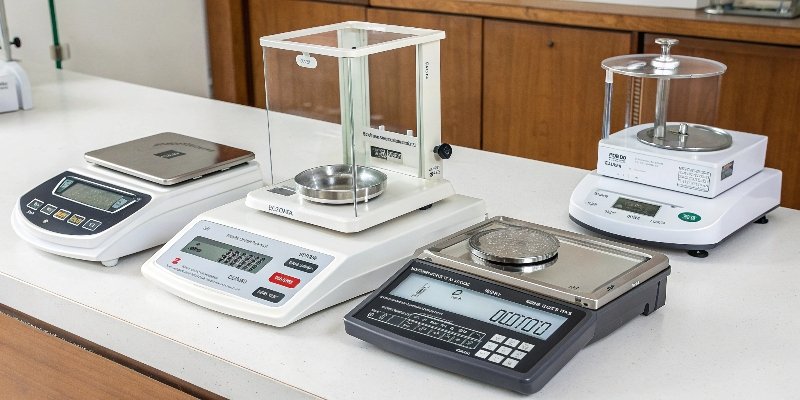
In my 18 years in the industrial scale business, I have worked with labs that support law enforcement. Their procedures are incredibly strict for a reason. Every single step, from sealing the evidence bag to placing the substance on the scale, is recorded. The integrity of the evidence, known as the "chain of custody2," is paramount. The scale itself is just one tool in this meticulous process.
The measurement procedure typically includes these key stages:
1. Environment Control
The scale is placed on a heavy, vibration-proof table in a room with a stable temperature and humidity. It is kept away from windows, doors, and air vents. All these precautions prevent external factors from influencing the delicate weighing mechanism and ensure the result is only for the substance itself.
2. Instrument Verification
Before any measurement, the technician verifies the scale's calibration. This is often done using certified weights that are known to be an exact mass. The scale's logbook is updated to show that it was checked and performed correctly. This step is crucial for proving the instrument was working properly at the time of the measurement.
3. Careful Handling and Weighing
The substance is handled with clean tools to prevent contamination. If it's a powder, it is often weighed on special anti-static paper or in a container. The draft shield1 doors are closed, and the operator waits for the reading to stabilize before recording the value. This process is often repeated multiple times to ensure the result is consistent.
Can you use a kitchen scale for drugs?
People sometimes think that any digital scale can be used to weigh small amounts. But using a kitchen scale for potent substances is incredibly inaccurate and completely unsuitable. It's important to understand why the right tool is critical for a sensitive job.
No, you cannot use a kitchen scale to accurately weigh drugs for any serious purpose. Kitchen scales typically measure in grams and lack the milligram precision needed for potent substances. Their inaccuracy makes them completely unreliable for forensic, pharmaceutical, or laboratory applications.
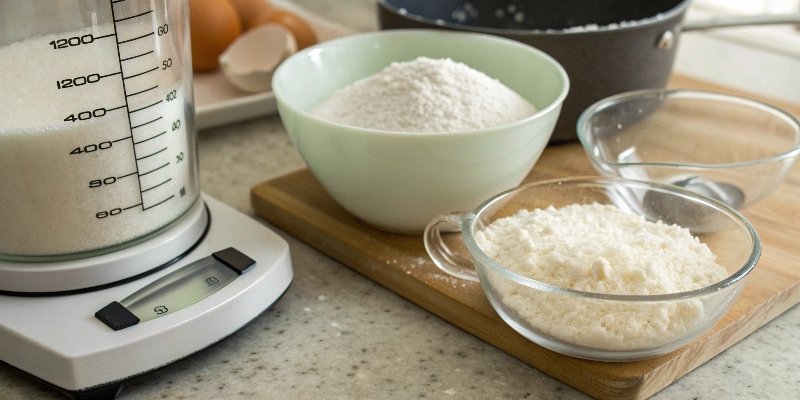
The difference in technology between a kitchen scale and a lab-grade analytical balance is huge. We design industrial and laboratory scales to solve problems where precision is everything. A kitchen scale3 is designed for an entirely different purpose, where being off by a gram or two doesn't matter for a cake recipe. For controlled substances, a milligram can change everything.
Let's break down exactly why a kitchen scale fails at this task:
Readability and Precision
A good kitchen scale might measure in 1-gram increments. An analytical balance4 measures in increments as small as 0.0001 grams (or 0.1 milligrams). That means the analytical balance is at least 10,000 times more precise. A kitchen scale would not even register a small, yet significant, quantity of a potent substance.
Repeatability
If you weigh the same object on an analytical balance three times, you will get the exact same result every time (e.g., 1.2543 g). If you try this with a kitchen scale, the results might be 1 g, then 2 g, then 1 g again. It is not designed to be repeatable for small masses, making it useless for reliable data.
External Factors
Kitchen scales have no protection from the environment. A slight breeze, a vibration from someone walking by, or even temperature changes can alter the reading without you knowing. The draft shield1 and stable construction of a lab balance are specifically designed to prevent these errors.
How is drug use measured?
The way drug use is quantified depends heavily on the context. Potency means that dosage is critical, and tiny errors in measurement can lead to huge problems. To get it right, you need instruments with microgram or milligram precision.
Measuring drug dosage requires extreme precision beyond what simple scales can offer. In pharmaceutical or research settings, this is done with analytical or microbalances. These devices ensure active ingredients are measured accurately in milligrams or micrograms for safety and efficacy.

The need for precision weighing is universal in science and medicine. Over the years, we've provided custom weighing solutions for everyone from large industrial plants to specialized medical research labs. The common thread is that a correct measurement is the foundation of a safe and effective outcome. When it comes to substances people ingest, there is zero room for error.
Here's how measurement works in different professional fields:
Pharmaceutical Manufacturing
When a company creates medicine, they use highly regulated processes. Good Manufacturing Practices (GMP)5 require that every ingredient, especially the active pharmaceutical ingredient (API), is weighed on a calibrated and certified balance. A tiny error could make a pill ineffective or, worse, toxic. The balances used in this industry are among the most precise available.
Forensic Toxicology
When a lab tests a biological sample (like blood) for drugs, they are not just weighing the drug itself. They use a combination of technologies, including mass spectrometry6, which can identify and quantify substances down to the nanogram level. However, creating the reference standards used to calibrate these machines requires an initial, highly accurate weighing on a microbalance.
Research and Development
In laboratories studying the effects of new compounds, scientists must prepare solutions with very specific concentrations. The entire experiment depends on the accuracy of that initial measurement. Using the wrong amount could invalidate weeks or months of work. This is why our R&D clients invest in high-performance weighing equipment. It is fundamental to good science.
Conclusion
Precise measurement of controlled substances is critical for legal and scientific accuracy. Only high-precision analytical balances can provide the required reliability, ensuring justice in the courtroom and safety in the laboratory.
-
Learn how draft shields protect measurements from environmental factors. ↩ ↩ ↩
-
Understand the critical role of chain of custody in maintaining evidence integrity. ↩
-
Find out why kitchen scales are unsuitable for precise measurements in forensic applications. ↩
-
Understand the features and applications of analytical balances in various fields. ↩
-
Learn about GMP and its role in ensuring quality and safety in pharmaceutical manufacturing. ↩
-
Explore the technology of mass spectrometry and its application in forensic science. ↩



[…] often stricter, requirements. The pharmaceutical and food industries, for example, must comply with Good Manufacturing Practices (GMP)3. GMP often requires weighing accuracy to be within ±0.1% of the full scale (FS). If you're […]
[…] requires four decimal places, a balance with 0.1mg readability is necessary. Don't pay for a semi-microbalance3 (0.01mg) if you don't need that fifth decimal […]