

Need perfectly accurate measurements in your lab? A tiny error can waste valuable time and materials. Choosing the right high-accuracy scale is the key to reliable results.
For extremely high accuracy, you should use an analytical balance or a microbalance. Analytical balances measure to 0.1 milligrams, perfect for chemical analysis. Microbalances are even more precise, ideal for tiny samples in biological research or nanomaterials development.

I've been in the scale manufacturing business for 18 years, and I've seen firsthand how the right instrument can transform a lab's workflow. Just knowing you need an "analytical balance1" is only the start. The details are what matter most for getting the repeatable, trustworthy data you depend on. Let's break down what you really need to know before you make a purchase.
What is the difference between an analytical balance and a precision balance?
Confused between "analytical" and "precision" balances? Choosing the wrong one can lead to inaccurate data or overspending on features you don't need. Let's clarify the difference.
The main difference is readability. An analytical balance is more sensitive, typically reading to 0.1mg or better. A precision balance usually reads to 1mg or 10mg. Analytical balances also require an enclosed draft shield to protect against air currents, which precision balances often don't.
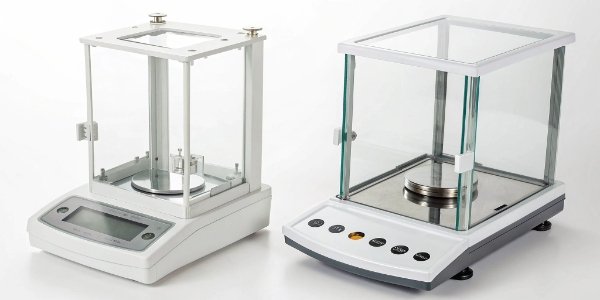
When my clients ask me about this, I tell them to think about what they're weighing. Both scales are accurate, but they serve different purposes. An analytical balance is for when the tiniest speck of material matters. A precision balance is a robust workhorse for general lab tasks where you need good, but not sub-milligram, accuracy. The distinction is crucial for both your budget and your scientific outcomes. To make it clearer, I've put together a simple table that highlights the main differences I always point out.
Key Differences at a Glance
| Feature | Analytical Balance | Precision Balance |
|---|---|---|
| Readability | 0.1 mg to 0.001 mg | 1 g to 0.001 g (1 mg) |
| Draft Shield | Always included (glass enclosure) | Sometimes, but often open pan |
| Capacity | Lower (typically up to ~300 g) | Higher (can be several kilograms) |
| Common Use | Quantitative chemical analysis, formulation | Sample preparation, quality control2 |
| Sensitivity | Extremely high; sensitive to environment | High, but more robust |
What key features should a high-accuracy laboratory scale have?
Are you buying a high-end laboratory scale? Missing one critical feature can limit your lab's efficiency for years. Here are the essential features you must look for.
A high-accuracy scale must have excellent readability (0.1mg or better) and repeatability. Look for internal automatic calibration to ensure constant accuracy without manual effort. A draft shield is essential, and data connectivity (like USB or RS232) is crucial for modern lab workflows.
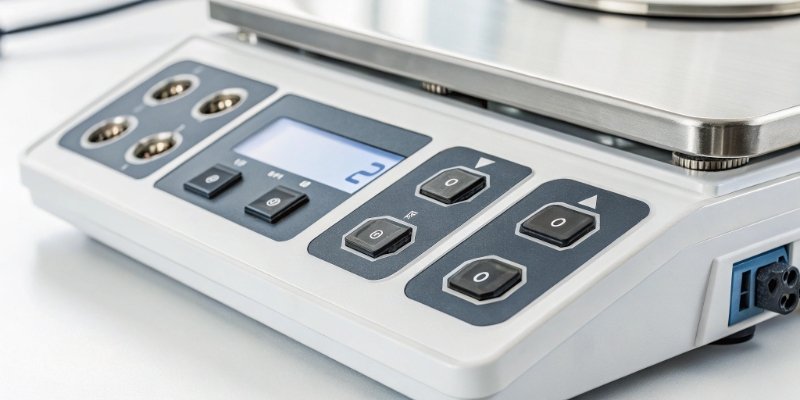
In my 18 years in the business, I've helped many labs choose their equipment. The best scales make your job easier, not harder. It's about more than just a number on a screen. The scale needs to be a reliable partner in your research. Top-tier brands like Mettler Toledo3 and Sartorius4 offer amazing features, but their cost can be high. At Weigherps, we focus on delivering these same core features—repeatability5, connectivity, and reliability—in a more budget-friendly package. We believe every lab deserves access to quality instruments.
Core Performance Metrics
The first thing to check is performance. Readability is the smallest increment the scale can display. Repeatability is just as important; it measures the scale's ability to show the same result when weighing the same object multiple times. Poor repeatability means you can't trust your data.
Must-Have Functional Features
Next, look at features that save you time and prevent errors. Internal Automatic Calibration is a huge one. The scale calibrates itself when it senses temperature changes or at set time intervals. This means you don't have to manually do it with external weights. Data Connectivity via USB or RS232 is also non-negotiable for modern labs. It lets you send results directly to a computer or LIMS, which eliminates transcription errors.
How do you determine the required readability for a lab application?
Not sure how much precision your lab actually needs? Overpaying for unneeded accuracy or getting a scale that's not precise enough are common mistakes. Here's how to decide.
Use the "ten times" rule. The scale's readability should be at least ten times more precise than the smallest tolerance you need to measure. If your process allows for an error of ±1mg, you need a balance with at least 0.1mg readability.

This is a question I get almost every day. It feels complicated, but it's not. The goal is to make sure the scale's own uncertainty doesn't significantly affect your measurement's accuracy. You want your process tolerance6, not the scale's limitations, to be the main source of potential error. Thinking about this before you buy ensures you get an instrument that is fit for your purpose without spending more than you have to. Let's walk through it.
Understand Your Smallest Sample and Tolerance
First, what is the smallest amount of material you plan to weigh? More importantly, what is the acceptable margin of error for that measurement in your experiment or process? This is your process tolerance. For example, in a chemical formulation, you might need to add 50 mg of a substance, with an acceptable tolerance of ±0.5 mg.
Apply the Rule of Ten
Once you know your tolerance, apply the simple rule. Your scale's readability7 must be at least one-tenth of that tolerance. In our example, the tolerance is 0.5 mg. One-tenth of that is 0.05 mg. Therefore, you would need a balance with a readability of 0.01 mg. This ensures the balance is sensitive enough for the task. Some regulated industries, like pharmaceuticals, have specific guidelines (like USP 418) that define this even more strictly, so always check your industry standards.
What environmental factors can affect the accuracy of an analytical balance?
Is your expensive new balance giving you unstable readings? The problem might not be the scale itself, but the room it's in. Let's look at the environmental culprits.
The biggest factors are air drafts, temperature changes, vibrations, and static electricity. Even a person walking nearby can affect a sensitive balance. Controlling these elements is absolutely necessary to get accurate and repeatable results from your instrument.

I once visited a client's brand-new lab where they were complaining about their top-of-the-line analytical balance. The readings were all over the place. I walked in and immediately saw the problem: the balance was right under an air conditioning vent. We moved it to a corner of the room on a sturdy, heavy table, and the readings stabilized instantly. Your balance is only as good as the environment you put it in.
Physical Disturbances
The most obvious problems are physical. Vibrations from footsteps, closing doors, or nearby heavy machinery can travel through the floor and disrupt the scale. That's why a heavy, stable weighing table (often made of stone or marble) is recommended. Air drafts from HVAC systems, open windows, or even people walking by can push on the weighing pan. This is exactly why analytical balances have a draft shield. Always keep the doors closed during a critical measurement.
Invisible Forces
Other factors are harder to see. Temperature changes can cause components inside the scale to expand or contract, leading to drift. Keep the balance away from direct sunlight, vents, and equipment that produces heat. Static electricity is another major issue, especially with plastic containers or fine powders. It can cause materials to "jump" on or off the pan, leading to incorrect readings. Using an anti-static ionizer or metal weigh boats can help solve this problem.
Conclusion
Choosing the right analytical balance means matching its readability to your application and controlling the lab environment. This simple approach ensures your team achieves precise and trustworthy results.
-
Explore this link to understand the functionality and applications of analytical balances in laboratory settings. ↩
-
Discover the role of precision balances in maintaining quality standards in laboratory processes. ↩
-
Explore the advanced features of Mettler Toledo scales, known for their reliability and precision. ↩
-
Learn about the innovative features of Sartorius scales that enhance laboratory efficiency. ↩
-
Explore the importance of repeatability in ensuring consistent and trustworthy data in experiments. ↩
-
Understanding process tolerance helps in selecting the right scale for your specific measurement requirements. ↩
-
Understanding readability is key to selecting the right scale for your specific measurement needs. ↩
-
Understanding USP 41 guidelines is crucial for compliance in pharmaceutical and laboratory settings. ↩



[…] to pay more and handle the equipment with extreme care because they absolutely need that level of sub-milligram precision3. But for 99% of industrial tasks, like batching, filling, or checkweighing, that level of […]