
Your gym members are looking for results, but your current system can't connect their effort to their data. This disconnect makes delivering personalized, data-driven fitness plans nearly impossible.
A modern gym should use an IoT-enabled digital body composition scale. These scales go beyond simple weight measurement. They analyze metrics like body fat and muscle mass and integrate directly with your gym management software, giving members personalized fitness tracking through a dedicated mobile app.
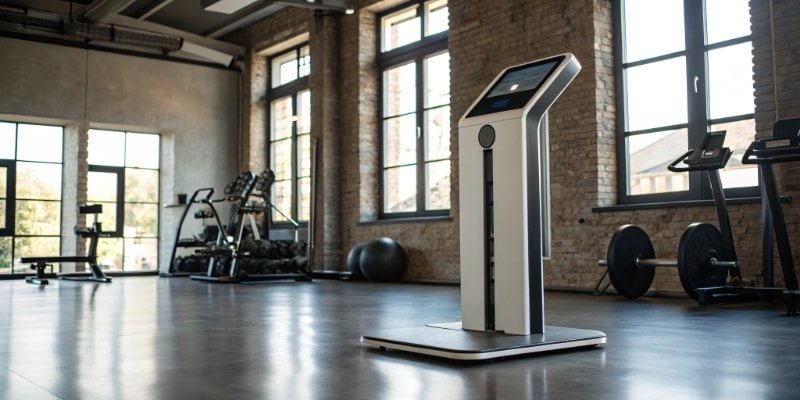
Choosing the right scale is no longer just about accuracy; it's about integrating technology to enhance the member experience1. The right hardware can transform a simple weigh-in into a powerful touchpoint for engagement and retention. It's the physical link to your digital ecosystem. But with so many options, how do you know which technology is right for your facility and, more importantly, for your members? Let's break down the key questions you need to ask.
Which type of weight scale is most accurate?
Inaccurate scales ruin member trust and undermine your gym's professional image. Promising data-driven results is impossible if your core measurement tool is unreliable. Digital technology offers superior precision.
For gyms, digital scales using Bioelectrical Impedance Analysis (BIA) are the most accurate and useful. They provide consistent weight readings plus detailed body composition data. Regular calibration ensures they maintain this high accuracy, building member confidence and providing valuable tracking insights.

When we talk about accuracy in a gym setting, we need to look deeper than just the weight number. The best scales use a combination of high-quality sensors and advanced technology. As a manufacturer with nearly two decades of experience, we know that true accuracy comes from quality components and rigorous testing.
Understanding Scale Technology
The technology inside the scale determines its accuracy. Basic digital scales2 use strain gauge load cells to measure weight, which is a big step up from the springs in mechanical scales. However, for a gym, you need more. BIA technology sends a safe, low-level electrical current through the body to estimate body composition.
Comparing Accuracy Across Scale Types
| Scale Type | Technology | Accuracy Factors | Best For |
|---|---|---|---|
| Mechanical | Springs & Dial | Prone to wear, hard to read precisely. | Basic home use, not for gyms. |
| Standard Digital | Strain Gauge Load Cells | High accuracy for weight, no wear. | When only weight is needed. |
| BIA Digital | Load Cells + BIA | High accuracy for weight, provides estimated body composition. | Modern gyms tracking member progress. |
At our facility, every single scale undergoes a comprehensive inspection by our quality control department before it leaves. We test for weight accuracy, battery performance, and software stability. We do this because we believe your reputation is built on the reliability of our products.
Are gym weighing scales accurate?
Members constantly compare their weight at the gym to their scale at home, leading to doubts. This questioning can chip away at your facility's credibility and the value of your programs.
Yes, professional-grade gym scales are very accurate for their intended purpose: tracking trends over time. While absolute weight can vary between devices, a quality gym scale provides consistent, repeatable measurements, which is what matters for monitoring fitness progress and making adjustments to training plans.

The most important quality of a gym scale isn't perfect, absolute accuracy—it's precision and consistency. A member's weight can fluctuate daily due to hydration, meals, and other factors. A good scale will reflect these changes consistently. Educating members that progress is about the trend line over weeks, not a single day's number, is key. This is where smart scales3 shine.
Accuracy vs. Consistency
- Accuracy: How close a measurement is to the true value.
- Consistency (or Precision): How close repeated measurements are to each other.
For a gym member, consistency is more valuable. They need to know that if the scale shows they lost one pound of fat and gained one pound of muscle, it's a reliable trend. Our IoT scales help manage this. By connecting to software, each weigh-in is time-stamped and logged automatically. Your software can then present this data in an easy-to-understand graph. This transforms a simple number into actionable data, empowering personal trainers4 and members to make better decisions. As a hardware partner, we provide the reliable foundation for your software to deliver this powerful user experience.
How do I choose the right weighing scale?
You think you are just buying a scale, but the wrong choice leads to wasted money, member complaints, and integration headaches. How do you select a scale that grows with your business?
Choose a scale based on three pillars: integration capability, data metrics, and durability. The best scale must connect seamlessly to your software, measure the body composition metrics your members need, and be built to withstand the heavy traffic of a commercial gym.

As a software provider, your primary concern is how a piece of hardware will talk to your system. That's our primary concern, too. We don't just sell scales; we provide weighing solutions5. We built our business on empowering customers to leverage technology.
Key Selection Criteria
- System Integration: This is non-negotiable. A modern gym scale must have a clear path to connect to your gym management software. We support our partners by providing robust Software Development Kits (SDKs) and Application Programming Interfaces (APIs). Our technical team works with you to ensure a smooth integration, allowing our hardware to become a natural extension of your software.
- Data Metrics Provided: What do your members need to know? A simple weight number is not enough anymore.
| Metric Level | Data Provided | Member Value |
|---|---|---|
| Basic | Weight | Minimal insight. |
| Intermediate | Weight, Body Fat %, Water % | Good for general fitness tracking6. |
| Advanced | All the above + Muscle Mass, Bone Mass, BMI, BMR | Provides a complete picture for serious athletes and detailed progress reports. |
- Durability and Support: A gym is a high-traffic environment. The scale must be built with industrial-grade components, have a tempered glass or reinforced platform, and be easy to clean. Furthermore, you need a partner who stands behind their product. We provide a 12-month after-sales service guarantee and a dedicated support team to assist with any technical challenges.
Which is better mechanical or digital weighing scale?
Old-style mechanical scales seem simple and tough, but in a data-driven fitness world, they are an anchor. Is that "old reliable" scale actually holding your business back from its potential?
For any modern gym, a digital scale is far superior to a mechanical one. Digital scales offer greater accuracy, provide vital body composition data through BIA, and can connect to management software. This connectivity is the key to offering personalized, 21st-century fitness services.
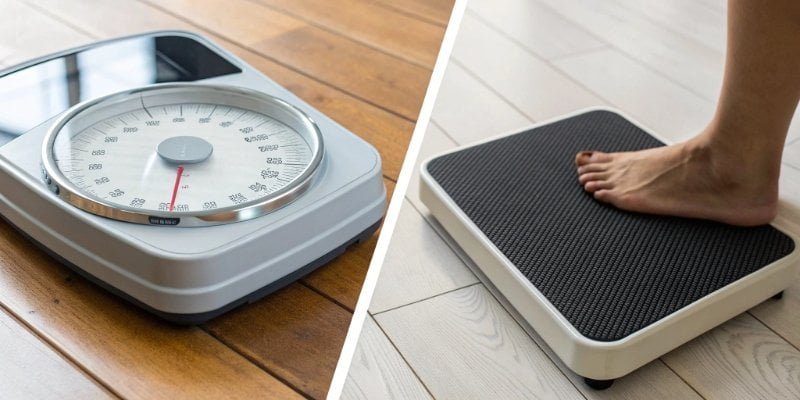
The decision between mechanical and digital is a decision between the past and the future. While a mechanical scale might feel nostalgic, it offers zero data integration, which is the lifeblood of a modern gym experience. My insight when I started this journey was that modern gyms are becoming data hubs, and a scale is a primary data-collection point.
Head-to-Head Comparison
Mechanical Scales
They operate on a spring mechanism. When you step on the scale, the spring compresses, and a dial moves to indicate your weight.
- Pros: No power source needed. Very simple to operate.
- Cons: Accuracy degrades over time as the spring wears out. Readings can be inconsistent. It only measures weight. Most importantly, there is no way to capture and transfer data automatically.
Digital Scales
They use electronic load cells for precise weight measurement7 and often include BIA technology for body composition analysis.
- Pros: Highly accurate and consistent. Provide a wealth of data beyond weight. The digital display is easy to read.
- Pros (The Game Changer): They are designed for connectivity. With Wi-Fi or Bluetooth, they can instantly send data to a member's app or your central management system.
This single feature—connectivity—is what enables the entire ecosystem your members now expect. It allows for automated tracking, personalized plans, and competitive challenges. Choosing a digital, IoT-ready scale is the first step in achieving the quantum leap in business development we envision for all our partners.
Conclusion
To thrive, modern gyms need smart, digital body composition scales. These devices must integrate with software to offer the personalized, data-driven fitness tracking that today's members demand and value.
- Explore how integrating technology can enhance member satisfaction and retention. ↩
- Discover the benefits of digital scales over mechanical ones for accurate fitness tracking. ↩
- Discover how smart scales can provide actionable insights for trainers and members. ↩
- Explore how trainers can utilize scale data to enhance client training and results. ↩
- Find out about innovative weighing solutions that can transform gym operations. ↩
- Learn best practices for tracking fitness progress and keeping members motivated. ↩
- Understand the best practices to ensure accurate weight measurements for members. ↩



[…] manufacturer, open communication is key. A good hardware partner will provide comprehensive SDKs3, clear API documentation4, and direct access to their engineering team. When your developers have […]