
Your scale is giving inconsistent readings, and you know it needs calibration. Without a proper 50g weight, you risk inaccurate measurements that could compromise your entire project.
To calibrate a scale with 50g without a standard weight, you can use ten U.S. nickels, as each one weighs 5 grams. Alternatively, 50 milliliters of pure water in a lightweight, sealed container will also weigh 50 grams. These are great substitutes for quick checks.
Using everyday items to check your scale is a smart move when you're in a pinch. But how accurate are these methods, and are they suitable for professional or industrial settings? The answer depends entirely on the level of precision you need. Let’s explore the options, from simple household tricks to the high-tech solutions we use in the industry. Understanding these differences will help you maintain your equipment's accuracy and reliability.
What weighs exactly 50g?
You need an exact 50g reference, but all you have are everyday objects. This uncertainty is frustrating and could affect your results. Here are some reliable options you can use.
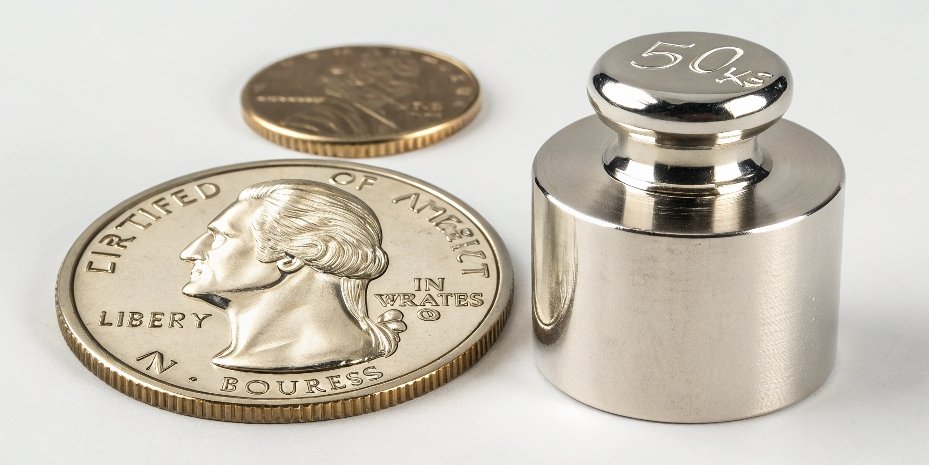
Strictly speaking, only a certified F1 or E2 class calibration weight weighs exactly 50g. For practical purposes, ten U.S. nickels (minted after 1866) or 50ml of pure water at 4°C are excellent substitutes for non-critical applications.
The term "exactly" is very important in the world of weighing. For most home or office tasks, a tiny bit of variation doesn't matter. But in a lab or industrial setting, precision is everything. As a scale manufacturer with 18 years of experience, I know that the right tool for the job is critical. Let's look at why these substitutes work and where their limits are.
Using Common Items as a Reference
Some household items have surprisingly consistent weights. This makes them useful for a quick calibration check. Coins are a popular choice because governments mint them to specific standards.
- U.S. Nickels: Each nickel weighs 5.0 grams. Ten of them make a reliable 50g reference.
- U.S. Pennies: Pennies minted after 1982 weigh 2.5 grams. Twenty of them will give you 50g.
A Scientific Approach with Water
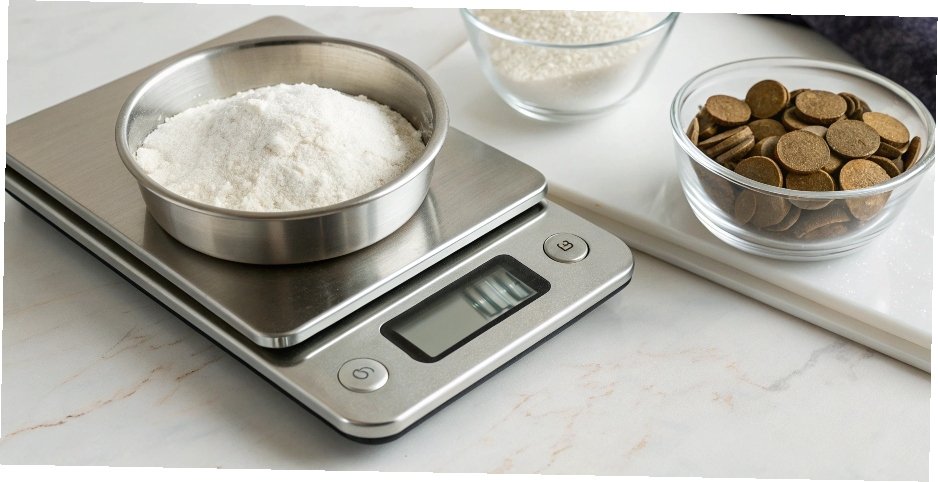
Water offers another great option due to its density. One milliliter of pure water weighs one gram. So, if you carefully measure 50 ml of water into a very light container, you have a 50g weight. Just remember to subtract the container's weight by using your scale's tare function1 first. This method is highly accurate if done carefully.
| Item | Weight per Unit | Quantity for 50g | Potential Error |
|---|---|---|---|
| U.S. Nickel | 5.0 g | 10 coins | Low (due to wear) |
| U.S. Penny | 2.5 g | 20 coins | Low (due to wear) |
| Pure Water | 1 g/mL | 50 mL | Medium (measurement error2) |
| AA Battery | ~23 g | 2 batteries + 4g | High (varies by brand) |
What can I use to calibrate my digital scale 50g?
Your digital scale is demanding to be calibrated, but you don't have the official weight. Ignoring it will lead to errors. I'll show you how to fix this now.
For the highest accuracy, use a certified 50g calibration weight. For general use, common items like ten nickels work well. Many modern industrial scales also feature no-weight calibration, which uses internal sensor data for a highly precise and convenient recalibration.
Choosing the right calibration method depends on your scale and your needs. A simple kitchen scale has different requirements than a high-precision industrial machine. We help our clients find the most cost-effective and accurate weighing solutions, and that includes the calibration process. Here's a breakdown of the methods you can use, from the simplest to the most advanced.
The Substitute Item Method
This is the most accessible method. It's perfect for quickly checking a scale at home or in a non-critical business setting. The process is straightforward and doesn't require special equipment.
- Prepare: Place your scale on a flat, stable surface away from any drafts.
- Tare: Turn the scale on and press the "Tare" or "Zero" button to clear the display.
- Calibrate: Place your 50g substitute (like ten nickels) on the scale.
- Confirm: Enter your scale’s calibration mode3 (check the manual) and confirm that the weight is 50g.
No-Weight Calibration Technology
For industrial applications where precision is non-negotiable, we often use a more advanced method. This is especially true for our custom IoT weighing systems. Many digital sensors come with factory-calibrated data stored internally. The scale's instrument can read this data and perform a "no-weight" calibration. This technique provides an error margin of less than 0.1%, which is far more accurate than using substitute items. It saves time and removes the need to buy and maintain expensive certified weight sets.
What is an example of 50 grams?
You see "50 grams" in a recipe or manual, but it's hard to visualize. This makes it tough to estimate weight. I'll give you clear, everyday examples.
A good example of 50 grams is a large chicken egg. You can also think of it as a small bag of peanuts, about ten U.S. nickels, or a standard-sized C battery. These common items help you feel and see what 50 grams really is.
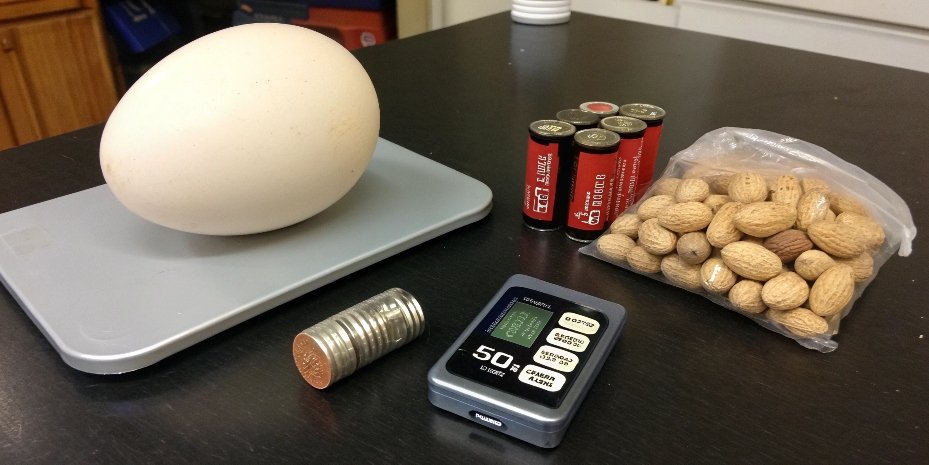
Connecting a measurement to a real-world object makes it much easier to understand. Over the years, I've found that giving customers relatable examples helps them use their equipment more effectively. Whether you're a home user or a purchasing manager, having a good mental reference for weight is incredibly useful. It helps you spot potential issues with your scale long before they become big problems.
Examples from Daily Life
You can find things that weigh about 50 grams all around you. This makes it easy to get a feel for the weight.
- In the Kitchen: A single large egg or about 1/4 cup of granulated sugar is close to 50g.
- In the Office: A stack of about nine business cards or a small roll of tape weighs around 50g.
- Common Goods: One of those small "travel-size" bars of soap is often 50g. Two AA batteries are just under, at about 46g.
Here is a simple table to help you visualize it.
| Category | Item | Approximate Weight |
|---|---|---|
| Food | Large Chicken Egg | 50 g |
| Food | 1/4 Cup of Sugar | 50 g |
| Office | Stack of 9 Business Cards | 50 g |
| Household | C Battery | 50 g |
| Currency | Ten U.S. Nickels | 50 g |
What weight do you need to calibrate scales?
You know you need to calibrate your scale, but which weight should you use? Using the wrong one can make your scale less accurate. I will clarify this for you.
The specific weight needed for calibration is determined by your scale's model and capacity. You should always check the user manual first, as it will tell you the exact weight to use. Often, it is a value around 50% to 75% of the scale's maximum capacity.
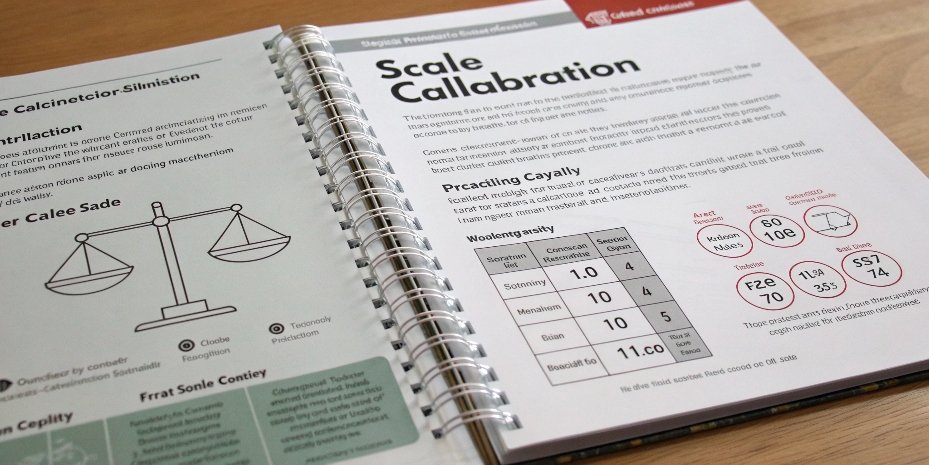
As an industrial scale manufacturer, one of the most common support questions we get is about calibration. People often think any known weight will work, but that's not true. Scales are designed to be calibrated at specific points to ensure accuracy across their entire weighing range. Using the wrong weight will give you a false sense of accuracy.
Why the Manual is Your Best Friend
Your scale's user manual is the most important resource for calibration. It removes all guesswork. The manufacturer has determined the optimal calibration point for that specific model's load cell and software. If the manual says to use a 100g weight, then a 50g weight won't work correctly. This information is crucial for maintaining the equipment as intended.
Span vs. Linearity Calibration
For basic scales, a single weight calibration (called a span calibration) is usually enough. This sets the scale's upper weighing limit. However, for high-precision4 or commercial scales, a linearity calibration might be required. This process uses multiple weights, for example, at 25%, 50%, and 100% of the scale's capacity. It ensures the scale is accurate not just at zero and full capacity, but also at all the points in between. This is vital for applications where materials are measured at various weights. We provide our clients with clear documentation and support to ensure they perform the right calibration every time.
Conclusion
Calibrating with 50g is simple. Use certified weights for top precision or common items for quick checks. Always verify your scale's accuracy after calibration to ensure reliable results.
-
Understanding the tare function is crucial for accurate weight measurements. ↩
-
Learn about factors that can lead to measurement errors in your scale. ↩
-
Learn how to enter calibration mode for accurate scale adjustments. ↩
-
Explore what makes high-precision scales essential for accurate measurements. ↩


Comments (0)