
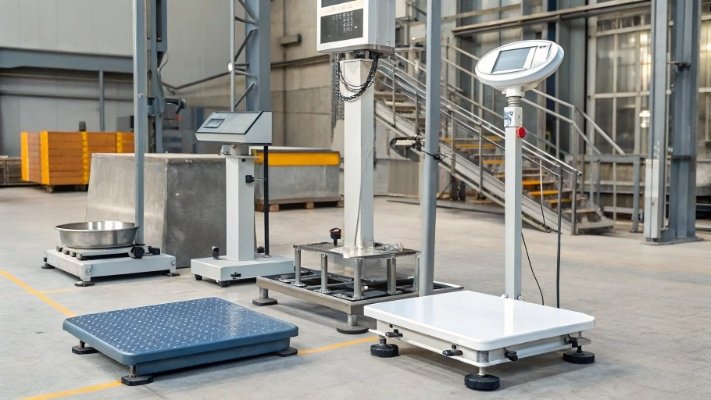
Are you struggling to find the right weighing system? The options seem endless, and a wrong choice can cost you significant time and money. Here’s a clear guide.
An industrial weighing system is a tool used to measure the weight or mass of objects in industrial settings. These systems range from simple mechanical scales to advanced electronic and smart IoT systems, utilizing components like load cells and digital indicators for precise measurement in manufacturing, logistics, and chemical industries.
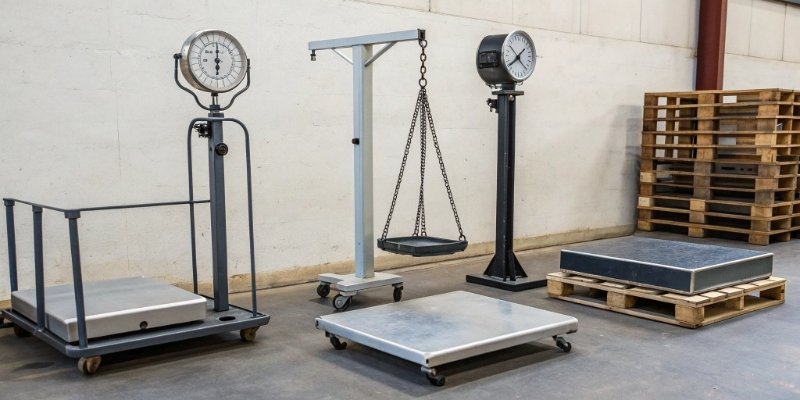
You now have a basic idea of what these systems are. However, to truly make an informed decision for your business, you need to understand what goes into them and how they differ. Choosing the right system is about matching the technology to the task. Let's break down the different types to help you see which one fits your operational needs.
What Are the Different Components of Industrial Weighing Systems?
Confused by all the technical terms like load cells and indicators? Understanding the building blocks of a weighing system can seem complex, but it's simpler than you might think.
At their core, most modern industrial weighing systems consist of a platform or structure to hold the object, load cells that act as sensors to detect weight, and an indicator that displays the measurement. These components combine to create different system types, from simple electronic scales to fully integrated smart systems.
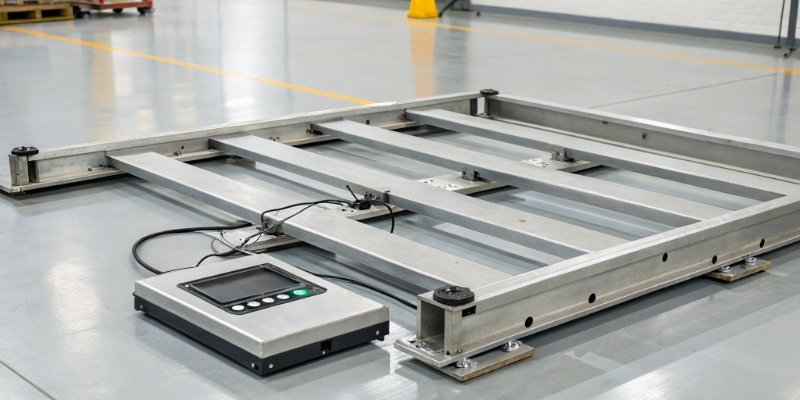
In my 18 years of manufacturing industrial scales, I’ve seen how these core components are the foundation of every weighing solution we build. How we combine them defines the scale's purpose and capability. The platform is what your items sit on. The load cell is the heart of the system; it’s a transducer that converts force into a measurable electrical signal. The indicator then takes that signal and turns it into a number you can read. But from there, things get more interesting. These components form the basis for three main categories of weighing systems.
System Types Breakdown
We can group most industrial scales into these classifications:
| System Type | Principle of Operation | Key Characteristics |
|---|---|---|
| Mechanical | Uses levers and a balance beam based on the principle of moments. | Simple structure, low cost, but lower accuracy and no automation. |
| Electronic | Uses electronic load cells1 to convert force into a digital signal. | High accuracy, fast response, digital features, and excellent connectivity. |
| Mechatronic | A hybrid that combines mechanical structures with electronic components. | Balances cost and performance, offering better accuracy than purely mechanical systems. |
Today, electronic systems dominate the market because of their flexibility and accuracy. At Weigherps, we focus heavily on these systems, especially integrating them with IoT technology to create "Smart Weighing Systems" that offer data connectivity2, remote monitoring3, and even AI-assisted functions. This is where the real business transformation happens.
How Are Industrial Weighing Systems Utilized Across Various Industries?
Can one type of scale really work for every industry? Applying a simple logistics scale in a volatile chemical plant is a recipe for disaster. Let's clarify where each system shines.
Weighing systems are crucial across many sectors. In logistics, vehicle and platform scales manage shipments. In manufacturing, bench and floor scales ensure quality control. Specialized industries like chemical and pharmaceutical plants require explosion-proof and high-precision scales for safety and compliance.
The right scale in the right place makes all the difference for safety and efficiency. A food processing client of ours needs IP68 waterproof scales4 that can withstand daily high-pressure washdowns, while a partner in the petroleum industry relies on our explosion-proof systems for safe operation in hazardous zones. The application dictates the design. Here’s a quick look at how different industries use our weighing systems.
Industry-Specific Applications
Matching the scale to the industry is the first step toward operational excellence.
Manufacturing and Production
In manufacturing, precision is everything. From counting tiny components to checking the final product weight, scales are part of the quality control5 loop. We often provide high-precision bench scales for quality inspection labs and durable platform scales for production lines that can handle heavy loads and constant use.
Logistics and Warehousing
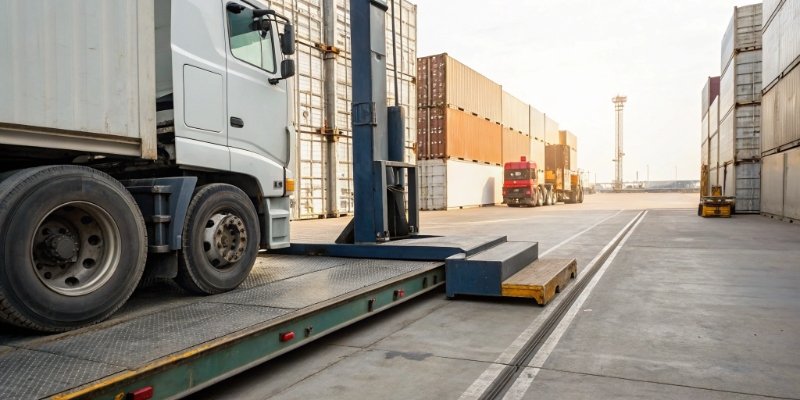
This is all about movement and volume. Our clients in logistics use large vehicle scales6 (truck scales) to weigh incoming and outgoing freight, which is essential for billing and compliance. Inside the warehouse, floor scales and pallet jack scales help manage inventory accurately and efficiently.
Specialized Industries (Chemical, Food, Metallurgy)
These fields have unique challenges.
- Chemical & Pharma: Safety is paramount. We build intrinsically safe, explosion-proof scales7 for environments with flammable materials.
- Food Processing: Hygiene is key. Our stainless steel, IP67/IP68 waterproof scales are designed for easy cleaning.
- Metallurgy: Extreme heat is the norm. We supply high-temperature crane scales8 that can function reliably near furnaces.
What Are the Key Functions of Industrial Weighing Systems?
Do you think a scale just shows a number on a screen? Modern systems do so much more, and ignoring these functions means missing out on major efficiency gains.
Beyond simple weighing, key functions include high-precision measurement for labs, dynamic weighing for items on conveyor belts, and automated batching for production recipes. Modern systems also offer data connectivity, remote monitoring, and intelligent alerts for total process control.

I remember when a scale's only job was to give a weight. Now, a scale is a data hub. As a software provider, this is where our worlds connect. The scales we build are designed to be the hardware backbone for your intelligent software solutions. The true power is unlocked when the weight data is integrated into a larger system like an ERP or a Warehouse Management System (WMS).
From Basic to Smart Functions
The evolution of weighing functions has completely changed what’s possible on the factory floor.
Basic and Precision Weighing
This is the fundamental function. It ranges from weighing raw materials on a large platform scale to measuring tiny samples on a high-precision bench scale with milligram accuracy. Even at this basic level, digital displays and simple data output are standard.
Process and Dynamic Weighing
This is where scales become part of an active process.
- Belt Scales: Continuously weigh bulk material as it moves along a conveyor.
- Checkweighers: Automatically check the weight of products on a production line and reject those outside the tolerance.
- Batching/Dosing Scales: Control the precise measurement of ingredients for a recipe, crucial in the food, chemical, and pharmaceutical industries.
Smart and Connected Functions
This is the future, and it's what we specialize in. Our IoT weighing systems are designed to communicate. They can connect to your network via Wi-Fi, Ethernet, or other protocols, sending real-time data to the cloud. This enables remote monitoring, automated alerts for over/under weights, and integration with other smart devices, empowering you to build powerful, data-driven solutions for your clients.
How Do Industrial Weighing Systems Improve Operational Accuracy?
Are small weighing errors slowly eating into your profits? Inaccurate measurements lead to material waste, compliance failures, and unhappy customers. Precision is not optional; it’s essential for a healthy bottom line.
These systems boost accuracy with high-resolution sensors and advanced digital filtering to block out vibrations and electronic noise. Furthermore, specialized designs like IP68 waterproof or explosion-proof scales guarantee reliable performance even in harsh industrial environments, preventing measurement errors from happening in the first place.

We once had a client who was losing thousands of dollars a month due to inaccurate batching in their food production. The problem wasn't a "bad" scale, but the wrong scale. It wasn't designed to handle the vibrations and humidity of their plant. After we installed a system with better filtering and an IP67-rated enclosure, their material loss dropped to nearly zero within a week. Accuracy is a result of having the right technology for the job.
The Pillars of Weighing Accuracy
Three key factors work together to ensure your measurements are always on point.
The Role of High-Quality Components
It all starts with the load cell. A high-quality load cell provides a stable, repeatable, and linear response to weight. Paired with a fast, intelligent indicator that uses advanced algorithms to process the signal, you get a reading that is both quick and trustworthy. We perform extensive testing on every component to ensure it meets international standards.
Adapting to the Environment
An industrial environment is rarely perfect. There's dust, water, vibrations, and sometimes even explosive gases. A scale's accuracy drops if its components are compromised. That’s why we build:
- Waterproof/Dustproof Scales (IP rated): Sealed enclosures protect sensitive electronics from moisture and debris.
- Explosion-Proof Scales: Intrinsically safe designs prevent any spark, ensuring accuracy and safety in hazardous areas.
- Shock-Resistant Platforms: Dampening features absorb shocks and vibrations, preventing them from affecting the weight reading.
Software and Regular Calibration
Finally, accuracy is maintained through software and process. Smart software can learn to ignore consistent vibrations on a production floor. It can also prompt users for regular calibration—the process of checking the scale against a known certified weight. We provide comprehensive documentation and support to help our clients maintain their systems for long-term accuracy.
Conclusion
From basic parts to smart functions, the right industrial weighing system is vital. We are here to help you find the perfect, cost-effective weighing solution for your market needs.
-
Understand the technology behind electronic load cells and their impact on precision in weighing. ↩
-
Explore the benefits of data connectivity in weighing systems for real-time data analysis and decision-making. ↩
-
Discover how remote monitoring enhances operational efficiency and data management in weighing systems. ↩
-
Learn about the features and benefits of IP68 waterproof scales in food processing and other industries. ↩
-
Explore the critical role of weighing systems in maintaining quality standards in production. ↩
-
Discover the role of vehicle scales in logistics and their importance for accurate freight management. ↩
-
Understand the necessity of explosion-proof scales in hazardous environments for safety and compliance. ↩
-
Learn about high-temperature crane scales and their applications in metallurgy and extreme environments. ↩



Comments (0)