
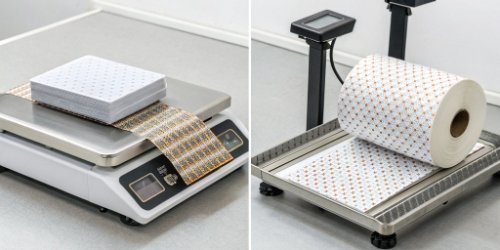
Choosing the right printing scale can feel complicated. Making the wrong choice costs your business time and money. Let me help you understand the key differences to find what's best for you.
The main difference is the printing method. Direct thermal scales use special heat-sensitive paper to create an image. Thermal transfer scales use a heated ribbon to transfer durable ink onto the label. This simple difference impacts cost, durability, and how you can use them.
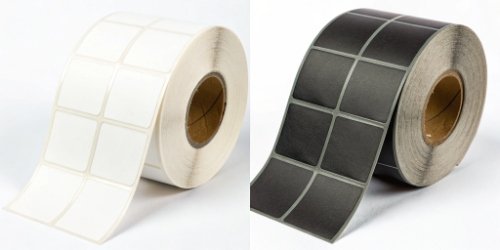
Knowing this is the first step. But how does this choice affect your daily operations and your budget? These two technologies are designed for very different jobs. Let's break it down further so you can make an informed decision that actually helps your business grow and avoids frustrating problems down the line.
Which is better, thermal transfer or direct thermal?
You need the best printing method for your specific labels. A bad choice can lead to unreadable barcodes or unnecessarily high supply costs. Let's compare them to find the perfect fit.
Neither technology is universally "better." It all depends on your needs. For short-term labels like shipping or receipts, direct thermal is very cost-effective and simple. For long-lasting labels that resist heat, sunlight, and chemicals, thermal transfer is the superior choice for durability.
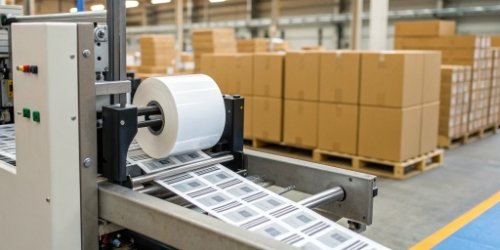
In my 19 years of manufacturing industrial scales1, I’ve seen clients make this choice based on one key factor: longevity. If your label only needs to be readable for a few weeks or months, direct thermal is perfect. A shipping label is a great example. It's simple, requires no ribbon, and gets the job done cheaply. But if you are labeling a product that will sit in a warehouse for a year, or be exposed to sunlight and rough handling, you must use thermal transfer. The ribbon melts a resin or wax-based ink onto the label surface, creating a permanent bond. This makes it tough enough for almost any industrial environment.
Here is a simple table to help you compare:
| Feature | Direct Thermal | Thermal Transfer |
|---|---|---|
| Durability | Low (fades with time, heat, sun) | High (long-lasting, resists elements) |
| Ribbon Needed? | No | Yes |
| Simplicity | Very high, just load labels | Higher, requires loading ribbon |
| Long-term Cost | Can be higher due to printhead wear2 | Can be lower because printhead is protected |
| Best For | Shipping, receipts, short-term use | Product ID, asset tracking, long-term storage |
How to tell the difference between direct thermal and thermal transfer labels?
You found a random roll of labels in the supply closet. Using the wrong type can jam your printer or produce blank labels. Here is a quick, fool-proof test to identify them instantly.
The easiest method is the fingernail scratch test. Scratch the label's surface firmly with your nail. If a dark gray or black mark appears, it is a direct thermal label. If nothing happens, you have a thermal transfer label.

This simple trick works because of the paper's chemistry. Direct thermal labels are coated with a special chemical that turns black when heated. The friction from your fingernail generates just enough heat to activate that chemical layer and leave behind a dark mark. It's a reliable test we often show new clients because it never fails. Thermal transfer labels, on the other hand, are just paper or synthetic material. They have no special heat-sensitive coating. They are designed to absorb ink from a ribbon, not react to heat themselves. So when you scratch them, absolutely nothing happens. Sometimes, you can also tell the difference by feel. Direct thermal paper often has a slick, smooth surface. Thermal transfer labels tend to feel more like standard paper or a matte plastic film, depending on the exact material.
Can you use direct thermal labels in a thermal transfer printer?
You're out of thermal transfer labels but have a full roll of direct thermal ones on hand. Can you use them in an emergency? You don't want to break an expensive piece of equipment.
Yes, you absolutely can. Most modern thermal transfer printers are designed to also work in direct thermal mode. You just have to remove the ink ribbon and change a setting in the printer's menu or software from "transfer" to "direct."
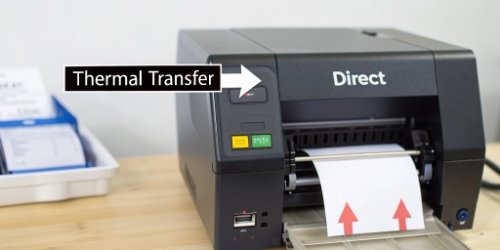
This dual-mode capability is a great feature we see in almost all the industrial printing scale3s we work with today. The printhead inside a thermal transfer printer4 works by getting very hot. It can either heat the ribbon to transfer ink, or it can heat the direct thermal paper directly. The machine does not care what it is heating. The key is to make sure you have removed the ribbon. If you leave it in, you will just waste it as it spools through with the blank labels. After removing the ribbon, you must go into the printer’s settings and specify you are using the "direct thermal" method. This tells the printer to apply the correct amount of heat and not to look for a ribbon, which would otherwise cause a "ribbon out" error. Just remember, this trick does not work the other way around. A printer built only for direct thermal printing cannot use a ribbon at all.
What is a disadvantage of using direct thermal printing?
Direct thermal printing seems so easy and affordable with no ribbons to buy. But there is always a catch, isn't there? This hidden drawback can end up costing you more in the long run.
The main disadvantage is poor durability. The labels are very sensitive to sunlight, heat, and physical abrasion. The printed image can fade and become unreadable in just a few months, making it completely unsuitable for long-term product identification.
The second big disadvantage, and one many people overlook, is the wear and tear on your equipment. In direct thermal printing, the printhead makes direct, constant contact with the moving label paper. This paper is more abrasive than the smooth thermal transfer ribbon. Over time, this constant friction wears down the protective coating on the delicate printhead elements. As a manufacturer, I can tell you that a high-quality printhead is one of the most expensive replacement parts of a printing scale. So while you save money by not buying ribbons, you might end up spending much more on replacing the printhead more frequently. With thermal transfer printing, the ribbon acts as a soft, protective buffer between the printhead and the label. This can significantly extend the life of your printhead and lower your total cost of ownership5 over the years.
Conclusion
To sum up, your choice is simple. Use direct thermal for short-term needs like shipping. Choose thermal transfer for durable, long-lasting labels that need to survive a tough environment.
-
Find the best industrial scales for manufacturing to enhance your production efficiency. ↩
-
Learn tips to minimize printhead wear and extend the life of your label printing equipment. ↩
-
Explore this link to find expert reviews and comparisons of printing scales tailored for various business applications. ↩
-
Find out if your thermal transfer printer can handle direct thermal labels for flexibility. ↩
-
Understand total cost of ownership in printing to make informed financial decisions. ↩



Comments (0)