
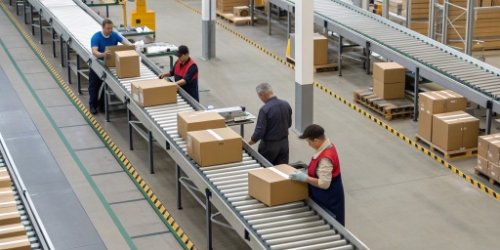
Manual weighing and data entry are slowing down your operations. These errors lead to costly disputes and lost customers. Integrating smart weighing systems solves this by automating the entire workflow.
The most effective way is to deploy integrated smart weighing systems. These devices automatically capture weight and dimension data, connect to your shipping software to calculate costs, print labels, and upload all information. This removes manual work, speeds up the process, and improves accuracy significantly.
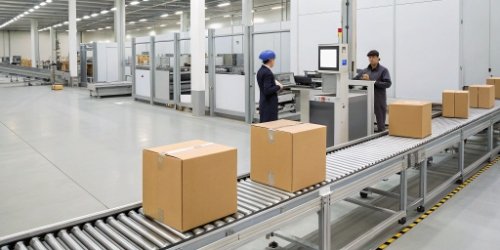
That's the short answer. But as a software provider, you know the devil is in the details. Integrating hardware and software isn't always simple. Over my 19 years as a manufacturer of industrial scales, I've seen what works and what doesn't. Let's break down how you can create a seamless flow from the moment a package is weighed to the second it's shipped. It's about empowering your software with reliable hardware that just works.
How Can Technology Integrate Weighing and Shipping Processes for Greater Efficiency?
Your software is top-notch, but slow hardware creates big bottlenecks. Manually entering weight data from a scale into your system is a major point of failure, causing costly delays.
Technology connects weighing and shipping using smart devices with open APIs and SDKs. These tools allow scales and dimensioners to send data directly to your software. This instantly calculates costs, prints shipping labels, and updates your records, creating one smooth, automated process.

Integrating technology is about creating a conversation between the physical and digital worlds. For you as a software vendor, this means finding hardware partners who speak your language. At Weigherps, we focus on providing scales with flexible APIs (Application Programming Interfaces) and comprehensive SDKs (Software Development Kits). This is the key to unlocking true efficiency.
The Role of APIs and SDKs
An API acts as a ready-made bridge. Our scales can use it to instantly send data—weight, dimensions, a barcode scan—directly to your system. An SDK gives your developers the tools to build deeper, more custom integrations. For example, your software could command the scale to re-weigh an item or trigger a specific function based on the weight data received. This two-way communication1 makes the hardware an active part of your software's ecosystem.
A Practical Comparison
I remember a client, a logistics software company, who struggled with shipping errors from their end-users. We helped them integrate our DWS system. The change for their customers was immediate and powerful.
| Feature | Manual Process | Integrated Process |
|---|---|---|
| Data Entry | Operator manually types weight | Captured automatically |
| Labeling | Operator prints from separate PC | Printed automatically at station |
| Error Rate | High (5-10%) | Near zero (<0.1%) |
| Throughput | ~100 packages/hour | 500+ packages/hour |
This level of integration is not just about efficiency; it’s about providing your customers with a reliable, error-free solution that your software powers from end to end.
What Strategies Improve the Transition from Weighing to Shipping in Logistics?
Packages are weighed quickly, but then chaos begins at the shipping dock. This disorganization causes lost packages, shipping delays, and frustrated teams, undermining your system's efficiency gains from the start.
Improve the transition by using the right tool for the job. Deploy portable smart scales for field collections to capture data immediately. At the central hub, use high-speed DWS systems that automatically weigh, measure, and label packages, placing them on the correct conveyor for shipping.
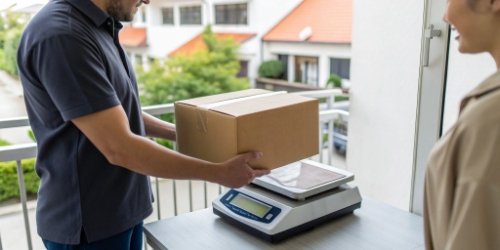
A smooth transition depends on mapping out the entire journey of a package. You can't just drop a fast scale into a broken workflow. After years of helping software clients design complete solutions for their customers, I've learned that the best strategy involves a mix of specialized tools designed for specific points in the logistics chain.
Capturing Data at the Source
Many logistics operations begin outside the warehouse. Think of a courier picking up packages from a customer's office. We developed portable smart scales2 for this exact scenario. The courier can weigh the item on the spot, and the scale sends the data via Bluetooth to a mobile app running your software. The data is in your system before the package even reaches the hub. This creates trust and transparency with the end customer, as the weighing is done right in front of them, and it eliminates data entry errors back at the warehouse.
Centralizing and Automating at the Hub
Once packages arrive at a sorting center, speed and accuracy are everything. This is where static or dynamic DWS (Dimensioning, Weighing, Scanning) systems are critical. A package is placed on a conveyor, and in a fraction of a second, it's scanned, weighed, and measured. Our systems instantly feed this complete data set to your software, which determines the shipping cost and route. A label is then automatically printed and applied, and the package is sorted to the correct outbound lane without a person ever touching a keyboard.
How Do Automated Systems Streamline Logistics from Weighing to Shipment?
Repetitive manual tasks are holding your logistics flow back. Each small human error in weighing or data entry builds into a huge problem of lost revenue and operational chaos for your clients.
Automated systems streamline logistics by replacing manual steps with technology. They use conveyors, scanners, and DWS units that work together. A package is identified, weighed, and measured automatically. This data is fed to your software, which then triggers a label to be printed and applied.
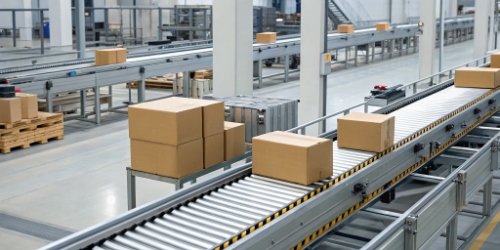
Automation is more than just a fast scale; it's an ecosystem of hardware working in perfect harmony, orchestrated by great software—your software. As a hardware manufacturer, our goal is to create the reliable physical tools that bring your software's logic to life. Let's walk through how these systems create such a streamlined flow.
The Automated Workflow
Imagine a package entering your client's warehouse.
- Identification: An overhead camera or scanner reads the barcode as the package moves along a conveyor belt, identifying it in the system.
- Dimensioning & Weighing: It then passes through a dynamic DWS system. Harmless lasers and sensors measure its length, width, and height, while an in-motion scale integrated into the conveyor captures its weight. This whole step takes less than a second.
- Data Transmission: Our system instantly sends this complete data packet (ID, L, W, H, Weight) to your software server via its API.
- Decision & Action: Your software does its magic. It looks up the customer, calculates the dimensional weight, determines the shipping cost from its rate tables, selects the best carrier, and sends a command to the next station.
- Labeling & Sorting: A print-and-apply module receives the command, generates the correct shipping label, and applies it to the package. Further down the line, a mechanical sorter3 diverts the package to the correct lane for the designated outbound truck.
This entire process eliminates human intervention from weighing to sorting, guaranteeing near-perfect accuracy and incredible throughput. Your role is to be the brain; our role is to provide the reliable eyes and hands.
What Challenges Should Be Addressed to Optimize Logistics from Weighing to Delivery?
You know you need to recommend a hardware upgrade to your clients, but the risks feel huge. You're worried about system compatibility, downtime during installation, and lack of support if something goes wrong.
To optimize logistics, you must solve a few key challenges. First, ensure seamless hardware and software integration with strong APIs. Second, secure your data transmission. Finally, plan for a smooth installation with excellent technical support. Choosing the right hardware partner is the solution.

I've spoken with hundreds of purchasing managers and technical directors at software companies. Their concerns are almost always the same. It's not just about buying a scale; it's about investing in a solution that won’t create new problems for you or your customers. Here are the biggest hurdles and how we help you overcome them.
Challenge 1: Integration & Compatibility
Your biggest fear is that the hardware won't talk to your software, turning a simple project into a nightmare. We get it. That's why our R&D team focuses on creating devices with flexible integration options that are easy to work with. We provide clear, comprehensive documentation for our APIs and SDKs. More importantly, our technical team works directly with your developers to test and ensure a smooth, stable connection. We have built our 19-year business on being a reliable partner for software companies, not just a vendor.
Challenge 2: Quality, Support, & Maintenance
What happens after the purchase? The last thing you want are calls from angry customers because their new hardware failed. We stand behind our products. Every single unit undergoes comprehensive testing by our quality inspection department4 before it ships—we test weight accuracy, battery performance, and software connectivity. All our products comply with CE and other international certifications and come with a 12-month after-sales service guarantee. We build our products to be stable and reliable because your reputation depends on it, and our long-term partnership depends on your success.
Conclusion
Streamlining logistics from weighing to shipping is achievable. By integrating smart, reliable weighing technology with your software, you can create an automated, efficient, and error-free workflow for your clients.
-
Discover the importance of two-way communication for seamless data exchange in logistics. ↩
-
Explore the advantages of using portable smart scales for on-the-go logistics operations. ↩
-
Discover the functionality of mechanical sorters and their impact on logistics efficiency. ↩
-
Explore the significance of quality inspection in ensuring reliable logistics hardware. ↩



Comments (0)