
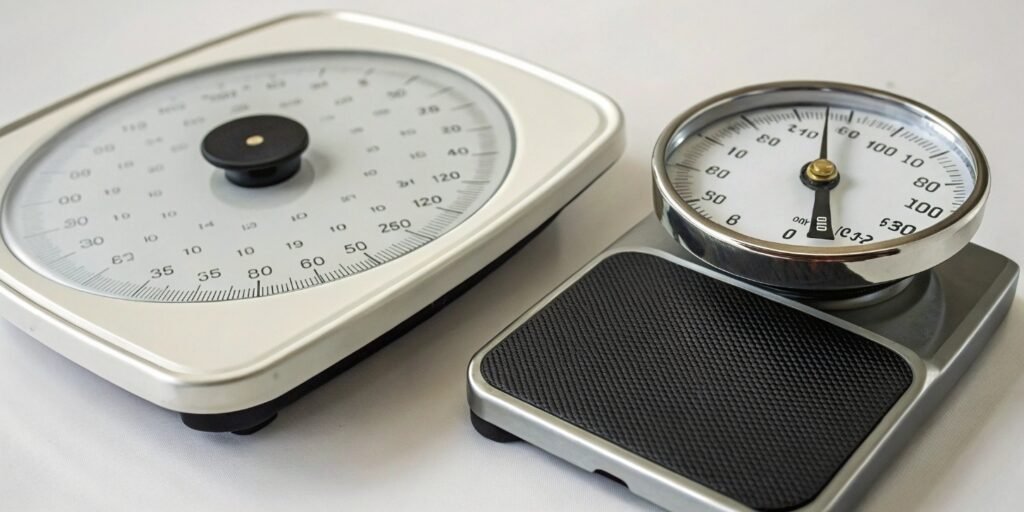
Are you struggling to get consistent weight readings? Choosing between scale types can be confusing, but the right choice directly impacts your operational accuracy and efficiency.
To be direct, digital scales are more accurate than analog scales. This is because they use precise electronic sensors and provide a clear digital readout. This design minimizes the mechanical wear and human error common with analog scales, giving you more reliable data.
As someone who has been in the industrial weighing1 business for 18 years, I get this question all the time. People want to know which tool is truly better for the job. The answer isn't just about a single number; it's about understanding how each technology works and where it fits best. It's a key decision for any business that relies on accurate measurements, especially for software vendors2 like you who need reliable data to power your systems. Let's break down the details so you can make an informed choice for your specific needs. Understanding these differences will help you select a scale that not only measures weight but also adds value to your entire operation.
Are digital scales more accurate than analog scales?
Your production process is suffering from inconsistent measurements. You need results you can trust every single time, but your current scales are letting you down with fluctuating readings.
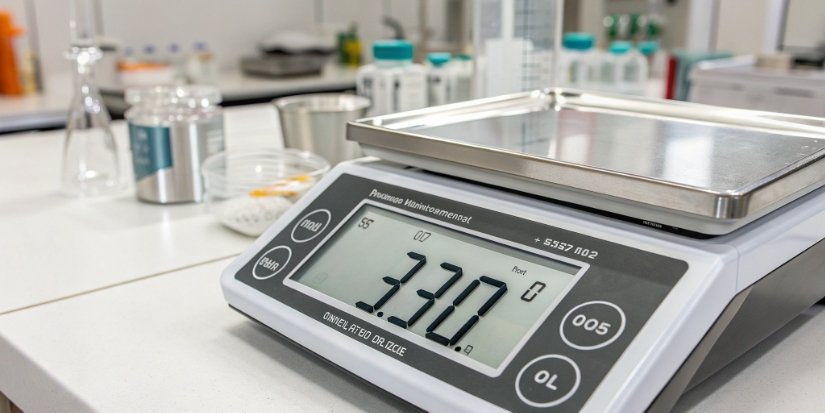
Yes, digital scales are significantly more accurate. They use electronic load cells for high precision, often with error margins as low as ±0.1 grams. Analog scales rely on springs, which can lead to larger errors of ±1 gram or more and lose accuracy over time.
Let's dive deeper into why this accuracy3 gap exists. It comes down to two main factors: the internal technology and how we read the results. At Weigherps, our quality control department tests every single unit for this very reason. The difference is clear.
The Technology Inside
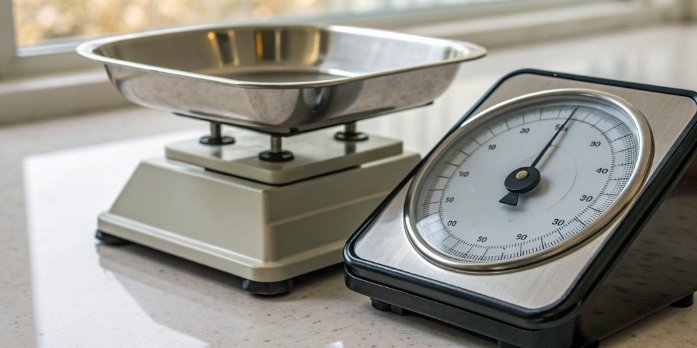
An analog scale works like a simple spring. You place an object on it, the spring compresses, and it moves a dial. This mechanical process is subject to wear, temperature changes, and friction. Over time, the spring can lose its tension, directly affecting the accuracy of your readings.
A digital scale, on the other hand, uses a component called a load cell4. A load cell is a transducer that converts force into a measurable electrical signal. This signal is then processed and displayed as a number. This process is far less prone to environmental factors and mechanical wear.
Reading the Measurement
With an analog scale, you have to interpret where a needle points on a dial. This can lead to parallax error, where the reading changes depending on your viewing angle. A digital scale eliminates this problem completely by giving you a direct, unambiguous numerical output.
| Feature | Digital Scale | Analog Scale |
|---|---|---|
| Measurement Tech | Electronic Load Cell | Mechanical Spring |
| Typical Error | ±0.1g or less | ±1g or more |
| Reading Method | Direct Digital Display | Pointer on a Dial |
| Source of Error | Electronic Calibration | Mechanical Wear, View Angle |
What are the main advantages of a digital scale over an analog one?
You need more than just a weight. You need data you can use, integrate, and analyze, but basic analog scales offer you none of these modern capabilities.
The main advantages of digital scales are their advanced features and connectivity. They offer functions like unit conversion, tare, and part counting. More importantly, they can output data to connect with software, printers, and IoT systems, which is impossible with analog scales.
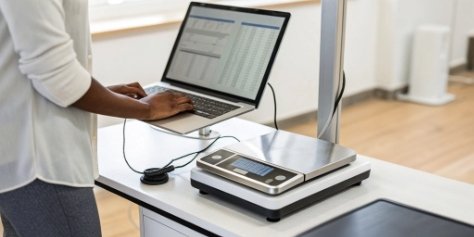
In my experience working with software providers, the conversation always turns to data. A weight measurement is no longer just a static number; it's a data point that can trigger actions, update inventory, and ensure quality control. This is where digital scales5 truly shine and where they enable businesses to grow.
Data Integration and Connectivity
This is the biggest differentiator for modern businesses. Our IoT electronic scales are designed to speak the same language as your software. Through interfaces like RS232, USB, or wireless connections, a digital scale can send real-time weight data directly to your system. This automates data entry, eliminates human error, and provides a reliable data stream for your applications. For a software vendor, this is a massive opportunity to provide a seamless, integrated solution to your clients.
Consistency and Repeatability
Digital scales provide exceptional repeatability. If you weigh the same item ten times, you will get the exact same result ten times. This is because the electronic components are stable and not easily affected by vibrations or minor temperature shifts. For processes that involve batching or formula creation, this consistency6 is critical. It ensures that every product coming off the line meets the same exact specifications. An analog scale’s mechanical nature just can’t provide this level of trust.
When might an analog scale be a better choice than a digital one?
You assume digital is always the answer. But sometimes you just need a simple, tough tool that works anywhere, without worrying about batteries or complex setups.
An analog scale is a better choice in environments without a power source or where extreme simplicity is needed. Because they are purely mechanical, they don't require batteries or outlets and are often more resistant to dust, water, and rough handling in the field.

While we specialize in advanced digital and IoT weighing solutions, I always advise clients to use the right tool for the right job. There are definitely situations where the elegant simplicity of an analog scale wins out. Forcing a high-tech solution into a low-tech environment can sometimes create more problems than it solves.
Environmental Resilience
Think about a remote farm, a busy fish market, or a dusty construction site. Power can be unreliable or nonexistent. In these places, a digital scale's reliance on batteries or a power cord is a liability. An analog scale, however, will work perfectly. Its simple mechanical design is often less sensitive to water splashes, heavy dust, and physical bumps. You just set it down and it works, every time.
Cost and Simplicity
There's no question that analog scales7 are cheaper to purchase. Their maintenance is also straightforward. There are no circuits to fail or software to update. If your operation only requires an approximate weight and does not need data logging or high precision, an analog scale is an extremely cost-effective choice. For example, for internal logistics where you just need to confirm a box is "heavy" or "light," an analog scale does the job perfectly without the higher initial investment. It’s a workhorse, not a racehorse.
Which type of scale is generally more durable and reliable?
You worry about your equipment breaking down. Downtime means lost money, and you need a scale that you can depend on day in and day out.
This question depends on how you define "durable" and "reliable." Analog scales are mechanically more durable against physical shock. However, high-quality digital scales provide far more reliable and consistent data accuracy over their lifespan, making them the more reliable choice for business operations.

At Weigherps, our vision is to be your most reliable weighing expert. This means we think deeply about this exact question. Reliability isn't just about whether a scale turns on; it's about whether you can trust the information it gives you. We put every single product through a comprehensive testing protocol for weight, battery, and software performance before it ever leaves our factory.
Mechanical Durability vs. Data Reliability
It's helpful to separate these two ideas.
- Mechanical Durability: An analog scale has fewer delicate parts. It's essentially a spring and a dial in a metal case. You can often drop it or treat it roughly, and it will still function (though its accuracy may suffer). It is physically robust.
- Data Reliability: This is where digital scales excel. An analog scale's accuracy degrades over time due to mechanical wear. Its reliability fades. A well-built digital scale, on the other hand, will provide the same accurate measurement for years, provided it's properly maintained and calibrated. Its data output is consistently trustworthy.
For a software business whose value depends on accurate data, data reliability is the more important metric.
| Aspect | Analog Scale | Digital Scale |
|---|---|---|
| Physical Shock Resistance | Generally High | Varies; high-end industrial models are very durable |
| Resistance to Wear | Low (springs wear out) | High (load cells are stable) |
| Long-Term Accuracy | Decreases over time | Stable with calibration |
| Data Trustworthiness | Low to Medium | Very High |
Conclusion
Ultimately, digital scales offer superior accuracy and data features for modern needs. Your final choice should balance the demand for precision against your budget and operating environment.
-
Stay updated on the latest trends and technologies in the industrial weighing sector. ↩
-
Understand the advantages for software vendors in utilizing accurate weighing solutions. ↩
-
Understand the importance of accuracy in weighing and its effects on operational efficiency. ↩
-
Gain insights into the technology behind load cells and their role in digital scales. ↩
-
Explore the advantages of digital scales for accuracy and efficiency in various applications. ↩
-
Understand the significance of consistent measurements in production processes. ↩
-
Learn about the scenarios where analog scales might be more suitable for your needs. ↩


Comments (0)