

Are you struggling to choose the right weighing scale? It's tough when you have to decide between perfect accuracy and a crystal-clear display. Let me help you clear that up.
Both are critical, but accuracy is the foundation. An inaccurate measurement, no matter how clearly displayed, is useless. However, poor readability can lead to misinterpreting accurate data. Your specific application will ultimately determine which feature to prioritize for the best results.
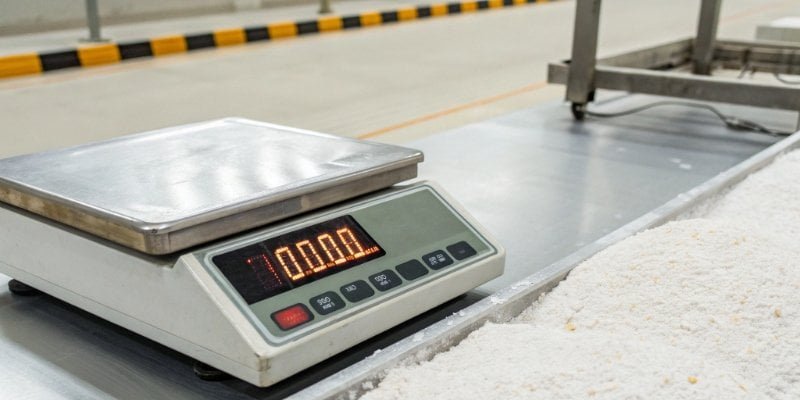
This might sound like a tricky balancing act. Over my 18 years in the industrial scale1 business, I've seen many clients wrestle with this decision. The key to making the right choice is to first understand that these two terms are not the same thing. To get to the bottom of this, we need to break down what each concept really means and how they affect your daily operations. A lot of confusion, and costly mistakes, come from mixing them up.
Is readability the same as accuracy?
People often use the terms "accuracy" and "readability" as if they mean the same thing. This common mistake can lead you to buy equipment that isn’t right for the job.
No, they are completely different. Accuracy is how close a scale's measurement is to the true, actual weight. Readability, or division, is simply the smallest increment the scale can display. A scale can have high readability but poor accuracy.

Let's make this simple. Think of accuracy2 as truthfulness. If you place a certified 10kg weight on a scale and it reads 10.001kg, that scale is highly accurate. It's telling you something very close to the actual truth. As a software vendor, the integrity of your data starts here. Your systems rely on receiving correct input, and that begins with an accurate measurement from the physical device.
Now, think of readability3 as detail. It's the smallest step the scale's display shows. For instance, if a scale displays weight in 0.1g steps (e.g., 5.0g, 5.1g, 5.2g), its readability is 0.1g. It offers a detailed view. But here is the critical point I always stress to my clients: a highly detailed view is useless if it's not a truthful one. You could have a scale with a readability of 0.001g, but if it's not calibrated correctly, that detailed number is just a fantasy.
| Concept | What It Measures | Simple Example |
|---|---|---|
| Accuracy | How close the measurement is to the true value. | Placing a 1kg standard weight on the scale; it reads 1.002kg. |
| Readability | The smallest unit the scale can display. | The scale's display shows numbers like 12.1g, 12.2g, 12.3g. |
Understanding this difference protects you from purchasing a scale that looks impressive but delivers faulty data.
What is more important, readability or accuracy?
You have a limited budget for new equipment. Do you choose the scale with guaranteed accuracy or the one with the big, bright, easy-to-read screen? This decision is a tough one.
Accuracy is fundamentally more important. Bad data is worse than no data. However, if poor readability causes constant operator mistakes, the effective accuracy of your entire process drops. It's a balance, but the scale's core accuracy must be your starting point.

In almost every industrial job I've encountered, from pharmaceuticals to chemical mixing4, accuracy is non-negotiable. If a formula requires 50.25g of a substance, you need a scale that can accurately measure that amount. An error of a single gram could ruin an entire batch, costing thousands of dollars. For my clients who are software providers, you know this principle well: garbage in, garbage out. The accuracy of the hardware is the first line of defense for the integrity of the data your software will process.
However, readability has its own crucial role. Imagine a fast-paced packaging line5 where a worker has to weigh hundreds of boxes an hour. The scale might be perfectly accurate, but if its display is small, dim, or slow to update, the worker may misread the numbers, slow down, or make mistakes out of fatigue. In this case, a scale with a slightly lower accuracy but a large, bright, and instantly responsive display might lead to better overall results and fewer errors. It's about the entire human-machine system6, not just the machine itself.
Here’s a quick guide based on application:
| Application Scenario | Top Priority | Why It Matters |
|---|---|---|
| Lab Formulation | Accuracy | The final product's quality and safety depend on precise ingredient measurements. |
| Shipping/Receiving | Readability | Speed and efficiency are key. Operators need to see weights quickly and clearly to keep the line moving. |
| Food Processing | Both | Accuracy is needed for recipe consistency, while readability is vital for fast-paced production environments. |
The right choice depends entirely on analyzing your specific workflow and identifying the biggest risks: are they in precise measurement or in human error during data entry?
How important is readability?
It’s easy to focus on the technical specs of a scale and forget about the person who has to use it every day. But is the display really that important?
Readability is extremely important for preventing human error and boosting productivity. A clear, well-lit display ensures that the scale's accurate measurements are read correctly by the operator, which is especially vital in busy or poorly lit industrial settings.

I've visited countless client facilities, and poor readability is a hidden productivity killer. It's not just about convenience; it has real financial consequences7. First, there's the risk of operator error. Misreading a '6' as an '8' or missing a decimal point because of glare on the screen can lead to incorrect shipping weights, wasted product, or faulty batches. These small mistakes add up over time.
Second, it slows everything down. When an operator has to stop, squint, and double-check a reading, you're losing valuable seconds on every single weighing. Multiply that by thousands of operations per day, and you're looking at significant labor costs tied to a poor user interface. Third, it causes worker fatigue. Constantly straining to see a dim or small display can lead to headaches and reduced focus, which is a safety concern in any industrial environment.
This is why, when we develop custom weighing solutions8, we focus heavily on the display. Features that make a huge difference include:
- Large, High-Contrast Digits: Easy to see from a distance.
- Bright Backlighting: Essential for warehouses or areas with variable lighting.
- Fast Response Time: The display updates instantly with no lag.
- Good Viewing Angle: The reading is clear even when the operator isn't standing directly in front of the scale.
Investing in good readability is an investment in your people and your process efficiency.
What does readability mean?
We've talked a lot about readability, but the term itself can be confusing. It has two meanings in the world of scales. Let's get perfectly clear on what it stands for.
Technically, readability is the smallest increment the scale is designed to display, also known as the division. For example, a scale that measures in 0.01g steps has a readability of 0.01g. It defines the fineness of the measurement.
This is where customers often get tripped up. There is the technical definition and the practical one. As we just discussed, the practical meaning of readability is how easy it is to physically read the screen. But when you look at a spec sheet, "readability" means the scale's division—the smallest unit it can resolve.
It's like having a ruler. A ruler marked with millimeters has a higher technical "readability" than one marked only with centimeters. It lets you measure with more fineness. However, if the millimeter marks are faded and tiny, its practical readability is terrible. You need both for the tool to be useful.
So, how do you choose the right technical readability? A good guideline is the "Rule of 109." Your scale's readability should be at least ten times more fine than the smallest tolerance you need to measure. For example, if your process requires you to weigh an item with a tolerance of ±1 gram, you should be using a scale with a readability of 0.1 gram. This ensures that the scale's own increments are not a significant source of error in your process. This is the kind of practical advice we give our clients to ensure they get the performance they need without overpaying for precision that won't benefit their operation.
Conclusion
Both accuracy and readability are vital partners in reliable weighing. Accuracy provides the correct data, and readability ensures it's used correctly. The perfect balance for you always depends on your specific needs.
-
Discover essential features that enhance performance and reliability in industrial weighing applications. ↩
-
Understanding the significance of accuracy can help you make informed decisions when selecting a scale. ↩
-
Learn how readability impacts the efficiency and accuracy of measurements in various settings. ↩
-
Learn how precision in weighing can impact the success of chemical formulations. ↩
-
Explore strategies to enhance efficiency in packaging lines through better weighing solutions. ↩
-
Learn about the interaction between humans and machines to optimize performance and safety. ↩
-
Understanding the financial impact can motivate improvements in weighing accuracy and readability. ↩
-
Explore how tailored weighing solutions can enhance efficiency and accuracy in your operations. ↩
-
Learn about this guideline to ensure your scale's readability meets your measurement needs. ↩



Comments (0)