

Struggling to find the right balance for your work? Picking the wrong one can lead to inaccurate results and costly errors. Let's explore which scales offer the best accuracy.
Generally, electronic balances are far more accurate than mechanical ones. For the highest accuracy, analytical balances measure to the milligram. Ultra-microbalances go even further, offering the most precise measurements available for scientific and lab use.

So, we know electronic balances1 lead the pack. But within that category, there is a wide range of options. You might be wondering just how accurate these devices can get. Let's break down the different types to find the absolute best in accuracy2.
What is the most accurate type of balance?
Working with tiny samples where every microgram matters? A slight miscalculation can invalidate your research or process. The most accurate balances are built specifically for these demanding tasks.
The most accurate types are ultra-microbalances and microbalances. These can measure to one-millionth of a gram. Analytical balances are also extremely accurate, commonly measuring to 0.1mg or 0.01mg. These are the top choices for laboratory and research environments.

In my 18 years in the weighing industry, I've seen technology evolve dramatically. Today, the quest for accuracy has led to some amazing devices. The champions of accuracy are ultra-microbalances3 and microbalances4. These instruments are incredibly sensitive. They are used in pharmaceutical research and material science where the tiniest particle matters. They often require a special environment, free from vibrations and air currents, to perform correctly. Just below them are analytical balances5, which are the standard for most serious lab work. They provide fantastic accuracy, usually down to four or five decimal places (0.1mg or 0.01mg). I remember a client in the pharmaceutical field who struggled with consistency. We helped them switch to a proper analytical balance. It completely transformed their quality control and helped them meet strict regulatory standards. These high-end balances are true marvels of engineering.
How to tell which balance is more accurate?
Comparing balance specifications can feel like reading a foreign language. All the numbers and technical terms can be confusing. You can easily judge accuracy by looking for a few key indicators.
The quickest way to judge a balance's accuracy is to check its readability or resolution. This is the smallest increment it can display. For a deeper analysis, also look at its repeatability and linearity specifications. A smaller number for readability usually means higher accuracy.
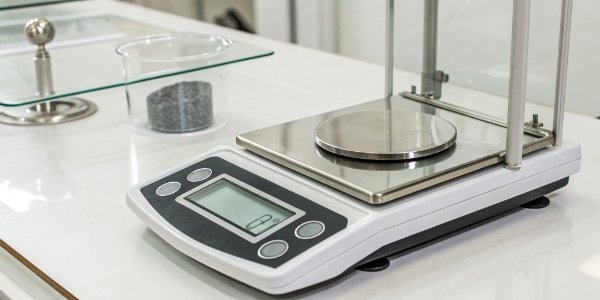
When you look at a spec sheet, it's easy to get lost. But you only need to focus on a few key metrics to understand a balance's performance.
Readability
This is the most obvious number. It tells you the smallest unit the scale can show. For example, a readability6 of 0.001g is better than 0.01g. It's the first clue to a balance's accuracy.
Repeatability
This metric tells you how consistent the balance is. If you weigh the same object ten times, how close are the results to each other? Good repeatability is crucial for reliable work.
Linearity
This shows how accurate the balance is across its whole weighing range7. It should be just as accurate weighing a 10g item as it is with a 100g item.
As a manufacturer, we pay close attention to all these details. A truly accurate balance performs well in all three areas.
| Metric | What It Measures | Why It Matters |
|---|---|---|
| Readability | The smallest displayed weight increment. | Indicates the scale's level of detail. |
| Repeatability | Consistency of results for the same weight. | Ensures your measurements are reliable over time. |
| Linearity | Accuracy across the entire capacity range. | Guarantees correct readings for both light and heavy items. |
Is top loading or analytical balance more accurate?
Choosing between a top-loading and an analytical balance? They can look similar, but their performance is very different. Picking the right one is crucial for your application's success.
An analytical balance is significantly more accurate than a top-loading balance. Analytical balances have a higher resolution, often measuring to 0.1mg or better. They also have a draft shield to protect against air currents, ensuring more stable and accurate readings.

The main difference between these two types comes down to their design and intended use. An analytical balance is built for one thing: supreme accuracy with small samples. This is why it has a glass enclosure, called a draft shield. Even a tiny breeze or your own breath can change the reading on such a sensitive device. Its readability is usually 0.1mg (0.0001g) or better. A top-loading balance8, on the other hand, is built for convenience and speed in less controlled environments. It offers good accuracy, typically from 1g to 0.001g, but it can't match an analytical balance. It also has a much higher capacity, making it great for general lab work, production, or quality checks where you need quick results but don't need to measure to the microgram.
Here is a simple breakdown:
| Feature | Analytical Balance | Top-Loading Balance |
|---|---|---|
| Accuracy | Extremely High (0.1mg or better) | Good to High (1g to 0.001g) |
| Capacity | Low (typically under 300g) | High (up to several kilograms) |
| Draft Shield | Yes, built-in | No |
| Best For | Lab research, chemical analysis | General weighing, production |
Which balance is the most precise?
Have you heard the terms "accuracy" and "precision" used interchangeably? This common mix-up can lead to bad choices. Understanding the difference is key to getting reliable results.
Precision refers to a balance's ability to give the same result for the same weight repeatedly. The most precise balances are analytical and microbalances. Their high-quality construction and sensitive sensors ensure excellent repeatability, which is critical for consistent quality control.

Let me clarify the difference simply. Accuracy is about hitting the bullseye. If a weight is truly 10.000g, an accurate balance will read 10.000g. Precision is about hitting the same spot over and over, even if it's not the bullseye. The most desirable balance is both accurate and precise. It hits the bullseye every single time. Analytical and microbalances are designed for the highest precision. Their internal mechanisms, like high-quality load cells and advanced software, minimize variations. This is vital for software companies that might be integrating our scales into a system. Your software needs consistent, repeatable data from the hardware. A precise balance provides that stable data stream. This is why our quality control is so strict. We test every scale to ensure it is not only accurate against a certified weight but also precise through repeated measurements.
Conclusion
Choosing the right balance depends on your needs. Electronic balances are best, with analytical and microbalances offering the highest accuracy and precision for demanding tasks.
-
Explore the benefits of electronic balances for accuracy and reliability in measurements. ↩
-
Understand the key factors that influence the accuracy of different types of balances. ↩
-
Discover the technology behind ultra-microbalances and their applications in research. ↩
-
Find out how microbalances are used in various scientific fields for accurate measurements. ↩
-
Learn why analytical balances are essential for precise measurements in labs. ↩
-
Learn how readability affects measurement precision and accuracy in balances. ↩
-
Learn how the weighing range impacts the accuracy and usability of balances. ↩
-
Find out when a top-loading balance is suitable for your weighing needs. ↩



Comments (0)