

Struggling to find the right scale for your warehouse? The wrong choice can create bottlenecks, inventory errors, and wasted money. Let’s find the perfect fit for your operation.
The best industrial scale for your warehouse is one that matches your specific needs. Consider the maximum weight and size of your goods, the working environment, and your need for data integration. This ensures you get an accurate, efficient, and durable weighing solution.
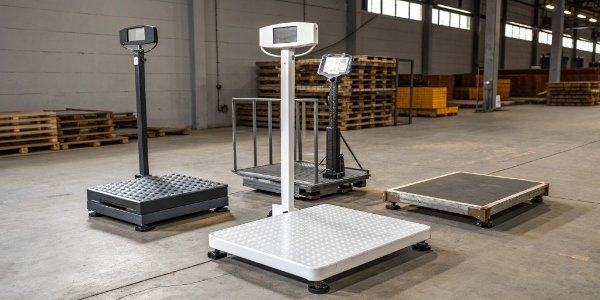
Over my 18 years in this industry, I’ve seen many clients struggle with this decision. They either buy a scale that’s too weak for their needs or one that’s far too complex and expensive. The key is knowing what to look for before you buy. This guide will walk you through the most important questions you need to ask. Let’s dive into the details to make sure you invest wisely.
Floor scale vs. pallet jack scale: Which is better for warehouse logistics?
Are you debating between a fixed floor scale and a mobile pallet jack scale? Making the wrong choice can seriously slow down your entire workflow and create frustrating bottlenecks for your team.
A floor scale is best for a dedicated weighing station where goods are brought to be weighed. A pallet jack scale is better for mobility, letting you weigh items anywhere. Your decision depends on your unique warehouse logistics and workflow.
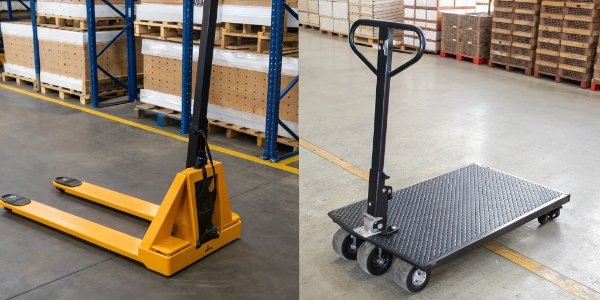
Let's break this down further to see which one fits your operation. Think about how goods move through your warehouse. Do you have a central point for receiving and shipping, or are things more spread out?
Floor Scales: The Stationary Powerhouse
A floor scale1 is the traditional workhorse for a reason. It's robust, can handle very high capacities, and is perfect for a fixed weighing point, like a shipping or receiving dock. If your process involves bringing all pallets to one area for verification, a floor scale is incredibly efficient. You can install it in a pit to be flush with the floor, making it easy to roll carts and pallet jacks on and off.
Pallet Jack Scales: The Mobile Solution
A pallet jack scale2 combines moving and weighing into a single step. This is a huge time-saver in large warehouses where traveling to a central floor scale is inefficient. You can weigh pallets right off the truck, in the storage aisles, or during order picking. This mobility reduces handling time and speeds up your entire logistics chain3. The trade-off is typically a slightly lower capacity compared to a large floor scale.
| Feature | Floor Scale | Pallet Jack Scale |
|---|---|---|
| Location | Fixed, stationary | Mobile, can be used anywhere |
| Workflow | Bring goods to the scale | Bring scale to the goods |
| Best For | Centralized receiving/shipping docks | Large warehouses, spot-checking |
| Efficiency | High throughput at a single point | Reduces travel time, multi-tasking |
How do you choose the right capacity and size for an industrial floor scale?
Are you feeling overwhelmed by all the different capacity and size options for floor scales? Guessing can lead to buying a scale that breaks under pressure or one that wastes valuable floor space.
To choose the right industrial floor scale, select a capacity that is 10-20% higher than the heaviest load you plan to weigh. For size, make sure the platform is large enough to fully support your biggest items, like a standard pallet.
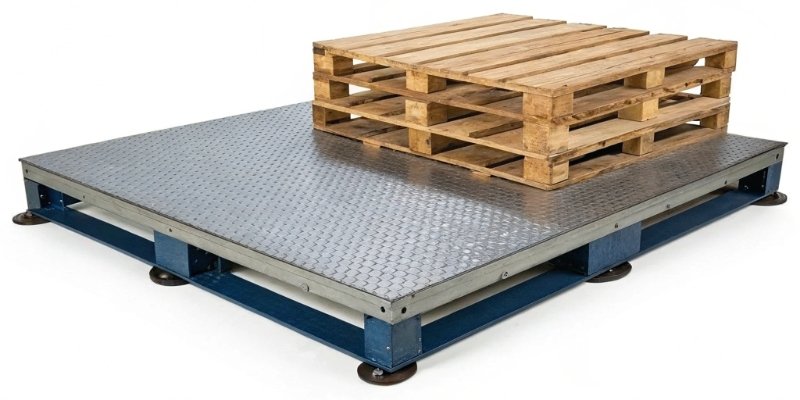
Getting the capacity and size4 right is fundamental to the scale's accuracy and longevity. Let me share the simple rules we use to guide our clients. They are easy to remember and will prevent you from making a costly mistake.
Calculating the Right Capacity
Never choose a scale with a capacity that just barely meets your needs. This puts too much stress on the load cells and can lead to damage or inaccurate readings over time. A safe rule of thumb is to add a 10-20% buffer. For example, if your heaviest pallets are typically 500 kg, you should look for a scale with at least a 600 kg capacity. For warehouses dealing with standard palletized goods, scales in the 1 to 5-ton range are the most common and versatile choice.
Matching Platform Size to Your Goods
The size of the scale platform is just as important as the capacity. Your goods should fit completely on the platform without any part hanging over the edge. Overhang can cause inaccurate weight readings and create a tipping hazard. For most warehouses, a platform size of 1.2m x 1.5m is a great starting point, as it comfortably fits standard pallets. Always measure your largest items, whether they are pallets, crates, or machinery, and choose a platform that gives you a little extra room.
What are the main factors to consider when buying a heavy-duty industrial scale?
You know you need a heavy-duty scale, but what should you look for beyond weight and size? It's a big investment, and overlooking key details can lead to unexpected costs and operational problems later.
Beyond capacity and size, you must consider your warehouse environment and specific functional needs. Factors like water resistance, high temperatures, explosion risk, and data connectivity are critical for choosing a scale that will perform reliably and efficiently.
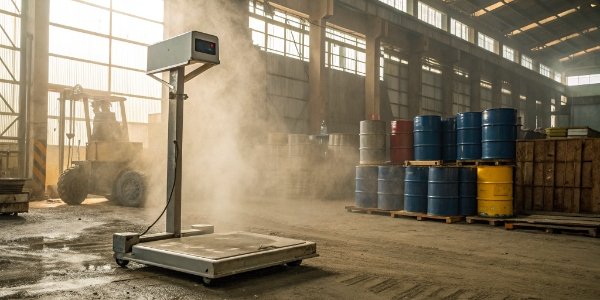
A scale is more than just a box that shows a number. It's a piece of equipment that has to survive in your specific work environment and integrate with your processes. I always tell my clients to think about two main things: the environment and the function.
Surviving Your Environment
Your warehouse environment will try to destroy your scale. Is it wet, dusty, hot, or even potentially explosive? You need a scale built to withstand those conditions. For wet or dusty areas, look for a stainless steel scale with a high IP rating, like IP68, which means it's fully protected. If you're working in extreme temperatures, you'll need a scale with special high-temperature sensors5. For hazardous areas with flammable gases or dust, you must use an ATEX-certified explosion-proof scale to ensure safety.
| Environment | Recommended Feature | Key Benefit |
|---|---|---|
| Wet / Dusty | Stainless Steel, IP68 Rating | Prevents corrosion and damage |
| High Temperature | High-Temp Sensors | Ensures accuracy and durability |
| Explosive | ATEX Certification | Guarantees safety in hazardous zones |
Meeting Your Functional Demands
Do you need to weigh items while they're moving, or do you need to capture data automatically? If you are weighing bulk materials on a conveyor, you'll need a belt scale. If you are checking package weights on a production line, a dynamic checkweigher6 is the right tool. For most warehouses, the most important functional need is data management. Look for a scale with RS485 or USB interfaces. These ports allow you to connect the scale directly to your computer or ERP system, automating data entry and eliminating human error.
How does integrating a weighing system with inventory software improve warehouse efficiency?
Are you still writing down weights on a clipboard and typing them into a computer later? This manual process is slow, full of potential errors, and creates a major delay in updating your records.
Integrating your scale with inventory software automates data capture, eliminating human error. This provides real-time inventory visibility, speeds up receiving and shipping, and gives you accurate data for better business decisions.
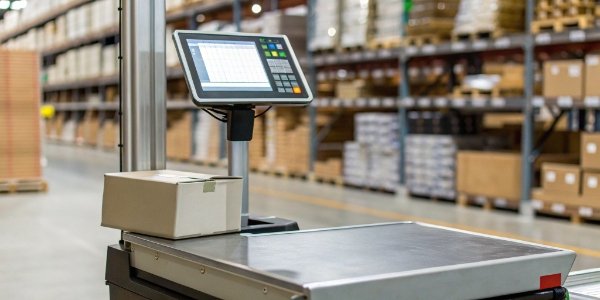
As a technical director or purchasing manager, you already know the power of good software. Connecting your weighing hardware directly to your Warehouse Management System (WMS) or ERP is one of the single biggest efficiency gains you can make. It transforms weighing from a standalone task into a seamless part of your data workflow.
Eliminating Human Error
Every time a person has to read a number, write it down, and type it in, there's a chance for a mistake. A "6" can become a "9," a decimal point can be missed, or a number can be transposed. These small errors add up, leading to inaccurate inventory counts, shipping mistakes, and financial discrepancies. Direct integration means the weight data goes from the scale to your system instantly and perfectly every time.
Achieving Real-Time Visibility
With manual entry, your inventory records are always out of date. You only know what you have after someone finishes entering the data from a pile of paperwork. When your scale is integrated, your stock levels are updated in real-time. The moment a shipment is received and weighed, it's reflected in your system. This allows for better planning, fewer stockouts, and more accurate fulfillment.
Speeding Up Workflows
Think about your receiving process. With an integrated system, a worker can scan a pallet, place it on the scale, and the weight is automatically logged in your WMS against the purchase order. The entire process takes seconds. Compare that to the manual method of weighing, writing, walking to a terminal, and typing. The time savings across hundreds or thousands of transactions per day are enormous.
Conclusion
Choosing the right warehouse scale means matching capacity, size, environment, and data needs to your workflow. This ensures you get maximum efficiency, accuracy, and return on your investment.
-
Learn about the advantages of floor scales, including their efficiency and capacity, to optimize your warehouse operations. ↩
-
Find out how pallet jack scales enhance mobility and efficiency in large warehouses, making them a smart choice. ↩
-
Understand how scales contribute to a smoother logistics chain, enhancing overall warehouse productivity. ↩
-
This resource provides essential tips for selecting the correct scale capacity and size, preventing costly mistakes. ↩
-
Explore the necessity of high-temperature sensors in scales to ensure accuracy in extreme conditions. ↩
-
Learn about dynamic checkweighers and how they can improve accuracy and efficiency in production lines. ↩


[…] IP684: This rating means the scale is completely dust-tight and can withstand continuous immersion in water under conditions specified by us, the manufacturer. […]