

Trying to bake the perfect cake but your measurements are off? Inconsistent scales ruin recipes. I'll explain why your scale fails and how to fix it based on my experience.
Digital kitchen scales often become unreliable due to low-cost sensors sensitive to temperature changes, environmental interference from humidity or other appliances, and a lack of proper user calibration. These factors combine to cause inaccurate and inconsistent readings over time.
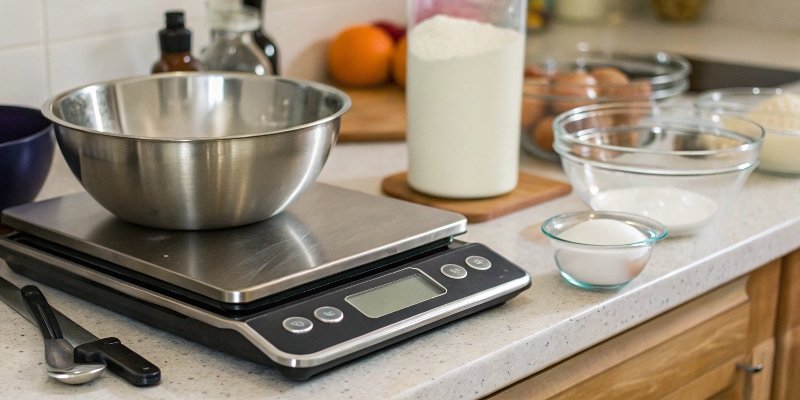
It's frustrating when you can't trust your tools. As someone who has spent 18 years in the industrial weighing1 industry, I've seen firsthand what separates a reliable scale from an unreliable one. The problems you face with a simple kitchen scale are often miniature versions of the challenges we solve on a much larger, industrial level. Let’s break down the hidden reasons your kitchen scale might be letting you down and explore how to ensure you get an accurate reading every single time.
What are the most common reasons digital kitchen scales become inaccurate?
Have you noticed your scale giving different weights for the same item? This inaccuracy can be frustrating. I'll show you the core technical reasons behind this common problem.
The most common reasons for inaccuracy are sensor limitations, calibration errors, and environmental factors. Low-cost strain gauges are sensitive to temperature and impact, while neglecting calibration and using the scale near microwaves or in high humidity will cause significant errors.
In my work with industrial scales, precision is everything. The same principles apply to your kitchen scale, just on a different scale. The biggest issue often lies in components you can't see.
Core Component Limitations
Most consumer kitchen scales use a low-cost component called a strain gauge sensor2 to measure weight. While effective in ideal conditions, they have weaknesses. A small temperature change of just 5°C can cause the reading error to expand by up to ±0.5%. Dropping the scale or placing a heavy pot on it can also cause "zero point drift3," which means the scale no longer knows where zero is. This is especially common in less expensive models.
Environmental and Calibration Issues
Your kitchen is a tough environment for a sensitive electronic device. High humidity can cause sensor drift, and electromagnetic interference4 from appliances like microwaves can make the readings jump around. Many users also forget a critical step: calibration. Over time, all scales drift. Without regular calibration using a standard weight, these small errors add up, making your measurements unreliable.
| Factor | Cause | Effect on Scale |
|---|---|---|
| Sensor Quality | Low-cost strain gauge | Sensitive to temperature changes |
| Physical Damage | Overload or impact | Permanent "zero point drift" |
| Environment | Humidity & Microwaves | Inconsistent or fluctuating readings |
| User Error | Lack of calibration | Accumulated long-term inaccuracy |
How can you troubleshoot a kitchen scale that gives inconsistent readings?
Is your scale's display jumping around? Don't throw it out just yet. These simple troubleshooting steps can often restore its accuracy and save you from buying a new one.
To troubleshoot an inconsistent scale, first check the batteries and ensure it's on a flat, stable surface. Then, perform a calibration using a known weight. Also, try moving it away from other electronics to rule out electromagnetic interference.

Before we replace a multi-thousand-dollar industrial unit, my team always runs through a basic diagnostic checklist. You can apply the same logic to your kitchen scale. It often comes down to three simple areas: power and placement, environment, and calibration.
Step 1: Basic Checks
Start with the simplest things first. A flickering display or inconsistent reading is often a sign of a weak battery. Replace them with a fresh set. Also, ensure your scale is on a hard, flat, and level surface. A wobbly table or a textured countertop can prevent the sensor from getting a stable reading. Check for any crumbs or debris trapped under the scale, as this can also interfere with its function.
Step 2: Environmental Scan
As I mentioned earlier, your kitchen is full of potential interference. Move your scale away from microwaves, induction cooktops, and even running blenders. These devices can create electromagnetic fields that disrupt the sensitive electronics inside the scale. Also, avoid placing it near a heat source like a stove or in direct sunlight, as temperature fluctuations are a primary cause of inaccurate readings. Let the scale sit for 30 minutes to adjust to the room's temperature before using it.
Step 3: Recalibration
If the basic checks don't work, it's time to recalibrate. This process resets the scale's internal reference point. Most scales have a calibration mode (check your manual). It's crucial to use a known, standard weight for this—not a coin or a can of soup. I recommend investing in a small 50g E2 class calibration weight. They are inexpensive and ensure your scale is reset to a true, accurate standard.
What user mistakes can cause a digital scale to be unreliable?
You followed the recipe exactly, but it still failed. The problem might not be the recipe, but how you use your scale. Let's fix common user mistakes.
Common user mistakes include placing the scale on an uneven or vibrating surface, not taring it correctly between ingredients, and ignoring the need for regular calibration. Overloading the scale or exposing it to extreme temperatures can also permanently damage it.
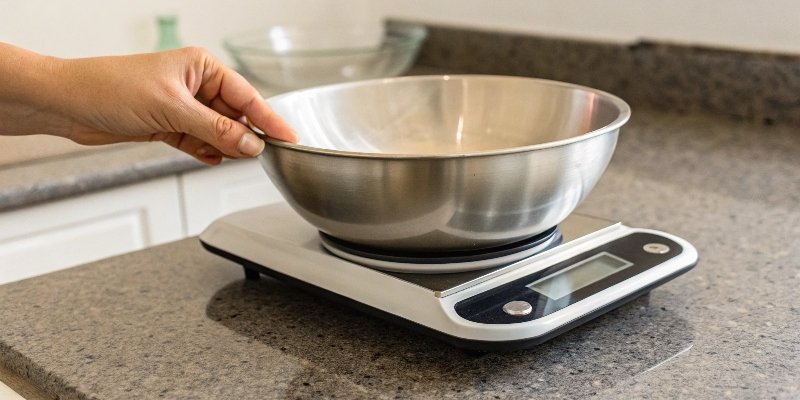
From my experience providing solutions to global clients, I've learned that even the most advanced equipment can fail if not used correctly. The same is true for your kitchen scale. Often, unreliability comes from small, overlooked habits that damage the scale or introduce errors.
The Unstable Foundation
The most common mistake I see is placing the scale on an unstable surface. A cutting board that rocks, a dish towel, or a vibrating countertop next to a running refrigerator will all prevent the load cell5 from settling. The sensor needs a perfectly still and level base to measure weight accurately. Always use a hard, flat surface away from any vibrations.
Forgetting the "Tare" Function
The "tare" or "zero" button is your best friend for accurate baking. It resets the display to zero. You should press it after placing your empty bowl on the scale, and then again after adding each ingredient. Forgetting to tare means you are adding the weight of the previous ingredient to the next, which is a sure way to ruin a recipe.
The Calibration Blind Spot and Rough Handling
Most people use their scale right out of the box and never think about calibration again. But as we've discussed, temperature and tiny impacts throw it off over time. You should calibrate your scale weekly if you use it often. Lastly, be gentle. Dropping ingredients onto the scale from a height or storing it with heavy items on top can damage the delicate sensors inside, leading to permanent inaccuracy.
What features should you look for in a reliable and accurate kitchen scale?
Tired of buying scales that don't last or give wrong readings? Choosing the right one from the start is key. I'll show you what professional features matter.
For a reliable scale, look for a higher capacity than you need to prevent overload. Key features include a dedicated calibration function, temperature compensation circuits for stability, and a stainless steel platform for durability and easy cleaning.
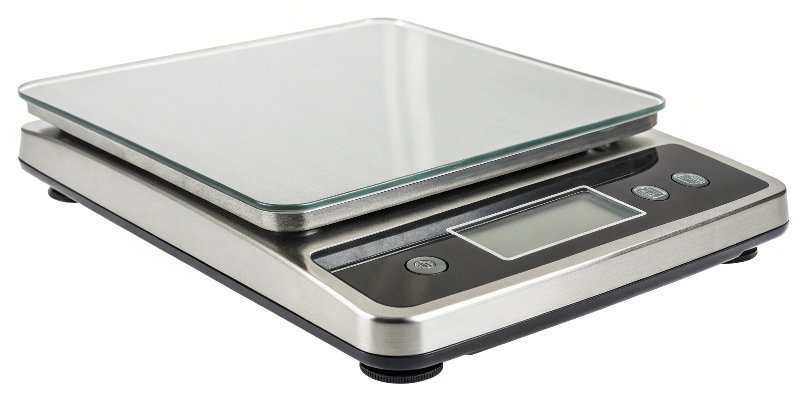
When our clients look for industrial weighing systems, they focus on reliability and accuracy above all else. You can apply the same professional mindset when choosing a simple kitchen scale. A few key features can make the difference between a frustrating gadget and a trustworthy kitchen tool.
Better Internals: Sensors and Circuits
While you can't see inside the scale, certain features on the box indicate better quality. Look for any mention of "temperature compensation6." This means the scale has internal circuits designed to minimize the effect of temperature changes, a major source of inaccuracy. This is a feature standard in industrial equipment that is now available in some higher-quality consumer models.
User Calibration and Build Quality
A reliable scale is designed to be maintained. Look for a scale that has a clear calibration function and, ideally, comes with a starter calibration weight. This shows the manufacturer is confident in their product's precision. For the exterior, choose a scale with a single, solid stainless steel platform7. It's not just for looks; it’s durable, easy to clean, and provides a stable surface that protects the sensitive load cell underneath.
| Feature | Basic Scale | Reliable Scale |
|---|---|---|
| Calibration | None or difficult to access | Easy one-touch function, may include a weight |
| Internals | Basic strain gauge | Mentions temperature compensation or high-precision sensors |
| Platform | Plastic | Stainless Steel |
| Capacity | Low (e.g., 3kg) | Higher than needed (e.g., 5kg) to avoid overloads |
Conclusion
A reliable kitchen scale depends on good sensors, proper use, and regular calibration. Choosing the right features and avoiding common mistakes will ensure your measurements are always accurate.
-
Explore the principles of industrial weighing systems and how they relate to kitchen scales. ↩
-
Learn about strain gauge sensors and their role in measuring weight accurately. ↩
-
Understand the phenomenon of zero point drift and how to prevent it in your kitchen scale. ↩
-
Discover how electromagnetic interference can disrupt your kitchen scale's performance. ↩
-
Understand the role of load cells in kitchen scales and their importance for accurate measurements. ↩
-
Explore the benefits of temperature compensation in maintaining scale accuracy. ↩
-
Discover the advantages of stainless steel platforms for durability and easy cleaning. ↩



Comments (0)