
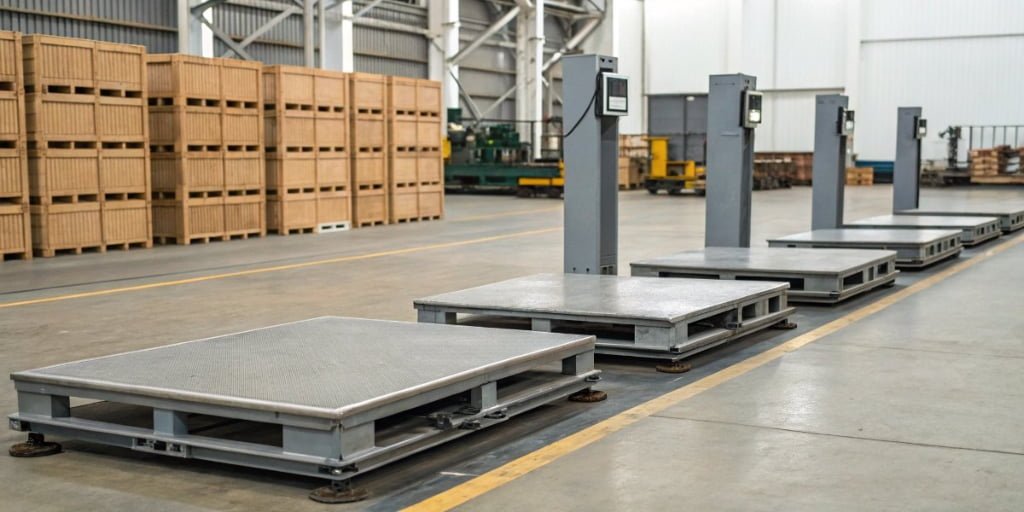
Struggling with slow, manual weighing processes? These mistakes cost your business time and money. Modern industrial scales transform your operations, boosting efficiency and eliminating costly errors.
The popularity of industrial weighing scales comes from their integration of new technology with traditional weighing. They solve real-world problems by providing accurate data, automating processes, and connecting directly to business software. This makes them essential tools for modern factories seeking efficiency and control.
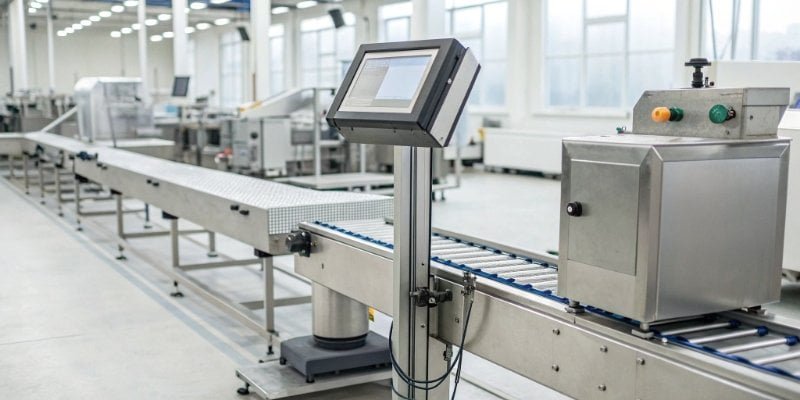
In my 19 years of manufacturing industrial scales, I have seen a huge shift. Scales are no longer just simple tools for measuring weight. They have become the heart of factory automation1 and data collection2. Many of our clients are software vendors, and they see this change clearly. They need reliable hardware to connect their smart systems3 to the physical world. This is where modern industrial scales come in. They provide the crucial link between a physical product and the digital data that drives a business. This article will break down why these devices are becoming so essential for businesses everywhere. We will explore their accuracy, their many advantages, and their wide range of uses.
How accurate are industrial weighing scales?
Worried that inaccurate weights are hurting your product quality? Even small errors can lead to big losses and unhappy customers. Thankfully, modern scales deliver the precision you can trust.
The accuracy of an industrial scale depends on its type and classification, but modern electronic scales are extremely precise. Many high-quality scales offer accuracy with error margins as low as 0.01% or even better, thanks to advanced load cells and regular calibration.

Accuracy is not just a single feature; it is the result of several factors working together. As manufacturers, we focus on engineering scales that deliver consistent and reliable results. For our clients, understanding these factors helps them choose the right tool for the job. You wouldn't use a truck scale to weigh spices, and the same logic applies across industries. The level of precision4 you need determines the type of scale you should get.
Scale Classifications and What They Mean
Regulatory bodies like OIML5 (International Organization of Legal Metrology) set standards for scale accuracy. These are divided into classes.
| Class | Typical Use | Description |
|---|---|---|
| Class I | Laboratory, Pharmaceutical | Extremely high precision for weighing very small quantities. |
| Class II | Jewelry, Precious Materials | High precision for valuable goods where accuracy is critical. |
| Class III | Commercial, Industrial | The most common class for industrial use, balancing cost and precision. |
| Class IV | Highway Weight Enforcement | Lower precision, used for gross weight checks on vehicles. |
Key Factors Influencing Accuracy
Beyond the class, other elements are crucial. The quality of the load cell, the electronic brain of the scale, is number one. A good load cell gives stable readings. Regular calibration6 is also vital. We always tell our clients to calibrate their scales on a set schedule to maintain accuracy. Finally, the environment matters. Vibrations, air currents, and temperature changes can all affect a scale's performance.
What are the advantages of weighing scales?
Are your old, manual processes holding your business back? Relying on disconnected systems creates bottlenecks and prevents you from seeing the bigger picture. Modern scales unlock a new level of control.
The main advantages are huge gains in efficiency, better data management, and integration with other systems. They automate tasks, cut down on human error, and feed real-time weight data directly into your inventory or production software for smarter, faster decisions.

When we design a new weighing system, we are thinking beyond just measurement. We are focused on how that measurement can improve a client's entire workflow. A scale by itself is useful, but a scale connected to your business is powerful. This is especially true for software companies who partner with us. They need hardware that speaks the same language as their software. The advantages of today's scales are built around this idea of connectivity and intelligence. It’s about turning a simple weight measurement into actionable business intelligence.
Efficiency and Cost Savings
Automated scales, like checkweighers7 on a production line, can weigh hundreds of items per minute. This is impossible for a human to do. This speed reduces labor costs. It also ensures every package meets the target weight, cutting down on product giveaway and saving money.
Data Integration and Traceability
This is the biggest advantage for modern industries. Our IoT-enabled scales8 can send weight data9 directly to an ERP or Warehouse Management System (WMS). For a food manufacturer, this means you can trace a specific batch of ingredients from the warehouse to the final product. For a logistics company, it provides accurate shipping weights10 for billing and compliance. This seamless data flow eliminates manual entry errors and provides an accurate, real-time view of your operations.
What are industrial scales used for?
Think scales are only for checking how heavy something is? You might be missing their true potential in a modern business. Let's look at what these powerful tools can really do.
Industrial scales are used for much more than basic weighing. Key applications include inventory management, quality control through checkweighing, precise recipe formulation in batching processes, and verifying weights for shipping and logistics to ensure compliance and fair trade practices.
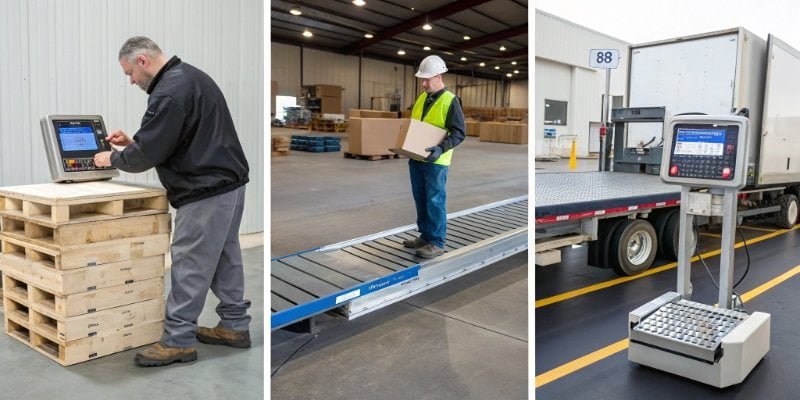
Over the years, our customers have used our scales in ways I never imagined at first. They are the foundation for so many critical business processes. From the moment raw materials enter a factory to the moment a finished product ships out, a scale is often involved. We work with clients to provide customized solutions because every industry has unique needs. Below is a look at some of the most common applications we see across different sectors. Each one relies on the scale for accurate data to keep the business running smoothly.
Common Applications Across Industries
| Industry | Primary Use Case | How Scales Are Used |
|---|---|---|
| Logistics & Shipping | Shipping and Receiving | Weighing pallets and parcels to calculate shipping costs and verify bills of lading. Truck scales weigh entire vehicles. |
| Manufacturing | Quality & Process Control | Checkweighers ensure product packages are within tolerance. Batching scales create precise mixtures and recipes. |
| Agriculture | Inventory & Sales | Platform scales weigh livestock. Hopper scales measure grain during storage and transport. |
| Food & Beverage | Formulation & Compliance | Stainless steel scales are used for recipe mixing. They also ensure products meet net weight regulations. |
| Pharmaceutical | Precision & Traceability | High-precision scales measure tiny amounts of active ingredients. Data logging is critical for regulatory compliance11. |
In each case, the scale is not a standalone device. It's a data point. It tells a manager how much inventory is on hand, whether a product meets quality standards, or if a shipment is correct.
What are the benefits of using a mechanical scale?
Need a scale for a tough spot with no access to power? Digital scales may not be an option in some harsh conditions. This is where a simple, durable mechanical scale shines.
The main benefits of a mechanical scale are its durability and ability to work without electricity. This makes it ideal for remote locations, hazardous environments where sparks are a risk, or any situation where simplicity and reliability are more important than advanced features.

While most of our focus at Weigherps is on creating smart, IoT-enabled electronic scales, we understand that technology is not always the answer for every situation. I have visited client sites in very remote areas where reliable electricity is just not available. In those cases, a good old-fashioned mechanical scale12 is the perfect tool for the job. They are built like tanks and operate on simple principles of levers and springs. They have a clear place in the world of weighing, even as technology moves forward.
When Mechanical Makes Sense
The biggest advantage is independence. A mechanical scale works anywhere, anytime. It is not affected by power outages or electrical interference. This makes them great for fieldwork in agriculture or construction. They are also often used in potentially explosive environments (hazardous areas) where an electronic device could be a source of ignition. Their simple design also means there are fewer parts that can break, making them very durable and long-lasting with minimal maintenance.
The Limitations for Modern Industry
However, for most businesses today, especially those focused on efficiency and data, mechanical scales have serious drawbacks. They lack the precision of modern electronic scales. More importantly, they cannot communicate. You cannot connect a mechanical scale to your inventory system, your PLC, or the cloud. Every reading must be manually observed and written down, opening the door for human error. They don't support automation like checkweighing or batching. So, while they solve a specific problem, they do not offer the data and efficiency benefits that are driving the popularity of modern industrial scales.
Conclusion
Industrial scales are popular because they blend reliable weighing with modern tech. They deliver accuracy, efficiency, and the data integration that today's smart factories and businesses need to grow.
-
Learn about the transformative impact of factory automation on productivity and efficiency. ↩
-
Discover effective strategies for data collection that can streamline your manufacturing processes. ↩
-
Discover how smart systems can revolutionize industrial operations through automation and data. ↩
-
Understand the key factors that influence the precision of industrial weighing scales. ↩
-
Learn about the OIML standards and their significance in ensuring scale accuracy. ↩
-
Find out why regular calibration is crucial for maintaining scale accuracy and reliability. ↩
-
Explore the role of checkweighers in quality control and efficiency in production lines. ↩
-
Discover the advantages of IoT-enabled scales in improving data integration and traceability. ↩
-
Explore the critical role of weight data in optimizing manufacturing and logistics processes. ↩
-
Understand the methods used to calculate shipping weights for accurate billing and compliance. ↩
-
Learn about the essential compliance requirements that ensure product safety and quality. ↩
-
Explore the benefits of mechanical scales in specific industrial applications. ↩



Comments (0)