

Struggling with unreliable measurements? A small error can derail your work, costing time and money. Discover why 0.001 g precision is the key to consistent, trustworthy results.
You need 0.001 g accuracy in fields like pharmaceuticals, chemical analysis, and microelectronics. This precision is essential for ensuring product quality, safety, and regulatory compliance. Even a milligram-level error can invalidate research, compromise product function, or lead to significant financial loss.
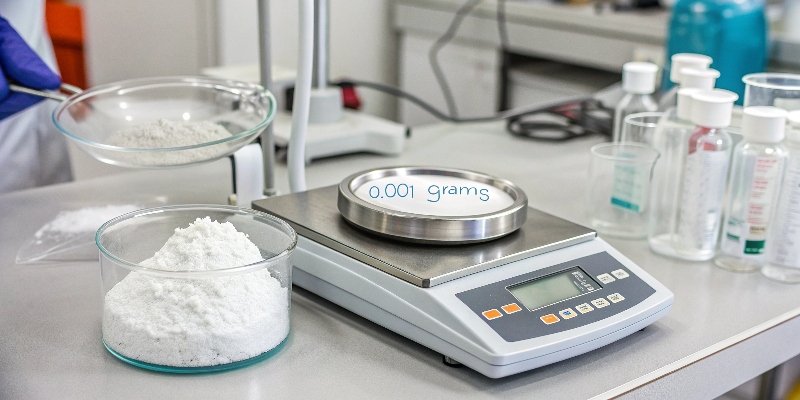
We've established that 0.001 g accuracy is vital in certain high-stakes fields. But what does that mean in practice? Over my 18 years in the industrial weighing industry, I've seen firsthand how this level of precision makes a difference. As a software provider, understanding the hardware your systems integrate with is crucial. Let's explore the specific applications and benefits to see why this precision is critical for your end-users.
What applications require a weighing accuracy of 0.001 g?
Wondering if your application really needs milligram precision? Using the wrong scale wastes money or compromises data. Let's identify the specific jobs that demand 0.001 g accuracy.
Applications requiring 0.001 g accuracy include pharmaceutical compounding, chemical solution preparation, quality control in microelectronics, and valuing precious metals. In these areas, precision is not a luxury; it is a fundamental requirement for safety, quality, and financial accuracy.

At our company, we build weighing solutions for a wide range of industries. The demand for 0.001 g accuracy consistently comes from sectors where the stakes are highest. It's not about measuring with more decimal places for the sake of it. It's about a functional need for certainty.
Scientific, Medical, and Manufacturing Uses
In my experience, the need boils down to three main areas. First is scientific and laboratory work, like preparing chemical solutions or developing new drugs. An error here can invalidate an entire experiment. Second is high-tech manufacturing, where tiny components in electronics must meet exact weight specifications. Third, and perhaps most critical, are medical and clinical fields. This includes everything from lab diagnostics to mixing patient-specific medications, where a tiny error can have serious health consequences.
The table below summarizes some key applications:
| Field | Application Example | Why 0.001 g is Critical |
|---|---|---|
| Pharmaceuticals | Measuring Active Pharmaceutical Ingredients (APIs) | Ensures correct dosage, avoiding toxicity or ineffectiveness. |
| Chemical Research | Preparing molar solutions1 | Guarantees reaction stoichiometry and valid experimental data. |
| Electronics | Weighing semiconductor components2 | Affects product functionality and assembly tolerances. |
| Medical Labs | Analyzing blood samples for diagnostic tests | Provides accurate diagnostic results for patient care. |
How does a 0.001 g accuracy improve experimental outcomes?
Frustrated by inconsistent experimental results? Minor inaccuracies can undermine your entire research project. Let's explore how 0.001 g accuracy directly leads to more reliable and repeatable outcomes.
An accuracy of 0.001 g drastically improves experimental outcomes by ensuring reproducibility. It minimizes compounding errors in multi-step processes and guarantees your measurements are a true reflection of the sample, not instrument limitations. This provides the reliable, high-quality data needed for valid conclusions.
Improving experimental outcomes isn't just about getting the "right" answer once. It's about getting the same, correct answer every time. High-precision weighing is the foundation of this consistency. I've worked with many R&D labs, and I can tell you the most successful ones are obsessed with their measurement process.
Boosting Reproducibility
For a scientific experiment to be considered valid, other researchers must be able to reproduce it and get the same results. If your initial measurements are off by even a fraction of a percent, reproducibility becomes impossible. A 0.001 g balance ensures that anyone following your procedure starts with the exact same quantities, removing a major variable.
Minimizing Compounding Errors
Many processes involve creating a stock solution and then making several dilutions from it. A small weighing error at the start, say 0.01%, might seem insignificant. But that error carries through and is magnified with each subsequent step. Using a 0.001 g balance minimizes that initial error, preventing it from spiraling out of control and ruining your final results.
Ensuring Data Integrity
Ultimately, you need to trust your data. When you use a high-precision balance, you remove doubt about a fundamental part of your process: the measurement. This allows you to focus on analyzing your experimental variables, confident that your foundational data is solid.
In what fields is high precision weighing crucial?
Do you think high-precision weighing is only for labs? That belief might cause you to overlook a critical tool for many industries. Let's explore the surprising range of fields that depend on it.
High-precision weighing is crucial in pharmaceuticals for drug safety and efficacy. It's vital in quality control for manufacturing, especially in electronics and automotive. It's also essential in legal metrology for trade, such as with precious metals, and for environmental science to measure pollutants.
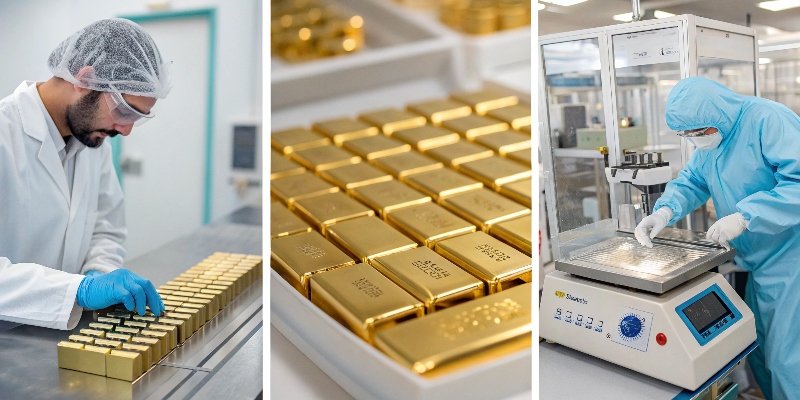
While laboratories are a primary user, the need for 0.001 g accuracy extends far into the commercial and industrial world. As a manufacturer, we provide weighing systems that are the backbone of quality and compliance in these fields. For your software, this means your potential market is broader than you might think.
Quality Control & Manufacturing
We work with manufacturers who produce everything from microchips to automotive sensors. For them, a 0.001 g scale isn't a lab instrument; it's a production tool. It ensures that every component meets a strict weight tolerance. A tiny deviation could cause a product to fail, leading to costly recalls.
Regulatory Compliance and Legal Metrology
Many industries are heavily regulated. In pharmaceuticals, Good Manufacturing Practices (GMP)3 mandate precise measurements. In food safety, ISO standards4 require traceability. Our scales, which comply with international certifications like CE, help our clients meet these strict requirements and pass audits. This also applies to "legal for trade" applications, where goods are sold by weight. A certified 0.001 g balance ensures fairness and prevents fraud.
Precious Metals & Jewelry
In the high-value goods market, precision is directly tied to profit. For a gold wholesaler, a tiny discrepancy adds up quickly. A 0.001 g error in a 1-gram gold piece can be a difference of over $0.60. Across thousands of transactions, this becomes a significant financial impact.
What are the benefits of using a balance with 0.001 g accuracy?
Wondering if a high-precision balance is worth the cost? Avoiding this investment can lead to waste, non-compliance, and lost revenue. Let's review the tangible benefits that justify the expense.
The main benefits are guaranteed regulatory compliance, reduced material waste, and enhanced product quality. It also boosts confidence in R&D outcomes and strengthens your brand's reputation for precision and reliability. This investment directly translates to improved efficiency and profitability.

Investing in a high-precision instrument is a business decision. At Weigherps, our vision is to empower our customers to achieve growth in production and profits. A 0.001 g balance is a key tool for achieving this. The return on investment5 is clear and multifaceted. As a software partner, knowing these benefits helps you articulate the value of an integrated, high-precision system to your customers.
Achieve Unwavering Compliance
For any business in a regulated industry, compliance is non-negotiable. Using a certified 0.001 g accuracy balance simplifies this. It provides the documentation and traceability needed to pass audits from bodies like the FDA or adhere to ISO standards. This minimizes risk and avoids costly penalties or shutdowns.
Reduce Costs and Eliminate Waste
Many high-precision applications involve very expensive materials, like APIs in medicine or rare earth metals in electronics. Precise weighing ensures you use the exact amount needed, no more, no less. This eliminates over-filling, prevents waste, and directly improves your bottom line.
Enhance Product Quality and Reputation
Ultimately, a high-precision process leads to a high-quality product. This means fewer defects, better performance, and higher customer satisfaction. For your brand, this builds a reputation for reliability and excellence. Customers trust brands that are synonymous with quality, giving you a powerful competitive edge.
Conclusion
In conclusion, 0.001 g accuracy is not just a technical specification. It is a fundamental requirement for quality, safety, and profitability in many modern, high-stakes industries.
-
Understanding the importance of precision in molar solutions can enhance your chemical research outcomes. ↩
-
Explore how accurate weighing of semiconductors affects product performance and assembly. ↩
-
Learn about GMP and how it ensures safety and quality in pharmaceutical manufacturing. ↩
-
Understanding ISO standards can help you ensure compliance and quality in your processes. ↩
-
Learn how precision weighing systems can enhance profitability and operational efficiency. ↩



[…] a company creates medicine, they use highly regulated processes. Good Manufacturing Practices (GMP)5 require that every ingredient, especially the active pharmaceutical ingredient (API), is weighed […]