
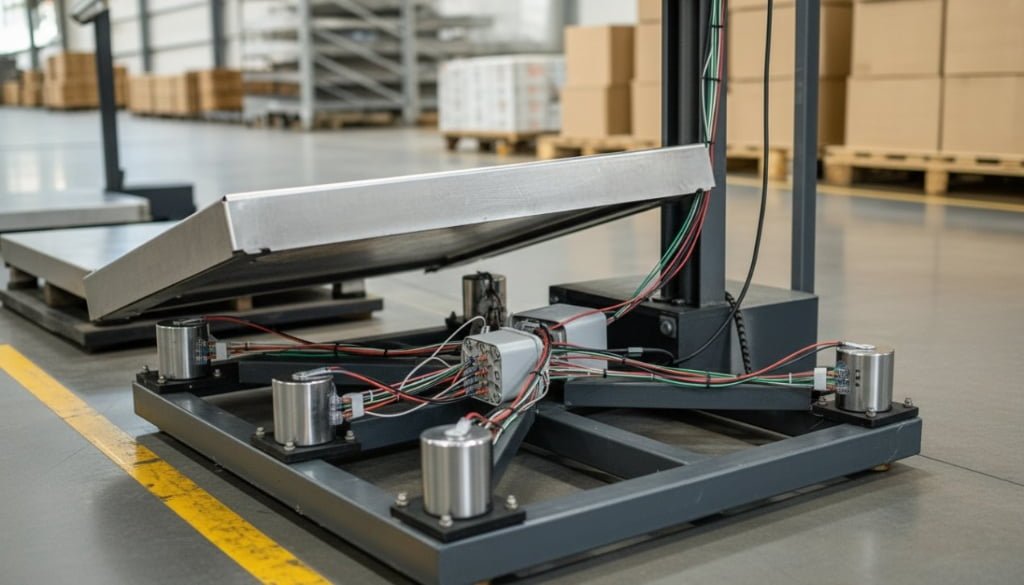
Choosing weighing equipment based on looks alone? Ignoring the internal sensor can lead to inaccurate data, production errors, and financial loss, jeopardizing your entire operation's integrity.
The sensor, or load cell, is the heart of any weighing scale. It is the component that actually measures weight. The quality of this technology directly determines the scale's precision, reliability, and consistency, impacting everything from quality control to profitability.

You now see that the sensor is the core component. But not all sensors are created equal. To make the best purchasing decision for your business, you need to understand the different technologies available and how they work. Let’s dive deeper into the world of internal sensing technologies to see how they impact your daily operations and bottom line. As a manufacturer with 18 years of experience, I’ve seen firsthand how the right sensor can transform a business.
What are some internal sensing technologies?
Confused by terms like "strain gauge" or "electromagnetic"? This technical jargon can make choosing the right scale feel overwhelming and lead to a poor purchasing decision.
The most common internal sensing technology is the strain gauge load cell, which measures resistance changes. Other key types include electromagnetic force restoration (EMFR) for high precision, and hydraulic or pneumatic load cells for heavy-duty, harsh environments.
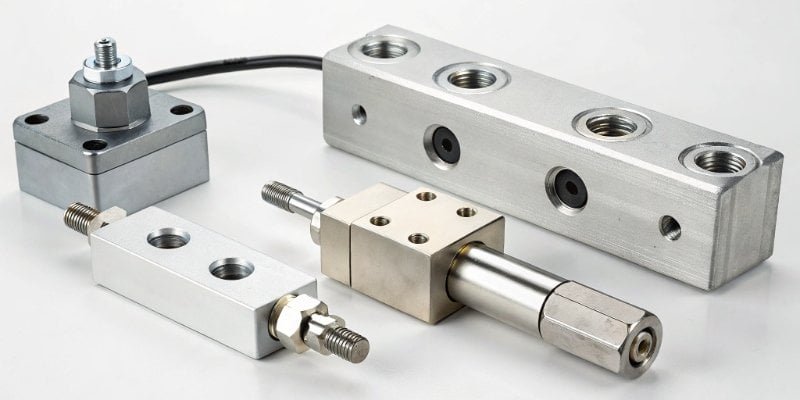
At Weigherps, we help clients choose the right technology for their specific needs. It's about finding the perfect balance between performance and cost. Here is a breakdown of the most common types.
Strain Gauge Load Cells
This is the workhorse of the industrial weighing1 world. It works by bonding a foil pattern (the strain gauge2) to a structural element (the load cell3 body). As a load is applied, the body deforms slightly, stretching or compressing the foil. This changes the foil's electrical resistance, which we can measure and convert into a weight reading. They offer excellent reliability and cost-effectiveness for a wide range of applications, from simple bench scales to large truck scales. We often recommend digital strain gauge load cells4 to our software vendor clients because their direct digital output simplifies integration and reduces signal noise.
Electromagnetic Force Restoration (EMFR)
For applications that demand the highest precision, like laboratories or pharmaceutical compounding, EMFR is the gold standard. Instead of measuring deformation, this technology uses an electromagnet to counteract the force of the weight being measured. The amount of electrical current needed to perfectly balance the load is measured. This value is directly proportional to the weight. While more expensive, EMFR sensors provide incredibly high resolution and fast stabilization times.
Other Specialized Technologies
For very heavy loads or extremely harsh environments, other technologies like hydraulic or pneumatic load cells5 might be used. These measure changes in fluid or air pressure to determine weight. They are extremely rugged and insensitive to electrical interference but generally offer lower accuracy6 than electronic load cells.
Here's a simple comparison:
| Technology Type | Key Advantage | Common Application |
|---|---|---|
| Strain Gauge | Best all-around value and versatility | General industrial weighing, retail, logistics |
| EMFR | Highest accuracy and speed | Laboratory analysis, pharmaceutical |
| Hydraulic | Extreme ruggedness and high capacity | Tank and silo weighing, hazardous areas |
Why is accuracy important for weighing and measuring?
Think a small deviation in weight is no big deal? Those tiny errors in your measurements can accumulate into massive financial losses and operational headaches over time.
Accuracy is crucial for economic and legal reasons. It ensures fair trade, meets regulatory compliance, and prevents financial loss from over-filling. In production, it guarantees product quality, consistency, and process efficiency, which is vital for maintaining a competitive edge.

I remember working with a food processing client who was losing thousands of dollars a month. Their old scales were consistently over-filling bags of snacks by just a few grams. It seems small, but over millions of units, it became a significant loss. Upgrading to accurate equipment paid for itself in less than six months. This story highlights the real-world value of accuracy.
Economic and Legal Risk Control
Many goods are sold by weight. In these cases, scales used for commerce must be "Legal for Trade" certified. Inaccurate scales can lead to heavy fines, legal action, and a complete loss of customer trust. From an economic standpoint, inaccuracy costs money. Giving away extra product eats into your profit margins, while under-filling can lead to customer complaints and returns. Accuracy ensures you are selling exactly what you promise, protecting both your finances and your reputation.
Production and Quality Management
In any manufacturing process that involves recipes or formulas, accuracy is non-negotiable. Think about producing paints, chemicals, or pharmaceuticals. A small error in a single ingredient can ruin an entire batch, wasting materials, time, and money. Consistent accuracy allows for repeatable processes, which is the foundation of modern quality control7. For our clients in software, providing a system that relies on accurate data capture is fundamental. Your software's analytics are only as good as the input data it receives from the hardware.
Research and Development Needs
When developing new products or conducting scientific experiments8, every variable must be tightly controlled. Weight is often a critical variable. High-accuracy weighing is essential for creating reliable, repeatable experiments. The data gathered during R&D forms the basis for future production specifications. Any inaccuracy at this stage can cause major problems down the line when scaling up production.
What is accuracy in a weighing scale?
You hear "accurate" and "precise" used a lot, but they are not the same thing. This common confusion can easily lead to you buying the wrong equipment for your needs.
Accuracy is how close a measurement is to the true, correct value. It is different from precision, which is how consistent and repeatable the measurements are. An ideal scale is both accurate and precise, delivering results that are both correct and repeatable.
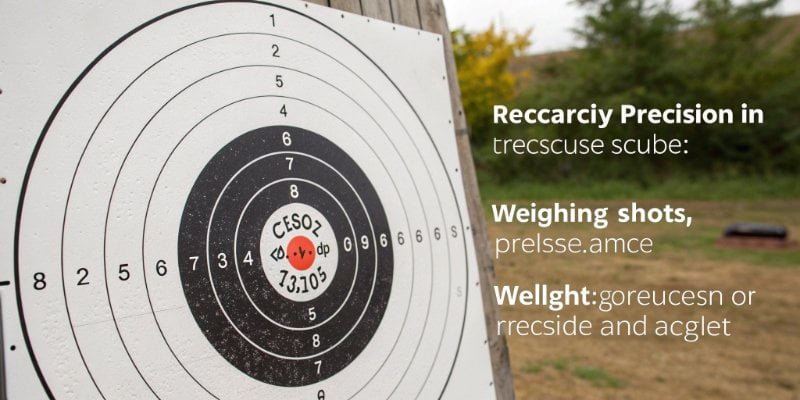
To get a better handle on this, think of an archer shooting at a target. If the arrows all hit the bullseye, the archer is both accurate and precise. If the arrows are all clustered together but in the top-left corner, the archer is precise but not accurate. If the arrows are scattered all over the target, the archer is neither accurate nor precise. In our quality control department, we don't just hope for the best. Every single scale we ship is tested and calibrated against certified weights to ensure it hits the bullseye every time. This rigorous testing guarantees that our customers receive equipment they can trust from day one.
Here are the key terms you should know:
| Term | Definition | Why It Matters |
|---|---|---|
| Accuracy | How close a reading is to the true weight. | Ensures you are not over-filling, under-filling, or using incorrect formulas. It's about being correct. |
| Precision (or Repeatability) | How consistent the readings are when weighing the same object multiple times. | Guarantees reliable, stable results for quality control and process consistency. It's about being consistent. |
| Linearity | The scale's ability to remain accurate across its entire weighing range, from light to heavy loads. | Ensures a 50kg reading is just as accurate as a 5kg reading, which is critical for versatile applications. |
Your business needs equipment that is both accurate and precise. A scale that gives you the exact same wrong weight every time (precise but not accurate) is just as useless as a scale whose readings are all over the place.
What is zero balance on a load cell?
Your scale shows a small weight even when empty. You might just press the "tare" button and forget it, but this could be a symptom of a much bigger problem.
Zero balance is the output signal of a load cell when there is no load applied. Ideally, this should be zero or very close to it. A significant deviation indicates potential issues like physical damage or electronic drift that can compromise measurement accuracy.

Pressing the "Zero" or "Tare" button on your scale is a temporary fix. It tells the display to ignore the current signal and consider it the new zero point. However, this doesn't solve the underlying problem with the sensor itself. A load cell with a poor or drifting zero balance9 is often a warning sign. Over my years in this industry, I have seen many companies ignore this until their measurements become completely unreliable, forcing an emergency shutdown or a costly product recall.
What Causes Poor Zero Balance?
Several factors can cause a load cell's zero point to shift.
- Physical Overload or Shock: Dropping a heavy object on the scale or exceeding its maximum capacity can permanently deform the load cell.
- Temperature Changes: All materials expand and contract with temperature. Our high-quality load cells have built-in temperature compensation, but extreme fluctuations can still cause temporary zero drift.
- Material Fatigue: Over many years and millions of weighing cycles, the metal in the load cell can develop fatigue, affecting its response.
- Moisture or Corrosion: In wet or corrosive environments, moisture can get into the electronics or corrode the strain gauge, leading to unstable readings.
As part of our commitment to you, we build our scales with high-quality, pre-tested load cells designed for minimal zero drift. Plus, our 12-month after-sales service guarantee gives you peace of mind that your equipment will remain stable and reliable.
Conclusion
Choosing the right scale means looking inside. The sensor technology dictates accuracy, which directly impacts your profits, compliance, and quality. Now you can make a truly informed decision.
-
Explore the common challenges faced in industrial weighing and how to overcome them. ↩
-
Understanding strain gauges can help you choose the right load cell for your specific needs. ↩
-
This resource provides a comprehensive overview of load cells, their types, and applications in weighing. ↩
-
Explore the advantages of digital strain gauge load cells for modern weighing applications. ↩
-
Learn about pneumatic load cells and their benefits in harsh environments. ↩
-
This article explains the significance of accuracy in weighing and its impact on business operations. ↩
-
Discover the relationship between weighing accuracy and effective quality management. ↩
-
Learn how accurate weighing is essential for reliable results in scientific research. ↩
-
Learn about zero balance and its implications for measurement reliability in weighing scales. ↩



Comments (0)