
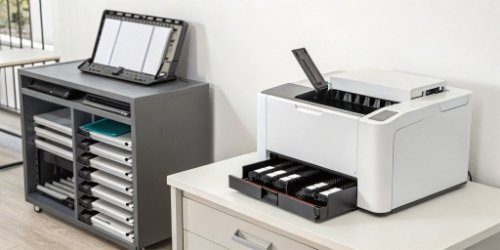
Tired of juggling separate scales and printers? This complex setup slows production and causes errors. Integrated printer scales streamline your workflow, combining weighing and labeling into one simple step.
An integrated printer is more efficient because it combines weighing, data processing, and label printing into a single device. This eliminates connection issues, reduces physical space, and streamlines the workflow by removing extra steps and potential human error, leading to faster, more accurate labeling.
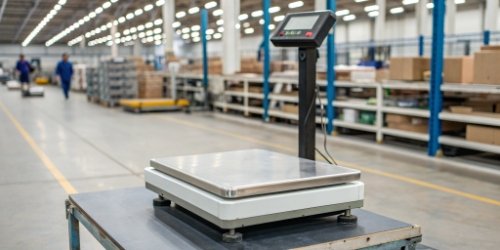
The simplicity of an all-in-one solution seems obvious, but the real magic is in the details. When you look closer, you’ll see how this integration transforms every part of your production line. Let’s break down exactly how these systems create such a significant boost in efficiency and what it means for your bottom line.
How Does an Integrated Printer Streamline Labeling Processes in Production?
Is your labeling process a bottleneck? Multiple steps between weighing and labeling create delays and frustration. An integrated system automates this flow, saving valuable time with every single item.
An integrated printer streamlines labeling by creating a single, automated workflow. It weighs an item, instantly calculates necessary data, and prints the corresponding label on the spot. This one-touch process eliminates manual data entry, device switching, and waiting times, significantly speeding up production.
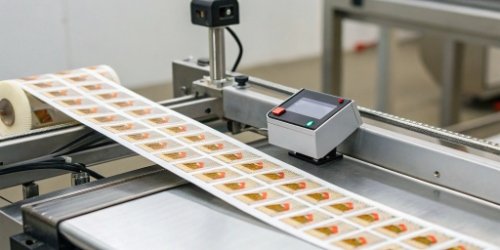
The core advantage lies in creating a ‘one-stop station’ for your products. In a traditional setup, you have multiple points of failure and delay. An operator weighs an item, notes the weight, moves to a computer, enters the data, and then sends a print command to a separate printer. Each step is an opportunity for error. With an integrated solution, the process is consolidated.
The One-Touch Workflow
Once an item is placed on the scale, the system does everything. It captures the weight, processes any linked product data (like SKU or price), and immediately prints a label. There’s no back-and-forth, no manual input. This is especially crucial in demanding environments. Think about a wet food processing plant or a dusty warehouse. Maintaining three separate electronic devices (scale, PC, printer) is far more challenging than protecting a single, ruggedized unit designed for that purpose. We’ve seen clients cut their processing time per package by over 30% just by making this switch.
What Are the Efficiency Benefits of Using Integrated Printers Over Separate Stations?
Are you losing time to equipment setup and maintenance? Managing separate stations is a constant drain on resources. An integrated printer minimizes this, letting your team focus on production.
Integrated printers boost efficiency by reducing physical movement, minimizing training time, and lowering the risk of human error. With a single point of operation, workers complete tasks faster. The simplified hardware also means less maintenance and troubleshooting, ensuring maximum uptime for your production line.
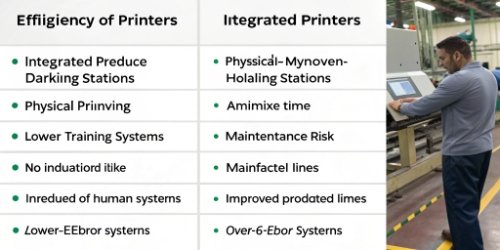
When we talk about efficiency, it is not just about speed; it is about optimizing resources across the board. An integrated system delivers tangible benefits in several key areas. Firstly, it saves valuable floor space by combining multiple pieces of equipment into one compact footprint. Secondly, it reduces the chance of human error1, which is a significant hidden cost in many operations. I remember a client who was constantly dealing with mislabeled packages because operators were keying in weights incorrectly. An integrated system completely eliminated that problem.
Direct Efficiency Comparison
| Metric | Separate Stations | Integrated Printer Scale |
|---|---|---|
| Steps per Item | 3-5 (Weigh, Record, Input, Print) | 1 (Place on scale, take label) |
| Potential for Error | High (Manual data entry) | Low (Automated process) |
| Operator Training | Moderate (Multiple devices) | Minimal (Single interface) |
| Equipment Footprint | Large (Requires space for 3+ items) | Compact (Single unit) |
This structured improvement ensures a smoother, more reliable workflow every single day.
How Can Combining Printing and Labeling Functions Reduce Operational Costs?
Worried about hidden operational costs? Power, maintenance, and supplies for multiple devices add up quickly. A single, integrated unit significantly cuts these expenses, directly improving your profitability.
Combining these functions reduces costs by lowering hardware investment, energy consumption, and maintenance needs. You buy and maintain one device instead of three. It also minimizes spending on consumables like ink and labels through more efficient, error-free printing, and reduces labor costs by improving worker productivity.
The financial argument for integration is compelling. Let’s move beyond the initial purchase price and look at the Total Cost of Ownership2 (TCO). A separate setup involves a scale, a computer, a printer, and all the necessary cabling and software licenses. That is three devices drawing power, three maintenance schedules to manage, and three potential points of failure.
Key Areas of Cost Reduction
- Hardware and Infrastructure: You are purchasing one piece of equipment, not a bundle. This also means fewer power outlets and data ports are needed, simplifying your infrastructure.
- Labor Costs: Faster processing means one operator can handle more volume, or you can reallocate labor to other value-added tasks. This is a direct translation of efficiency into savings.
- Consumables: Automated printing reduces wasted labels from typos or incorrect entries. Over thousands of labels a year, this small saving becomes significant.
- Maintenance: From my 19 years of experience in after-sales, servicing one integrated unit is far simpler and cheaper than troubleshooting a complex system of interconnected devices.
Why Are Integrated Printers Preferred for Enhancing Workflow and Productivity?
Does your workflow feel disjointed and slow? A lack of cohesion between tasks kills productivity. Integrated printers create a seamless flow, turning fragmented steps into a unified, efficient process.
Integrated printers are preferred because they create a fluid, predictable, and fast workflow. By centralizing the weighing and labeling task at a single point, they eliminate bottlenecks and make the entire production process smoother. This enhanced flow directly translates to higher output and improved overall productivity.
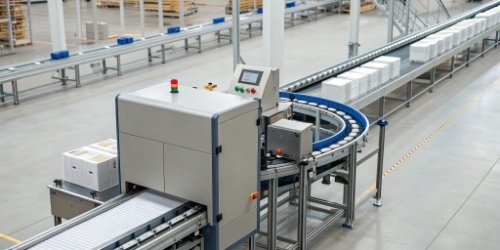
Productivity is all about momentum. Every time an operator has to stop, switch tasks, or move to another station, that momentum is lost. An integrated weighing and printing scale is designed to maintain that flow. The entire action becomes a single, fluid motion: place the item, take the labeled item, and move to the next.
The Foundation for a Smarter Workflow
This concept extends beyond just the physical actions. For software vendors like our clients, the true power is in the data stream. An integrated device provides a single, clean data source. Weight and product information are captured and logged together, making inventory management3, quality control4, and traceability much simpler. It becomes a key data-collection node in a modern, IoT-enabled factory5. This centralized approach not only boosts today’s productivity but also provides the high-quality data needed for future process optimization and integration with larger enterprise resource planning (ERP) systems. It makes your entire operation more scalable and future-proof.
Conclusion
Switching to an integrated printer scale is not just an upgrade. It is a strategic move to cut costs, reduce errors, and build a faster, more efficient production workflow.
-
Explore methods to minimize human error and improve accuracy in production. ↩
-
Gain insights into Total Cost of Ownership and its importance in equipment investment. ↩
-
Discover how integrated systems can streamline your inventory management processes. ↩
-
Find out best practices for maintaining quality control in production environments. ↩
-
Explore the benefits of IoT-enabled factories in modern manufacturing. ↩

Comments (0)