

Your experiment's success hinges on one number, but your balance won't stop fluctuating. This frustrating instability wastes time and ruins data integrity. Let's diagnose the issue and get you back to accurate results.
The most common reasons for an unstable lab balance reading include environmental factors like drafts, vibrations, and temperature changes; static electricity; improper weighing technique; or a hardware fault. Systematically checking these areas will usually identify and solve the problem, ensuring measurement accuracy.

When I visit a client's lab, unstable readings are a frequent complaint. But it's rarely a sign that the balance is broken. More often, the solution is much simpler than you think. The key is to work through the potential causes logically, starting with the easiest ones to fix. In this guide, I'll walk you through the exact process we use to diagnose these issues, drawing on my 18 years in the weighing industry. Let's get your measurements back on track.
How do drafts, vibrations, and temperature affect lab balance stability?
You've set up your balance perfectly, yet the numbers keep jumping around. Is the equipment faulty, or is your lab environment secretly working against you? Let's check the three biggest culprits.
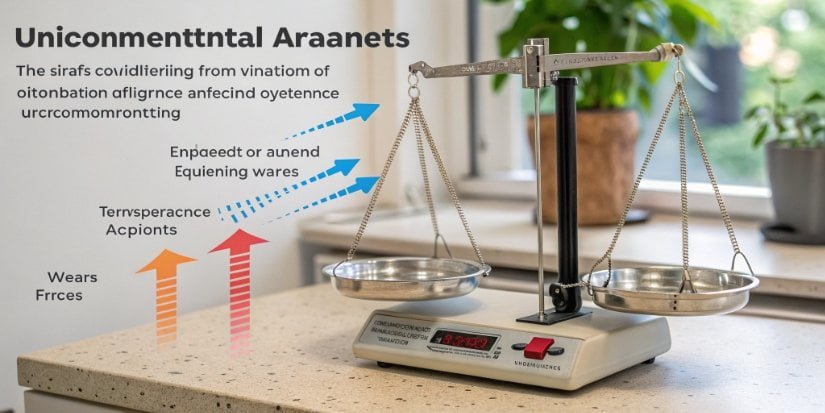
Drafts from air conditioning, vibrations from nearby equipment, and temperature shifts all create physical forces that a sensitive balance misinterprets as weight. These environmental interferences are a primary cause of unstable readings because the balance is designed to detect incredibly small mass changes.
Dive Deeper
As a manufacturer, we design balances to be extremely sensitive. This is great for precision, but it also means they can pick up disturbances you might not even notice. Let’s break down these invisible forces. I once helped a client whose balance was near a hallway; every time someone walked by, the slight air movement was enough to throw off their readings. We solved it by simply moving the balance to a quieter corner of the lab.
It’s crucial to control these three factors for reliable measurements.
| Environmental Factor | Common Causes & Effects | How to Fix It |
|---|---|---|
| Drafts (Air Flow) | Air conditioning, open doors, or people walking by can push on the weigh pan, causing number fluctuations. | Always close the draft shield1. Position the balance away from vents and high-traffic areas. |
| Vibrations | Nearby centrifuges, mixers, or even construction work can shake the internal mechanism, causing instability. | Place the balance on a heavy, dedicated anti-vibration table. Isolate it from vibrating machinery. |
| Temperature | A sample that's warmer or cooler than the room creates air convection currents inside the chamber, affecting the reading. | Let samples acclimate to room temperature before weighing. Maintain a stable lab temperature (20-25°C). |
By systematically isolating your balance from these influences, you eliminate the most common source of instability.
Could static electricity be the cause of my drifting balance readings?
You’ve eliminated drafts and vibrations, but your readings are still slowly drifting up or down. This phantom force can make you question every single result. It's time to consider the invisible culprit.
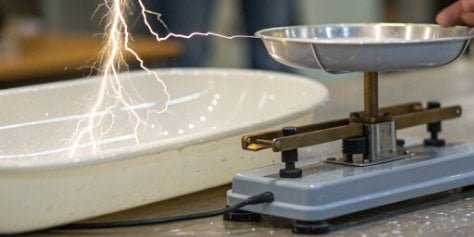
Yes, static electricity is a very common cause of drifting or jumping readings. It creates an electrostatic field between your sample container and the balance, exerting a push or pull force on the weigh pan that your balance registers as a change in weight.
Dive Deeper
I remember working with a pharmaceutical company that was weighing a very fine, dry powder in plastic weigh boats. Their readings were all over the place. The lab's air was very dry, which made static a huge problem. The powder was clinging to the container, and the container was essentially being repelled by the balance pan. The solution was an anti-static device2.
Static builds up most often when handling non-conductive materials like plastic or glass, especially in environments with low humidity (below 40%). This charge creates a force that can be strong enough to make your measurements completely unreliable. The reading might drift upwards, downwards, or just fail to settle. Here's how you can fight back against it.
| Problem Area | How It Causes Static Instability | Effective Solutions |
|---|---|---|
| Dry Environment | Low humidity allows static charges to build and linger. | Increase room humidity with a humidifier. Aim for 45-60% relative humidity. |
| Containers | Plastic or glass weighing containers3 easily accumulate static. | Use anti-static weighing containers or, if possible, a metal one. |
| Samples | Fine powders and non-conductive materials are prone to static. | Neutralize the charge on the sample and container using an ionizer (anti-static gun) before weighing. |
Addressing static is non-negotiable when you're working with powders or plasticware. An ionizer is often the most effective tool and a great investment for any serious lab.
What are the proper weighing techniques to prevent reading instability?
You've controlled the environment and zapped the static, but your results are still inconsistent. It's frustrating when you've done so much correctly, but the error might be in the small details of your process.
To ensure stability, always place samples in the center of the pan, close the draft shield, and handle items with tweezers, not bare hands. Crucially, you must also allow the balance sufficient warm-up time and perform regular calibrations before use.

Dive Deeper
The most common mistake I see new technicians make is treating a high-precision balance like a simple kitchen scale. They turn it on, throw something on it, and record the first number they see. A precision balance is a sensitive instrument that demands a methodical approach. Skipping these steps is like trying to run a marathon without warming up—you won't get the performance you need.
For example, placing an item off-center creates "corner load error4," putting uneven stress on the load cell5 and giving an inaccurate reading. Touching items with your fingers transfers oils and moisture, which adds minuscule weight and can throw off sensitive measurements. To build good habits and guarantee stable, repeatable results, follow this simple checklist every single time you weigh something.
- Warm-up: Turn the balance on at least 30-60 minutes before you need it. This allows the electronic components to reach a stable operating temperature.
- Calibrate: Perform a calibration6 at the start of each day or after the balance has been moved. Use certified weights.
- Handle Carefully: Use tweezers or gloves to handle samples and containers.
- Center the Load: Place your sample directly in the middle of the weighing pan.
- Close the Shield: Close all doors of the draft shield before taking a reading.
- Wait for Stability: Don't record the value until the balance's stability indicator confirms the reading is stable.
Mastering these simple techniques will eliminate the majority of operator-induced errors.
What troubleshooting steps should I follow if my balance won't stabilize?
You’ve tried everything—you've checked the environment, technique, and static—but the balance is still unstable. You might be ready to give up, assuming the expensive equipment is broken. Before you call for service, let's run through one final checklist.
First, re-verify that the balance is perfectly level and clean, checking for any debris under the pan. Next, confirm it has a stable power source. If these steps do not resolve the instability, the issue is likely an internal hardware fault that requires professional service.

Dive Deeper
When a client calls us convinced their balance is broken, I always ask them to perform these final checks. About half the time, we find the solution here without needing a service visit. For instance, a tiny granule of spilled chemical under the weigh pan can obstruct its movement and cause major instability. Another common issue we see as manufacturers is the use of a third-party power adapter with the wrong voltage, which can cause erratic electronic behavior.
Follow these steps in order before concluding it's a hardware failure.
- Re-Level the Balance: Look at the spirit level bubble on the balance. If it's not perfectly centered, adjust the feet of the balance until it is. An unlevel balance cannot give a stable reading.
- Perform a Deep Clean: Power down the balance. Carefully remove the pan and any other removable parts of the draft shield. Use a soft brush and a lint-free cloth to gently clean the chamber, paying close attention to the area under and around the pan.
- Check the Power Supply: Is the balance plugged directly into a reliable wall outlet, not a crowded power strip? Is the power cord the original one supplied by the manufacturer? If it uses batteries, try a fresh set.
- Run Internal Calibration: Use the balance's internal calibration function, if available. This can often correct for minor electronic drift.
If your balance is still unstable after you have meticulously worked through all of these steps, then it is time to contact a professional. The problem may be a damaged load cell or a faulty circuit board, which are not user-serviceable.
Conclusion
Unstable balance readings usually come from the environment, static, or poor technique. Systematically checking these factors will solve most issues and ensure your measurements are accurate and reliable.
-
Understanding the function of a draft shield can help you improve measurement accuracy. ↩
-
Find out how anti-static devices can help eliminate measurement errors caused by static electricity. ↩
-
Choosing the right containers can minimize static and improve measurement accuracy. ↩
-
Learn about corner load error and how to avoid it for more reliable balance readings. ↩
-
Understanding the load cell's function can help you troubleshoot balance issues effectively. ↩
-
Regular calibration is key to accuracy; discover best practices for maintaining your balance. ↩



Comments (0)