
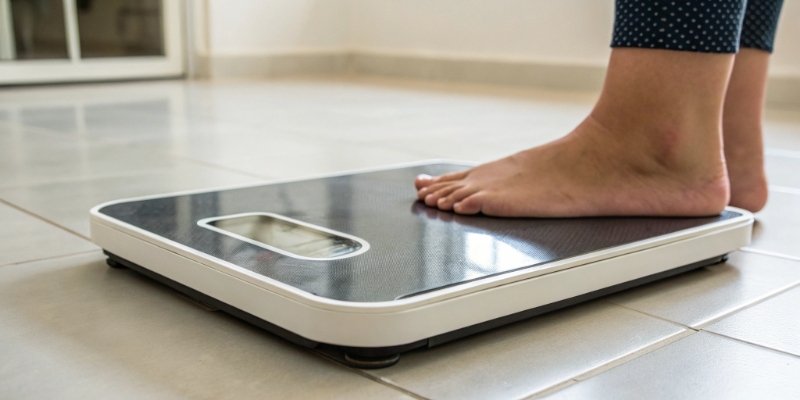
Your production relies on accurate data, but your scale gives inconsistent readings. This creates waste, slows you down, and makes you question the quality of your entire process.
Yes, inaccuracy can absolutely be a sensitivity issue, often caused by temperature changes, improper installation, or electrical interference. However, other common culprits include incorrect calibration, environmental factors, or an aging sensor. Pinpointing the exact cause is the first step to a reliable solution.
Now you know that sensitivity1 is a potential cause of your weighing troubles. But that's just scratching the surface. Understanding the "why" behind these inaccuracies is crucial for any technical manager or purchasing director looking to maintain a smooth operation. Let's dive deeper into the specific factors that throw your measurements off, so you can diagnose the issue and get your system back to performing with the precision you need.
What is the sensitivity of a weighing balance?
You hear the term "sensitivity" when discussing scales, but you're not sure what it means. This makes it hard to diagnose problems or select the right equipment for your needs.
In simple terms, sensitivity is how much a scale's output changes for a given unit of weight. It's the scale's responsiveness. A highly sensitive scale can detect tiny weight differences, but this also means it can be more easily affected by environmental disturbances.

Let's break that down further. Think of sensitivity like the responsiveness of a smartphone's touch screen. A high-quality screen reacts instantly and precisely to your touch. A low-quality one might lag or miss your input entirely. In a weighing system, the load cell2 is the heart of its sensitivity. At Weigherps, with 18 years of manufacturing experience, we know that the quality of the load cell's materials, like the elastomer and strain gauges, is critical. Even the adhesive used to bond the strain gauge can impact performance. This is why our R&D and production teams focus so heavily on these details.
High sensitivity isn't always the goal. For a lab, it's essential. For a busy factory floor, stability is often more important. You need the appropriate sensitivity for the job.
Sensitivity: High vs. Appropriate
| Feature | High Sensitivity | Appropriate Sensitivity |
|---|---|---|
| Best For | Clean lab environments, precision chemistry. | Industrial production, logistics, and batching. |
| Pros | Detects extremely small changes in mass. | Provides stable, repeatable readings despite minor disturbances. |
| Cons | More susceptible to errors from vibration, air flow, or temperature. | Might not register minuscule weight fluctuations. |
Why do I feel like my scale is inaccurate?
You have that nagging feeling your scale's readings are off, but you can't put your finger on it. This doubt erodes confidence and can lead to costly production errors.
This feeling of inaccuracy typically comes from real, observable issues like inconsistent readings for the same item, a reading that drifts, or slow response times. It could be a simple calibration fix or a sign of a deeper problem with the sensor or environment.

In my experience, when a client says their scale "feels" wrong, we can usually trace it back to one of a few concrete problems. The key is to turn that feeling into data. Start by observing your scale's behavior closely. Does it exhibit any of these common symptoms?
Zero Drift
Does the scale return to a perfect 0.00 after you remove a weight? If it shows a positive or negative number, that’s "zero drift3." This can be caused by temperature changes, debris stuck on or under the platform, or an aging load cell that's losing its stability.
Poor Repeatability
If you place the same certified weight on the scale ten times, do you get ten identical readings? If the numbers vary, you have a repeatability problem. This points to instability, which can come from environmental factors or internal electronic noise.
Non-Linearity
Does your scale measure a 1kg weight perfectly but is off when you measure a 50kg weight? This is a linearity error. It means the scale isn't accurate across its full capacity range. This often happens when a sensor has been damaged from overloading. I’ve seen this happen with clients who accidentally dropped a heavy load, permanently affecting the sensor's performance.
What might interfere with scale accuracy?
You've calibrated your scale, but the readings are still all over the place. You're getting frustrated because the problem feels invisible and impossible to solve, wasting your valuable time.
Interference often comes from the surrounding environment. Vibrations from machinery, drafts from air vents, and even radio signals from walkie-talkies can disrupt a scale's sensitive electronics, causing inaccurate readings. These external factors can be just as impactful as internal faults.
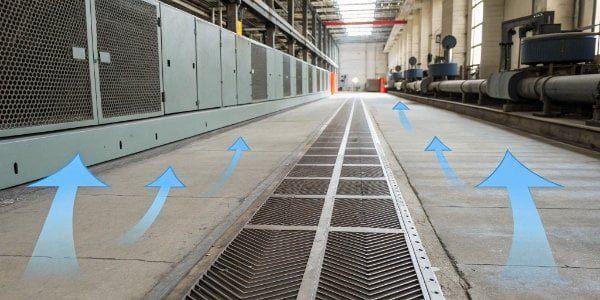
A scale is a precision instrument, even a rugged industrial one. Its job is to measure force, so any unintended force will affect its reading. As a manufacturer, we design our scales to be robust, but you have to control the environment for true accuracy.
Here are the culprits I see most often:
- Vibrations: The most common source of interference. A forklift driving by, a nearby conveyor belt, or a large motor can send vibrations through the floor. These tiny movements are picked up by the load cell, creating "noise" in your weight readings. The solution is often an anti-vibration mat or even moving the scale to a more stable location.
- Air Currents: You'd be surprised how much a simple air draft can affect a scale, especially one with high resolution. HVAC systems, open bay doors, or even people walking past can create enough air pressure to alter the reading. I once visited a client whose batching system went haywire every afternoon. It turned out that's when they opened their warehouse doors for ventilation.
- EMI/RFI4: Electromagnetic Interference (EMI) and Radio Frequency Interference (RFI) are invisible but powerful. They come from sources like large electric motors, two-way radios, and even cell phones. This electronic "noise" can interfere with the low-voltage signal from the load cell. Our scales are designed with shielding, but in extreme EMI/RFI environments, extra grounding and shielded cables may be necessary.
What factors can affect the accuracy of weight measurements?
You feel like you're in a constant battle against invisible forces, trying to keep your measurements accurate. This fight impacts quality, consistency, and ultimately, your bottom line and reputation.
The primary factors are temperature fluctuations, improper or infrequent calibration, the physical health of the sensor, and how force is applied. Managing these core areas is the key to achieving and maintaining reliable measurements over the long term.

After 18 years of seeing every possible weighing challenge, I can tell you that long-term accuracy comes down to controlling a few key variables. It's about combining a quality product with good processes. Here at Weigherps, we build our products to last, but even the best equipment needs proper care. Let's look at the big four factors and how you can manage them. Our quality inspection department rigorously tests every unit for these factors before it ever leaves our facility.
How to Manage Key Accuracy Factors
| Factor | The Problem It Causes | The Solution and How We Help |
|---|---|---|
| Temperature | Load cell materials expand and contract with temperature changes, causing the output signal to drift. This is called sensitivity drift. | Choose a scale with a good temperature-compensated load cell. We build our sensors to perform reliably across a specified temperature range. Also, try to keep the operating environment as stable as possible. |
| Calibration | All scales drift over time. Without regular calibration against a known, certified weight, your scale's readings will slowly become inaccurate. | Implement a regular calibration schedule. Use certified test weights, not just a random object. As your partner, we can advise on the proper calibration frequency for your specific application. |
| Sensor Health | Load cells are mechanical parts. They experience fatigue from long-term use and can be permanently damaged by overloading or shock (like dropping a heavy item). | Perform regular visual inspections of the scale and sensor. Most importantly, never exceed the scale's maximum capacity. We design our scales with overload protection5, but severe abuse can still cause damage. |
| Force Application | Scales are calibrated to measure static weight applied to the center of the platform. Off-center, side-loaded, or dynamic (moving) loads will produce inaccurate readings6. | Train operators to place items in the center of the scale and wait for the reading to stabilize. For non-standard applications, talk to us about a custom weighing solution7 designed for your specific needs. |
Conclusion
Inaccurate weighing often points to sensitivity issues caused by temperature, interference, or installation. Regular calibration, environmental control, and a quality, well-maintained sensor are your best defenses for achieving reliable results.
-
Understanding sensitivity helps you choose the right scale for your needs, ensuring accurate measurements. ↩
-
Understanding load cells is key to grasping how scales measure weight accurately. ↩
-
Learn about zero drift to identify and fix issues with your scale's accuracy. ↩
-
Learn about electromagnetic and radio frequency interference to protect your scale's accuracy. ↩
-
Understanding overload protection can help you prevent damage and maintain scale accuracy. ↩
-
Explore the common causes of inaccurate readings to troubleshoot and improve your weighing process. ↩
-
Explore custom solutions tailored to your unique weighing needs for optimal performance. ↩



[…] is everything. A higher-quality sensor, like the HBM Z6 series we often recommend, can have a non-linearity error4 below ±0.03%, ensuring extremely high precision. Lower-cost cells may have higher error rates, […]
[…] Temperature: Both the gauge and the object being weighed can expand or contract with temperature changes. This directly affects the gauge's electrical resistance, which the system interprets as a change in weight. This is a very common source of drifting readings1. […]