

Struggling with inconsistent scale readings that disrupt your operations? This instability can lead to costly errors and production delays. Let's explore why this happens and how to fix it.
Your strain gauge scale's accuracy might be unstable due to environmental factors like temperature changes, humidity, or vibrations. It could also be a problem with the gauge itself, the installation, or electrical noise. Identifying the source is the key to finding a solution.

I've been in the weighing industry for 18 years, and I've seen countless cases where a simple issue caused major accuracy problems. It's frustrating when your equipment doesn't perform as you expect. But you don't need to worry. We can break down the common reasons for this instability. Let's start by looking at where these errors come from. Understanding the sources is the first step toward a reliable and accurate weighing process.
What are the sources of error in strain gauge measurements?
Are you getting readings that just don't seem right? These errors can compromise your entire process, from quality control to inventory management. Pinpointing the exact error sources is crucial for a fix.
The main sources of error in strain gauge measurements include temperature fluctuations, improper bonding of the gauge, electrical noise from nearby equipment, and mechanical issues like creep or hysteresis. Environmental factors and physical misalignment also play a significant role in measurement inaccuracy.
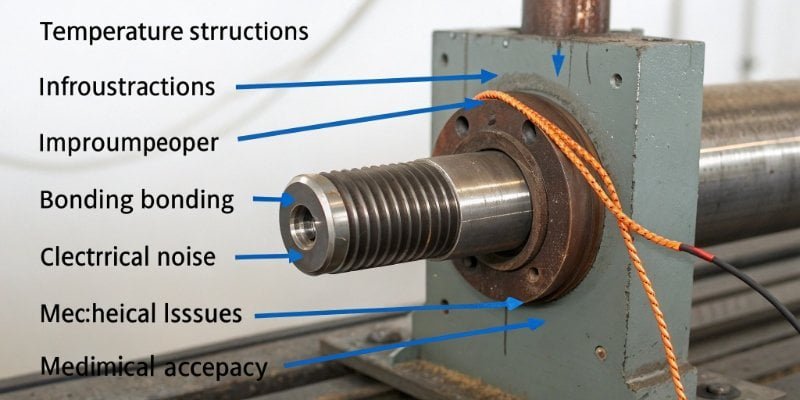
I'll break this down further for you. Errors usually come from a few key areas, and it's helpful to check them one by one.
Environmental Factors
This is a big one. Think about where your scale is located. Is it near a furnace, a large freezer door, or in a damp area?
- Temperature: Both the gauge and the object being weighed can expand or contract with temperature changes. This directly affects the gauge's electrical resistance, which the system interprets as a change in weight. This is a very common source of drifting readings1.
- Humidity & Corrosion: Moisture is another enemy of accuracy. It can get under the gauge's protective coating, degrade the bonding adhesive, and even cause corrosion. This corrosion changes the electrical properties of the gauge and leads to permanent errors.
Installation & Mechanical Issues
How the gauge was installed matters a lot.
- Improper Bonding: The gauge must be perfectly bonded to the weighing structure. If the adhesive isn't applied correctly, or if there are air bubbles, the strain isn't transferred correctly.
- Creep: This is when the reading changes slowly over time even though the weight on the scale is constant. It can be a problem with the gauge's material or the structure it's mounted on.
How accurate are strain gauges?
Are you wondering if your strain gauge is precise enough for your needs? Choosing the wrong accuracy class can lead to wasted materials, compliance failures, and unhappy customers. Let's clarify their true precision.
Strain gauges themselves are highly accurate devices, with typical accuracy classes ranging from 0.02% to 1% of their full-scale output. However, the final accuracy of the weighing system depends heavily on the quality of installation, the electronics, and environmental controls.

The accuracy of a strain gauge is a bit more complex than a single number. We have to look at it as part of a complete system. A single component's quality can affect the entire setup.
The Whole System Matters
The strain gauge is just one part. To understand real-world accuracy, you have to consider everything it's connected to.
- Load Cell Quality: The gauge is mounted on a structure called a load cell. The design and material of this load cell are critical. A poorly designed load cell will flex in unwanted ways, creating errors.
- Indicator and Electronics: The electronics that read the tiny signal from the gauge and convert it into a weight reading must be high quality. Cheap electronics can introduce their own noise and drift, ruining the accuracy of a great load cell.
Key Accuracy Factors
We use several terms to define performance. Understanding them helps you choose the right product.
| Accuracy Factor | Description | Impact on System Performance |
|---|---|---|
| Non-linearity | The deviation of the scale's output curve from a straight line. | A high non-linearity2 means the scale is less accurate at different weights. |
| Hysteresis | The difference in reading when approaching a weight from zero vs. from a higher weight. | Affects repeatability, especially in applications with cycles of loading and unloading. |
| Creep | The change in reading over time while under a constant load. | Important for applications where items sit on the scale for a long time, like in a silo. |
| Temperature | How much the reading changes with temperature. | A major source of error if the environment's temperature is not stable. |
So, while a single gauge can be very precise, you must evaluate the entire system to know the true accuracy you'll get.
How can you tell if a strain gauge is malfunctioning?
Do you suspect your scale is failing but you can't prove it? A faulty gauge can cause unpredictable errors, making your troubleshooting efforts a complete nightmare. Here are the clear signs to look for.
A malfunctioning strain gauge often shows clear symptoms. Look for readings that drift wildly, are completely unresponsive, or jump to zero or maximum value intermittently. Physical signs like peeling or corrosion on the gauge itself are also red flags.
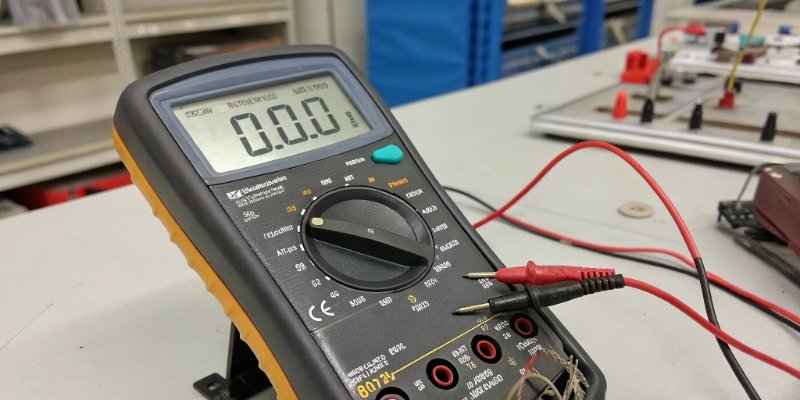
Over the years, I've helped many clients diagnose a failing strain gauge. It usually comes down to a few common symptoms that you can check yourself.
Symptom Checklist
If you see any of these signs, you likely have a problem with your strain gauge or its connections.
- Drifting Readings: The reading slowly climbs or falls even with nothing on the scale. This is a classic sign of electronic drift, moisture damage, or a failing gauge.
- No Response: You put a known weight on the scale, and the reading doesn't change at all. This often means there is a broken wire, a failed solder joint, or a completely dead gauge.
- Jumpy or Erratic Readings: The numbers jump around without any pattern. This frequently points to a bad connection, electrical interference from a nearby motor, or a physically damaged gauge.
- Inconsistent Zero: Every time you press the "tare" or "zero" button, the scale returns to a slightly different zero point. This indicates a general problem with the system's stability.
Simple Troubleshooting Steps
- Visual Inspection: First, just look at the load cell and its wiring. Do you see any cracks, peeling adhesive, or rust? Is a wire loose or frayed? Sometimes the problem is easy to see.
- Check the Environment: Has anything changed recently? Is there a new fan blowing on the scale? Is a new, powerful piece of equipment running nearby?
- Use a Multimeter: If you're comfortable with electronics, you can check the gauge's resistance. It should be close to its specified value (e.g., 350 ohms). An open circuit (infinite resistance) or a short (zero resistance) confirms it's broken.
What is the misalignment error of the strain gauge?
Are you frustrated by inaccurate readings even though you bought a high-quality scale? A tiny installation error that you can't even see could be the root cause of your problems. Let's discuss misalignment.
Misalignment error occurs when a strain gauge is not installed perfectly parallel to the direction of the force you want to measure. This causes the gauge to read only a portion of the actual strain, leading to consistently low and inaccurate measurements.
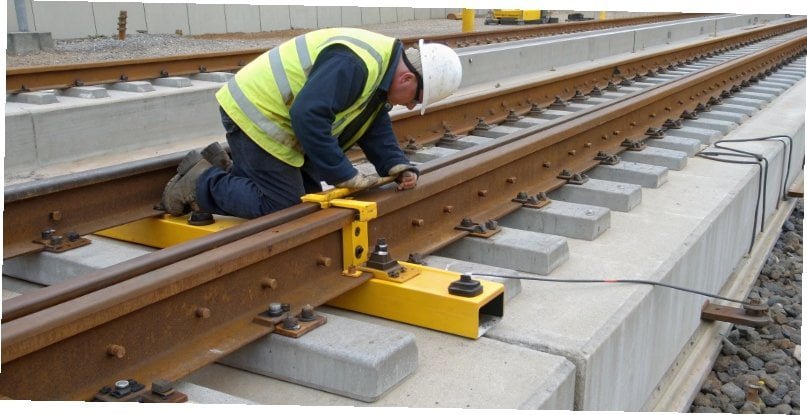
This is a technical but very important point. It all comes down to the quality of the installation. I can't stress this enough.
The Cosine Effect
Imagine you want to measure how much a steel beam bends when you put a load on it. The main force, or strain, is happening along the length of the beam. You must place the strain gauge exactly parallel to that length. If the gauge is installed at a slight angle, even a tiny one, it won't measure the full strain. It will only measure the part of the strain that is acting along its own angled axis. This is often called the "cosine error3" because the measured strain is the true strain multiplied by the cosine of that small misalignment angle. It always results in a reading that is lower than the true value.
Let's look at a table to see the real impact.
| Misalignment Angle (Degrees) | Percentage of True Strain Measured | Resulting Error Percentage |
|---|---|---|
| 0° | 100% | 0% |
| 1° | 99.98% | 0.02% |
| 5° | 99.62% | 0.38% |
| 10° | 98.48% | 1.52% |
As you can see, even a 5-degree misalignment, which is hard to see with the naked eye, introduces a significant error of nearly 0.4%. For high-precision industrial applications4, this is often unacceptable. This is why professional installation by trained technicians is so critical. It’s not just about gluing a sensor on; it’s a precision engineering task.
Conclusion
Your scale's instability often stems from the environment or installation errors. By identifying the specific error source, you can find the right solution and regain your measurement confidence.
-
Learn about the common causes of drifting readings and how to address them. ↩
-
Discover how non-linearity can impact the accuracy of your weighing system. ↩
-
Learn how cosine error can lead to significant inaccuracies in readings. ↩
-
Explore the importance of precision in industrial applications and how to achieve it. ↩


Comments (0)