
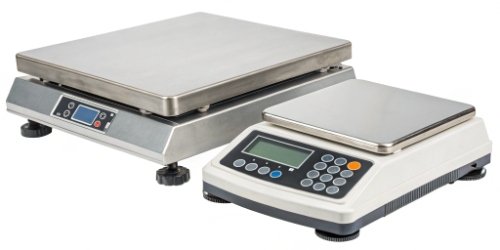
Are you tired of hitting roadblocks with fixed-function hardware? Your clients demand custom solutions, but your tools are inflexible. This mismatch can cost you projects and damage your reputation.
Programmable scales are the solution. They offer unparalleled flexibility, allowing you to tailor weighing functions through software. This means you can meet unique client needs, adapt to future changes, and integrate seamlessly into any system without swapping hardware. This adaptability is key for modern system integration.
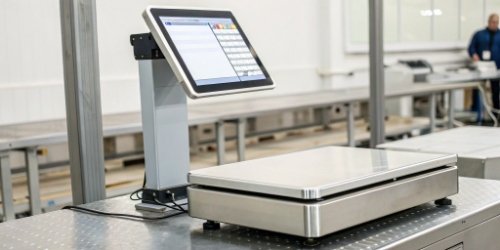
As a system integrator, your value lies in creating tailored solutions that solve specific problems for your clients. You build bridges between different technologies to create a seamless, efficient workflow. But what happens when a core piece of hardware, like a weighing scale, is rigid and unchangeable? It becomes a bottleneck, limiting your ability to innovate and deliver what the client truly needs. We have seen this happen many times. A great software solution is held back by hardware that cannot adapt. This is why the conversation about programmable scales is so important for your business. It is about choosing tools that empower you, not limit you.
What Are the Key Benefits of Choosing Programmable Scales for System Integration?
Do you find yourself sourcing new hardware for every unique client request? This process is slow and costly. It adds complexity to your inventory and support, eating into your profit margins.
Programmable scales solve this by being highly adaptable. A single hardware model can serve many different client needs through software changes. This future-proofs your solutions, increases your return on investment, and simplifies your entire integration process from development to deployment.
Choosing the right hardware is a strategic decision. With fixed-function scales, you buy a tool for one specific job. If the job changes, you need a new tool. For a system integrator, this is a major problem. Your clients' needs evolve. Market demands shift. A programmable scale, however, is like having a versatile, multi-tool1. Its core function can be redefined through software. This offers significant long-term advantages that go beyond a single project. I remember a client who initially needed a simple checkweighing function. Six months later, they wanted to add batching and data logging for quality control. With a programmable scale, this was just a software update. With a fixed-function model, it would have required a complete hardware replacement, causing downtime and extra cost. This adaptability2 is the core benefit. It allows you to say "yes" to more client requests and build more robust, lasting solutions.
Key Strategic Advantages
| Benefit | Fixed-Function Scale | Programmable Scale |
|---|---|---|
| Future-Proofing | Requires hardware replacement for new needs. | Adapts to new requirements via software updates3. |
| Cost-Effectiveness | Lower initial cost but higher long-term cost. | Higher initial cost but lower total cost of ownership. |
| Inventory | Need to stock multiple models for different jobs. | One or two models cover a wide range of applications. |
| Deployment Speed | Sourcing new hardware slows down projects. | Faster deployment by reusing hardware with new software. |
How Do Programmable Scales Offer More Flexibility Than Fixed-Function Models?
Are you limited by hardware that dictates your software's capabilities? A fixed-function scale has its logic built-in. You cannot change it, forcing you to work around its limitations in your software.
Programmable scales give you control. You define the workflow, the data output, and the user interface. This flexibility means you can create a truly integrated system that works exactly as your client needs it to, without frustrating hardware constraints.

The difference between fixed-function and programmable scales is like the difference between a basic calculator and a smartphone. The calculator does one thing: basic math. It does it well, but it will never do anything else. A smartphone, on the other hand, can be a calculator, a camera, a GPS, or a communication device. Its function is defined by the apps, or software, you install. Programmable scales4 operate on this same principle. A fixed model might only output the final weight. But a programmable scale can be configured to do so much more. You can teach it to tare automatically after a set time, send weight data only when stable, or communicate with other machines on a production line. This flexibility is not just a minor feature; it is a fundamental shift in how you can approach system design. It moves the intelligence from the hardware to your software, where you have complete control.
Core Differences in Flexibility
- Workflow Customization: With fixed-function scales, you are stuck with a predefined process. Programmable scales allow you to create custom workflows. For example, you can program a sequence like: Tare -> Fill to Target Weight -> Signal PLC -> Log Data -> Repeat.
- Data Integration: You can control the exact format and timing of data output. This makes integration with databases, ERP systems, and other software much simpler. You are not forced to parse a generic data string.
- User Interface (UI): For scales with displays, you can often customize what the operator sees, showing custom prompts, instructions, or data fields relevant to the specific task.
Why Are Programmable Scales Better Suited for Customizable Solutions in System Integration?
Does your client need a unique weighing process that no off-the-shelf scale can handle? Trying to force a standard product to fit a custom need often leads to clunky, unreliable workarounds.
Programmable scales are designed for customization. As a manufacturer, we provide the tools and support for you to build custom logic directly on the scale. This allows you to meet highly specific client requirements efficiently and reliably, making you a more valuable partner.

System integration is all about creating custom solutions5. You are not just selling products; you are solving unique business problems. Your clients come to you because they need something specific that they cannot buy elsewhere. A programmable scale is the perfect hardware component for this business model. It is a blank canvas. We provide the stable, reliable, and accurate weighing hardware. You, the integrator, provide the intelligence. For instance, a client in the pharmaceutical industry6 needed a highly specific formulation process. They required multi-stage batching where each ingredient had a different tolerance and logging requirement. No standard scale could do this. By using one of our programmable models, their development team wrote a custom application that ran on the scale's indicator. It guided the operator through the process flawlessly. This level of customization is impossible with fixed-function hardware7. It empowers you to build exactly what the client imagines.
Levels of Customization
- Simple Parameter Configuration: Adjusting settings like data output format, stability parameters, and basic unit switching.
- Scripting/Logic Programming: Writing simple scripts or logic flows directly on the scale's indicator to control basic processes, triggers, and I/O.
- Full Application Development: Using an SDK (Software Development Kit) to develop a complete, custom application that runs on the scale. This offers the highest level of control and integration.
As a source manufacturer with our own R&D team, we can support you at every level. This partnership is what makes complex, custom solutions possible.
In What Ways Do Programmable Scales Enhance Efficiency for System Integrators?
Is your development cycle slowed down by hardware procurement and testing? Managing multiple types of fixed-function scales for different projects creates logistical headaches and increases support overhead for your team.
Programmable scales streamline your operations. You can standardize on a single, versatile hardware platform. This reduces inventory, simplifies development and testing, and makes support much easier. Your team becomes expert on one platform, leading to faster project completion.
Efficiency is key to profitability. Programmable scales introduce efficiency at multiple stages of your process. First, during the sales and solution design phase. You can confidently propose solutions to a wider range of problems because you know your hardware is flexible enough to handle it. You spend less time searching for niche hardware. Second, during development and deployment. Your team works with a familiar platform. They know its communication protocols and capabilities. This drastically reduces development and integration time. Instead of learning a new piece of hardware for each project, they just write new software for the same hardware. Third, in post-sales support. Your support team only needs to be trained on one hardware platform. This simplifies troubleshooting and reduces the need to stock a wide variety of spare parts. Standardizing on a programmable platform is a powerful business strategy that reduces complexity and saves both time and money.
Efficiency Gains Across the Board
- Reduced R&D Time: No need to learn new hardware for each project. Your team can build a library of code to reuse.
- Simplified Inventory: Stocking one or two programmable models can replace a dozen different fixed-function scales.
- Faster Deployment: Projects move from concept to completion faster when the hardware is a known, flexible component.
- Streamlined Support: Your technical team becomes an expert on the platform, allowing for quicker and more effective customer support.
Conclusion
Programmable scales offer the flexibility and adaptability that system integrators need. They empower you to build better custom solutions, future-proof your work, and increase your overall operational efficiency.
-
Explore the benefits of versatile hardware solutions in meeting diverse client needs. ↩
-
Explore the importance of adaptable hardware in meeting evolving client demands. ↩
-
Explore the importance of software updates in maintaining and improving scale performance. ↩
-
Explore how programmable scales can enhance flexibility and adaptability in your projects. ↩
-
Discover strategies for developing tailored solutions that meet unique client needs. ↩
-
Learn about the specific needs and solutions for system integration in the pharmaceutical sector. ↩
-
Learn about the drawbacks of fixed-function hardware and why flexibility is crucial. ↩


Comments (0)