
Integrating hardware is tough. Without the right system access, your software project stalls. Programmable scales offer different access levels, giving you the control you need to build your custom solutions.
Developers can expect a range of system access levels from programmable scales. This includes API access for data retrieval, SDKs for feature customization, and in some cases, direct access to communication protocols or even the scale’s source code, depending on the partnership agreement with the manufacturer.

Gaining the right level of access is crucial for any development project. But what do these access levels actually mean in practice? These options can feel complex, and choosing the wrong one can cause major delays. Let's break down the specific types of access you can get and what they allow you to do. Understanding these options is the first step to choosing the right hardware partner for your software.
What Types of System Access Do Programmable Scales Provide for Developers?
Need to integrate a scale but unsure of the access types? The wrong choice can derail your project. Programmable scales offer various access levels, ensuring you find the right fit for your software.
Programmable scales typically offer several access types for developers. These include high-level APIs for simple data exchange, Software Development Kits (SDKs) for deeper function control, and direct access to communication protocols. For deep partnerships, some manufacturers even provide access to the underlying source code for maximum customization.
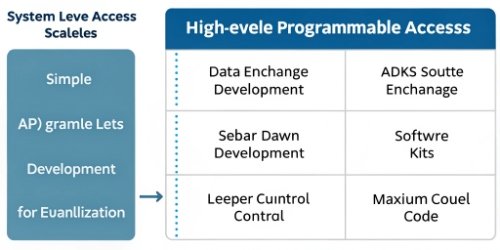
The type of access you get determines what you can build. As a manufacturer, we see this every day. Some clients just need to pull weight data into their existing software. Others want to build a completely new application that runs on the scale itself. To meet these different needs, we provide a spectrum of access options.
Levels of System Access
| Access Type | Best For | Level of Control |
|---|---|---|
| API | Simple data retrieval1, web apps | Low |
| SDK | Custom features, complex workflows | Medium |
| Source Code | Full customization, co-development | High |
An Application Programming Interface (API) is the most common entry point. It's perfect for when you just need to read the weight and send simple commands. Think of it like a remote control for the scale. You can press the "get weight" button, and the scale sends the data back.
A Software Development Kit (SDK) gives you more power. It's a full toolbox with libraries, code samples, and documentation2. With an SDK, you can build features that feel native to the scale, like custom user interface3s or complex automated weighing sequences.
Finally, for deep partnerships, we offer direct protocol and source code access4. This is for clients who need total control. They can modify the scale's core behavior or build entirely new firmware. This is the ultimate level of collaboration.
How Much Control Over System Functions Do Developers Have with Programmable Scales?
You have access to the system, but how much real control do you get? Limited functionality can cripple your software's potential. Programmable scales give you control that scales with your access level.
A developer's control over system functions depends entirely on the access level granted. With API access, you can typically read weight data and trigger basic commands. An SDK allows for greater control, like customizing the display, managing tare functions, and integrating custom workflows directly on the scale.

The level of control you have is directly tied to the type of access you've been given. It’s not just about getting data; it's about what you can tell the hardware to do with that data. Your control can range from simply listening to the scale to completely rewriting its core purpose. We work with our partners to find the right balance for their project.
Basic Control: Data Retrieval
With API access5, your control is mostly one-way. You can query the scale for information like the current stable weight, unit of measure, or battery status. You might also be able to perform basic actions like taring the scale or switching units. This is perfect for Point-of-Sale (POS) systems or inventory management software that just needs to log weights.
Intermediate Control: Feature Customization
An SDK opens up a world of possibilities. You can start creating your own workflows. For example, you could program a button on the scale’s screen to not only tare the weight but also send the data to your cloud server6 and print a specific label. You can control the user interface, manage data locally, and integrate more tightly with other devices. This is where your software truly starts to merge with the hardware.
Advanced Control: Core Logic Modification
With source code access, you have complete control. You can change how the scale filters vibrations, create a completely new weighing application, or optimize its performance for a highly specific task. I once worked with a client in the chemical industry who needed a custom algorithm for mixing compounds. With source code access, their developers were able to build this logic directly into the firmware, creating a unique and highly efficient solution they couldn't have bought off the shelf.
What Are the Limits of System Access for Developers Using Programmable Scales?
Every system has its limits. Hitting an unexpected hardware or security wall can stop your project dead. Understanding these boundaries beforehand is crucial for planning your integration successfully.
System access is not unlimited. The primary limitations are often tied to the scale's hardware capabilities, such as processing power and memory. Security is another major factor; manufacturers restrict access to critical firmware to prevent bricking the device or compromising its certification for legal trade.
While we want to give developers as much freedom as possible, there are practical and regulatory limits we have to respect. These aren't meant to hold you back. Instead, they ensure the device remains stable, secure, and compliant. Knowing these limits from the start helps you design a better product.
Hardware Constraints
The scale's physical hardware is the first boundary. You can't run a graphics-heavy application on a scale with a simple LCD screen and a low-power processor. The available memory, CPU speed, and I/O ports all define the scope of what's possible. It is important to choose hardware that matches your software's ambitions.
Firmware and Security Restrictions
We protect the core firmware for a very important reason: stability and accuracy. A small, incorrect change to low-level code could "brick" the device, making it unusable. More importantly, many industrial scales must have metrology certifications7 to be used for legal trade. Any unapproved change to the core weighing software can void this certification. Therefore, we lock down these critical sections to ensure the scale always functions as a reliable and legal measuring instrument.
The Partnership Agreement
The final limit is often the business relationship itself. The level of access you get is defined in our agreement. A standard customer using our API has different access than an OEM partner we are co-developing a new product with. A deeper partnership means deeper access. We believe in building trust and offering more control to partners who share our vision for a project.
How Do Programmable Scales Facilitate Developer Access to System Features?
Getting access is great, but is it actually usable? Poor documentation and a lack of support can kill a project's momentum. Quality programmable scales make access easy through great tools and support.
Programmable scales facilitate developer access through comprehensive documentation, clear code examples, and dedicated technical support. Manufacturers often provide robust SDKs with well-defined libraries and tools that simplify the integration process, allowing developers to focus on their application logic instead of low-level hardware communication.

Granting access is only half the battle. We know that if the development process is frustrating, the project won't succeed. That's why we invest heavily in making our systems easy for developers to work with. Our goal is to get you from concept to a working prototype as quickly as possible. A good hardware partner doesn't just give you the keys; they show you how to drive.
Comprehensive Documentation and APIs
Everything starts with clear documentation. For an API, every endpoint, parameter, and potential response needs to be clearly explained. For an SDK, every function and library should have a purpose and usage examples. We spend a lot of time writing and refining our documentation so that developers can find the answers they need without having to ask.
Robust Software Development Kits (SDKs8)
A good SDK is more than just a collection of files. It’s a complete development environment9. Our SDKs include pre-built libraries to handle complex tasks, complete sample projects to get you started, and sometimes even a device emulator. This allows your team to start writing and testing code before the physical hardware even arrives. It dramatically speeds up the development timeline and reduces integration headaches.
Dedicated Technical Support
Sometimes, you just need to talk to an expert. I remember a software vendor client who was struggling to integrate one of our scales into a complex automated production line10. They couldn't figure out why they were getting intermittent communication errors. After a quick call, our technical team realized they were using the wrong cable type for that environment. A five-minute conversation saved them days of troubleshooting. This is why we provide a dedicated support team of engineers who understand both our hardware and your software challenges.
Conclusion
Programmable scales offer developers tiered system access. Understanding the levels, from API to source code, and their limits helps you choose the right partner for successful, innovative software integration.
-
Data retrieval is a fundamental function that allows software to interact with the scale's measurements. ↩
-
Good documentation helps developers navigate integration challenges, speeding up the development process. ↩
-
Customizing the user interface can significantly improve user experience and functionality. ↩
-
Source code access allows for maximum customization, enabling developers to create tailored solutions. ↩
-
API access is essential for simple data retrieval, making it a key feature for many software applications. ↩
-
Integration with cloud servers allows for advanced data management and analytics. ↩
-
Metrology certifications are crucial for legal trade, ensuring scales meet industry standards. ↩
-
SDKs provide developers with tools and libraries to customize features, enhancing their software capabilities. ↩
-
A robust development environment streamlines the coding process, making it easier for developers to create applications. ↩
-
Programmable scales can enhance automation, improving efficiency in production environments. ↩



[…] scale's touchscreen becomes the main user interface. More importantly, we provide a Software Development Kit (SDK)4. This allows your web app, using simple JavaScript commands5, to communicate with the scale's […]