
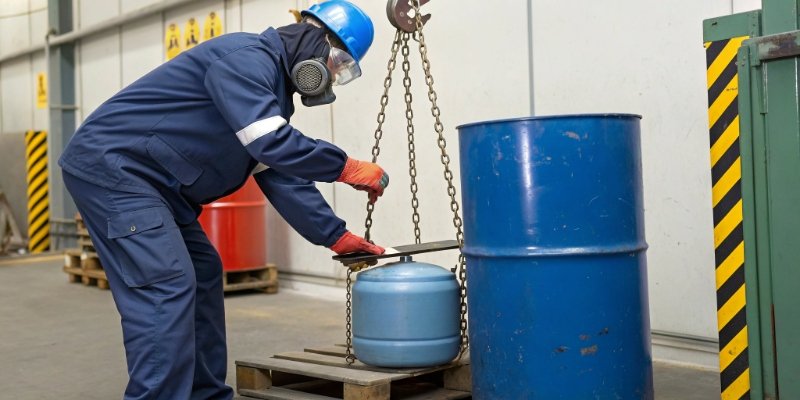
Working with chemicals means safety and accuracy are everything. Get one wrong, and the consequences can be severe. This is where mastering your scale’s tare function becomes absolutely critical.
To use the tare feature safely in hazardous areas, you must use certified explosion-proof (ATEX, IECEx) scales. Follow a strict procedure: calibrate the scale, place the empty container, tare to zero, and then fill. Thorough operator training is essential to prevent accidents and ensure accuracy.

The tare function1 seems simple, but in a high-stakes environment where flammable gases or volatile chemicals2 are present, "simple" is not enough. You need a process that is repeatable, accurate, and above all, safe. As someone who has spent 18 years manufacturing industrial scales, I’ve seen firsthand how a disciplined approach to weighing can prevent disaster. It's about combining the right technology with the right knowledge. Let’s break down what you need to know to protect your team, your product, and your facility.
What is the purpose of the tare weight?
You think you know your weights, but confusing tare with gross weight is a common slip-up. This mistake can ruin an entire batch or, worse, create a serious safety hazard.
The main purpose of determining the tare weight is to isolate the net weight of a product. By subtracting the container's weight (tare), you can accurately measure only the contents, which is vital for correct formulation and billing.
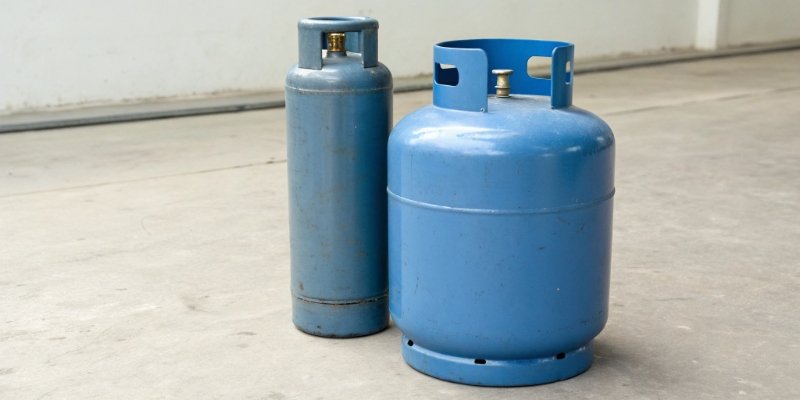
In my experience, the terms get mixed up, so let's clarify them. Think of it as three distinct layers. The tare weight3 is just the weight of the empty container—the drum, cylinder, or pallet. The net weight4 is the weight of the product you actually care about—the chemical, the gas, the powder. The gross weight5 is the total of both: tare plus net.
Why does this matter so much? In industries handling chemicals, the net weight is the "money weight." It dictates the formula's concentration. If you miscalculate and use gross weight instead of net, you could underfill a batch, leading to a weak, ineffective product. Or you could overfill it, wasting expensive materials and potentially creating a dangerously potent mixture. For compliance and quality control, having accurate records of tare and net weights is non-negotiable.
| Weight Type | Definition | Example (Chemical Drum) |
|---|---|---|
| Tare Weight | Weight of the empty container | The weight of the empty steel drum |
| Net Weight | Weight of the contents only | The weight of the chemical inside |
| Gross Weight | Total weight (Tare + Net) | The drum filled with the chemical |
How is the tare function used in a weighing scale?
Pressing the 'Tare' button seems obvious, but are you sure your team follows the right sequence every time? A small misstep can throw off the entire measurement, a risk you can't afford.
The tare function works by zeroing out the scale's display with an empty container on it. This allows the scale to show only the weight of the material added afterward, which is the net weight.
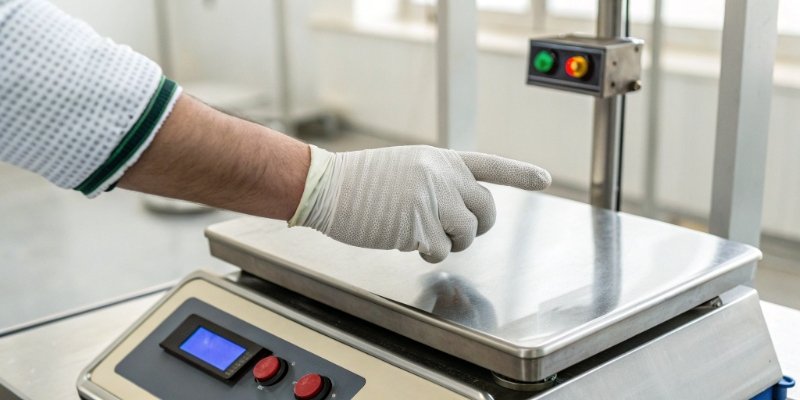
Using the tare function1 correctly is a simple but rigid process. Getting it right every time is a matter of discipline. Over the years, we've helped countless clients create a standard operating procedure (SOP) for this. It’s a core process for ensuring both quality and safety, especially when you're filling gas cylinders or chemical drums where precision is paramount.
Here is the step-by-step process we recommend:
- Check Calibration: Before you begin, verify the scale's accuracy. Use a known, certified weight to confirm the scale is reading correctly. Don't skip this step.
- Place the Empty Container: Put the empty, clean drum or cylinder securely onto the center of the scale platform. Wait for the weight reading to become completely stable.
- Press the 'Tare' Button: Once stable, press the ‘Tare’ or ‘Zero’ button. The display should now read 0.00. The scale has now stored the container’s weight in its memory.
- Fill the Container: Begin filling the container with your chemical or gas. The weight displayed on the scale is now the net weight of the product you are adding. While filling, you should also be mindful of the gross weight to ensure you don't exceed the container's maximum safe capacity.
- Final Verification: Once filling is complete, the final reading is your net weight. You can record this for your batch records.
How accurate is the tare function?
You rely on the tare function every day, but have you ever questioned its accuracy? The truth is, its precision isn't automatic; it depends entirely on the quality and condition of your scale.
The accuracy of the tare function is directly linked to the scale's overall accuracy, resolution, and calibration. A high-quality, properly calibrated scale will perform the tare operation with no loss of precision, ensuring your net weights are reliable.
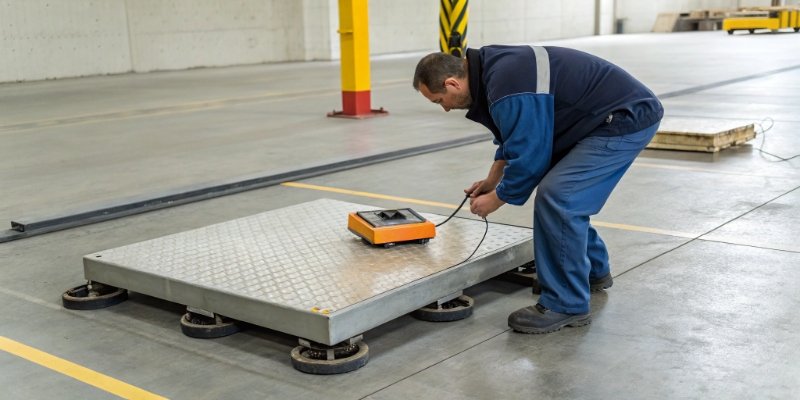
The tare button isn't a magic wand for accuracy. It simply tells the scale's software, "ignore the current weight and start counting from zero." The accuracy of that "zero" and every measurement after depends on several key factors. At Weigherps, our quality control department runs every scale through rigorous tests for just this reason.
Here’s what really determines tare accuracy:
- Scale Resolution and Quality: A scale with a higher resolution (more decimal places) can measure smaller increments, making its tare point more precise. A well-built scale with a high-quality load cell will provide stable, repeatable readings, which is essential for accurate taring.
- Calibration: This is the most important factor. If the scale is not calibrated correctly, everything it measures will be off. Taring on an uncalibrated scale just starts an inaccurate measurement from a false zero. Regular calibration with certified weights is the only way to guarantee accuracy.
- Environment: Industrial environments are tough. Vibrations from nearby machinery, strong air drafts, or extreme temperature changes can cause the scale reading to fluctuate, making it difficult to get a stable tare.
- Operator Practice: The operator must wait for the scale reading to be completely stable before pressing the tare button. Taring a fluctuating number introduces an immediate error.
What are the key safety considerations when taring in hazardous zones?
Using a regular office scale to weigh chemicals in a hazardous zone is a recipe for disaster. The risk of an explosion from a single spark is real, and it demands specialized equipment.
The most critical safety considerations are using certified explosion-proof (ATEX or IECEx) equipment, enforcing strict maintenance and calibration schedules, and providing comprehensive operator training on handling hazardous materials and the specific weighing equipment.
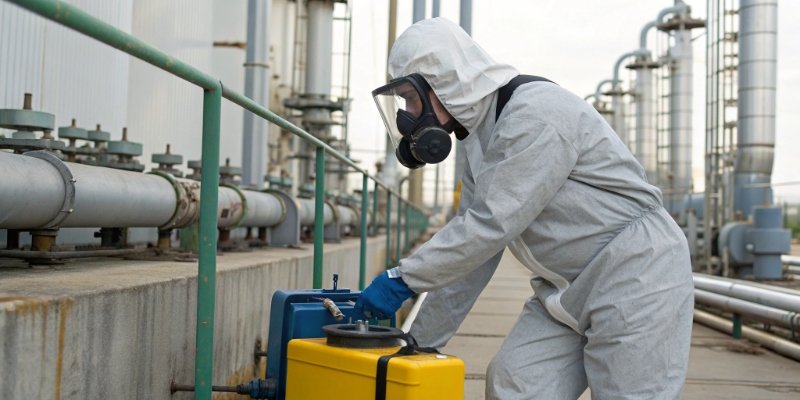
When we design weighing solutions for clients in the chemical or gas industries, safety is the first and last thing we talk about. A scale is an electronic device, and in an environment with flammable dust or vapor, any electronic device can become an ignition source. This is why specialized equipment and protocols are not optional—they are mandatory.
Here’s a breakdown of what you must focus on:
- Certified Equipment: Your scales must be intrinsically safe or explosion-proof, with certifications like ATEX (for Europe) or IECEx (international). These scales are designed so their electrical components are sealed and cannot generate a spark that could ignite the atmosphere. Our Weigherps scales, for example, can be configured to meet these standards. Features like an IP rating for water and dust resistance are also vital for durability and safety.
- Strict Safety Protocols:
- Operator Training: Your team must be trained not just on how to use the scale, but on the specific dangers of the chemicals being weighed. They need to know the risks of overfilling, static discharge, and improper container handling.
- Container Handling: Always keep gas cylinders and chemical drums upright and secure on the scale. Avoid any impacts or drops that could damage the container or the scale.
- Maintenance: Regular maintenance is a safety function. It ensures that seals are intact, wiring isn't frayed, and the equipment remains compliant with its safety certification.
Conclusion
Safely using the tare feature in hazardous areas needs the right tools and strict rules. This ensures accuracy and protects your people, product, and facility, keeping your operations safe and reliable.
-
Understanding the tare function is crucial for accurate measurements in any weighing process. ↩ ↩
-
Understand the risks of volatile chemicals to implement effective safety measures in handling. ↩
-
Understanding tare weight is vital for isolating the net weight of products in chemical processes. ↩
-
Understanding net weight is essential for accurate formulation and billing in chemical handling. ↩
-
Learn about gross weight and its implications in the weighing process to avoid costly mistakes. ↩


[…] Violation of safety regulations4 (e.g., ATEX5, IECEx6) […]