
Are your profits being weighed down by inaccurate measurements? A faulty truck scale can cause major financial losses and legal trouble. We know how critical precision is for your business.
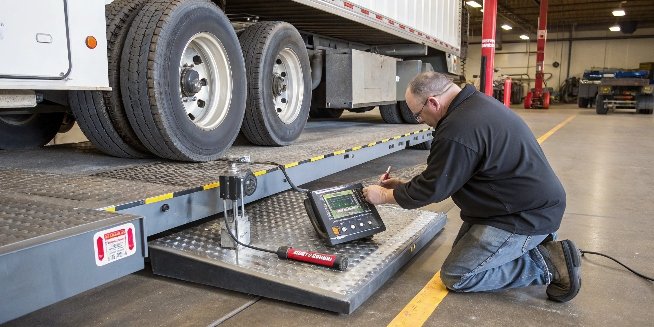
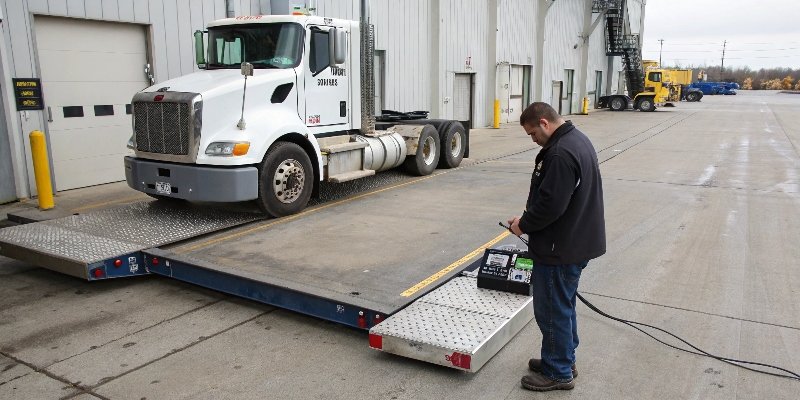
To calibrate a commercial truck scale, a technician first zeroes the empty platform. Then, they place certified test weights at various points to check accuracy. If needed, they adjust the load cells through the scale's controller. Finally, they issue a formal calibration certificate for compliance.
Maintaining an accurate truck scale is not just about following rules. It is about protecting your bottom line and ensuring fairness in every transaction. Inaccurate scales can lead to overpaying for goods, under-billing customers, or even facing fines for overloading vehicles. We've seen it happen. Let's explore the process in detail so you can be confident that every pound is accounted for, keeping your operations smooth and profitable.
What are the steps involved in calibrating commercial truck scales?
Worried you're missing a step in the calibration process? An incomplete procedure can void your certification. We follow a proven, thorough method to ensure total accuracy every time.
The key steps are pre-calibration checks, zeroing the scale, performing a span test with certified weights, and making electronic adjustments. The process concludes with detailed documentation and issuing a certificate.

In our 18 years of experience, we've refined calibration into a science. It's more than just putting weights on a scale. It's a systematic process that guarantees the scale performs correctly under all conditions. Let’s break down exactly what our technicians do on-site.
Preparation Comes First
Before any weights are placed, preparation is key. The scale deck must be completely clean and free of any debris like mud, ice, or gravel. These things can affect the zero reading. We also ensure the area is closed to traffic to prevent vibrations that could interfere with the delicate measurements.
The Core Calibration Process
Once the area is secure, the real work begins. We follow a multi-step process to test and adjust the scale. Each step builds on the last to ensure comprehensive accuracy across the entire weighing range.
| Step | Action | Purpose |
|---|---|---|
| 1. Zero Test | The empty scale is reset to 0.0. The technician confirms it holds a stable zero. | To establish a correct baseline for all future measurements. |
| 2. Span Test | Certified test weights are placed on the scale, often at corners and the center, up to its capacity. | To check for accuracy and linearity across the full weighing range. |
| 3. Adjustment | If readings deviate from the test weights, the load cell outputs are adjusted through the controller. | To correct any errors and bring the scale back within tolerance. |
| 4. Documentation | A certificate is generated, showing before/after data, test weight details, and the next due date. | To provide official proof of compliance for legal and trade purposes. |
This methodical approach leaves no room for error, ensuring your scale is ready for reliable service.
How often should commercial truck scales be calibrated for accuracy?
Are you unsure when to recalibrate your scale? Waiting too long can lead to costly errors and non-compliance fines. We help clients stay on a schedule that protects their business.
For legal-for-trade purposes, commercial truck scales must be calibrated at least once a year. More frequent calibration is recommended for scales with high usage, in harsh environments, or after any repairs.

The yearly requirement is just a baseline. Think of it as a minimum. I once worked with a client in the aggregate industry whose scale drifted after just six months due to the high volume of trucks and dusty conditions. They switched to a semi-annual schedule and eliminated their weighing discrepancies. Real-world use is the best indicator of your true calibration needs.
Factors That Determine Calibration Frequency
A simple annual schedule isn't always enough. Several factors can affect your scale's accuracy and may require you to calibrate more often. It's important to monitor your scale's performance and consider its operating conditions.
Regulatory vs. Operational Needs
Legally, an annual calibration by a certified professional is often the minimum. However, your own quality standards might demand more. For example, if you are part of a quality management system like ISO 90011, you may need to define a calibration frequency2 based on risk and usage.
Triggers for Immediate Recalibration
Certain events should trigger an immediate call to a service technician. Don't wait for your next scheduled appointment if one of these happens.
| Trigger Event | Why It Requires Recalibration |
|---|---|
| Lightning Strike | Can damage sensitive electronic components like load cells and indicators. |
| Physical Impact | A vehicle collision can knock the platform or foundation out of alignment. |
| Foundation Shifts | Flooding or ground settling can cause the scale to become unlevel. |
| Component Replacement | Any repair involving load cells or junction boxes changes the system. |
| Consistently Inaccurate Readings | If you notice weight drift, it's a clear sign an adjustment is needed. |
By understanding these factors, you can create a proactive maintenance plan that keeps your scale accurate all year long.
What tools and standards are used in calibrating truck scales?
Confused by the equipment and certifications needed for proper calibration? Using the wrong standards can make your efforts worthless. We ensure every tool we use meets strict global requirements.
Calibration requires certified test weights traceable to national or international standards like NIST or OIML. Technicians also use weight-transporting equipment, leveling tools, and specialized software to perform and document the calibration.
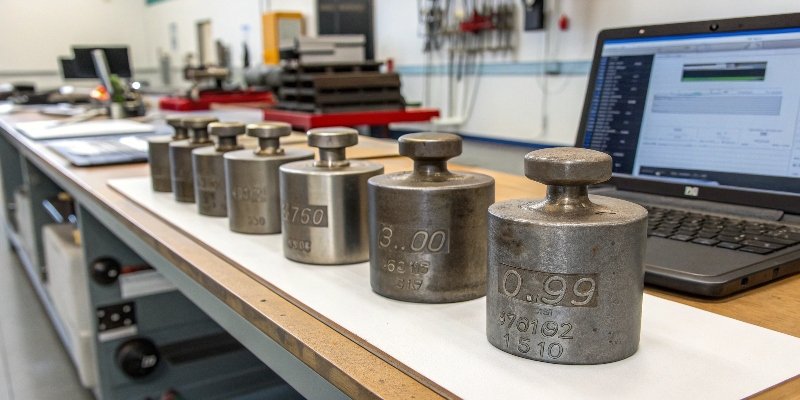
The accuracy of a calibration is only as good as the tools used. That's why we invest heavily in maintaining our equipment. Our test weights are re-certified on a regular schedule to ensure they are traceable back to primary standards. This traceability is what gives a calibration certificate3 its legal authority. It’s a non-negotiable part of our quality promise.
The Technician's Toolkit
A certified technician arrives with much more than just a toolbox. They bring a specialized set of equipment designed for the sole purpose of verifying and adjusting heavy-capacity scales.
Essential Hardware
The most visible part of the process is the hardware. These are the physical tools that interact with the scale.
- Test Weights: These aren't just blocks of metal. They are precisely manufactured and certified weights, often made of cast iron or high-density concrete. For truck scales, we use large test weights, sometimes up to 20,000 kg, which are transported by a special truck with a built-in crane.
- Leveling Tools: A digital or spirit level is used to confirm the scale platform is perfectly horizontal. An unlevel scale will not weigh accurately.
Standards and Certifications
The invisible but most critical part of calibration relates to the standards and processes followed.
| Standard/Tool | Purpose | Why It's Important |
|---|---|---|
| NIST / OIML Traceability | A documented chain showing the test weights conform to national (NIST) or international (OIML) standards. | Provides legal proof that the calibration is based on an accepted standard of mass. |
| ISO/IEC 17025 | An international standard for the competence of testing and calibration laboratories. | Certifies that the company performing the calibration follows strict quality procedures. |
| Calibration Software | Software used to record test results, perform adjustments, and generate the final certificate. | Ensures consistency, reduces human error, and creates a professional, auditable record. |
When you hire a calibration service, always ask if their technicians are certified and if their weights are traceable. It's the only way to be sure you're getting a valid, compliant calibration.
What are the challenges in maintaining the accuracy of commercial truck scales?
Is your scale's accuracy drifting between calibrations? Environmental factors and daily wear can quietly degrade performance. We build our scales to withstand these challenges for long-term stability.
Maintaining accuracy is challenged by environmental issues like temperature shifts and moisture, physical wear on load cells and cables, and operational factors like debris buildup and foundation settling. Proactive maintenance is key.
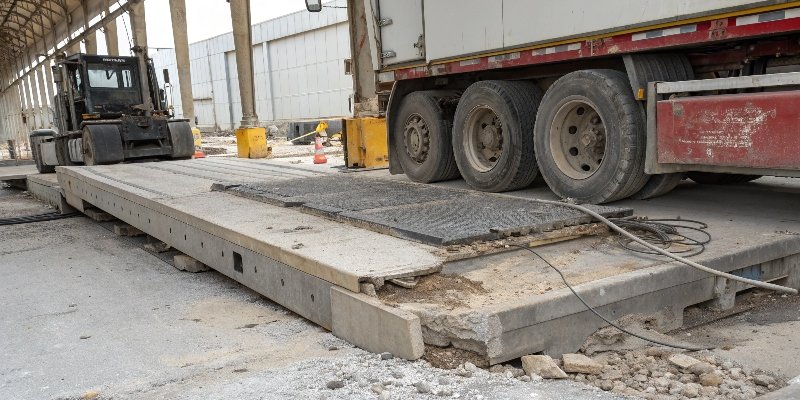
A truck scale lives a tough life. It’s exposed to extreme weather, heavy loads, and sometimes accidental impacts. I recall a case at a port where saltwater corrosion on the load cell cables caused intermittent errors that were very hard to diagnose. The solution was upgrading to hermetically sealed, stainless steel components. This experience taught us that building for the environment is just as important as the initial calibration.
Common Threats to Scale Accuracy
Even the best-built scale needs attention to stay accurate. Being aware of the common threats helps you perform preventative maintenance and spot problems before they lead to big losses.
Environmental and Physical Factors
The world around your scale is constantly trying to knock it out of calibration.
- Temperature Fluctuations: Metal expands and contracts with temperature, which can slightly alter load cell readings. Our modern digital load cells4 have built-in temperature compensation5 to minimize this effect.
- Moisture and Corrosion: Water is the enemy. It can get into junction boxes, corrode cables, and damage load cells. Proper drainage around the scale and using sealed components are essential defenses.
- Debris Buildup: Dirt, ice, or gravel getting wedged between the scale deck and the foundation is a common problem. It restricts the deck’s movement and can lead to inaccurate readings. Regular cleaning is a simple but effective fix.
Component Wear and Tear
Over time, the parts that do the work can degrade.
| Challenge | Weigherps' Solution / Mitigation Strategy |
|---|---|
| Load Cell Drift | Load cells can lose their responsiveness over time. We use high-quality, pre-tested load cells to ensure longevity. |
| Cable Damage | Rodents can chew on cables, or they can be damaged by machinery. We recommend using steel-braided conduit for protection. |
| Foundation Settling | The concrete foundation can sink or crack over time, making the scale unlevel. Periodic checks of the foundation are vital. |
By addressing these challenges with robust design and a smart maintenance plan, we help you ensure your scale's accuracy is never in question.
Conclusion
In short, proper truck scale calibration ensures accuracy, compliance, and safety. We are your expert partner, providing a path to revolutionize your weighing operations and achieve business growth.
-
ISO 9001 standards can enhance your calibration process, ensuring quality and compliance. ↩
-
Knowing the right calibration frequency helps maintain accuracy and compliance in your operations. ↩
-
A calibration certificate is essential for legal compliance and ensuring the accuracy of your measurements. ↩
-
Understanding load cells is key to grasping how truck scales measure weight accurately. ↩
-
Temperature compensation is crucial for maintaining accuracy in varying environmental conditions. ↩



[…] lab. This is achieved by adhering to internationally recognized standards, like those outlined in ISO/IEC 170251. It provides a set of rules and best practices that remove ambiguity. For you, as a software […]